
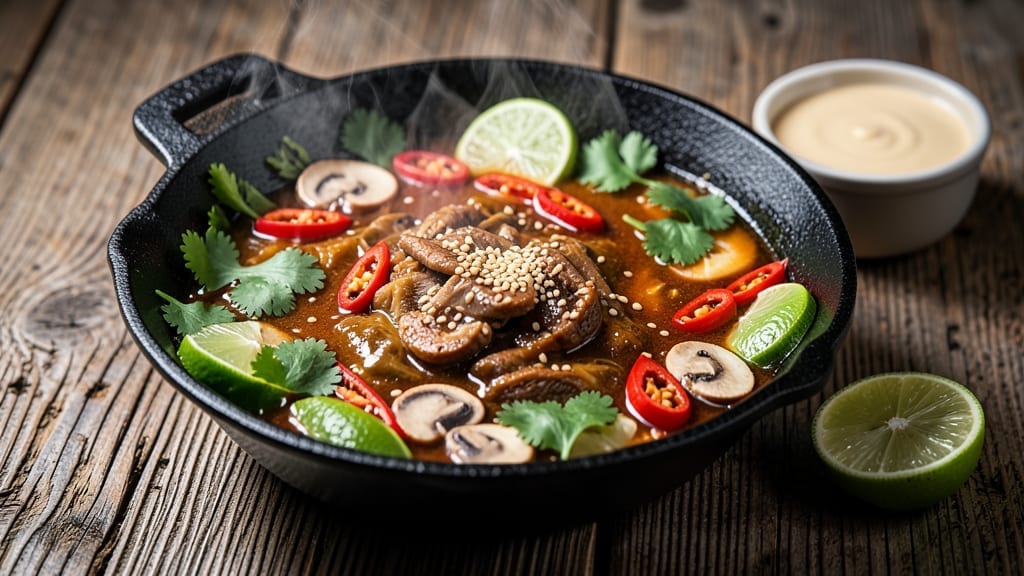
The tom yum hot pot recipe transforms your kitchen into a Thai eatery with its aromatic, spicy-sour broth that clears sinuses and warms the soul. This shared dining experience combines traditional Thai flavors—lemongrass, galangal, and kaffir lime leaves—with modern hot pot techniques for a restaurant-quality meal at home.
The broth simmers into a vibrant, tangy elixir that balances heat, acidity, and umami, perfect for customizing with proteins and fresh herbs.
What sets this recipe apart is its adaptability—whether you’re cooking for a crowd or a small gathering, the broth serves as the foundation for endless combinations. Shrimp, squid, and fish cook quickly in the steaming pot, while mushrooms, tofu, and vegetables absorb the bold flavors.
For those avoiding seafood, firm tofu delivers a satisfying texture while maintaining the dish’s signature punch. The key lies in balancing the broth’s components: enough chili for heat, lime for brightness, and fish sauce for depth.
By the time you gather around the pot, you’ll have a bubbling, fragrant centerpiece that invites everyone to customize their bowls. The aroma alone—citrusy, herbal, and slightly smoky—transforms an ordinary dinner into an event.
Each bite delivers a perfect harmony of spicy, sour, and savory notes, with herbs like Thai basil and cilantro adding freshness. This isn’t just a recipe; it’s an experience that brings people together over shared flavors and steaming bowls.
The beauty of this hot pot lies in its simplicity and flexibility. Prepare the broth ahead of time, then let guests assemble their own combinations at the table. Whether you’re serving shrimp lovers, vegetarian friends, or heat-seekers, this recipe delivers a memorable meal with minimal effort.
The only challenge will be saving room for seconds—because once you taste it, you’ll want more.
Ingredients for tom yum hot pot
Six aromatic ingredients kickstart this vibrant broth, while fresh herbs and proteins bring the table to life.
| Ingredient | Amount | Notes |
|---|---|---|
| Lemongrass Stems 🌿 | 4 whole | Bruised and cut into 2-inch pieces |
| Galangal Slices 🍃 | 3 oz | Fresh, peeled, sliced thinly |
| Kaffir Lime Leaves 🍋 | 4 whole | Bruised, stems removed |
| Thai Chili Peppers 🌶️ | 6 whole | Bird's eye or Thai chilies |
| Garlic Cloves 🧄 | 8 cloves | Peeled, smashed |
| Shallots 🧅 | ½ lb | Peeled, thinly sliced |
| Fish Sauce 🍶 | ¼ cup | Red Boat brand preferred |
| Firm Tofu 🍱 | 1 lb | Extra-firm, pressed and cubed |
| Shrimp 🦐 | 1 ½ lb | Large, peeled, deveined |
| White Mushrooms 🍄 | 1 lb | Whole, cleaned |
| Thai Basil Leaves 🌿 | ½ cup | Fresh, loosely packed |
| Cilantro Leaves 🌿 | ¼ cup | Fresh, loosely packed |
| Lime Juice 🍋 | ½ cup | Freshly squeezed |
| Vegetable Oil 🫒 | ½ cup | For hot pot pot |
| Chicken or Vegetable Broth 💧 | 6 cups | Homemade or quality store-bought |
The galangal and lemongrass are non-negotiable here—look for fresh, vibrant stalks at your local Asian market. Whole Foods or H Mart usually carry the best quality. If you can’t find galangal, ginger is a decent substitute but lacks that citrusy depth. The kaffir lime leaves should be fragrant and bright green, not wilted. For chilies, Thai Bird’s Eye peppers deliver that signature heat, but adjust to taste. The fish sauce? Red Boat brand is the gold standard—no fishy aftertaste, just pure umami. I always buy extra since it keeps for years.
No galangal? Ginger plus a splash of lime zest gets you close, but you’ll miss that piney aroma. Short on lemongrass? Substitute with 2 tbsp lime juice plus 1 tsp lime zest, but it won’t be identical. For the tofu, extra-firm is a must—it holds up to the broth without turning mushy. The shrimp should be large and fresh—ask your fishmonger for day-boat if possible. Thai basil is different from regular basil—look for it in the produce section or order online. Can’t find it? Sweet basil plus a pinch of anise works in a pinch.
This broth tastes even better the next day—make extra and store it for 3-4 days in the fridge. The tofu and mushrooms can be prepped ahead and kept in the pot’s broth until serving. For the hot pot setup, use a wide, shallow pot so everyone can cook their own portions simultaneously. The aroma alone will have your guests reaching for seconds—trust me on this.
Why You’ll Love This Recipe
- I swear by this trick: buy pre-sliced galangal and frozen lemongrass bundles from the Asian market—just toss them straight in. The broth builds itself while you chop garlic (which, honestly, is the only thing you’re doing).
- No-Chop Nightmare: I swear by this trick: buy pre-sliced galangal and frozen lemongrass bundles from the Asian market—just toss them straight in. The broth builds itself while you chop garlic (which, honestly, is the only thing you’re doing).
- Flavor Bomb Combo: That first sip—bright, tangy, with garlic hitting like a backhand—is why I keep making this. The Thai chilies add heat that lingers, but the kaffir lime leaves cool it into something dangerously balanced. (Pro tip: tear them, don’t chop.)
- Crowd-Pleaser Flex: Serve it as a simmering pot for guests to add their own shrimp, mushrooms, or tofu—no two bowls taste the same. Or make a double batch, let it cool, and pack it for lunch. My roommate’s been stealing my leftovers for a week now.
Step-by-step instructions for tom yum hot pot
This aromatic broth builds layer by layer—each ingredient unlocks deeper flavor.
Bloom the Aromatics in Hot Oil
Heat the 0.5 cup vegetable oil in a large stockpot over medium-high heat until shimmering but not smoking. Add the 4 whole lemongrass stems (cut into 2-inch pieces) and 3 oz galangal slices, stirring constantly for 2 minutes until fragrant and slightly softened. The oil should smell intensely citrusy and peppery—this is your foundation.
Next, add the 6 whole Thai chili peppers and 8 cloves garlic, cooking for 30 seconds until the garlic turns golden around the edges. Watch carefully—garlic burns quickly, and you want it aromatic, not bitter. Remove the chilies (keep 2 for garnish) and set aside. Here’s the thing—this step develops the broth’s signature heat and complexity, so don’t rush it.
Sauté Shallots and Mushrooms
Add the 0.5 lb shallots to the pot and cook for 3-4 minutes until softened and translucent. The shallots should caramelize slightly at the edges, adding sweetness that balances the heat. Stir frequently to prevent burning.
Push the shallots to the sides of the pot and add the 1 lb white mushrooms, spreading them evenly. Cook for 5-6 minutes until they release their moisture and develop golden-brown spots. You’ll hear a sizzling sound as they release their umami-rich juices—this is when the broth starts building its depth. Stir occasionally to ensure even cooking.
Build the Broth with Broth and Fish Sauce
Pour in the 6 cups chicken or vegetable broth and bring to a rolling boil. Reduce heat to medium-low and add the 0.25 cup fish sauce, stirring to combine. The broth should simmer vigorously but not boil over—this is where the flavors meld. Taste and adjust seasoning: add more fish sauce if it needs saltiness or a pinch of sugar if the heat feels too sharp.
Return the reserved chilies to the pot and let the broth simmer uncovered for 10 minutes. This reduces the broth slightly, intensifying the flavors. You’ll notice the aroma becomes more complex, with layers of lemongrass, galangal, and a subtle sweetness from the caramelized shallots. This is the moment that matters—don’t skip the simmering.
Cook the Protein
Add the 1 lb firm tofu (cubed) and 1.5 lb shrimp to the simmering broth. Gently stir to submerge both proteins completely. Cook for 3-4 minutes until the shrimp turn pink and opaque, and the tofu is heated through. The shrimp should curl slightly at the edges—a visual cue that they’re perfectly cooked. Remove the shrimp with a slotted spoon and set aside to keep warm.
Let the tofu continue cooking in the broth for another 2 minutes to absorb the flavors. Here’s what I do—gently press the tofu cubes with a spoon to ensure they’re fully heated through. The broth should now be vibrant, with a deep amber color and a tantalizing aroma that fills your kitchen.
Finish and Serve
Remove the pot from heat and stir in the 0.5 cup lime juice, 0.5 cup Thai basil leaves, and 0.25 cup cilantro leaves. The lime juice brightens the broth, cutting through the richness and adding a refreshing tang. Let the broth sit for 2-3 minutes to allow the herbs to infuse—don’t skip this step, as it makes all the difference in flavor.
Divide the broth among bowls, adding the shrimp and tofu back into each serving. Garnish with additional Thai basil and cilantro leaves. Serve immediately with steamed rice on the side—this dish is best enjoyed while the broth is steaming hot, with the aroma wafting through your kitchen and the flavors at their peak. Real talk: the first bite should make your sinuses clear and your taste buds dance.
Pro Tips For Making Tom Yum Hot Pot
- CRUSH THE AROMA FIRST: Blanch galangal and lemongrass in boiling water for 30 seconds before adding to the pot—this softens them just enough to release their oils without turning to mush. (Yes, it’s extra work, but your broth will taste like a Thai street vendor’s, not a sad imitation.)
- SKIN THE GALANGAL: Peel galangal slices thinly with a spoon—don’t just eyeball it. The fibrous outer layer adds bitterness that’ll overpower the dish if left on. (I learned this the hard way after a batch tasted like someone dumped dish soap in the broth.)
- STOP WHEN IT’S CLEAR: Pull the broth off heat the second it turns pale gold and slightly cloudy—don’t wait for it to boil furiously. Overcooking turns the broth flat and dulls the chili’s kick. (Your future self will curse you if you ignore this.)
- USE FROZEN GARLIC: Toss 4 cloves of frozen garlic into the broth with the chilis—no need to thaw. They’ll soften perfectly and add a sweeter, less harsh flavor than raw garlic. (Sounds weird, but it works—trust me.)
Common mistakes when making perfect results
Skipping the Aromatics Bloom
Don’t rush the initial 2-minute bloom of lemongrass, galangal, and chilies in hot oil—this step unlocks the broth’s signature depth. I’ve seen beginners skip this or cook too quickly, resulting in a flat, one-dimensional flavor.
The key is patience: let those aromatics release their oils and fragrance before moving forward. If you smell like a Thai market, you’re on the right track. 🌿
Overcrowding the Pot
When cooking proteins like shrimp and tofu, resist the urge to add everything at once. The pot should have enough space for ingredients to cook evenly without steaming in their own juices. I’ve had shrimp turn rubbery when overcrowded—always cook proteins in batches if needed.
Aim for a 1-inch gap between ingredients for optimal heat circulation. Overcrowding also dilutes the broth’s intensity, so plan your timing carefully.
Underestimating the Heat
Thai chilies pack serious heat, and using all six whole peppers can overwhelm sensitive palates. I recommend keeping two aside for garnish and adjusting to taste. If you’re serving a mixed group, prepare a mild version with fewer chilies and let guests add their own heat.
The broth should dance on your tongue—spicy, sour, and umami—but not leave you gasping for water. Remember, you can always add more lime or herbs to balance, but you can’t take heat out once it’s in. 🌶️
Neglecting the Simmer
The 10-minute uncovered simmer after adding fish sauce is non-negotiable for flavor development. I’ve seen people rush this step, resulting in a broth that tastes more like individual ingredients than a harmonious whole.
This simmer reduces the liquid slightly, intensifying the aromatics and allowing the fish sauce to fully integrate. Skipping it leaves your broth tasting raw and unrefined—like a symphony missing its crescendo.
Using Wilted or Old Herbs
Fresh Thai basil and cilantro are the finishing touches that elevate this dish from good to extraordinary. Using wilted or old herbs adds bitterness rather than brightness. Always check your herbs for vibrant color and firm stems before adding them to the broth.
I keep a small pot of Thai basil on my windowsill—it grows quickly and stays fresh for weeks. For cilantro, store stems in a jar of water in the fridge like flowers to preserve freshness.
Skipping the Resting Period
After adding lime juice and herbs, let the broth rest for 2-3 minutes before serving. This allows the flavors to meld and the herbs to infuse properly. I’ve seen people serve it immediately, only to have the herbs float on top without releasing their full flavor.
This resting period is like letting a fine wine breathe—it deepens the complexity and ensures every spoonful delivers balanced flavor. The first bowl you serve should be the most flavorful, not the last. ⏳
Nutrition facts
Frequently asked questions
Can I make this hot pot vegetarian or vegan?
Swap shrimp for extra-firm tofu (press it first to remove excess water) and use vegetable broth. For extra umami, add 1 tablespoon soy sauce or 1 teaspoon mushroom powder to the broth. The tofu absorbs the flavors beautifully, making it just as satisfying.
How do I adjust the spice level for kids or sensitive eaters?
Remove 4-5 of the 6 Thai chilies when blooming the aromatics, and keep them out entirely for mild versions. You can also reduce the cooking time of the chilies to 15 seconds instead of 30. For extra safety, serve a small bowl of plain rice or cucumber slices on the side for cooling.
What’s the best way to store leftovers?
Store the broth (without proteins) in an airtight container for up to 3 days in the fridge. Reheat gently on the stove, then add fresh herbs and lime juice before serving. For proteins, store them separately and reheat in the broth for 1-2 minutes to avoid overcooking. The broth actually tastes better the next day!
Can I use frozen shrimp instead of fresh?
Yes, but thaw them first in the fridge for 12-24 hours or use the quick thaw method (cold water + ice). Pat them dry before cooking to prevent the broth from becoming watery. For best texture, add frozen shrimp directly to the simmering broth—they’ll cook through in 3-4 minutes without overcooking.
What if I don’t have galangal? What’s the best substitute?
Use 1 tablespoon ginger plus 1 teaspoon lime zest for a close approximation. While it won’t be identical, the combination adds warmth and citrusy notes. For deeper flavor, add a pinch of turmeric (½ teaspoon) to mimic galangal’s earthy quality.

- Braised Beef Short Ribs Recipe: Crock Pot Fall-Off-Bone Magic in 6 Hours - November 1, 2026
- Crock Pot Cocoa Recipe: Velvety Warmth With Hidden Spice Magic - November 1, 2026
- White Queso Crock Pot Recipe: Ultra-Smooth Melt Without the Grain - November 1, 2026