
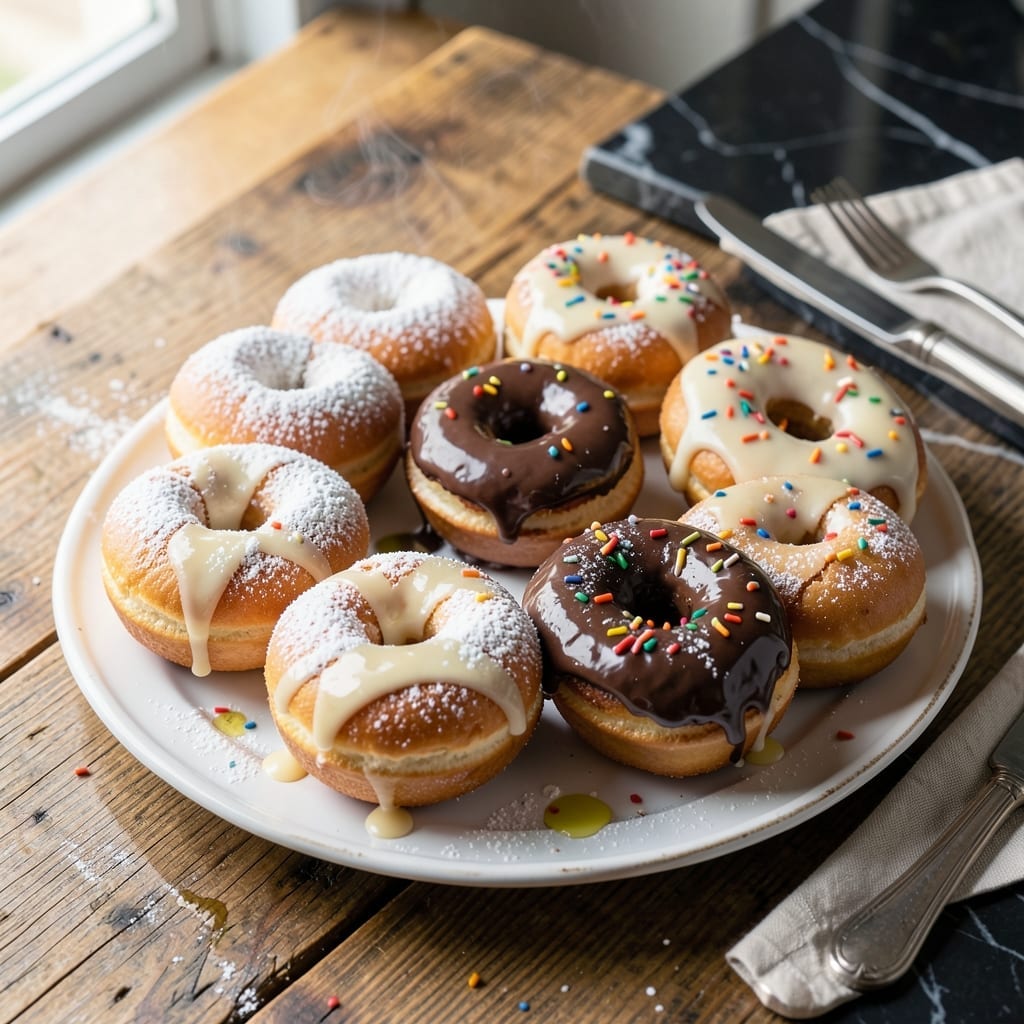
Seattle’s iconic handcrafted donuts are within reach with this proven recipe. The key lies in a precise balance of ingredients and timing to achieve that signature fluffy texture.
This method delivers restaurant-quality results by focusing on proper dough rising and frying techniques. The process is straightforward but requires attention to detail for the best outcome.
You’ll end up with golden, pillowy donuts ready for your choice of glaze or topping. The consistency and flavor will rival any professional bakery’s offering.
Perfect for special occasions or weekend treats, these donuts are worth the effort. Here’s how to make them at home.
Ingredients for Top Pot Donut
Twelve ingredients deliver that signature Seattle fluff and golden perfection in every bite.
| Ingredient | Amount | Notes |
|---|---|---|
| All-Purpose Flour 🌾 | 4 cups | Sifted for even texture |
| Granulated Sugar 🍚 | ½ cup | Fine grain for dough |
| Whole Milk 🥛 | 1 cup | Warm, about 110°F |
| Active Dry Yeast 🍞 | 2 ¼ tsp | One packet, proofed |
| Unsalted Butter 🧈 | ¼ cup | Melted and cooled |
| Large Eggs 🥚 | 2 whole | Room temperature |
| Salt 🧂 | 1 tsp | Fine sea salt preferred |
| Vanilla Extract 🌿 | 1 tsp | Pure extract for best flavor |
| Ground Nutmeg 🌰 | ¼ tsp | Freshly grated ideal |
| Vegetable Shortening 🫒 | 2 cups | For frying, high smoke point |
| Powdered Sugar 🍬 | 2 cups | For classic glaze |
| Heavy Cream 🥛 | ¼ cup | For glaze richness |
The flour forms the foundation—King Arthur or Bob’s Red Mill all-purpose delivers consistent results. Yeast must be fresh; check the expiration date and proof it properly to ensure a good rise. Whole milk provides the fat needed for tenderness, while the butter adds richness. For authentic Top Pot flavor, use European-style butter if available, as it has a higher fat content.
No whole milk? 2% milk plus a tablespoon of melted butter works as a substitute. If you’re avoiding dairy, unsweetened almond milk with a teaspoon of vinegar can be used, though texture may vary. The nutmeg is subtle but essential—freshly grated makes a noticeable difference. For the glaze, heavy cream can be swapped with half-and-half for a lighter finish.
Dough can be made a day ahead and refrigerated overnight—let it come to room temperature before shaping. Fried donuts are best eaten the same day but keep 2-3 days in an airtight container. Glaze should be applied fresh; store any extra in the fridge for up to 1 week.
Why You’ll Love This Recipe
- I’ll be real: these disappear faster than pancakes at a family gathering, but they’re just as good with coffee on a lazy Sunday morning.
- No-Fuss Dough: Between us, the yeast does all the work—just mix, let it rise, and you’re halfway to warm, pillowy donuts without breaking a sweat.
- Brunch Star: I’ll be real: these disappear faster than pancakes at a family gathering, but they’re just as good with coffee on a lazy Sunday morning.
- Budget-Friendly Batch: A bag of flour and a stick of butter stretch further than you’d think—24 donuts for the cost of a single bakery box.
Step-by-Step Instructions for Top Pot Donuts
Master the technique behind these iconic donuts with precise steps for perfect texture and flavor.
Step 1: Activate the Yeast and Prepare the Dough
Begin by warming the 1 cup Whole Milk to 110°F—it should feel just slightly warm to the touch. In a stand mixer fitted with the dough hook, combine the warm milk with the 2.25 tsp Active Dry Yeast and the 0.5 cup Granulated Sugar. Let this sit for 5-7 minutes until the mixture becomes frothy, confirming the yeast is active.
Add the 0.25 cup Unsalted Butter (melted and cooled), 2 whole Large Eggs, 1 tsp Salt, 1 tsp Vanilla Extract, and 0.25 tsp Ground Nutmeg to the yeast mixture. Mix on low until combined, then gradually incorporate the 4 cups All-Purpose Flour. The dough should be smooth and elastic, pulling away from the sides of the bowl.
Step 2: Knead and Let the Dough Rise
Increase the mixer speed to medium and knead the dough for 5-6 minutes until it’s supple and slightly tacky but not sticky. If the dough feels too wet, add a tablespoon of additional flour, but avoid over-flouring—this can make the donuts dense.
Transfer the dough to a lightly greased bowl, cover with a damp towel, and let it rise in a warm, draft-free place for 1.5 to 2 hours, or until it has doubled in size. The ideal environment is 80-85°F; if your kitchen is cooler, place the bowl near a warm oven or on a heating pad set to low.
Step 3: Shape, Proof, and Fry the Donuts
Once risen, turn the dough out onto a lightly floured surface and roll it to a ½-inch thickness. Use a 3-inch round cutter to cut out donuts, and a 1-inch cutter to punch out the centers for the classic ring shape. Place the donuts on a floured baking sheet, cover loosely, and let them proof for 30-40 minutes until puffy.
Heat the 2 cups Vegetable Shortening in a deep, heavy pot to 360°F. Fry the donuts in batches, being careful not to overcrowd the pot, for 1-2 minutes per side until they are golden brown. Use a slotted spoon to transfer them to a wire rack lined with paper towels to drain.
Step 4: Prepare and Apply the Glaze
While the donuts are still warm, prepare the glaze by whisking together the 2 cups Powdered Sugar and 0.25 cup Heavy Cream in a bowl until smooth. The glaze should be thick but pourable; if it’s too stiff, add a teaspoon of cream at a time until it reaches the right consistency.
Dip each donut into the glaze, turning to coat evenly, and return them to the wire rack to allow the glaze to set for 10-15 minutes. The glaze will harden slightly but remain tender, creating the signature Top Pot finish. Serve the donuts fresh for the best texture and flavor.
Pro Tips For Making Top Pot Donut
- Proof the Yeast: Always bloom your active dry yeast in warm whole milk (110°F) with a pinch of sugar first—I learned this the hard way after a few dense, sad donuts.
- Chill the Dough: After shaping, refrigerate the dough for 30 minutes before frying. This makes a real difference in keeping the donuts’ shape while they puff up in the oil.
- Skip Cold Butter: Use room-temperature unsalted butter when mixing the dough. Cold butter won’t incorporate evenly, and you’ll end up with streaky, uneven texture.
- Fry at 375°F: Keep your oil at a steady 375°F—any cooler and the donuts absorb grease, any hotter and they brown too fast without cooking through. I use a thermometer now after guessing (and ruining) my first few batches.
Regional Styles of top pot donut
Seattle Original
Top Pot’s classic style starts with a yeast-raised dough that’s light and airy, with just a hint of nutmeg for warmth. The original Seattle version is finished with a simple vanilla glaze that lets the dough shine. I love how the glaze cracks slightly when you bite in. 💛
Maple Bacon Twist
A Pacific Northwest favorite combines maple glaze with crispy applewood-smoked bacon crumbles. Use thick-cut bacon cooked until extra crispy, then chop into ¼-inch pieces. The sweet-salty contrast is what makes this variation so beloved.
Chai Spice
This fall-inspired version infuses the glaze with chai tea bags steeped in warm heavy cream. Add ½ tsp cinnamon, ¼ tsp cardamom, and a pinch of cloves to the glaze for extra warmth. It’s like a cozy hug in donut form.
Lemon Lavender
Bright and floral, this variation zests 2 lemons into the dough and adds 1 tbsp culinary lavender to the glaze. The lavender should be food-grade and finely ground. This one’s a hit at spring gatherings and feels fancy without much effort.
Chocolate Old Fashioned
For a cake donut twist, some Seattle bakeries use a chocolate batter with ½ cup cocoa powder mixed into the dry ingredients. Fry as usual, then roll in cinnamon sugar while still warm. It’s a nod to the old-fashioned donuts Top Pot occasionally features.
Nutrition Facts
Frequently Asked Questions
Can I make these donuts without a stand mixer?
Yes, you can knead by hand. It will take 8-10 minutes of vigorous kneading to develop the gluten properly. The dough should feel smooth and elastic when ready.
Why did my donuts turn out dense?
Dense donuts usually result from underproofed dough or old yeast. Ensure the dough doubles in size during rising and use fresh yeast checked for active bubbles in warm milk.
How do I store leftover donuts?
Keep them in an airtight container at room temperature for 2-3 days. For longer storage, freeze unglazed donuts for up to 1 month. Reheat in the oven before glazing.
Can I bake these instead of frying?
Baking works but won’t replicate the classic texture. Use 375°F for 8-10 minutes, flipping halfway. The flavor will be lighter without that fried crispness.

- 6 Oz Chocolate Chip Cookie Recipe: Perfectly Balanced Crispy Edges and Chewy Hearts - September 25, 2026
- 6-Inch Coffee Cake Recipe: Vanilla Bean Swirls and Buttery Streusel Topping - September 25, 2026
- 1 Hour Soup Recipe: Velvety Richness Without the Wait - September 25, 2026