
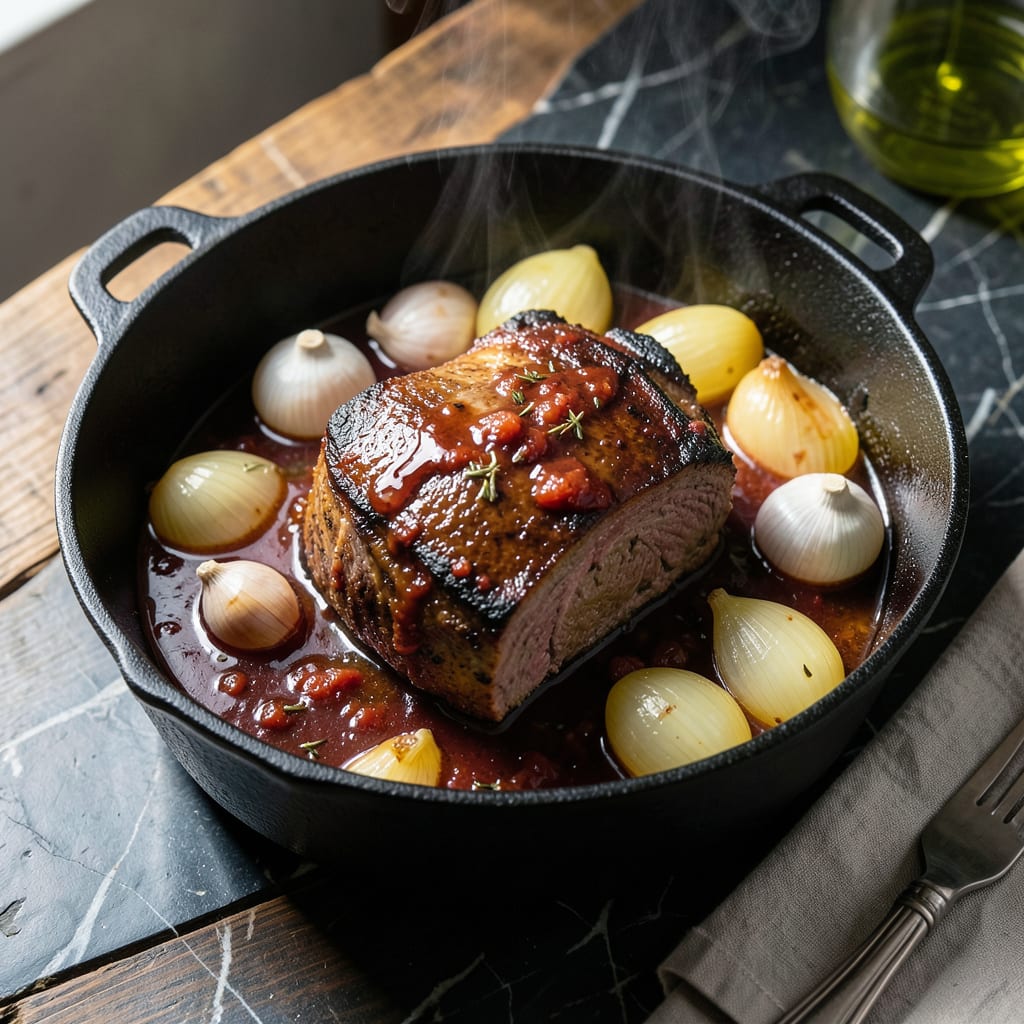
This braised beef recipe transforms tough cuts into fork-tender perfection through low, slow cooking. The caramelized onions create a rich, deep foundation that elevates every bite.
With proper technique, even the most economical roast becomes melt-in-your-mouth tender. The secret lies in patience and the right balance of moisture and heat.
Ingredients for Tough Pot Roast
Transform economical beef with these carefully selected ingredients for braised perfection every time.
| Ingredient | Amount | Notes |
|---|---|---|
| Beef Chuck Roast 🥩 | 3 lb | Well-marbled, trimmed of excess fat |
| Yellow Onions 🧅 | 3 whole | Large, thinly sliced for caramelizing |
| Garlic Cloves 🧄 | 6 cloves | Peeled, smashed for maximum flavor |
| Beef Stock 💧 | 3 cups | Low-sodium preferred for control |
| Red Wine 🍷 | 1 cup | Dry variety like Cabernet Sauvignon |
| Tomato Paste 🍅 | 2 tbsp | For depth and umami richness |
| Fresh Thyme Sprigs 🌿 | 4 whole | Tied with kitchen twine for easy removal |
| Fresh Rosemary Sprigs 🌿 | 2 whole | Woody stems removed before serving |
| Bay Leaves 🍃 | 2 whole | Dried, for aromatic complexity |
| Carrots 🥕 | 3 whole | Peeled, cut into thick chunks |
| Celery Stalks 🌿 | 3 whole | Cut into large pieces |
| Olive Oil 🫒 | 2 tbsp | For searing and sautéing |
| All-Purpose Flour 🌾 | 2 tbsp | For thickening braising liquid |
| Kosher Salt 🧂 | 1 ½ tsp | Diamond Crystal preferred for consistency |
| Black Pepper 🌶️ | 1 tsp | Freshly ground for optimal flavor |
The beef is non-negotiable here. Chuck roast with visible marbling (look for those white fat streaks) ensures fork-tender results. Whole Foods or Costco offer excellent quality, but most supermarkets carry suitable options. Avoid lean cuts like sirloin—they lack the connective tissue that breaks down into gelatin during the long, slow cooking process.
No red wine? Substitute beef broth with 1 tbsp balsamic vinegar for similar depth. Fresh herbs can be replaced with dried at one-third the quantity (1 tsp dried thyme for the sprigs). The tomato paste adds essential umami—those squeeze tubes at Trader Joe’s prevent waste. Carrots and celery can be swapped for parsnips or fennel if preferred.
This dish improves overnight as flavors meld. Store leftovers in an airtight container for up to 4 days in the refrigerator or freeze for 3 months. The braising liquid makes excellent gravy—strain and reduce before serving for maximum impact.
Why You’ll Love This Recipe
- Hands-Off Cooking: I just sear the chuck roast, dump in onions, garlic, stock, and wine, then let the oven do the work for hours.
- Deep, Rich Flavor: The red wine and beef stock turn tough chuck into fall-apart tender meat with a sauce so good I sop it up with bread.
- Feeds a Crowd: Between us, this makes enough for Sunday dinner plus lunches for days—ideal for families or when friends drop by.
- Budget Friendly: Honestly, chuck roast is one of the cheapest cuts, but slow-cooked with garlic and onions, it tastes like a fancy meal.
Step-by-Step Instructions for Braised Beef With Caramelized Onion Depth
This method transforms tough beef chuck roast into fall-apart tender perfection through patient braising.
Step 1: Sear and Season the Beef Chuck Roast
Pat the 3 lb Beef Chuck Roast completely dry with paper towels—this ensures a proper sear. Season all sides evenly with the 1.5 tsp Kosher Salt and 1 tsp Black Pepper. This aggressive seasoning penetrates the meat during the long cooking process.
Heat the 2 tbsp Olive Oil in a Dutch oven over medium-high heat until shimmering. Sear the beef chuck roast for 4-5 minutes per side until deeply browned. The meat should release easily when ready to flip—don’t force it. Transfer the roast to a plate and set aside.
Step 2: Build the Aromatic Base with Vegetables
In the same pot, add the 3 whole Yellow Onions and cook over medium heat for 8-10 minutes until they begin to caramelize. Add the 3 whole Carrots, 3 whole Celery Stalks, and 6 cloves Garlic Cloves, cooking for another 3-4 minutes until the vegetables soften.
Stir in the 2 tbsp Tomato Paste and let it cook for 1-2 minutes until it darkens slightly. This step develops the umami foundation of your braising liquid. The paste should turn a deeper red color when ready.
Step 3: Deglaze and Add Braising Liquid
Pour in the 1 cup Red Wine and scrape up all browned bits from the bottom of the pot with a wooden spoon. Let the wine reduce by half, about 3-4 minutes. This deglazing captures all the concentrated beef and vegetable flavors.
Add the 3 cups Beef Stock, 4 whole Fresh Thyme Sprigs, 2 whole Fresh Rosemary Sprigs, and 2 whole Bay Leaves. Stir to combine, then return the beef chuck roast to the pot, nestling it into the liquid. The liquid should come about halfway up the roast.
Step 4: Braise Until Fork-Tender
Cover the pot and bring to a gentle simmer. Reduce heat to low and cook for 3-3.5 hours, turning the roast every hour. The meat is done when a fork slides in with no resistance and the internal temperature reaches 195-200°F.
Alternatively, transfer the covered pot to a 325°F oven for the same duration. The long, slow cooking time breaks down the collagen in the chuck roast, transforming tough connective tissue into gelatin that makes the meat incredibly tender.
Step 5: Thicken and Finish the Sauce
Remove the beef chuck roast and set aside. Skim any excess fat from the surface of the braising liquid. Mix the 2 tbsp All-Purpose Flour with 2 tbsp of the cooking liquid to create a slurry, then whisk it into the pot.
Simmer the sauce for 5-7 minutes until it thickens enough to coat the back of a spoon. Remove the thyme, rosemary, and bay leaves before serving. The sauce should have a rich, velvety texture that clings to the beef.
Pro Tips For Making Tough Pot Roast
- Low and Slow: Cook at 275°F for 3-4 hours—any higher and the chuck roast turns chewy instead of fall-apart tender. I learned this the hard way after pulling a tough roast out at 325°F.
- Dry the Meat: Pat the chuck roast bone-dry before searing, or it’ll steam instead of brown. Sounds obvious, but I skipped this once and wondered why my pot roast looked pale.
- Use Enough Liquid: Add beef stock until it’s about halfway up the roast—less than that and the onions burn, more and the wine flavor gets watered down.
- Sear in Batches: Don’t crowd the pot when browning the meat, or it’ll boil in its own juices. Two minutes per side in a hot pan, then set aside while you soften the onions.
Flavor Customization for This Dish
Herb Infusions
Swap the thyme and rosemary for 6 fresh sage leaves and 1 tsp juniper berries for a woodsy, earthy depth. I tie these in cheesecloth for easy removal. This works wonderfully with red wine-based braises. 🌿
Spicy Kick
Add 1 tsp crushed red pepper flakes with the tomato paste, or include 2 chopped chipotle peppers in adobo for smoky heat. Balance the spice with an extra 1 tbsp brown sugar to the onions while caramelizing.
Umami Boost
Stir in 1 tbsp soy sauce or 1 tbsp fish sauce when deglazing for deeper savory notes. I prefer Tamari for gluten-free needs. A splash of Worcestershire sauce also enhances the beefy richness.
Sweet Touches
Add 2 tbsp balsamic vinegar to the onions during caramelization for sweet-tart complexity. Alternatively, include ½ cup chopped prunes or dried apricots with the braising liquid for fruity depth.
These small tweaks elevate your braised beef while keeping the soul of the dish intact.
Acid Balance
Finish with 1 tbsp apple cider vinegar or lemon juice to brighten the rich sauce. I always taste first—some batches need just a squeeze to wake up the flavors. 💡
Nutrition Facts
Frequently Asked Questions
Why did my roast turn out dry?
It likely cooked too hot or fast. Use low heat and ensure the liquid covers at least halfway up the meat. The ideal internal temperature is 195-200°F for fall-apart tenderness.
Can I use a slow cooker instead?
Yes! Sear the meat first, then cook on low for 8-10 hours. This method works well but lacks the depth of oven braising. Add all liquid and aromatics as directed.
What’s the best cut for this?
Chuck roast is ideal due to its marbling and connective tissue. Avoid lean cuts like sirloin—they won’t break down properly. Look for well-marbled pieces at 3 lbs.
How do I fix under-seasoned sauce?
Reduce the sauce further to concentrate flavors, or add a pinch of salt, splash of soy sauce, or 1 tbsp vinegar for balance. Taste and adjust gradually.

- 4C Bread Crumbs Meatballs Recipe: Crispy Crust and Juicy Centers - September 25, 2026
- 6 Oz Chocolate Chip Cookie Recipe: Perfectly Balanced Crispy Edges and Chewy Hearts - September 25, 2026
- 6-Inch Coffee Cake Recipe: Vanilla Bean Swirls and Buttery Streusel Topping - September 25, 2026