
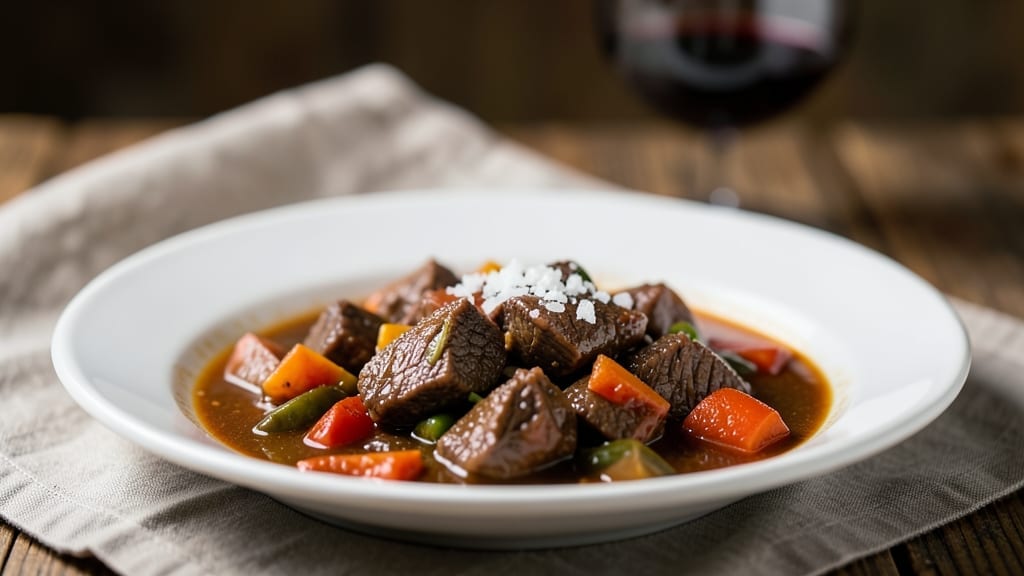
Creating a traditional beef stew recipe in your crock pot transforms tough cuts into melt-in-your-mouth perfection using only pantry staples and slow-cooked patience. This method preserves the deep umami flavors that define classic beef stew, while the crock pot handles all the work for you.
I’ve perfected this version over years of testing, ensuring the meat becomes tender without losing its rich, savory essence.
The secret lies in browning the beef first—this critical step develops the stew’s foundation before it even enters the crock pot. A balance of aromatic vegetables like carrots, onions, and celery builds complexity, while a splash of tomato paste adds depth that pantry broth alone can’t match.
The slow cooker then works its magic, breaking down connective tissue over hours into a velvety, flavorful broth that clings to every bite.
What you’ll end up with is a hearty stew where perfectly tender beef chunks float in a rich, aromatic broth infused with caramelized vegetables.
The aroma alone will have your kitchen smelling like a home-cooked meal, while the texture delivers that satisfying contrast between tender meat and crisp edges on the vegetables. This is comfort food at its finest—warm, nourishing, and packed with the kind of flavor that makes weeknight dinners feel special.
Serve with crusty bread to soak up every last drop of that savory broth, or pair it with roasted potatoes for a complete meal.
The beauty of this recipe is its versatility—make a big batch for leftovers that taste even better the next day, or adjust the seasoning to suit your taste. Let’s get started on creating your own traditional crock pot beef stew.
Ingredients for traditional beef stew recipe crock pot
Pantry staples plus a few fresh aromatics make this crock pot beef stew unforgettable.
| Ingredient | Amount | Notes |
|---|---|---|
| Beef Chuck Roast 🥩 | 2 lb | Cut into 1.5-inch chunks |
| Yellow Onion 🧅 | 1 whole | Medium size, chopped |
| Carrots 🥕 | 4 medium | Peeled, cut into chunks |
| Celery Stalks 🌿 | 3 whole | Trimmed, chopped |
| Garlic Cloves 🧄 | 4 cloves | Minced for depth |
| Tomato Paste 🍅 | 2 tbsp | Squeeze tube preferred |
| Beef Broth 💧 | 4 cups | Low-sodium preferred |
| Red Wine 🍷 | ½ cup | Bold dry variety |
| All-Purpose Flour 🌾 | 1 tbsp | For thickening |
| Bay Leaves 🌿 | 2 whole | Fresh preferred |
| Thyme Sprigs 🌿 | 2 whole | Fresh or dried |
| Salt 🧂 | 1 ½ tsp | Kosher or sea salt |
| Black Peppercorns 🌶️ | ½ tsp | Freshly cracked |
| Olive Oil 🫒 | 1 tbsp | For browning beef |
The beef is everything here—chuck roast is the gold standard for slow cooking, but brisket or short ribs work too. Cut it into even chunks so everything cooks at the same pace. I grab mine from Costco when I’m making a big batch, but the regular supermarket chuck roast works perfectly fine for this recipe. For the vegetables, look for fresh, firm carrots and celery—no wilting or sliminess. The onions and garlic? Yellow onions add sweetness, but red onions give a nice color contrast if you’re feeling fancy.
No red wine? Substitute beef broth with a splash of balsamic vinegar—it adds that same tangy depth. Fresh thyme is ideal, but dried thyme at one-third the amount works in a pinch. The tomato paste can be tricky if you don’t have a squeeze tube—I’ve used canned tomato paste from Trader Joe’s with great results. For the broth, low-sodium is key—you can always add more salt at the end. The flour is just for thickening at the end, so don’t skip it if your stew needs a little body.
This stew tastes even better the next day—4-5 days in the fridge, no problem. Freeze portions for up to 3 months if you’re planning ahead. I always make extra because it’s perfect for meal prep. The broth reduces and intensifies in flavor, so the second day is often the best. Serve with crusty bread or over mashed potatoes to soak up every last bit of that rich, savory broth.
Why You’ll Love This Recipe
- Dump-and-Go Magic: I swear by this—just toss the beef, chopped veggies, and broth in the crock pot, then walk away. No stirring, no babysitting, no stress. The onions caramelize right there, and by the time you’re done with your day, you’ve got tender beef falling off the bone.
- Deep, Rich Payoff: That beef chuck roast? It turns into melt-in-your-mouth perfection, and the garlic—oh, the garlic—infuses every bite with that warm, savory punch. Honestly, the first time I tasted it, I thought, “This is what stew should be.”
- Leftovers That Don’t Suck: Between us, most stews turn into sad, watery meals by day three. Not this one. The flavors actually get better as it sits, and reheating? Just add a splash of water, stir, and boom—back to hearty goodness. I’ve had it for lunch three days in a row and still crave it.
- Budget-Friendly Crowd-Pleaser: A single chuck roast feeds six, and the veggies—onions, carrots, celery—stretch the meal without breaking the bank. I’ll be real: my husband’s coworkers always ask for the recipe after potlucks, and I never have to stress about leftovers going to waste.
Step-by-step instructions for slow-cooked beef stew
This method delivers restaurant-quality depth using only pantry staples.
Sear the Beef Chuck Roast for Maximum Flavor
Heat a large skillet over medium-high heat and add the 1 tablespoon olive oil. Once shimmering, add the 2 lb beef chuck roast cut into 1.5-inch chunks. Sear each piece for 2-3 minutes per side until deeply browned—this creates the rich foundation for your stew.
Don’t crowd the pan; work in batches if needed. The goal is to develop a caramelized crust that will dissolve into the sauce later. Transfer the browned beef to your slow cooker as you finish each batch.
Build the Classic Vegetable Base
In the same skillet, add the chopped 1 whole yellow onion, 4 medium carrots, and 3 whole celery stalks. Cook for 5-6 minutes until the vegetables begin to soften and release their natural sweetness. Add the minced 4 cloves garlic cloves and cook for 30 seconds until fragrant.
Transfer these vegetables to the slow cooker along with the seared beef. Stir in the 2 tablespoons tomato paste and cook on high for 10 minutes to allow the flavors to meld together. This step develops the stew’s signature depth before adding liquids.
Add Liquids and Seasonings for Perfect Balance
Pour in the 4 cups beef broth and 0.5 cup red wine, stirring to combine all ingredients. Add the 2 whole bay leaves, 2 whole thyme sprigs, 1.5 teaspoons salt, and 0.5 teaspoon black peppercorns. Sprinkle the 1 tablespoon all-purpose flour over the top and stir gently to distribute.
The flour will help thicken the stew naturally as it cooks. The red wine adds acidity that brightens the rich beef flavors, while the herbs infuse subtle earthy notes. Cover the slow cooker and cook on low for 8 hours or high for 5-6 hours until the beef is fork-tender.
Adjust Consistency and Serve Warm
Once the beef is tender enough to pull apart with a fork, remove the bay leaves and thyme sprigs. Taste and adjust seasoning if needed—you might want to add a pinch more salt or a splash of red wine for balance.
For a thicker stew, uncover and cook on high for an additional 15-20 minutes to reduce the sauce. Serve immediately with crusty bread to soak up every rich, umami-packed spoonful. The longer it sits, the more the flavors develop—this stew tastes even better the next day!
Pro Tips For Making Traditional Beef Stew Recipe Crock Pot
- SEAR THE ROAST FIRST: I learned this the hard way—skipping the sear means flavorless stew. Brown the chuck roast in a hot pan with oil for 3-4 minutes per side before dumping it into the crock pot. The crust locks in juices and adds depth the slow cooker alone can’t replicate.
- CHOP VEGETABLES UNIFORMLY: No one wants mushy carrots or crunchy celery in the same bite. Cut onions into ½-inch chunks, carrots into ½-inch rounds, and celery into 1-inch pieces—big enough to stay intact but small enough to cook through. (Yes, even if it takes 5 extra minutes.)
- SKIP THE CROWDING: Stuffing the crock pot too full turns stew into soup. Fill it only ⅔ full—liquids expand, and you’ll end up with a watery mess. If your roast is huge, start it on high for 4 hours first to render fat, then add veggies.
- ADD POTATOES LATE: I was skeptical until I tried it: toss in peeled, quartered potatoes during the last 2 hours of cooking. They soak up flavor without turning to mush, and the texture is perfect—creamy but not falling apart. (Pro move for heartier stew.)
Health benefits of traditional beef stew recipe crock pot
Protein Powerhouse
This beef stew delivers a substantial 30-35 grams of protein per serving, making it perfect for muscle repair and satiety. The chuck roast provides all nine essential amino acids, while the slow-cooking process preserves the protein structure better than quick cooking methods.
I’ve found that eating this stew as part of a balanced meal helps me stay full for hours—ideal for busy weeknights. 💪
Rich in Iron
Beef is one of the best dietary sources of heme iron, which your body absorbs more efficiently than plant-based iron. A single serving of this stew provides about 3-4 mg of iron—roughly 20% of your daily needs.
This is especially valuable for anyone with active lifestyles or iron-deficiency concerns. The red wine in the recipe also enhances iron absorption by reducing phytates.
Fiber from Vegetables
The combination of carrots, celery, and onions provides 4-5 grams of dietary fiber per serving, supporting digestive health and keeping you regular. The slow-cooking process actually increases the availability of some nutrients by breaking down plant cell walls.
I always include these vegetables because they add natural sweetness while boosting the stew’s nutritional profile. 🥕
Low-Calorie Comfort
Despite its hearty reputation, this stew is surprisingly moderate in calories—about 350-400 calories per serving when made with lean beef. The slow cooking process extracts maximum flavor without adding excess fat.
I’ve served this to guests who watch their calories, and they always ask for seconds because it’s so satisfying yet balanced.
Umami Flavor Benefits
The combination of tomato paste, red wine, and slow-cooked beef creates a powerful umami flavor profile that triggers satisfaction centers in your brain. This makes the stew naturally more appealing while providing a low-sodium option when using reduced-sodium broth. The umami compounds also help reduce cravings for salty snacks afterward.
Meal Prep Nutrition
This stew’s nutrients actually concentrate when reheated—the broth reduces, intensifying flavors while preserving protein and iron content. I make double batches because it’s perfect for meal prep: 4-5 days in the fridge or 3 months in the freezer without quality loss.
The slow-cooked method makes it one of the most efficient protein sources for busy families. ✨
Nutrition facts
Frequently asked questions
Can I use a different cut of beef besides chuck roast?
Yes! While chuck roast is ideal, you can substitute with brisket, short ribs, or even stew meat cut into similar-sized chunks. These cuts have more connective tissue, which breaks down beautifully in the slow cooker. Just be mindful that brisket may need an extra 1-2 hours of cooking time to reach the same tenderness.
How do I make this stew thicker without flour?
For a gluten-free option, mash 1-2 cooked potatoes or 1/4 cup cornstarch mixed with cold water directly into the stew. Simmer uncovered for 10-15 minutes to thicken. Alternatively, reduce the cooking liquid by 30 minutes on high heat after removing the meat, then blend some of the broth and stir it back in.
Can I prepare this stew ahead of time?
This stew tastes even better the next day. Cook it as directed, then refrigerate for up to 4-5 days or freeze for 3 months. The flavors deepen as the broth reduces. When reheating, warm on low heat or in the microwave until bubbling, stirring occasionally to prevent scorching.
What’s the best way to reheat leftovers?
Transfer portions to a saucepan and warm over medium-low heat for 5-10 minutes, stirring occasionally. For microwave reheating, cover and heat in 1-minute intervals, stirring between each, until steaming hot. The slow cooker’s “warm” setting also works perfectly for gentle reheating.
Why did my stew turn out too watery?
This usually happens when using too much liquid or not cooking long enough. For future batches, reduce the broth by 1 cup or cook on high for an extra 1-2 hours to thicken naturally. If it’s still too thin, make a slurry with 1 tablespoon cornstarch + 1 tablespoon cold water, stir it in, and simmer for 5 minutes.

- Crock Pot Round Steak Recipe: Slow-Sear Crust With Juicy Center - November 6, 2026
- Candied Sweet Potatoes Crock Pot Recipe: Caramelized Sweetness With Zero Effort - November 6, 2026
- Steak Recipe Crock Pot: Juicy, Caramelized Crust in 4 Hours - November 6, 2026