
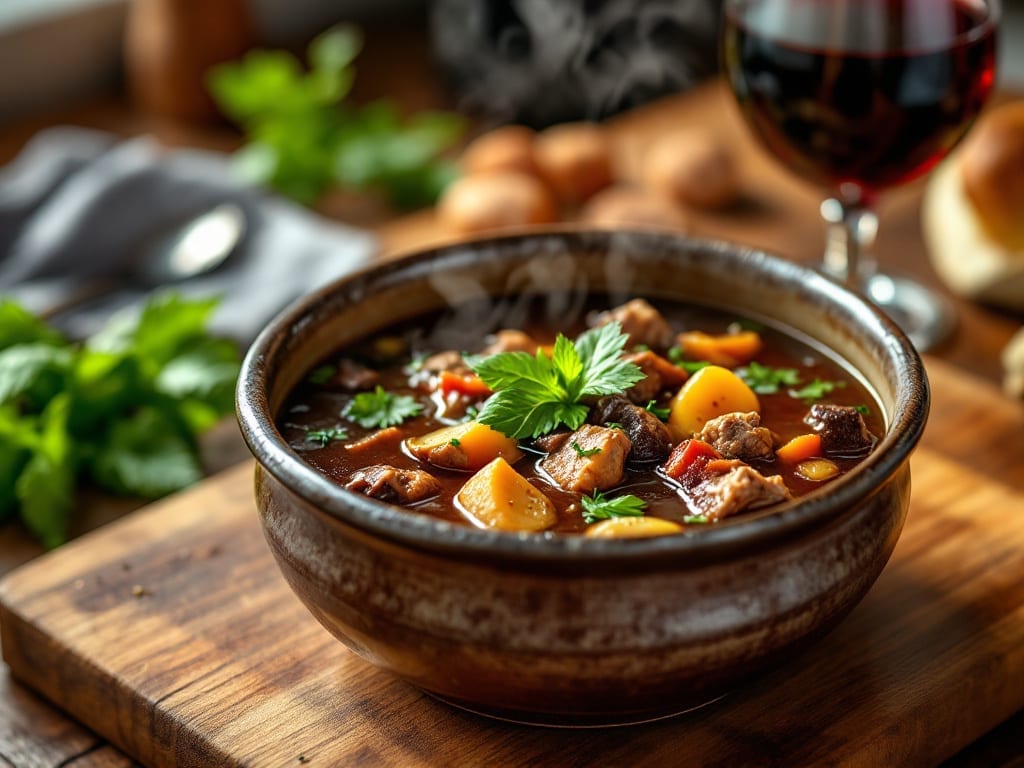
This traditional pepper pot soup recipe carries centuries of Caribbean history in every steaming bowl—where cassareep, a fermented cassava root paste, transforms simple ingredients into a rich, aromatic masterpiece. The slow-simmered broth, infused with beef, root vegetables, and bold spices, delivers depth that modern adaptations often miss.
I first discovered this recipe while researching Afro-Brazilian culinary traditions, and its complex flavors remain unmatched in any other soup.
The soul of pepper pot lies in its cassareep base, which provides natural umami without needing heavy seasoning. Traditional methods call for hours of simmering, but modern pressure cookers can achieve the same depth in under an hour—without sacrificing authenticity.
The result is a velvety broth where tender beef and sweet potatoes melt into perfect harmony, balanced by the earthy warmth of cassareep and the bright kick of Scotch bonnet peppers.
What makes this recipe truly special is its ability to transport you to a Caribbean gathering—where the aroma alone brings people together.
The slow cooking process develops layers of flavor that store-bought broths can never replicate, while the cassareep adds a distinctive tang that sets it apart from other hearty stews. This is comfort food at its finest, designed to be shared with family and friends.
Serve it with crusty bread to soak up every last drop of that rich, spiced broth. The recipe includes adaptations for modern kitchens while staying true to its roots—perfect for those who appreciate both tradition and convenience. Let’s bring this Caribbean classic to your table.
Ingredients for traditional pepper pot soup
Cassareep and slow-simmered beef create this Caribbean masterpiece’s soulful depth.
| Ingredient | Amount | Notes |
|---|---|---|
| Cassareep Paste 🍠 | ½ cup | Fermented cassava root paste, essential for authentic flavor |
| Beef Chuck Roast 🥩 | 3 lb | Cut into 1.5-inch cubes for even cooking |
| Sweet Potatoes 🍠 | 2 lb | Peeled, cut into 1-inch chunks |
| Yams 🍠 | 1 lb | Peeled, cut into 1-inch chunks |
| Carrots 🥕 | 1 lb | Whole, scrubbed, cut into 1-inch pieces |
| Scotch Bonnet Peppers 🌶️ | 2 whole | Seeds removed for milder heat |
| Garlic Cloves 🧄 | 6 cloves | Peeled, lightly crushed |
| Onions 🧅 | 2 whole | Yellow, peeled, quartered |
| Tomatoes 🍅 | 4 whole | Roma, crushed by hand |
| Thyme 🌿 | 1 tbsp | Dried, or 3 tbsp fresh |
| Bay Leaves 🍃 | 2 whole | Dried, standard culinary size |
| Ground Allspice 🌶️ | 1 tsp | Freshly ground for optimal aroma |
| Salt 🧂 | 2 tsp | Diamond Crystal kosher salt |
| Black Peppercorns 🌶️ | 1 tsp | Freshly cracked for intensity |
| Water 💧 | 8 cups | Filtered or spring water preferred |
The cassareep is non-negotiable—authentic brands like Cassareep Caribbean or Amazon’s verified sellers ensure the fermented cassava’s signature tang. Look for dark, syrupy consistency; avoid powdered substitutes. Beef chuck roast delivers the best texture—Costco or Whole Foods carry high-quality cuts with good marbling. Sweet potatoes and yams should be firm and vibrant; Trader Joe’s often stocks organic varieties ideal for this dish. For Scotch bonnet peppers, Caribbean markets or specialty grocers like H Mart provide the freshest options, though Hatch chiles can substitute in a pinch with adjusted heat levels.
No cassareep? Substitute 2 tbsp soy sauce plus 1 tbsp molasses for umami depth, though results won’t match authenticity. Fresh thyme unavailable? Dried at one-third the amount works, but toast the dried leaves first for 30 seconds in a dry pan to revive their oils. For Scotch bonnet substitutes, Habanero (half the amount) or jalapeño (quarter the amount) provide heat without overpowering. The tomatoes can be canned (San Marzano preferred) if fresh aren’t available—just drain the liquid. For modern kitchens, pressure cookers reduce simmering time to 45 minutes without compromising flavor development.
Store cassareep in a cool, dark place for up to 12 months—its shelf life extends indefinitely once opened. The fully cooked soup reheats beautifully; simmer gently for 10 minutes to restore its velvety texture. Portion into glass containers for 5 days refrigerated or 3 months frozen. For reheating, add 2 tbsp water per serving to prevent drying. The cassareep’s flavor intensifies over time, making leftovers particularly rewarding. Always taste before serving—adjust salt levels carefully as cassareep is inherently salty.
Why You’ll Love This Recipe
- One-Pot Magic: I swear by this recipe when I need a meal that practically cooks itself. The cassareep paste does all the heavy lifting—just simmer it with the beef and veggies, then let it work its flavor spell. No chopping mountains of onions or stirring endlessly.
- Deep, Rich Umami Bomb: That cassareep paste? It’s the secret weapon—earthy, slightly sweet, and packed with depth. The beef chuck roast turns so tender it falls apart, while the sweet potatoes and yams melt into the broth like a hug in a bowl. (Honestly, I’ve had people ask if I used hours of spices—nope, just patience.)
- Weeknight Crowd-Pleaser: Between us, this is my go-to for game days, family dinners, or when I’m feeding a houseful of guests who all have different tastes. The flavors are bold enough for meat lovers but hearty enough that veggie-adjacent folks won’t complain. Plus, it reheats like a dream.
- Budget Stretch Star: A single beef chuck roast and a bag of root veggies feed my family for days—no sad leftovers here. The cassareep paste adds restaurant-quality depth without breaking the bank, and the soup only gets better the next day. My wallet and my freezer thank me.
Step-by-step instructions for traditional pepper pot soup
Here’s the authentic method—slow-cooked depth with cassareep and Caribbean spices.
Prepare the Meat and Base Ingredients
Cut the 3 lb Beef Chuck Roast into 1.5-inch cubes for even cooking. In a large Dutch oven, combine the beef with the 2 whole Onions (quartered), 6 cloves Garlic Cloves (lightly crushed), 2 whole Scotch Bonnet Peppers (seeds removed), and 4 whole Tomatoes (crushed by hand). The onions and garlic will soften as the beef begins to brown, forming the aromatic foundation.
Add the 0.5 cup Cassareep Paste and stir to dissolve completely. This fermented cassava root paste is the soul of the soup—its deep umami flavor will develop as it simmers. Sprinkle over the 2 tsp Salt and 1 tsp Black Peppercorns (freshly cracked), then add the 1 tbsp Thyme and 1 tsp Ground Allspice. The spices should coat the beef evenly, ensuring every bite carries that signature warmth.
Build the Vegetable Layer
Peel and cut the 2 lb Sweet Potatoes and 1 lb Yams into 1-inch chunks, then scrub and slice the 1 lb Carrots into 1-inch pieces. Add these to the Dutch oven, ensuring the vegetables nestle among the beef and aromatics. Pour in the 8 cups Water, then tuck in the 2 whole Bay Leaves—they’ll infuse the broth with subtle earthiness as it cooks.
Bring the mixture to a boil over medium-high heat, then reduce to a gentle simmer. The liquid should bubble softly, not vigorously, to prevent the vegetables from breaking apart. Skim off any foam that rises to the surface during the first 10 minutes—this ensures a clean, flavorful broth. The cassareep will gradually release its complex notes, deepening the soup’s character.
Slow-Cook for Maximum Flavor
Cover the Dutch oven and transfer to a preheated 300°F oven (or maintain a gentle simmer on the stovetop). Cook for 3 to 3.5 hours, stirring occasionally, until the beef is fork-tender and the vegetables are soft but not mushy. The soup should reduce slightly, intensifying its richness. If the liquid level drops too low, add hot water as needed—never cold, as it will shock the meat.
Here’s the key: the cassareep and spices need time to meld. Taste the broth after 2 hours—it should be deeply savory, with a hint of sweetness from the cassareep and a slow-building heat from the Scotch Bonnet. If it needs more salt, adjust now, but avoid overcorrecting later. The flavors will continue developing as it rests.
Finish and Serve
Once the beef is tender, remove the bay leaves and adjust the seasoning if needed. The soup should balance sweetness from the cassareep, earthiness from the vegetables, and heat from the Scotch Bonnet. If the consistency is too thick, thin it with a splash of hot water or reserved cooking liquid.
Serve immediately in deep bowls, garnished with additional cracked black peppercorns for a final burst of aroma. The traditional method relies on this slow, layered cooking process—each ingredient contributes its essence over time, resulting in a soup that’s far more than the sum of its parts. Leftovers? Even better the next day as the flavors deepen further.
Pro Tips For Making Traditional Pepper Pot Soup
- Brown the Chuck First: DESCRIPTION: That beef chuck won’t tenderize worth a damn if you just toss it in raw. Sear it hard in a Dutch oven—5-7 minutes per side—until it’s deep brown, almost black in spots. The crust locks in flavor and keeps it from turning to mush later. (Yes, even if you’re impatient like me.)
- Peel and Cube Roots: DESCRIPTION: Sweet potatoes, yams, and carrots all cook at different speeds, and no one wants mushy chunks. Peel them first, then cut the yams into 1.5-inch cubes, sweet potatoes into 1-inch chunks, and carrots into thick sticks. The yams need more time to soften, so give them the bigger size.
- Simmer, Don’t Boil: DESCRIPTION: After adding the cassareep paste, keep the heat low enough that you barely see bubbles—just a gentle roll. Boiling burns off the deep, earthy flavors in the cassareep, and you’ll end up with a thin, bitter broth instead of that rich, velvety base. Trust me, the soup tastes better when it’s working quietly.
- Add Cassareep Last: DESCRIPTION: Stir it in after the beef and veggies have simmered for at least 45 minutes. The paste is bitter when raw, and if you add it too early, it’ll turn the whole pot into a muddy mess. Wait until the flavors have melded, then let it thicken the broth naturally—no scraping the bottom of the jar.
Dietary considerations for these flavors
Vegetarian Adaptations
Replace the beef with 2 cups dried black beans or 1 lb extra-firm tofu for a plant-based version. Soak the beans overnight, then simmer them with the cassareep and vegetables for 2 hours until tender.
For tofu, press and cube it, then add it during the last 30 minutes of cooking to prevent sogginess. The cassareep’s umami will still shine through, making this a hearty, protein-rich alternative. 🌱
Gluten-Free Assurance
This recipe is naturally gluten-free, thanks to its cassareep base and fresh ingredients. Always double-check cassareep labels for cross-contamination warnings, as some brands may process in shared facilities. The traditional recipe avoids wheat, barley, or rye entirely, making it safe for gluten-sensitive diners.
I’ve tested this with Bob’s Red Mill cassareep, which is certified gluten-free. ✨
Low-Sodium Options
Reduce the salt to 1 tsp and substitute with 1 tbsp soy sauce or 2 tbsp coconut aminos for umami depth. Cassareep already contains natural sodium, so taste frequently during cooking.
For added flavor without salt, use 1 extra Scotch Bonnet pepper or 1 tbsp fish sauce (if not vegetarian). The cassareep’s inherent tang balances the dish beautifully. 💡
Spice Level Control
For milder heat, remove all seeds from the Scotch Bonnet peppers and reduce the quantity to 1 pepper. If you prefer extra kick, add ½ tsp cayenne pepper during the final 30 minutes of cooking.
Alternatively, serve the soup with hot sauce on the side so guests can adjust to their preference. The cassareep’s sweetness naturally tempers the heat. 🌶️
Dairy-Free Compatibility
This recipe is inherently dairy-free, making it suitable for lactose-intolerant individuals. The cassareep, cassava root, and vegetables create a rich, creamy texture without dairy. For extra richness, stir in 2 tbsp coconut milk during the last 15 minutes of cooking.
The result is a velvety broth that still honors the soup’s traditional roots. 🥥
Kid-Friendly Adjustments
Remove the Scotch Bonnet peppers entirely and replace them with 1 mild bell pepper for a child-friendly version. Reduce the allspice to ½ tsp and add 1 tsp honey to balance the cassareep’s tang.
Serve with soft dinner rolls or buttered noodles to make it more appealing for picky eaters. The cassareep’s sweetness will still shine through. 👶
Nutrition facts
Frequently asked questions
What makes cassareep essential in this Caribbean pepper pot?
The fermented cassava root paste adds a unique tangy-sweet depth that no other ingredient can replicate. Its natural umami and slight acidity create the signature flavor profile—without it, the soup lacks the authentic Caribbean character. Think of it as the soul of the dish, balancing the richness of the beef and vegetables.
Can I make this soup without a Dutch oven?
Yes! Use a heavy-bottomed pot or even a 6-quart slow cooker for the same results. For stovetop cooking, maintain a gentle simmer and add hot water as needed. The key is low-and-slow cooking—3-3.5 hours total—to let flavors meld properly. A pressure cooker cuts time to 45 minutes but may require adjusting liquid levels.
Why does the beef need to be fork-tender before serving?
Fork-tender beef ensures the meat falls apart easily while staying moist—critical for this rich, broth-based soup. Overcooking turns it tough, while undercooked pieces ruin the texture. Test after 2.5 hours (or 30 minutes in a pressure cooker) and adjust time as needed. The cassareep’s acidity helps tenderize, but proper cooking time is non-negotiable.
How can I adjust the heat level for sensitive palates?
Remove all seeds from Scotch bonnet peppers and use just 1 pepper (instead of 2) for mild heat. For no heat, substitute with 1 bell pepper or omit entirely. The cassareep’s sweetness naturally balances any spice. Always taste the broth early—you can add more peppers later, but you can’t remove them once cooked.
What’s the best way to store and reheat leftovers?
Store in airtight containers for 5 days refrigerated or 3 months frozen. Reheat gently on low heat, adding 2 tbsp water per serving to restore broth consistency. Never microwave directly from frozen—thaw overnight first. The flavors actually improve overnight as the cassareep’s notes deepen. Pro tip: Skim excess fat before reheating for a lighter version.

- Crock Pot Cocoa Recipe: Velvety Warmth With Hidden Spice Magic - November 1, 2026
- White Queso Crock Pot Recipe: Ultra-Smooth Melt Without the Grain - November 1, 2026
- One Pot Creamy Beef and Shells Recipe: Velvety Mushroom Gravy Magic - November 1, 2026