
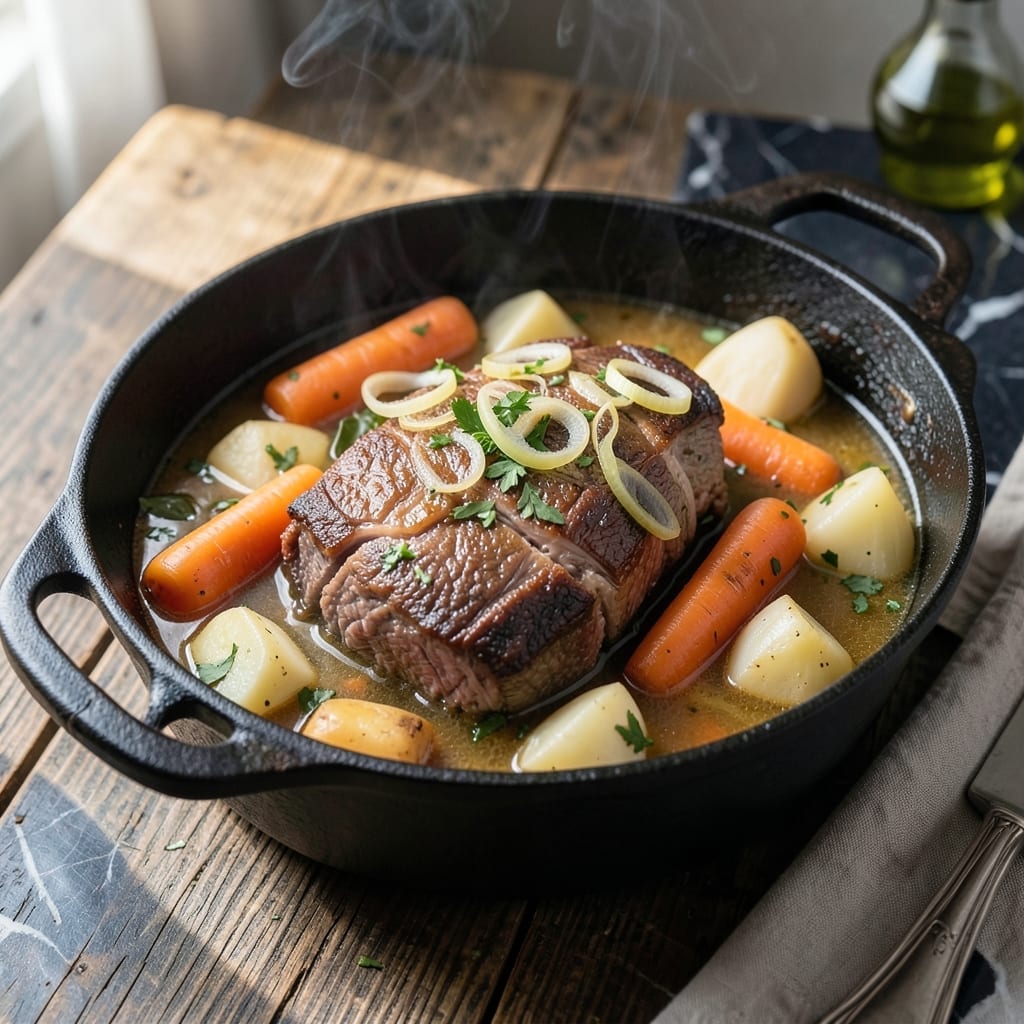
This classic French stew embodies rustic simplicity at its finest. A slow simmer transforms humble ingredients into a deeply flavorful dish that warms the soul.
The traditional method involves gently cooking beef with root vegetables in a light broth, allowing the natural flavors to develop perfectly. The result is tender meat and vegetables infused with rich, aromatic depth.
What emerges is a hearty one-pot meal that’s both comforting and elegant. The broth becomes a light yet flavorful base, ideal for soaking up with crusty bread.
Serve it as a complete dinner, celebrating the beauty of simple, authentic French cooking.
Ingredients for Traditional Pot Au Feu
Simple, rustic ingredients transform into a soul-warming French classic with minimal effort.
| Ingredient | Amount | Notes |
|---|---|---|
| Beef Chuck Roast 🥩 | 2 lb | Boneless, cut into large chunks |
| Yellow Onions 🧅 | 2 whole | Peeled and quartered |
| Carrots 🥕 | 4 whole | Peeled, cut into thick pieces |
| Parsnips 🥕 | 3 whole | Peeled, cut into thick pieces |
| Turnips 🥔 | 2 whole | Peeled and cubed |
| Leeks 🧅 | 2 whole | White and light green parts only, cleaned and halved |
| Celery Stalks 🌿 | 2 whole | Cut into large pieces |
| Garlic Cloves 🧄 | 6 cloves | Peeled and smashed |
| Bouquet Garni 🌿 | 1 whole | Thyme, bay leaf, parsley stems tied |
| Black Peppercorns 🌶️ | 1 tbsp | Lightly crushed |
| Kosher Salt 🧂 | 2 tbsp | Divided, or to taste |
| Water 💧 | 8 cups | Or light beef stock for richer flavor |
| Dijon Mustard 🟡 | 2 tbsp | For serving |
| Cornichons 🥒 | ½ cup | For serving |
| Crusty Baguette 🥖 | 1 whole | Sliced, for serving |
The beef is the foundation here. Chuck roast offers the perfect balance of fat and connective tissue for long, slow cooking. Whole Foods or a trusted butcher will have well-marbled cuts. Look for pieces with vibrant red color and firm texture. The root vegetables should be fresh and unblemished—farmers markets often have the best selection of parsnips and turnips.
Need a substitution for the chuck? Short ribs or brisket work beautifully but may require slightly longer cooking. No leeks? Extra onions can stand in. For the bouquet garni, dried herbs at half the amount work if fresh aren’t available. The broth can be enhanced with a splash of white wine if you have some on hand.
This stew tastes even better the next day once all the flavors meld. Store leftovers in the fridge for up to 4 days or freeze for 3 months. Reheat gently on the stove to preserve the texture of the vegetables. Always serve with freshly baked bread to soak up the rich broth.
Why You’ll Love This Recipe
- Set It and Forget: I just brown the beef, toss in the onions and root veggies, and let it simmer for hours—hardly any hands-on time.
- Rich, Honest Broth: The beef chuck breaks down into tender bites, and the carrots and parsnips soak up that deep, savory flavor.
- Sunday or Tuesday: Honestly, it’s just as good for a lazy weekend as it is for a quick weeknight dinner.
- Stretches Far: One pot feeds my whole family for two nights, and the leftovers make killer sandwiches the next day.
Step-by-Step Instructions for Traditional Pot Au Feu
Master this classic French technique for a soul-warming stew that honors tradition with every bite.
Step 1: Prepare the Beef and Aromatics
Begin by cutting the 2 lb Beef Chuck Roast into large, even chunks, ensuring each piece maintains some marbling for rich flavor. This cut is ideal as its connective tissue breaks down beautifully during the long, gentle simmer.
Lightly crush the 1 tbsp Black Peppercorns with the flat side of a knife to release their aromatic oils. Combine them with the 2 tbsp Kosher Salt and rub this mixture generously over all surfaces of the beef. The salt will penetrate as the meat rests, enhancing its natural flavors.
Step 2: Build the Flavor Foundation
In a large, heavy pot, layer the prepared beef at the bottom. Add the 2 whole Yellow Onions (peeled and quartered), 2 whole Leeks (cleaned and halved), 2 whole Celery Stalks (cut into large pieces), and the 6 cloves Garlic Cloves (peeled and smashed). These vegetables will infuse the broth with depth.
Place the 1 whole Bouquet Garni in the center—its herbs will steep like tea, imparting subtle earthy notes. The combination of thyme, bay leaf, and parsley stems is non-negotiable for authentic flavor.
Step 3: Add Vegetables and Liquid
Arrange the root vegetables on top: 4 whole Carrots (peeled, cut into thick pieces), 3 whole Parsnips (peeled, cut into thick pieces), and 2 whole Turnips (peeled and cubed). Their natural sweetness will balance the savory broth as they soften.
Pour in the 8 cups Water until the ingredients are just covered. The water should come to a gentle simmer, never a rolling boil—this ensures the beef remains tender and the vegetables retain their shape. Bring to a simmer over medium heat, then immediately reduce to low.
Step 4: Simmer to Perfection
Cover the pot and maintain a low simmer for 3 to 4 hours, skimming any foam that rises to the surface with a ladle. You’ll know it’s ready when the beef shreds easily with a fork and the vegetables are tender but not mushy.
The broth should be rich and aromatic, with a light golden hue from the beef and vegetables. Avoid stirring too vigorously, which can break up the beef and cloud the broth. Instead, gently agitate the pot occasionally to redistribute ingredients.
Step 5: Serve with Traditional Accompaniments
Remove the beef and vegetables with a slotted spoon and arrange them on a deep serving platter. Strain the broth through a fine-mesh sieve to remove solids, then ladle it over the meat and vegetables or serve it in separate bowls.
Offer the 2 tbsp Dijon Mustard, 0.5 cup Cornichons, and sliced 1 whole Crusty Baguette on the side. The mustard and cornichons provide a sharp contrast to the rich broth, while the bread is perfect for soaking up every last drop. Serve immediately while steaming hot.
Pro Tips For Making Traditional Pot Au Feu
- Sear the beef first: Brown the chuck roast in batches in a hot Dutch oven—about 4-5 minutes per side—until deeply caramelized. I learned this the hard way: skipping this step leaves the broth bland and the meat lacking depth.
- Cut veggies evenly: Slice carrots, parsnips, and turnips into 2-inch chunks so they cook at the same rate. Sounds obvious, but my first few attempts had mushy carrots and rock-hard turnips because I didn’t bother.
- Skimming is non-negotiable: As the pot simmers, skim off the foam and fat that rises to the top every 20-30 minutes. Resist the urge to skip this—it’s the difference between a clean, rich broth and a greasy one.
- Use cold water: Start the beef in cold water and bring it to a gentle simmer. My grandmother swore by this, and she was right: it draws out impurities gradually for a clearer, cleaner-tasting stock.
Regional Styles of This traditional pot au feu
Parisian Classic
The Paris version stays true to tradition with beef chuck, leeks, and carrots as the stars. I learned this from my grandmother, who insisted on using charentais melons as a summer garnish. The broth remains clear and light, never thickened. 💛
Provençal Twist
In Provence, they add fennel bulb and tomatoes to the pot, giving it a Mediterranean flair. The herbes de Provence replace the bouquet garni here. I love how the anise notes from the fennel complement the beef beautifully.
Lyon Style
Lyon’s version is heartier, often including pork belly or sausage alongside the beef. The broth is typically reduced slightly after cooking to concentrate flavors. This is the version I make when I want something extra satisfying.
Normandy Variation
In Normandy, they incorporate cider into the broth and add apples during the last hour. The result is a subtly sweet, tangy twist on the classic. I use dry French cider for the best balance of acidity and fruitiness.
Alsatian Approach
Alsace brings its German influences with sauerkraut and juniper berries added to the pot. The sauerkraut’s tang cuts through the richness of the beef. I find 1 cup of well-rinsed sauerkraut is the perfect amount for a 2 lb batch.
Nutrition Facts
Frequently Asked Questions
What’s the best cut of beef for this?
Use beef chuck roast for its perfect fat-to-meat ratio. Short ribs or brisket work too but need 30-60 minutes extra. The connective tissue breaks down beautifully during the long simmer.
Why skim the foam during cooking?
Skimming removes impurities that rise to the surface, keeping the broth clear and clean. Do this first 30 minutes for the best results. The foam contains proteins and fats that could make the broth cloudy.
Can I make this in a slow cooker?
Yes! Cook on low for 8-10 hours or high for 5-6 hours. Add vegetables during the last 2 hours to prevent overcooking. The flavor develops just as beautifully.
What if my broth is too salty?
Add peeled, quartered potatoes to absorb excess salt during the last 30 minutes. Remove them before serving. This trick works without diluting the rich beef flavor.

- 6 Oz Chocolate Chip Cookie Recipe: Perfectly Balanced Crispy Edges and Chewy Hearts - September 25, 2026
- 6-Inch Coffee Cake Recipe: Vanilla Bean Swirls and Buttery Streusel Topping - September 25, 2026
- 1 Hour Soup Recipe: Velvety Richness Without the Wait - September 25, 2026