
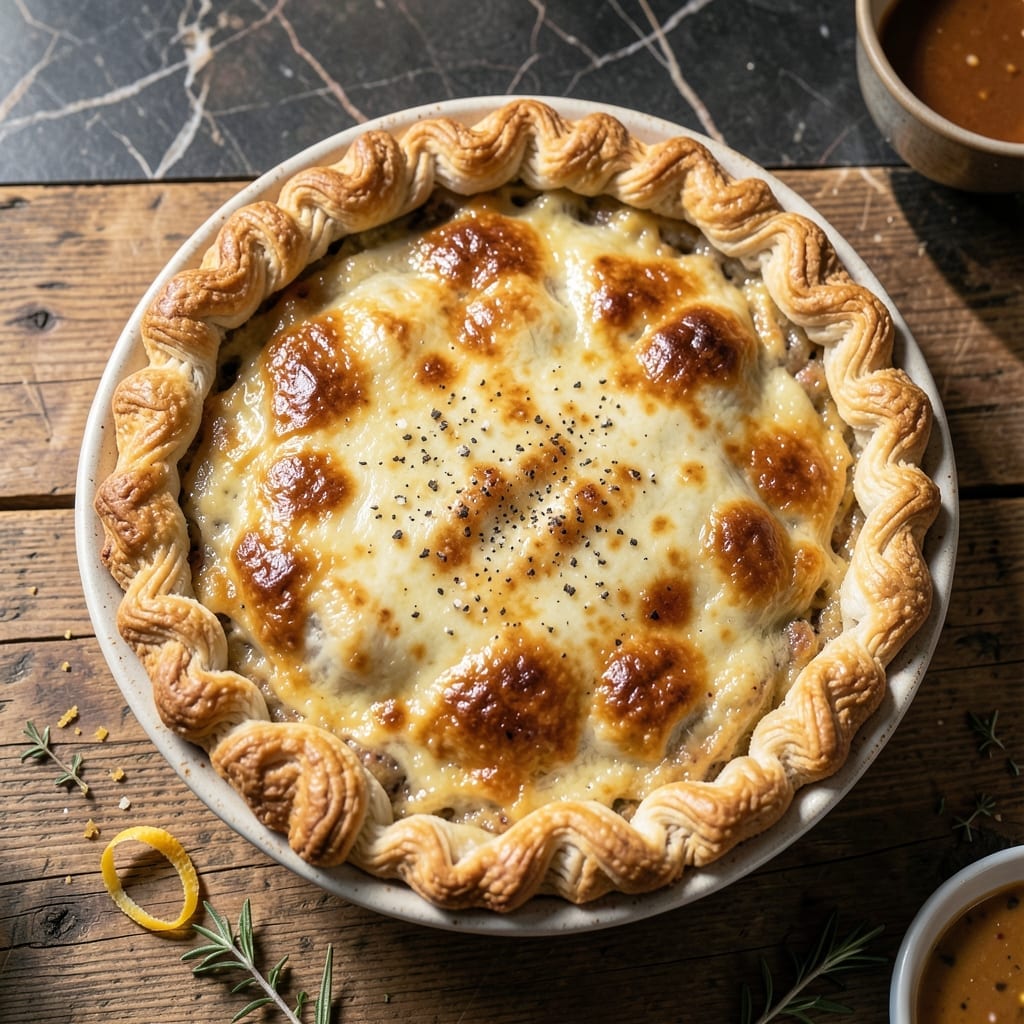
A flaky turkey pot pie crust makes all the difference between a good pie and an unforgettable one. This recipe delivers buttery layers that stay crisp even under a hearty filling.
The secret is cold ingredients and minimal handling. Keep your butter chilled and work quickly to prevent the dough from warming, which ensures those coveted flaky layers.
With a golden finish and tender bite, this crust complements the savory turkey filling perfectly. The buttery richness balances the dish without overpowering it.
Follow these precise steps for a crust that bakes up light, airy, and perfectly layered every time. Your pot pie will be the star of any meal.
Ingredients for Turkey Pot Pie Crust
Cold butter and minimal handling create that perfect flaky, golden crust every time.
| Ingredient | Amount | Notes |
|---|---|---|
| All-Purpose Flour 🌾 | 2 ½ cups | Plus extra for dusting |
| Unsalted Butter 🧈 | 1 cup | Cold, cut into cubes |
| Ice Water 💧 | ½ cup | Plus extra as needed |
| Salt 🧂 | 1 tsp | Fine sea salt preferred |
| Granulated Sugar 🍚 | 1 tsp | Optional, for color |
| Large Egg 🥚 | 1 whole | For egg wash |
| Heavy Cream 🥛 | 1 tbsp | Optional, for richer wash |
| Apple Cider Vinegar 🍏 | 1 tbsp | For tenderness |
The butter is non-negotiable here—cold, unsalted, and high-quality. Plugra or Kerrygold give the best layers, but any good European-style works. Keep it chilled until the last second, and cut it into even cubes so it distributes properly. The flour should be all-purpose (King Arthur’s is reliable) for the right protein content. If your kitchen is warm, chill the bowl and pastry cutter too.
No unsalted butter? Use salted and reduce the added salt by half. Short on all-purpose flour? Pastry flour plus a tablespoon of bread flour gets you close. The vinegar helps inhibit gluten formation—white vinegar works too. For a richer wash, swap the egg for heavy cream or a mix of both. The sugar is optional but gives that classic golden sheen.
Dough keeps in the fridge for 2 days or frozen for 1 month (wrap tightly). Baked crust stays crisp for 1 day at room temp. For make-ahead, roll out the dough and freeze between parchment—thaw 15 minutes before using.
Why You’ll Love This Recipe
- Five Ingredient Magic: The crust comes together with just flour, butter, ice water, salt, and a touch of sugar—no fancy pantry hunting required.
- Buttery Perfection: Cold butter layered into the flour creates that flaky, melt-in-your-mouth texture I crave with every bite.
- Freezer Friendly: I double the batch and freeze half for next week’s pot pie—saves me time and stress when life gets busy.
- Budget Stretcher: Honestly, this crust costs pennies compared to store-bought, and it tastes a hundred times better.
Step-by-Step Instructions for Turkey Pot Pie Crust
This method ensures a flaky, golden crust that complements any savory filling perfectly.
Step 1: Combine Dry Ingredients and Cut in Butter
In a large bowl, whisk together the 2.5 cups all-purpose flour, 1 tsp salt, and 1 tsp granulated sugar until evenly distributed. The sugar adds a subtle golden hue to the finished crust.
Add the 1 cup unsalted butter, cold and cut into cubes. Using a pastry cutter or your fingertips, work the butter into the flour until the mixture resembles coarse crumbs with pea-sized butter pieces visible. This creates the flaky layers as it bakes.
Step 2: Incorporate Liquid Ingredients to Form Dough
Make a well in the center of the flour-butter mixture. Pour in the 0.5 cup ice water and 1 tbsp apple cider vinegar. The vinegar tenderizes the gluten, ensuring a more delicate crust.
Using a fork, gently mix the liquid into the dry ingredients until the dough just begins to come together. It should look shaggy with some dry bits remaining. Avoid overmixing, as this develops tough gluten.
Step 3: Chill the Dough for Optimal Texture
Turn the dough out onto a lightly floured surface and gently knead it just until it forms a cohesive ball. Divide the dough into two equal portions, flatten into discs, and wrap each tightly in plastic wrap.
Refrigerate for at least 1 hour (or up to 2 days). Chilling relaxes the gluten, prevents shrinking during baking, and keeps the butter cold for maximum flakiness. This step is non-negotiable for a perfect crust.
Step 4: Roll Out and Prepare for Filling
On a well-floured surface, roll out one dough disc to a thickness of about ⅛ inch. For a standard 9-inch pie dish, aim for a 12-inch circle. Transfer the rolled dough to the pie dish, pressing it gently into the bottom and sides without stretching.
Trim the edges, leaving a ½-inch overhang. For a double-crust pie, roll out the second disc similarly. Brush the bottom crust lightly with a mixture of the 1 whole large egg and 1 tbsp heavy cream to prevent sogginess.
Step 5: Assemble and Bake to Golden Perfection
Add your filling to the crust-lined dish. Top with the second rolled dough, either as a whole piece or cut into strips for a lattice design. Crimp the edges to seal, then brush the entire surface with the remaining egg wash for a glossy, golden finish.
Bake at 375°F for 40-45 minutes or until the crust is deep golden brown and the filling is bubbling. If the edges brown too quickly, tent them with foil. Let the pie rest for 10 minutes before slicing to allow the filling to set.
Pro Tips For Making Turkey Pot Pie Crust
- Chill the Butter: Cut your unsalted butter into small cubes and freeze for 15 minutes before mixing—this keeps it from melting too fast when you work it into the flour, which is what gives you that flaky crust.
- Use Ice Water: Measure out your ice water and let it sit for 2 minutes so it’s cold but not slushy, then add it slowly to the flour mixture; this prevents the dough from getting tough.
- Don’t Overwork It: After the water goes in, mix just until the dough comes together, even if it looks a little shaggy—I learned this the hard way after ending up with a dense, chewy crust more than once.
- Rest the Dough: Wrap the dough in plastic and let it rest in the fridge for at least 30 minutes, or up to overnight; this gives the gluten a chance to relax and makes rolling it out way easier.
Regional Styles of This Recipe
New England Tradition
In New England, pot pie crust often includes a touch of cider vinegar for extra flakiness, just like in this recipe. The regional preference leans toward a thicker crust to hold up against hearty turkey and vegetable fillings. I’ve found King Arthur flour works perfectly for this style.
Southern Comfort Style
Southern cooks often add a bit of shortening alongside butter for a tender, melt-in-your-mouth texture. The crust tends to be slightly sweeter, so increasing the sugar to 1.5 tsp gives that classic Southern touch. This variation pairs beautifully with a creamy turkey filling.
Midwest Practicality
The Midwest favors a simpler approach—often using all-butter crusts with minimal additives. The focus is on efficiency, so rolling the dough slightly thinner (1/16 inch) is common. This style bakes up crisp and golden, perfect for a traditional turkey pot pie.
Pacific Northwest Twist
Out West, there’s a trend toward whole grain flours. Replace 1 cup all-purpose flour with whole wheat pastry flour for a nuttier flavor. The crust has a heartier texture but still stays flaky. I love how it complements the earthy tones of a turkey and mushroom filling. 🌾
French Influence
For a French-inspired version, add 1 tbsp finely chopped fresh herbs like thyme or rosemary to the dough. This infuses the crust with subtle aromatic notes that elevate the entire dish. The technique comes from classic pâte brisée, which is all about buttery richness.
Quick Southern Tip
In a pinch, Southern cooks sometimes use self-rising flour and skip the salt. The result is a slightly lighter crust that rises a bit more. Just be sure to adjust the liquid, as self-rising flour absorbs moisture differently. 💡
Nutrition Facts
Frequently Asked Questions
Why use cold butter for the crust?
Cold butter creates steam during baking, which makes the layers flaky. If it warms up, the fat melts into the flour, resulting in a dense texture instead of a light, airy one.
Can I make the dough ahead of time?
Yes! The dough keeps in the fridge for 2 days or can be frozen for 1 month. Wrap it tightly in plastic to prevent drying out. Thaw overnight in the fridge before rolling.
How do I prevent a soggy bottom crust?
Brush the bottom crust with a thin layer of egg wash before adding the filling. This creates a barrier that keeps moisture from making the crust limp.
Can I use shortening instead of butter?
Yes, but the flavor will be less rich. For best results, use half butter and half shortening to maintain flakiness while adding some buttery taste.

- 4C Bread Crumbs Meatballs Recipe: Crispy Crust and Juicy Centers - September 25, 2026
- 6 Oz Chocolate Chip Cookie Recipe: Perfectly Balanced Crispy Edges and Chewy Hearts - September 25, 2026
- 6-Inch Coffee Cake Recipe: Vanilla Bean Swirls and Buttery Streusel Topping - September 25, 2026