
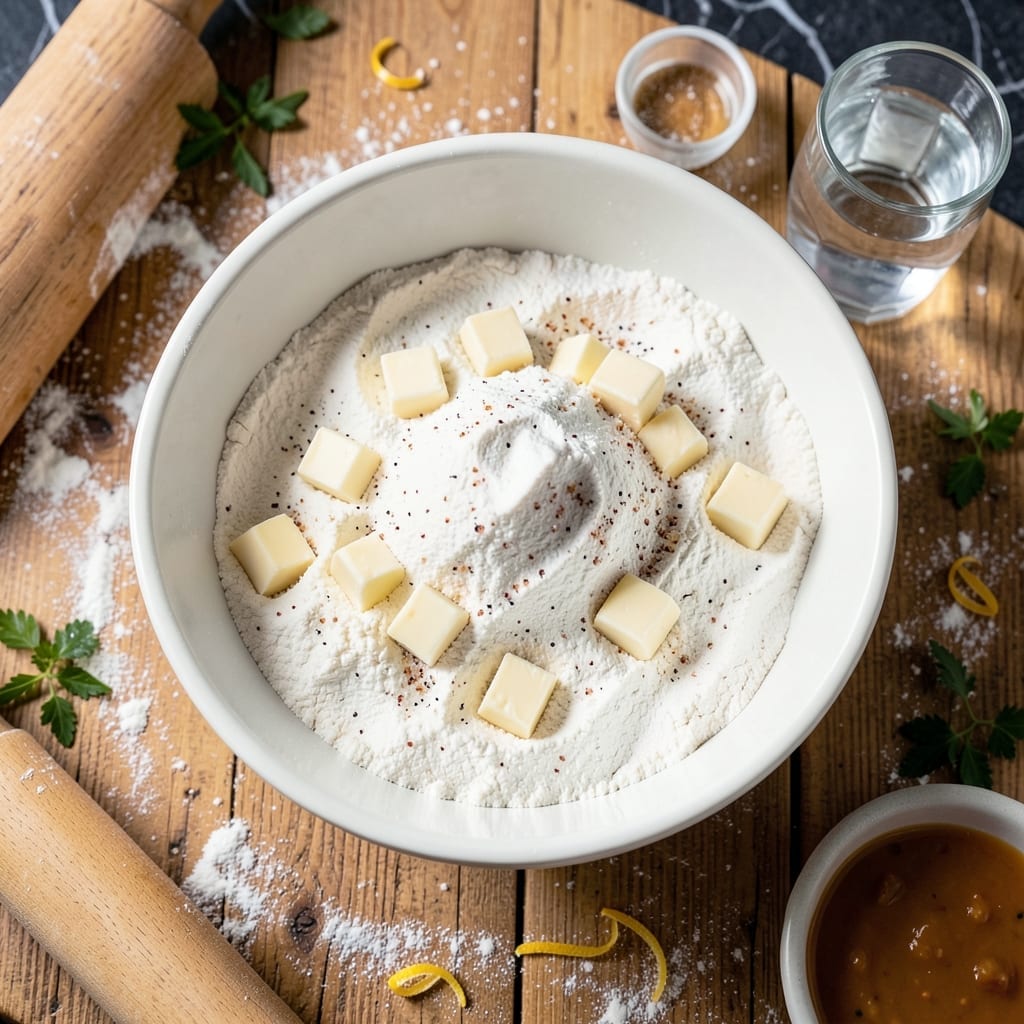
Creating the perfect pot pie starts with mastering this homemade dough that delivers flaky layers every time. The secret lies in keeping ingredients ice-cold and handling the dough minimally to prevent toughness.
This recipe uses a simple combination of flour, butter, and water, with precise folding techniques to create those coveted layers. The result is a golden crust that bakes up crisp and tender, perfectly complementing rich turkey fillings.
With just 15 minutes of prep and a short rest period, you’ll have dough ready for any savory pie. The layers separate beautifully in the oven, creating that signature flaky texture that makes pot pie so irresistible.
Use this as your base for any savory pie creation. The method is straightforward yet yields professional results.
Ingredients for Turkey Pot Pie Dough
Eight simple ingredients create professional-quality flaky dough for any savory pie creation.
| Ingredient | Amount | Notes |
|---|---|---|
| All-Purpose Flour 🌾 | 2 ½ cups | Plus extra for dusting work surface |
| Unsalted Butter 🧈 | 1 cup | ice-cold, cut into small cubes |
| Ice Water 💧 | ½ cup | Plus 1 tbsp as needed |
| Fine Sea Salt 🧂 | 1 tsp | Diamond Crystal preferred for consistency |
| Granulated Sugar 🍚 | 1 tsp | Balances salt, optional but recommended |
| White Vinegar 🧪 | 1 tsp | Strengthens gluten for flakiness |
| Large Egg 🥚 | 1 whole | For egg wash, optional for shine |
| Heavy Cream 🥛 | 1 tbsp | Mixed with egg for richness |
The butter is critical here. Use high-fat European-style like Plugrá or Kerrygold for superior flakiness—they have less water content than standard butter. Keep it ice-cold until the moment you cut it into the flour; warm butter means tough crust. For flour, King Arthur or Gold Medal all-purpose both perform reliably. The vinegar might seem odd but it’s a professional baker’s trick for tender layers.
No unsalted butter? Salted works at one-to-one, just reduce the added salt by half. Short on ice water? Vodka at the same amount creates even flakier crust (alcohol evaporates during baking). For a richer flavor, replace 1 tbsp of water with sour cream. The egg wash is optional but gives that golden bakery shine—milk works in a pinch.
The dough rests best 30-60 minutes in the fridge. Wrap it tightly in plastic—prevents drying. Unused portions freeze beautifully for 3 months. Roll from the center outward, turning the dough 90 degrees between rolls to maintain even thickness. Always work on a lightly floured surface to prevent sticking.
Why You’ll Love This Recipe
- No-Fuss Mixing: I just pulse flour, cold butter, and a pinch of sugar in my food processor—no fancy techniques, no stress.
- Buttery Heaven: The flaky layers from that butter and ice water combo? Pure comfort in every bite.
- Freezer Friendly: I double the batch and freeze half for next week’s pot pie—saves me a ton of time.
- Pantry Staples: Flour, butter, salt, sugar—things I always have on hand, so no last-minute grocery runs.
Step-by-Step Instructions for Turkey Pot Pie Dough
Master these steps for a golden, flaky crust that elevates your savory filling to perfection.
Step 1: Combine Dry Ingredients and Chill
In a large bowl, whisk together the 2.5 cups All-Purpose Flour, 1 tsp Fine Sea Salt, and 1 tsp Granulated Sugar until fully incorporated. I prefer Diamond Crystal salt for its consistent texture and clean flavor. The sugar balances the saltiness and promotes browning.
Place the bowl in the freezer for 10 minutes to chill the flour mixture. This prevents the unsalted butter from melting too quickly when incorporated, which is crucial for creating flaky layers. Cold ingredients are the foundation of a perfect pie crust.
Step 2: Cut in the Cold Butter
Add the 1 cup Unsalted Butter, which should be ice-cold and cut into small cubes, to the chilled flour mixture. Using a pastry cutter or your fingertips, work the butter into the flour until the mixture resembles coarse crumbs with some pea-sized butter pieces remaining.
This step should take 3-5 minutes. The visible butter pieces will create steam during baking, which separates the dough into distinct, flaky layers. Avoid overworking the mixture—you want those butter chunks intact. If the butter begins to soften, return the bowl to the freezer for 5 minutes before continuing.
Step 3: Add Liquid Ingredients and Form Dough
Create a well in the center of the flour-butter mixture. Add the 0.5 cup Ice Water, 1 tsp White Vinegar, and mix gently with a fork until the dough just begins to come together. The vinegar strengthens the gluten slightly, contributing to a more tender, flaky crust.
Turn the dough out onto a lightly floured surface and knead gently 4-5 times just until it forms a cohesive ball. Be careful not to overwork the dough, as this can develop too much gluten, resulting in a tough crust. If the dough feels too dry, add 1 tbsp of ice water, but no more.
Step 4: Chill and Roll Out the Dough
Divide the dough into two equal portions, flatten each into a disc, and wrap them tightly in plastic wrap. Chill in the refrigerator for at least 1 hour, or up to 2 days. This resting period allows the gluten to relax and the butter to firm up, making the dough easier to roll out.
When ready to use, roll out one disc on a lightly floured surface to fit your pie dish. For a golden finish, whisk together the 1 whole Large Egg and 1 tbsp Heavy Cream to create an egg wash, and brush it over the crust before baking.
Pro Tips For Making Turkey Pot Pie Dough
- Chill the Dough: After mixing, wrap the dough and refrigerate for at least 30 minutes—I learned this the hard way when my first few pies had tough crusts from warm butter.
- Use Ice-Cold Water: Keep your water truly icy, about 3-4 tablespoons, and add it slowly; this prevents the butter from melting prematurely, which ruins the flakiness.
- Skip Overworking: Mix just until the dough comes together, even if it looks a little shaggy—I used to over-knead and ended up with dense, chewy crusts instead of tender layers.
- Add a Pinch of Sugar: The granulated sugar isn’t just for flavor; a teaspoon helps with browning, giving that golden finish everyone expects from a pot pie crust.
Common Mistakes When Making Perfect Results
Overworking the Dough
Resist the urge to knead excessively once the dough comes together. Overworking develops too much gluten, resulting in a tough crust instead of flaky layers. I stop as soon as it holds together—usually after 4-5 gentle kneads. 💪
Warm Ingredients
Never use room-temperature butter or warm water. The butter must stay ice-cold until baking to create steam for flakiness. I chill my flour for 10 minutes before starting and keep extra ice water on hand to maintain coldness.
Skipping the Rest
Rushing the chilling step leads to shrinking and tough crust. Let the dough rest for at least 1 hour—I often rest mine overnight. This relaxes the gluten and allows the butter to redistribute for even layers.
Incorrect Butter Size
Butter pieces should be pea-sized when cutting into flour. If they’re too large, they’ll create gaps; if too small, they won’t create enough steam. I use a pastry cutter and check frequently to ensure consistent sizing.
Over-flouring Surface
Too much flour when rolling makes the crust dry and dense. Use just enough to prevent sticking—about 1-2 tbsp on your work surface. I dust lightly and shake off excess before rolling.
Uneven Rolling
Rolling the dough unevenly leads to inconsistent baking. Always roll from the center outward, turning the dough 90 degrees between rolls. This ensures even thickness for uniform flakiness. 🔥
Nutrition Facts
Frequently Asked Questions
Can I use shortening instead of butter?
Yes, but butter gives better flavor. Use 1:1 ratio of cold shortening, though the texture will be slightly less flaky. Butter’s water content creates more steam for layers.
How long can dough rest in the fridge?
Rest for at least 1 hour, or up to 2 days. Longer chilling improves texture but wrap tightly to prevent drying. For urgent use, 20 minutes in the freezer works.
Why does my crust turn out tough?
Overworking the dough develops gluten. Handle minimally and keep ingredients ice-cold. Also, avoid adding too much flour when rolling.
Can I make this ahead and freeze?
Freeze wrapped dough discs for up to 3 months. Thaw overnight in the fridge before rolling. Label with date for tracking.

- 4C Bread Crumbs Meatballs Recipe: Crispy Crust and Juicy Centers - September 25, 2026
- 6 Oz Chocolate Chip Cookie Recipe: Perfectly Balanced Crispy Edges and Chewy Hearts - September 25, 2026
- 6-Inch Coffee Cake Recipe: Vanilla Bean Swirls and Buttery Streusel Topping - September 25, 2026