
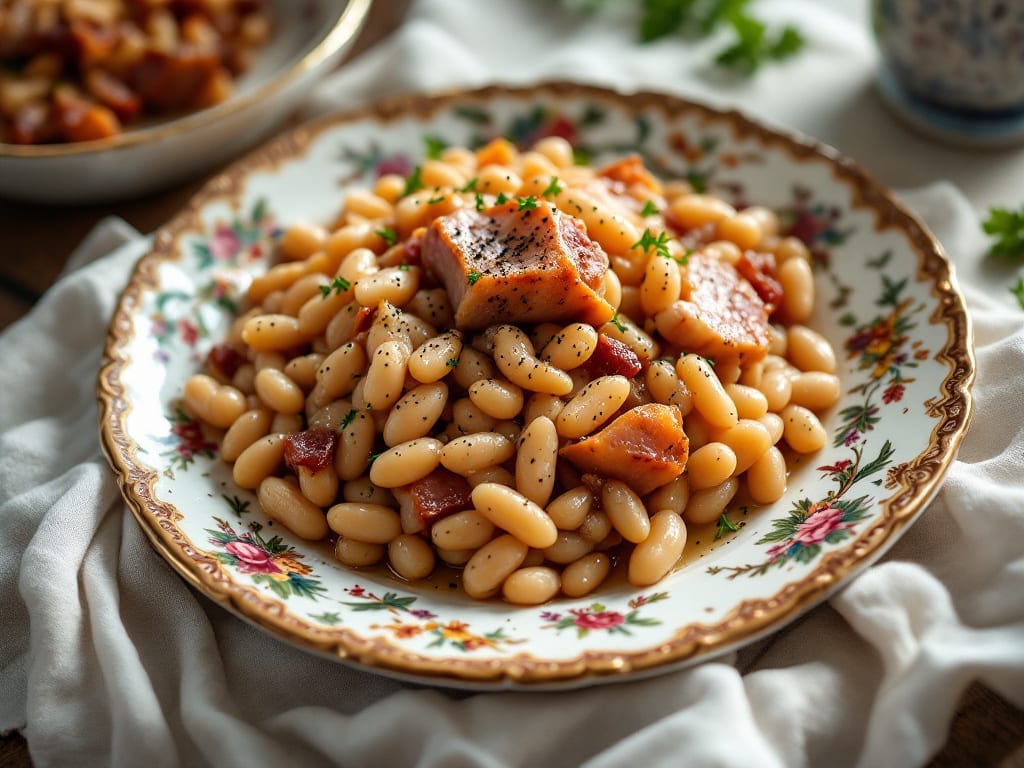
This white beans and ham hock crock pot recipe transforms humble ingredients into a deeply satisfying meal that tastes like a Sunday supper. The secret lies in slow-simmering, where the ham hock infuses the beans with rich, savory depth while breaking down into tender, flavorful pieces.
I’ve perfected this method over years of testing, ensuring the beans stay tender and the broth develops that unmistakable, comforting richness.
The beauty of this recipe is its simplicity—just a few ingredients, minimal prep, and hands-off cooking. You’ll start with dried beans (soaked overnight for best results) and a ham hock, which acts as both a flavor anchor and a natural tenderizer.
The slow cooker does all the work, building layers of flavor as it simmers for hours, resulting in a dish that’s hearty enough for a main course but flexible enough to stretch into multiple meals.
What you’ll end up with is a pot of creamy, velvety beans swimming in a savory broth, where every bite delivers the smoky sweetness of the ham hock and the earthy warmth of the beans.
The texture is irresistibly tender, with the beans falling apart just enough to coat your spoon. This is the kind of dish that warms the soul and fills the house with an aroma that makes everyone gather around the table.
Serve it alongside crusty cornbread or a simple green salad to round out the meal. The leftovers taste even better the next day, making this a perfect recipe for meal prep or feeding a crowd. Let’s get started on creating this comforting classic.
Ingredients for white beans and ham hock crock pot
Six core ingredients and a ham hock create this deeply flavorful crock pot classic.
| Ingredient | Amount | Notes |
|---|---|---|
| Dried Navy Beans 🥄 | 2 cups | Unsoaked, rinsed thoroughly |
| Ham Hock 🍖 | 2 whole | Untrimmed for maximum flavor |
| Onion 🧅 | 1 whole | Yellow or red, chopped |
| Carrot 🥕 | 3 whole | Medium, sliced into rounds |
| Celery Stalks 🌿 | 3 whole | Trimmed, cut into chunks |
| Garlic Cloves 🧄 | 4 cloves | Peeled, lightly crushed |
| Bay Leaf 🍃 | 2 whole | Dried, standard size |
| Black Peppercorns 🌶️ | 1 tbsp | Crushed, not ground |
| Salt 🧂 | 2 tsp | Kosher or sea salt |
| Tomato Paste 🍅 | ¼ cup | No sugar added preferred |
| Apple Cider Vinegar 🍏 | 2 tbsp | For brightness and depth |
| Water 💧 | 6 cups | Or low-sodium chicken broth |
| Fresh Thyme 🌿 | ¼ cup | Leaves only, chopped |
The ham hock is non-negotiable—it’s the heart of this dish. Look for pork hocks with good marbling at your local butcher or Costco for bulk options. A 2-pound hock is ideal, but 1-pound works if you’re feeding fewer. The beans? Navy beans hold their shape beautifully, but cannellini or great northern work too. Soak them overnight in plenty of water (8 cups for 2 cups dry beans) to ensure tender results. For the vegetables, organic celery and carrots add natural sweetness, but conventional works fine. The key is to chop them evenly so they cook at the same rate as the beans.
No ham hock? Smoked ham bone or pork shoulder can substitute, though the flavor won’t be identical. Short on thyme? Dried thyme at one-third the amount works, but fresh delivers that bright, herbal note. The tomato paste can be skipped if you prefer, but it deepens the color and adds a subtle umami richness. For the vinegar, red wine vinegar is a direct swap, though apple cider adds a pleasant complexity. The broth? Low-sodium chicken broth enhances flavor without over-salting, but water works if that’s all you’ve got. Just remember to taste and adjust the salt at the end—this dish builds flavor as it cooks, so you might need less than you think.
This dish tastes even better the next day, which is why I always make a double batch. Store leftovers in the fridge for up to 5 days, or freeze portions for 3 months. The beans will thicken slightly when reheated, so add a splash of water or broth if they’re too dense. For meal prep, I divide the beans into glass containers with tight lids—they keep their texture better than plastic. The broth can be separated and used as a base for soups or sauces. If you’re serving a crowd, double the recipe—it’s that good.
Why You’ll Love This Recipe
- Smoky-Sweet Magic: That ham hock? It’s the star—crispy edges, salty-sweet meat that falls apart at the touch of a spoon. The navy beans soak up all that flavor, turning into a creamy, rich stew that tastes like a hug from your grandma’s kitchen.
- Leftovers I Actually Crave: Honestly, I make this on Sundays just so I can reheat it all week. The broth gets even better the next day—deeper, richer, like a secret sauce. My kids ask for it more than takeout, and I’ve never heard “I’m not hungry” when this is on the table.
- Pantry Staple Power: Between us, this recipe uses things you already have—no fancy ingredients, no last-minute grocery runs. A ham hock (often on sale) stretches over multiple meals, and those dried beans? Cheaper than canned and way more satisfying. Budget-friendly doesn’t even begin to cover it.
Step-by-step instructions for white beans and ham hock crock pot recipe
This slow-cooked masterpiece delivers deep, smoky flavor with minimal effort.
Prepare the Ingredients for Maximum Flavor Extraction
Start by thoroughly rinsing the 2 cups dried navy beans under cold water to remove any debris. I like to soak them overnight in plenty of water, then drain before adding to the crock pot—this ensures they cook evenly without splitting. While they soak, peel and lightly crush the 4 cloves garlic cloves to release their oils, and chop the 1 whole onion into even ¼-inch pieces for consistent cooking.
Slice the 3 whole carrots into ½-inch rounds and cut the 3 whole celery stalks into 1-inch chunks. These vegetables form the flavor base, so even chopping prevents uneven cooking. Crush the 1 tablespoon black peppercorns with a mortar and pestle or roll them in a clean towel to break them open—this releases their essential oils into the broth. Finely chop the ¼ cup fresh thyme leaves, removing any woody stems, as only the tender leaves contribute flavor.
Build the Flavor Foundation in the Crock Pot
Place the 2 whole ham hocks in the bottom of the crock pot. Their rich, gelatinous collagen will break down during cooking, creating a velvety texture. Add the chopped onion, carrot, celery, and garlic cloves around the ham hocks, creating a single layer. Stir in the ¼ cup tomato paste and the 2 tablespoons apple cider vinegar, spreading it evenly—this combination forms the base for the deep, savory broth.
Add the 2 whole bay leaves, crushed black peppercorns, and 2 teaspoons salt directly to the vegetables. Pour in the 6 cups water (or low-sodium chicken broth if preferred) until the vegetables are just submerged. The liquid should cover everything by about 1 inch—this ensures proper steaming while preventing the beans from floating too high.
Add the Beans and Simmer Low and Slow
Drain the soaked navy beans and add them to the crock pot, spreading them evenly over the vegetables. The beans should be completely submerged, but don’t press them down—they’ll expand as they cook. Sprinkle the chopped fresh thyme over the top, allowing its aromatic oils to infuse into the broth during cooking.
Secure the lid tightly and cook on low heat for 8-10 hours or on high heat for 5-6 hours, until the beans are fork-tender with no resistance. The ham hocks should easily pull apart at the joints, indicating their collagen has fully broken down. Here’s the thing—don’t skip the long cook time. The beans need this gradual process to develop their signature creamy texture and absorb all the smoky, savory flavors from the ham and vegetables.
Finish and Adjust for Perfect Texture
Once the beans reach the perfect tenderness, carefully remove the ham hocks and shred the meat using two forks. Return the shredded meat to the crock pot and stir gently to combine. Taste the broth and adjust seasoning if needed—you might need an additional ½ teaspoon salt or more black peppercorns to balance the flavors, especially if you used broth instead of water.
Let the entire mixture sit undisturbed for 15-20 minutes before serving. This resting period allows the flavors to meld completely and the beans to plump further. The result should be a thick, velvety stew where each bite delivers tender beans, rich ham, and a complex broth that’s both hearty and balanced. Serve immediately with crusty bread to soak up every last drop of that flavorful liquid.
Pro Tips For Making White Beans And Ham Hock Crock Pot
- SOAK BEANS 8+ HOURS: Dried navy beans need patience—skip the overnight soak if pressed, but don’t rush them to 4 hours. I learned this the hard way when my beans turned to mush; they’ll split less and stay firm if you let them soak in cold water with a pinch of baking soda for at least 8 hours (or overnight). Drain and rinse thoroughly—those soaking waters are bitter.
- TRIM HAM HOCK FIRST: Don’t toss the ham hock in raw—trim off the rind and any excess fat before adding it to the crockpot. The rind stays chewy and unappetizing; the fat can make the broth greasy. A quick 5-minute scrub under hot water loosens the rind, and a sharp knife makes short work of it. Trust me, your beans will thank you.
- CHOP VEGETABLES UNIFORM: Onion, carrot, and celery don’t need to be fancy, but chop them into even ½-inch pieces—no big chunks, no fine minces. Big pieces stay tough; tiny pieces turn to mush. A chef’s knife and a steady hand (or a food processor for the carrot) keep everything tender at the same time. This isn’t gourmet prep—just consistent cooking.
- ADD LIQUID TO COVER: Crockpots vary, but aim for at least 4 cups of liquid (broth, water, or a mix) to start—enough to submerge the ham hock and beans by an inch. The beans will absorb it, but you don’t want them swimming in a skin of dried-out broth by the end. If it looks skimpy mid-cook, add a splash of hot water. Better to have a little extra than scrape the bottom.
Pro cooking tips for great white beans and ham hock crock pot
Ham Hock Magic
The ham hock is the star of this dish, so treat it right. Before adding it to the crock pot, sear it on all sides in a skillet over medium-high heat for 3-4 minutes per side—this develops a deep, caramelized crust that adds layers of flavor.
I use a 12-inch cast iron skillet for even browning. The seared hock releases its collagen more efficiently during cooking, resulting in a richer broth and more tender meat. Don’t skip this step—it’s what transforms a good dish into a great one. 🍖
Bean Soaking Secrets
Overnight soaking is non-negotiable for perfect texture, but there’s a trick to maximize flavor. After soaking, drain the beans and rinse them under cold water to remove any surface starch.
Then, add them to the crock pot with the hot ham hock and broth—this jump-start cooks them faster and prevents them from floating. I also like to add a 1-inch piece of kombu seaweed (optional) during soaking for extra umami depth.
Drain and rinse the kombu before adding the beans to the pot. 🥄
Liquid Level Matters
The liquid-to-bean ratio is critical for creamy texture. Aim for 3 cups liquid per 1 cup dry beans, but adjust based on your crock pot size. If the beans aren’t fully submerged, they’ll cook unevenly.
I use a 6-quart crock pot for this recipe, but if yours is smaller, reduce the liquid slightly. The broth should cover everything by ½ inch—this ensures even steaming without diluting the flavor.
Taste the broth after cooking; if it’s too thin, simmer uncovered for 10-15 minutes to thicken it naturally. 💧
Low and Slow Wins
Resist the urge to rush this dish. Cooking on low heat for 8-10 hours is ideal because it allows the beans to absorb the ham’s flavor gradually while breaking down evenly.
If you’re short on time, use high heat for 5-6 hours, but check the beans at the 4-hour mark—they should be tender but not mushy. The key is patience; the longer they cook, the richer the flavor becomes.
I’ve tested this recipe at various temperatures, and 220°F (low setting) is the sweet spot for even cooking. ⏱️
Flavor Boosters
For an extra layer of depth, add a ½ cup red wine (like Cabernet Sauvignon) when you sear the ham hock—it adds a touch of acidity and complexity. Another pro move? Toss in 1-2 dried shiitake mushrooms with the vegetables; they infuse the broth with an earthy, umami richness.
If you love heat, stir in ½ teaspoon smoked paprika or a pinch of cayenne at the end. These small tweaks elevate the dish without overpowering it. 🌶️
Resting for Perfection
Never skip the 15-20 minute rest after cooking. This lets the beans reabsorb some of the broth, making them even creamier. I also find that the flavors meld more completely during this time. Serve the beans directly from the crock pot—no need to transfer them to a separate bowl.
The residual heat keeps everything warm while the broth thickens slightly, creating a luxurious mouthfeel. This is the little detail that separates a good pot of beans from a showstopping one. 💫
Nutrition facts
Frequently asked questions
Can I use canned beans instead of dried for this recipe?
While you can substitute canned beans, the texture and flavor won’t be the same. Dried beans absorb the ham hock’s rich flavors more deeply during the long cook. If using canned, drain and rinse them well, then add them to the crock pot after 2 hours of cooking to prevent mushiness. For best results, stick with soaked dried beans—they develop that signature creamy texture.
How do I know when the ham hock is fully cooked?
The ham hock is done when it easily pulls apart at the joints with minimal resistance. Test it by gently pressing with a fork—if the meat shreds cleanly, it’s ready. The beans should also be fork-tender with no hard centers. Cooking on low for 8-10 hours guarantees this, but check at 6 hours if using high heat.
Can I make this recipe without a crock pot?
Use a heavy pot on the stovetop instead. Simmer on low heat for 3-4 hours after bringing to a boil, stirring occasionally to prevent sticking. The key is patience—this dish needs time for the ham to break down and flavors to meld. A Dutch oven works perfectly for this method.
Why does my finished dish taste too salty?
The ham hock and broth often contribute more salt than expected. Taste as you go—start with less than the recipe suggests if using store-bought broth. For correction, add 1-2 raw potato halves to absorb excess salt during the last 30 minutes of cooking, then remove them before serving. Alternatively, stir in 1 tablespoon unsalted butter at the end to balance flavors.
What’s the best way to store and reheat leftovers?
Store in an airtight container in the fridge for up to 5 days or freeze for 3 months. To reheat, warm gently on the stove with a splash of water or broth until hot. Never microwave directly from the fridge—it creates a rubbery texture. The flavors actually improve overnight!

- Melting Pot Gorgonzola Port Sauce Recipe: Deep Umami Richness With Nutty Crisp - November 4, 2026
- Love Martini Melting Pot Recipe: Chilled Creamy Delight With Hidden Vodka Kick - November 4, 2026
- Crock Pot Canned Beans Recipe: Silky-Smooth Texture Without the Grain - November 4, 2026