
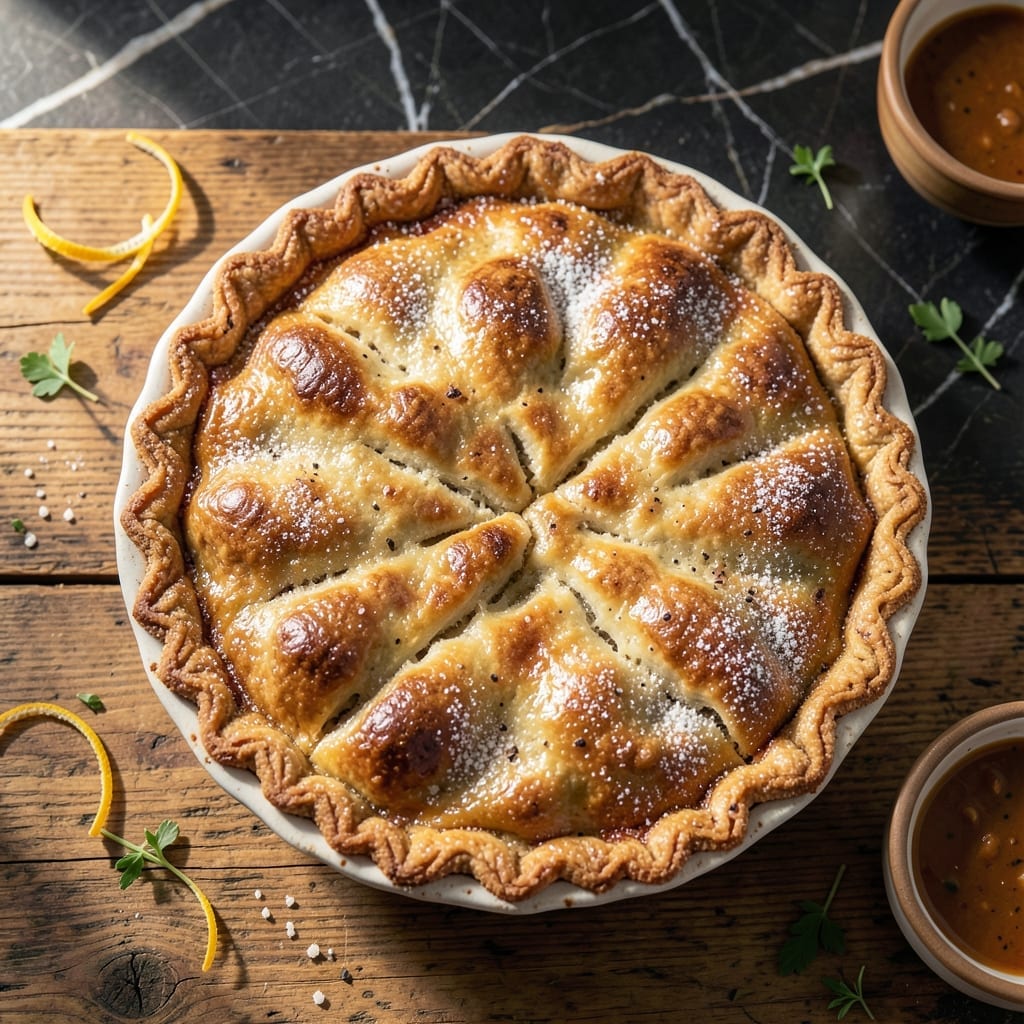
I developed this whole wheat crust to prove that nutritious and flaky can coexist. The secret is ice-cold butter and minimal handling to prevent gluten development.
Unlike traditional pie dough, this version uses white whole wheat flour for a lighter texture while maintaining rich, nutty flavor. A tablespoon of apple cider vinegar tenderizes the dough without affecting taste.
After 30 minutes of chilling, the crust bakes to golden perfection, creating a sturdy yet delicate vessel for hearty pot pie fillings. It holds up beautifully to both baking and reheating.
The result is a crust with visible layers that shatter at the touch, providing the ideal contrast to creamy vegetable fillings. This recipe delivers on texture without compromise.
Ingredients for Whole Wheat Pot Pie Crust
Quality butter and white whole wheat flour create this flaky, sturdy crust foundation.
| Ingredient | Amount | Notes |
|---|---|---|
| White Whole Wheat Flour 🌾 | 2 ½ cups | Plus extra for dusting surface |
| Unsalted Butter 🧈 | 1 cup | Ice-cold, cut into 1/2-inch cubes |
| Apple Cider Vinegar 🍏 | 1 tbsp | Tenderizes without affecting flavor |
| Ice Water 💧 | ⅓ cup | Plus 1-2 tbsp as needed |
| Fine Sea Salt 🧂 | 1 tsp | Diamond Crystal preferred |
| Granulated Sugar 🍚 | 1 tsp | Optional, enhances browning |
| Large Egg 🥚 | 1 whole | For egg wash finish |
| Heavy Cream 🥛 | 1 tbsp | Optional, for richer egg wash |
The butter must be ice-cold for optimal layering—Plugra or European-style yields superior texture. King Arthur’s white whole wheat flour delivers the promised nutty flavor without the density of regular whole wheat. The apple cider vinegar is non-negotiable; it tenderizes the dough by inhibiting gluten formation. For best results, chill all ingredients and equipment for 30 minutes prior to beginning.
No apple cider vinegar? White vinegar or lemon juice at equal amounts works. For a vegan version, replace butter with cold vegan butter and the egg wash with plant-based milk. The egg wash is optional but adds a beautiful golden sheen. If your kitchen is warm, chill the flour and mixing bowl as well—temperature control prevents tough crust.
The dough keeps well wrapped in plastic for 2-3 days in the refrigerator or 1 month frozen. For make-ahead convenience, roll and freeze the crust between parchment layers. Baked crusts hold their structure when reheated, making this ideal for meal prep.
Why You’ll Love This Recipe
- No Fuss Dough: Honestly, it’s just flour, butter, vinegar, water and salt—mix, chill, roll. Done.
- Buttery Depth: The apple cider vinegar adds a subtle tang that makes the crust taste rich and layered.
- Freezer Friendly: I roll out a double batch and freeze the extra for next week’s pot pie.
- Pantry Staples: White whole wheat flour and basic ingredients mean I can make this anytime without a special grocery run.
Step-by-Step Instructions for Whole Wheat Pot Pie Crust
Master the technique for creating a flaky, golden-brown crust that perfectly complements any savory filling.
Step 1: Prepare the Dough Base
In a large mixing bowl, combine 2.5 cups White Whole Wheat Flour, 1 tsp Fine Sea Salt, and 1 tsp Granulated Sugar. Whisk thoroughly to ensure even distribution of the dry ingredients. The sugar enhances browning, while the salt brings out the natural nuttiness of the white whole wheat flour.
Create a well in the center of the flour mixture. Add 1 cup Unsalted Butter (ice-cold, cut into 1/2-inch cubes) and 1 tbsp Apple Cider Vinegar. The vinegar tenderizes the dough without affecting flavor, and the cold butter is essential for achieving flakiness.
Step 2: Incorporate the Fat and Liquid
Using a pastry cutter or your fingertips, work the butter into the flour mixture until it resembles coarse crumbs with pea-sized butter pieces visible. Avoid overworking the dough—visible butter flecks are what create those coveted flaky layers.
Gradually drizzle in 0.33 cup Ice Water while gently mixing with a fork. Add 1-2 tbsp additional Ice Water only as needed, just until the dough begins to come together. The mixture should hold when pressed but not be sticky. Too much water will toughen the crust.
Step 3: Chill and Rest the Dough
Turn the dough out onto a lightly floured surface and gently shape it into a disk about 1-inch thick. Wrap it tightly in plastic wrap and refrigerate for at least 1 hour (or up to 2 days). This resting period allows the gluten to relax and the butter to firm up.
Chilling is non-negotiable for a flaky crust. It prevents the butter from melting prematurely during rolling and baking, which would result in a dense, tough texture. I always plan ahead to ensure proper chilling time.
Step 4: Roll and Fit the Crust
On a generously floured surface, roll the chilled dough into a 12-inch circle, about 1/8-inch thick. For a double-crust pie, divide the dough in half and roll each portion separately. Dust with additional White Whole Wheat Flour as needed to prevent sticking.
Transfer the rolled dough to a pie dish, pressing it gently into the bottom and up the sides. Trim any excess, leaving a 1/2-inch overhang. For a single crust, crimp the edges decoratively. For a double crust, reserve the second rolled portion for the top.
Step 5: Add the Finishing Touches
For a golden finish, whisk together 1 whole Large Egg and 1 tbsp Heavy Cream to create an egg wash. Brush this mixture evenly over the crust just before baking. The cream enriches the color and adds a subtle sheen.
Cut several small slits in the top crust if using a double-crust design to allow steam to escape. Bake according to your pot pie recipe instructions, typically at 375-400°F until the crust is deep golden brown and flaky. The egg wash ensures a professional, glossy appearance.
Pro Tips For Making Whole Wheat Pot Pie Crust
- Chill the Dough: After mixing, let the dough rest in the fridge for at least 30 minutes—whole wheat flour absorbs moisture differently, and this prevents a tough crust.
- Keep Butter Ice Cold: Cut the unsalted butter into small cubes and freeze for 10 minutes before mixing; I learned this the hard way after ending up with a greasy, flat crust.
- Use Vinegar Sparingly: Apple cider vinegar tenderizes, but more than a teaspoon can make the crust taste sour—measure carefully, especially with whole wheat’s nuttier flavor.
- Roll Between Parchment: Skip the floured counter and roll the dough between two sheets of parchment; whole wheat dough is stickier, and this makes cleanup and transfer a breeze.
Pro Cooking Tips for Great whole wheat pot pie crust
Butter Temperature Control
Keep your butter ice-cold until the moment it hits the flour. I freeze my 1/2-inch cubes for 15 minutes before starting. If the butter softens during mixing, pause and refrigerate the bowl for 10 minutes. This prevents premature melting that ruins flakiness. 💡
Minimal Handling Technique
Use your fingertips, not palms, to work the butter into flour. The warmth from your hands can melt the butter, so work quickly. I stop mixing as soon as the dough holds together—overworking develops gluten, making the crust tough.
Rolling Perfection
Roll the dough on a well-floured surface using even pressure. If it cracks, let it rest for 5 minutes at room temperature before continuing. I use a French rolling pin for more control over thickness.
Blind Baking Trick
For extra crispiness, blind bake the bottom crust at 375°F for 10 minutes with pie weights. Prick the base with a fork to prevent air bubbles. This creates a barrier against soggy bottoms from wet fillings.
Egg Wash Secrets
Whisk the egg and cream thoroughly for even coverage. I add a pinch of salt to the wash for extra flavor. Brush just before baking—too early and it will dry out, affecting the final sheen. ✨
Venting Top Crust
Cut 4-5 small slits in the top crust for steam escape. Space them evenly to prevent cracking. I use a sharp paring knife for clean cuts that don’t seal during baking.
Nutrition Facts
Frequently Asked Questions
Can I use regular whole wheat flour instead?
Yes, but the texture will be denser. White whole wheat flour is milder and lighter. For best results with regular whole wheat, reduce the amount by 1/4 cup and add 1 extra tbsp ice water to compensate.
Why does the dough need to rest?
Resting allows the gluten to relax and the butter to firm up. This prevents shrinkage during baking and ensures flaky layers. Skip this step, and you’ll get a tough, chewy crust.
Can I make this crust ahead?
The dough keeps for 2-3 days refrigerated or 1 month frozen. For best results, roll and freeze the crust between parchment layers. Thaw in the fridge before using.
How do I prevent a soggy bottom crust?
Blind bake the bottom crust at 375°F for 10 minutes with pie weights. Also, ensure your filling isn’t too wet before adding it.

- 6 Oz Chocolate Chip Cookie Recipe: Perfectly Balanced Crispy Edges and Chewy Hearts - September 25, 2026
- 6-Inch Coffee Cake Recipe: Vanilla Bean Swirls and Buttery Streusel Topping - September 25, 2026
- 1 Hour Soup Recipe: Velvety Richness Without the Wait - September 25, 2026