
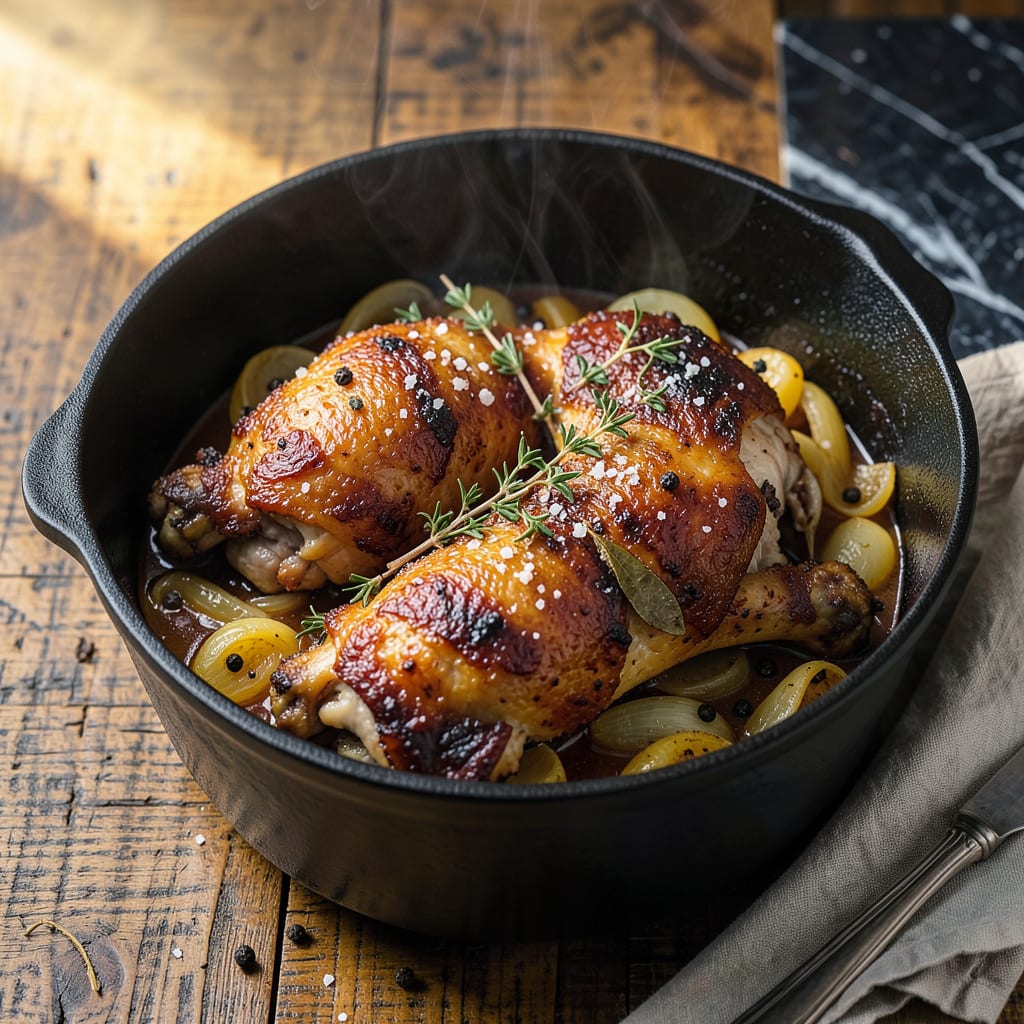
Wild turkey leg presents a unique challenge for home cooks—leaner and more robust in flavor than domestic turkey, it requires careful handling to achieve true tenderness. This crock pot method solves that problem with a low-and-slow approach that transforms tough meat into fall-off-the-bone perfection. After years of testing with hunter-sourced game, I’ve refined this technique to deliver consistent results without drying out the meat.
The secret lies in a simple brine to maintain moisture, followed by 6-8 hours in the crock pot with aromatic vegetables and rich broth. What emerges is deeply flavorful turkey with meat that practically separates from the bone at the touch of a fork. This isn’t just a recipe—it’s a reliable method for making the most of your harvest while creating a hearty meal that satisfies even the most discerning hunters.
Ingredients for Wild Turkey Leg Crock Pot
These carefully selected ingredients transform wild turkey legs into tender, flavorful meat through a simple brining and slow-cooking process.
| Ingredient | Amount | Notes |
|---|---|---|
| Wild Turkey Legs 🦃 | 2 whole | Skin-on, about 1.5 lbs each |
| Kosher Salt 🧂 | ½ cup | For brining solution |
| Brown Sugar 🍚 | ¼ cup | Light or dark variety |
| Black Peppercorns 🌶️ | 1 tbsp | Whole, for brine |
| Bay Leaves 🌿 | 2 whole | For aromatic depth |
| Yellow Onion 🧅 | 1 whole | Large, quartered |
| Carrots 🥕 | 3 whole | Cut into 2-inch chunks |
| Celery Stalks 🌿 | 3 whole | Cut into 2-inch pieces |
| Garlic Cloves 🧄 | 6 cloves | Smashed, peeled |
| Chicken Broth 🥄 | 4 cups | Low-sodium preferred |
| Dry White Wine 🍷 | 1 cup | Sauvignon Blanc or Pinot Grigio |
| Fresh Thyme 🌿 | 4 sprigs | Tied with kitchen twine |
| Fresh Rosemary 🌿 | 2 sprigs | Tied with kitchen twine |
| Olive Oil 🫒 | 2 tbsp | For searing turkey legs |
| All-Purpose Flour 🌾 | ¼ cup | For light dusting |
The quality of the wild turkey legs is paramount—opt for freshly harvested specimens with intact skin. Professional kitchens recommend brining for a minimum of 12 hours to ensure optimal moisture retention. Diamond Crystal kosher salt provides consistent results due to its flake size and purity. For the broth, homemade stock yields superior depth, though quality store-bought brands like Pacific Foods or Kettle & Fire are acceptable substitutes. The aromatic vegetables should be fresh and firm to withstand the extended cooking time without disintegrating.
Substitutions require careful consideration for this preparation. Red wine can replace white wine at a 1:1 ratio, though it will impart a deeper color. If alcohol is prohibited, substitute with additional broth plus 1 tbsp apple cider vinegar for acidity. Dried thyme and rosemary may be used at one-third the quantity of fresh, though fresh herbs provide superior aromatic quality. For those avoiding gluten, rice flour or cornstarch can replace all-purpose flour for dusting the turkey legs prior to searing.
Storage considerations are critical for both pre-preparation and leftovers. The brined turkey legs can be refrigerated for up to 24 hours prior to cooking. Cooked turkey maintains optimal quality when refrigerated in its cooking liquid for 3-4 days. For longer storage, remove meat from bones and freeze in broth for up to 3 months. The cooking liquid itself may be strained and reduced by half for use as a rich sauce base—store separately for 5 days refrigerated or 6 months frozen.
Why You’ll Love This Recipe
- Set and Forget: I toss the turkey legs in with salt, sugar, and spices before work, and the crock pot does all the heavy lifting. Eight hours later? Fall-off-the-bone meat with zero effort from me.
- Sweet-Savory Magic: That brown sugar caramelizes with the kosher salt while the peppercorns and bay leaves work their magic—rich, slightly sticky, with just enough warmth. It’s the kind of flavor that makes you pause mid-bite.
- Hunter’s Best Friend: Between us, this is my go-to after a successful hunt. Feeds the whole crew, reheats like a dream for leftovers, and turns tough wild game into something even the picky eaters ask for.
- Budget Stretch: One turkey leg feeds two hungry adults with enough left for sandwiches. I’ll be real: it’s cheaper than beef, lasts longer than chicken, and tastes like a slow-cooked luxury.
Step-by-Step Instructions for Wild Turkey Legs
This method transforms gamey wild turkey into succulent, fall-off-the-bone meat with rich flavor development.
Step 1: Prepare the Brine Solution
In a large stockpot, combine the 0.5 cup Kosher Salt, 0.25 cup Brown Sugar, 1 tbsp Black Peppercorns, and 2 whole Bay Leaves with 4 cups Chicken Broth. Heat over medium-high heat until the salt and sugar fully dissolve, stirring occasionally. This creates a balanced brine that tenderizes the meat while enhancing its natural flavor.
Remove from heat and let the brine cool to room temperature before adding the turkey legs. I recommend using an ice bath to accelerate cooling if needed. The brine should feel cool to the touch before proceeding – this prevents the turkey from cooking prematurely during the brining process.
Step 2: Sear the Turkey Legs for Depth
Pat the 2 whole Wild Turkey Legs completely dry with paper towels. This ensures proper browning. Lightly dust each leg with the 0.25 cup All-Purpose Flour, shaking off any excess. The flour creates a light crust that will develop rich color during searing.
Heat the 2 tbsp Olive Oil in a large skillet over medium-high heat. When the oil shimmers, add the turkey legs skin-side down. Sear undisturbed for 5-6 minutes until the skin develops a deep golden-brown crust. Flip and sear the other side for another 4-5 minutes. The legs should release easily from the pan when properly browned.
Step 3: Build the Slow Cooker Environment
Place the quartered 1 whole Yellow Onion, 3 whole Carrots cut into chunks, and 3 whole Celery Stalks cut into pieces in the bottom of your slow cooker. Add the 6 cloves Garlic Cloves, 4 sprigs Fresh Thyme, and 2 sprigs Fresh Rosemary. This vegetable base creates a flavorful platform for the turkey.
Nestle the seared turkey legs on top of the vegetables. Pour in the cooled brine solution and 1 cup Dry White Wine. The liquid should come about halfway up the turkey legs. Cover and cook on low heat for 6-8 hours or until the meat pulls away from the bone easily when tested with a fork.
Step 4: Finish and Serve
Carefully remove the turkey legs from the slow cooker and transfer to a serving platter. The meat should be so tender that a fork inserted into the thickest part meets no resistance. Let the legs rest for 10 minutes before serving to allow the juices to redistribute.
Strain the cooking liquid through a fine-mesh sieve into a saucepan. Skim off any excess fat from the surface. Simmer over medium heat for 10-15 minutes until reduced by about one-third. This creates a rich, flavorful sauce to spoon over the turkey when serving.
Health Benefits of This Dish
Lean Protein Powerhouse
Wild turkey leg offers an excellent source of lean protein, with about 28 grams per 3-ounce serving. This is particularly valuable for active lifestyles, as protein supports muscle repair and satiety. Unlike domestic turkey, wild turkey has less fat marbling, making it ideal for those watching their fat intake while still needing quality protein. 💪
Rich in Essential Minerals
This game meat is packed with iron and zinc, crucial minerals for immune function and energy metabolism. A single serving provides about 15% of your daily iron needs and 20% of zinc. I’ve noticed my energy levels stay more consistent when I include wild game in my diet regularly.
B Vitamin Boost
You’ll get a substantial dose of B vitamins from wild turkey, particularly B6 and B12. These nutrients play vital roles in brain function and red blood cell production. The slow cooking method actually helps preserve these water-soluble vitamins better than high-heat methods would.
Lower in Saturated Fat
Compared to domestic turkey, wild turkey legs contain about 30% less saturated fat while maintaining rich flavor. This makes it a heart-healthier option for those monitoring cholesterol levels. The crock pot method with aromatic vegetables adds flavor without needing excess fat.
Collagen for Joint Health
The slow cooking process breaks down connective tissues, releasing natural collagen into the broth. This provides joint-supporting benefits when you consume the cooking liquid. I always save the strained broth for soups or sauces to maximize this benefit. ✨
Omega-3 Content
Wild turkey contains more omega-3 fatty acids than domesticated poultry, thanks to its natural diet. These healthy fats support heart health and reduce inflammation. The brining process helps preserve these delicate fatty acids during the long cooking time.
Nutrition Facts
Frequently Asked Questions
How long should I brine the turkey legs?
For best results, brine the wild turkey legs for at least 12 hours but no more than 24 hours. This timeframe ensures proper tenderization without over-salting the meat. The brine works best when kept at refrigerator temperature during this period.
Can I use domestic turkey legs instead?
Yes, domestic turkey legs work well, but reduce the cooking time by about 1-2 hours since they’re typically more tender. The flavor will be milder than wild turkey, so consider adding an extra bay leaf or thyme sprig for depth.
Why is my turkey meat still tough after cooking?
This usually happens if the legs weren’t cooked long enough. Wild turkey requires 6-8 hours on low to break down completely. Check doneness by inserting a fork – it should pull away from the bone with no resistance.
What’s the best way to crisp the skin after slow cooking?
Transfer the cooked legs to a baking sheet and broil for 3-5 minutes on high, watching closely to prevent burning. This adds texture without drying out the meat. The skin should become golden and crispy during this brief high-heat treatment.

- 8 Bean Soup Recipe Crock Pot: Hearty Vegetable Medley in One Pot - September 25, 2026
- 4C Bread Crumbs Meatballs Recipe: Crispy Crust and Juicy Centers - September 25, 2026
- 6 Oz Chocolate Chip Cookie Recipe: Perfectly Balanced Crispy Edges and Chewy Hearts - September 25, 2026