
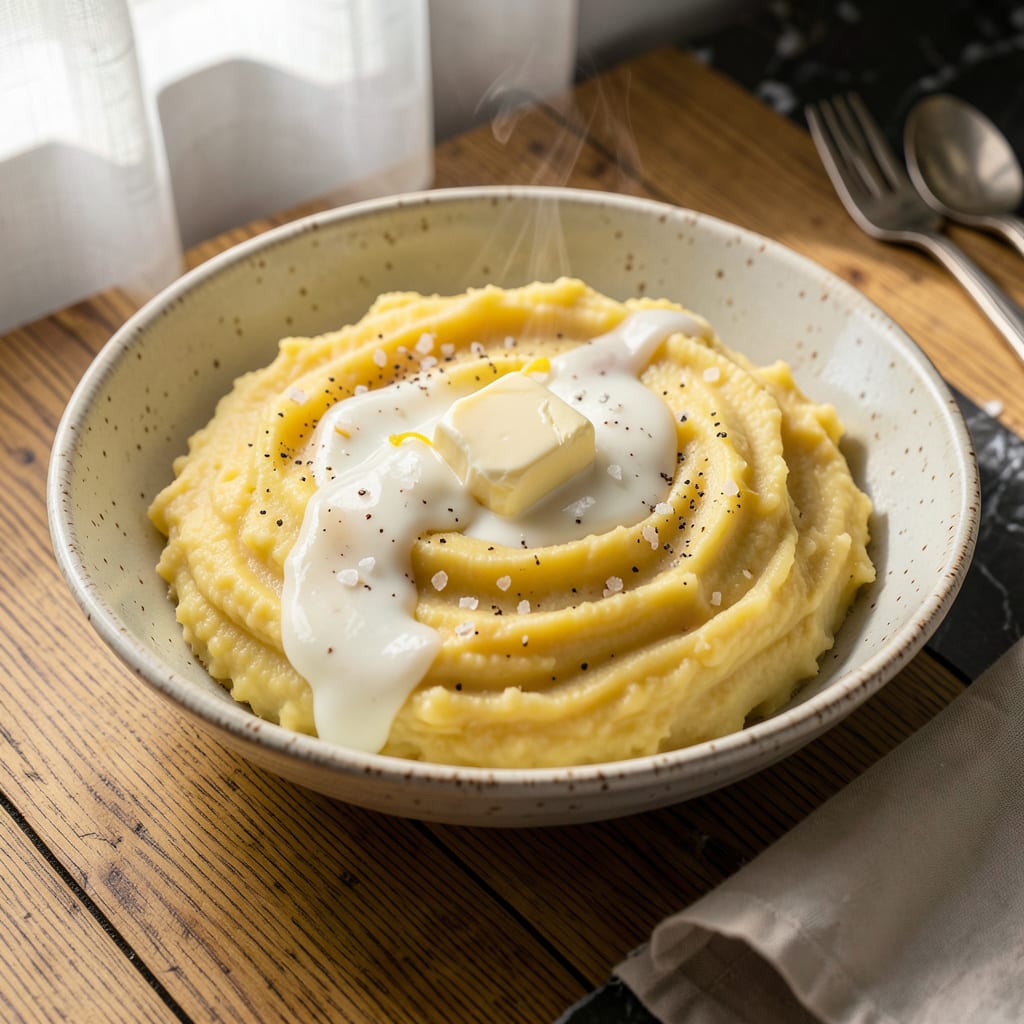
There’s something inherently comforting about a bowl of creamy mashed potatoes, especially when they boast that warm golden hue. This recipe transforms simple ingredients into a velvety side dish that pairs perfectly with any main course. The secret lies in achieving the ideal balance between richness and smoothness.
With just 30 minutes and basic pantry staples, you’ll create mashed potatoes that are impossibly smooth with a subtle buttery sweetness. The golden color comes naturally from the potatoes themselves, enhanced by a touch of warm dairy. This is comfort food at its finest—simple, satisfying, and always welcome at the table.
Ingredients for Yellow Mashed Potatoes
Transform basic pantry staples into velvety golden mashed potatoes with these carefully selected ingredients.
| Ingredient | Amount | Notes |
|---|---|---|
| Yukon Gold Potatoes 🥔 | 2 ½ lb | Peeled and cubed evenly |
| Unsalted Butter 🧈 | ½ cup | Cold, cubed for even melting |
| Whole Milk 🥛 | ¾ cup | Warm to room temperature |
| Heavy Cream 🥛 | ¼ cup | Full-fat for optimal richness |
| Kosher Salt 🧂 | 1 ½ tsp | Diamond Crystal preferred |
| Freshly Ground White Pepper 🌶️ | ¼ tsp | For subtle warmth without color |
| Garlic Cloves 🧄 | 2 cloves | Minced to fine paste |
| Sour Cream 🥛 | ¼ cup | Full-fat for creaminess |
| Nutmeg 🌰 | 0.125 tsp | Freshly grated preferred |
| Chives 🌿 | 2 tbsp | Fresh, finely chopped |
| Unsalted Chicken Stock 🍲 | ¼ cup | Optional for depth |
The potatoes are fundamental—Yukon Golds provide both creaminess and natural golden hue. Select medium-sized potatoes with smooth, unblemished skins from reputable grocers like Whole Foods or Trader Joe’s. Their higher starch content and buttery flavor make them ideal. For dairy, organic whole milk and European-style butter (such as Plugrá) yield superior texture and flavor. The butter should be 82% fat content for optimal emulsification during mixing.
For substitutions, Russet potatoes work but require more butter/milk to achieve creaminess. Half-and-half can replace heavy cream at a 1:1 ratio. Vegan adaptation? Use coconut milk (full-fat) and vegan butter (Miyoko’s recommended). The chicken stock is optional but adds depth—vegetable stock maintains vegetarian status. Fresh nutmeg is preferable to pre-ground; one-eighth teaspoon is sufficient for subtle warmth without overpowering.
Store potatoes in a cool, dark place (not refrigerated) for up to 2 weeks. Dairy products should be used within 5-7 days of opening. Prepared mashed potatoes keep 3-4 days refrigerated or 1 month frozen in airtight containers. Reheat gently with additional milk or butter to restore creaminess. For make-ahead convenience, prepare through mashing, then reheat with stock before serving to maintain ideal consistency.
Why You’ll Love This Recipe
- One-Pot Magic: I don’t even need a mixer—just a pot, a masher, and 20 minutes while the Yukon Golds practically melt into submission. The butter and cream go straight in hot, so no waiting for ingredients to “come to room temp” like some fussy recipes demand.
- That Golden Richness: Here’s what sold me—the natural buttery flavor of Yukon Golds means I can use less salt, but the heavy cream and whole milk make it taste like it’s been simmered all day. It’s the kind of side that gets quiet at the table (in a good way).
- Holiday or Tuesday: I’ve served this at Thanksgiving and alongside weeknight meatloaf (yes, even on a Tuesday night). The leftovers reheat beautifully with a splash of milk—no sad, gluey potatoes here.
- Budget Stretch: Five pounds of potatoes for $3, plus pantry staples I always have? This feeds my family of four with enough left for shepherd’s pie the next day. Honestly, it’s the only side dish I make that actually saves me money.
Step-by-Step Instructions for Yellow Mashed Potatoes
This method delivers velvety smooth, richly flavored potatoes with perfect consistency every time.
Step 1: Prepare and Cook the Yukon Gold Potatoes
Place the 2.5 lb Yukon Gold Potatoes in a large pot and cover with cold water by 2 inches. Add 1 tablespoon of the 1.5 tsp Kosher Salt to the water. Bring to a boil over high heat, then reduce to medium and simmer uncovered for 15-18 minutes. You’ll know they’re done when a fork pierces them with absolutely no resistance.
Drain immediately in a colander and return the potatoes to the warm pot. Let them sit uncovered for 2 minutes to allow excess steam to escape. This step prevents watery mashed potatoes by removing residual moisture that would otherwise dilute the flavor and texture.
Step 2: Infuse the Dairy Mixture
While the potatoes cook, combine the 0.75 cup Whole Milk, 0.25 cup Heavy Cream, and 2 cloves Garlic Cloves (minced to a fine paste) in a small saucepan. Warm over medium-low heat for 3-4 minutes until small bubbles form at the edges and the mixture reaches 160°F.
Remove from heat and whisk in the 0.5 cup Unsalted Butter until fully melted and emulsified. The butter should incorporate completely without separating. This gentle heating process ensures the dairy won’t curdle when combined with the potatoes while maximizing flavor infusion from the garlic.
Step 3: Mash and Incorporate Ingredients
Using a potato ricer or food mill, process the drained potatoes directly into the warm pot. If you don’t have these tools, a hand masher works—just be thorough to eliminate all lumps. Immediately pour the warm dairy mixture over the potatoes and fold gently with a silicone spatula until just combined.
Add the remaining 0.5 tsp Kosher Salt, 0.25 tsp Freshly Ground White Pepper, 0.25 cup Sour Cream, 0.125 tsp Nutmeg, and 0.25 cup Unsalted Chicken Stock. Fold until the mixture is smooth and uniform. The potatoes should glisten slightly and hold soft peaks when the spatula is lifted.
Step 4: Adjust Consistency and Finish
Taste and adjust seasoning if needed. For a lighter texture, fold in an additional 1-2 tablespoons of warm milk. For richer potatoes, incorporate another 1 tablespoon of the 0.5 cup Unsalted Butter. The ideal consistency should be creamy but able to hold its shape when spooned.
Transfer to a warmed serving bowl and create a shallow well in the center. Fill this with any remaining melted butter from the saucepan. Garnish with the 2 tbsp Chives and serve immediately while the butter is still glossy and the potatoes are at their peak creaminess.
Common Mistakes When Making This Recipe
Overcooking the Potatoes
One of the biggest mistakes I see is boiling potatoes until they’re falling apart. You want them tender but still holding their shape when pierced with a fork—about 15-18 minutes for 1-inch cubes. Overcooked potatoes absorb too much water, making your mash gluey instead of creamy. 🥔
Using Cold Dairy
Adding cold milk or cream straight from the fridge shocks the potatoes and creates a gummy texture. Always warm your dairy mixture gently to about 160°F before incorporating. I like to infuse mine with garlic for extra flavor while it heats—just don’t let it boil.
Underseasoning the Water
The cooking water should taste like the sea—salty enough to properly season the potatoes from the start. I use 1 tablespoon Kosher salt for 2.5 lbs of potatoes. Without this, you’ll end up with bland potatoes that require excessive salt later, which never distributes as evenly.
Overmixing the Potatoes
Whether using a ricer, masher, or mixer, stop as soon as the potatoes are smooth. Overworking releases too much starch, creating a pasty texture. I prefer a potato ricer for ultra-smooth results, but a hand masher works beautifully if you’re gentle. The moment you see no lumps, stop mixing. ⚡
Skipping the Draining Step
After boiling, many people rush to mash without properly draining the potatoes. Let them sit in the colander for 2 minutes to evaporate excess moisture. I even return them to the warm pot for another minute to ensure they’re perfectly dry before adding dairy.
Ignoring the Butter Temperature
Cold butter creates lumps, while melted butter can make potatoes greasy. The sweet spot is cold, cubed butter that melts gradually into the warm dairy mixture. I cut mine into ½-inch cubes right before using so it incorporates smoothly without breaking the emulsion.
Nutrition Facts
Frequently Asked Questions
Why do my mashed potatoes turn out gluey?
Gluey texture usually comes from overworking the potatoes or using overcooked spuds. Boil them just until fork-tender (15-18 minutes), then mash gently with a ricer or hand masher. Stop mixing as soon as they’re smooth to avoid releasing excess starch.
Can I make these ahead of time?
Yes! Prepare them completely, then store in an airtight container for up to 3 days. Reheat gently with a splash of warm milk, stirring constantly over low heat. For make-ahead convenience, prepare through mashing, then reheat with stock before serving.
What’s the best way to reheat leftovers?
Place them in a heatproof bowl over a pot of simmering water, stirring occasionally. Add 1-2 tablespoons of warm milk or butter per cup of potatoes. Avoid microwaving, which can make them rubbery. The goal is to restore creaminess without drying them out.
Can I use a different type of potato?
Russets work but require more butter/milk for creaminess. Red potatoes hold their shape better but lack the golden hue. For best results, stick with Yukon Golds—their natural buttery flavor and medium starch content create the perfect texture and color.
How do I get that golden color without artificial dyes?
The natural yellow comes from Yukon Gold potatoes themselves. For a richer hue, add 1-2 tablespoons of warm milk infused with a pinch of turmeric. The garlic and butter also enhance the golden tones naturally during cooking.

- 8 Bean Soup Recipe Crock Pot: Hearty Vegetable Medley in One Pot - September 25, 2026
- 4C Bread Crumbs Meatballs Recipe: Crispy Crust and Juicy Centers - September 25, 2026
- 6 Oz Chocolate Chip Cookie Recipe: Perfectly Balanced Crispy Edges and Chewy Hearts - September 25, 2026