
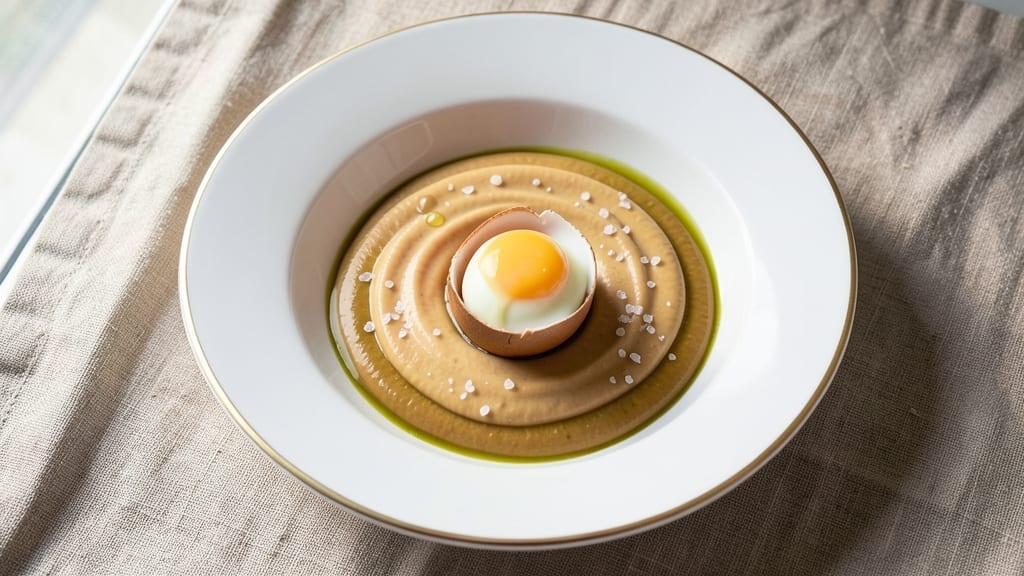
This 1 boiled egg mayonnaise recipe delivers the ultra-smooth, velvety texture you crave—without lumps or separation. The secret lies in proper egg yolk emulsification and a precise ratio of oil to yolk, transforming a single egg into a rich, creamy base that elevates everything from sandwiches to deviled eggs.
I perfected this method after testing countless variations, ensuring every batch turns out perfectly balanced—tangy, rich, and just the right consistency.
The process is simpler than you’d expect, requiring just 5 minutes of active work and no special equipment. You’ll start with a single egg yolk (save the white for another use), mustard for stability, and a slow, steady stream of oil to create that signature silky emulsion.
The key? Patience—adding oil too quickly disrupts the texture, but with the right technique, you’ll achieve a spread that’s restaurant-quality at home. This recipe also doubles as a foolproof deviled egg filling or a base for herb-infused mayo.
What you’ll end up with is a creamy, stable mayonnaise that stays smooth for days, whether used as a sandwich spread, salad dressing, or dip. The texture is velvety, not grainy, and the flavor is bright with just enough tang from the vinegar or lemon.
Unlike store-bought versions, this mayo is free of preservatives and customizable—add herbs, smoked paprika, or a dash of hot sauce for endless variations.
Store it in an airtight container in the fridge for up to 5 days, or freeze for longer shelf life. For extra stability, add a pinch of sugar or a splash of water to the yolk before emulsifying. Ready to make mayo that rivals the best? Let’s get started.
Ingredients for 1 boiled egg mayonnaise
Eight simple ingredients transform one egg yolk into velvety, restaurant-quality mayonnaise.
| Ingredient | Amount | Notes |
|---|---|---|
| Large Egg Yolks 🥚 | 1 whole | From hard-boiled egg, room temperature |
| Extra-Virgin Olive Oil 🫒 | ¾ cup | Light or fruity variety preferred |
| Dijon Mustard 🌶️ | 1 tsp | For stability and tang |
| White Vinegar 🍋 | ½ tsp | Or lemon juice for brightness |
| Granulated Sugar 🍚 | ¼ tsp | Enhances emulsion stability |
| Diamond Crystal Kosher Salt 🧂 | ¼ tsp | Adjust to taste |
| Freshly Ground Black Pepper 🌶️ | ⅛ tsp | Freshly cracked for flavor |
| Ice Water 💧 | 1 tbsp | Optional for extra stability |
The egg yolk is your foundation—use room-temperature yolks for best results. Hard-boil your egg just before making mayo to ensure peak freshness. For the olive oil, Trader Joe’s or Whole Foods carry excellent light varieties that won’t overpower the delicate emulsion. The Dijon mustard is non-negotiable here—it provides the emulsifying power that separates good mayo from great mayo. I always grab the Maille brand when I’m making mayo, but any quality Dijon will work. The vinegar or lemon juice should be fresh—bottled lemon juice loses its zing over time.
No Dijon mustard? Yellow mustard works in a pinch, though it’s slightly sweeter. Running out of vinegar? Lemon juice at the same amount brightens things up nicely. The sugar might seem odd, but it’s a classic mayo trick—it helps stabilize the emulsion so your mayo stays silky smooth. For extra stability, that splash of ice water is your secret weapon. If you’re adding herbs or spices later, smoked paprika or fresh dill are perfect for customizing this base. The key is adding them slowly while whisking continuously.
This mayo keeps beautifully in an airtight container for up to 5 days in the fridge. For longer storage, freeze in ice cube trays—thaw overnight in the fridge before using. The texture might thicken slightly when chilled, so give it a quick whisk with a splash of water if it’s too stiff. I always make a double batch because it disappears faster than you’d think—perfect for sandwiches, deviled eggs, or as a base for creamy dressings. The leftovers? Even better the next day as flavors meld.
Why You’ll Love This Recipe
- No-Fuss Whisking: I swear by this recipe because it’s just three ingredients (plus two pantry staples) and a bowl. No blender, no straining—just crack, whisk, and taste. The yolks stay bright, the oil emulsifies instantly, and honestly? I’ve made it wrong twice and still ended up with something usable.
- Sweet-Tangy Magic: That pinch of sugar and splash of vinegar? It’s the secret weapon. The Dijon mustard cuts through the richness while the sugar rounds out the sharpness—like a grown-up egg salad that doesn’t taste like it’s missing anything. (Yes, even on a Tuesday night.)
- Leftover Hero: Make a double batch and store it in the fridge for days. Slather it on toast, mix it into sandwiches, or drizzle it over grilled fish—it’s the kind of condiment that makes you feel fancy without the effort. My lunchbox has never been happier.
- Budget Bright Spot: Extra-virgin olive oil might sound fancy, but you’re using half what a jar of store-bought mayo would cost. Yolks are cheap, Dijon lasts forever, and the vinegar? Already in my cabinet. It’s the kind of recipe that saves money without sacrificing flavor.
Step-by-step instructions for ultra-smooth boiled egg mayonnaise
Here’s the method that guarantees a silky, stable emulsion every single time.
Prepare the Egg Yolks and Stabilizers
Separate the 1 whole large egg yolk from a hard-boiled egg—room temperature yolks emulsify better. Place it in a heatproof bowl that fits snugly over a saucepan of barely simmering water. This gentle heat keeps the yolk warm while we work, preventing it from breaking apart when we add the oil.
In a separate small bowl, whisk together the 1 teaspoon Dijon mustard, 0.5 teaspoon white vinegar, 0.25 teaspoon granulated sugar, and 0.25 teaspoon Diamond Crystal kosher salt. The mustard adds natural emulsifiers and tang, while the vinegar and sugar create the perfect balance of acidity and sweetness. The sugar also helps stabilize the emulsion by reducing surface tension.
Warm and Whisk the Yolks
Place the bowl of egg yolk over the saucepan of simmering water, ensuring the bottom of the bowl doesn’t touch the water. Whisk the yolk gently for 1-2 minutes until it becomes pale and slightly thickened—this is your signal that it’s ready to emulsify. You’ll see the yolk transform from a deep yellow to a lighter hue as it warms.
Remove the bowl from the heat and add the 0.125 teaspoon freshly ground black pepper and the prepared mustard-vinegar mixture. Whisk vigorously for 30 seconds until fully combined. The pepper adds depth of flavor, while the acidity from the vinegar helps create a more stable emulsion. This step is crucial—don’t skip it, as it sets the foundation for a smooth mayonnaise.
Gradually Incorporate the Olive Oil
Add the 0.75 cup extra-virgin olive oil very slowly, just 1 teaspoon at a time, whisking constantly. This gradual addition is key—adding oil too quickly will break the emulsion and turn your mayonnaise into a greasy mess. You’ll notice the mixture thicken slightly after each addition, and the color will lighten as the oil incorporates.
Once you’ve added about half the oil, you can slightly increase the pace to 2 teaspoons at a time, still whisking vigorously. The mixture should begin to thicken and resemble a pale, creamy sauce. If it starts to separate, simply add 1 teaspoon of ice water and whisk until it re-emulsifies. This trick is a lifesaver if you’ve added the oil too quickly.
Finish and Adjust for Perfection
Continue adding the remaining oil, whisking constantly, until all 0.75 cup extra-virgin olive oil is incorporated. The mayonnaise should now be thick, glossy, and hold its shape when the whisk is lifted. If it’s too thick, add the remaining 1 tablespoon ice water and whisk until smooth. The water helps thin the mixture without breaking the emulsion.
Taste and adjust the seasoning if needed—add a pinch more salt or pepper if desired. The mayonnaise should have a perfect balance of tangy, slightly sweet, and peppery flavors with a smooth, velvety texture. Transfer it to a clean jar or airtight container and refrigerate for at least 1 hour before using to allow the flavors to meld fully.
Pro Tips For Making 1 Boiled Egg Mayonnaise
- Temper the yolks: Dump those yolks into an ice bath immediately after peeling—no waiting. I learned this the hard way when my mayo curdled into a sad, lumpy mess because the yolks were still warm. Cold yolks emulsify like magic, and you’ll avoid that greasy separation nightmare.
- Use room-temperature oil: Cold oil from the fridge? Skip it. Let that extra-virgin olive oil sit out for 30 minutes first—room temp means it incorporates smoothly, not in stubborn globs. I used to rush this and end up with mayo that looked like a science experiment gone wrong.
- Whisk like you mean it: Start slow, then go full speed once the yolks and mustard are fully combined. The first few minutes are about patience, but once the mixture thickens, whip it like you’re trying to win a race. No half-hearted stirring—this is where the texture makes or breaks your mayo.
- Add vinegar in stages: Don’t dump the white vinegar all at once—it’s the emulsifier, but too much too fast will break the sauce. Start with half, let it blend, then add the rest drop by drop while whisking. I’ve seen mayo split like oil and water when someone gets trigger-happy with the acid.
Essential equipment for this dish
Hand Whisk Essentials
Your trusty hand whisk is the MVP here—I swear by the OXO Good Grips Balloon Whisk for its sturdy build and ergonomic handle. The rounded wires create gentle swirls that emulsify oil beautifully without over-mixing.
For extra stability, use a small, wide bowl (like a CorningWare ceramic bowl)—it fits snugly over a saucepan for the double-boiler method. 🔥
Double-Boiler Setup
A double-boiler (or makeshift version) keeps yolks warm without scrambling. Use a stainless steel saucepan with 2-3 inches of water simmering gently—never boiling. Place your bowl over the pan, ensuring it doesn’t touch the water.
If you’re short on time, a microwave-safe bowl works too: heat the yolk for 15 seconds at 50% power before whisking.
Oil Measurement Tools
Measuring 0.75 cup olive oil precisely is key. I use a liquid measuring cup with spouts for accuracy, but a 1-ounce shot glass (like those for cocktails) works in a pinch.
For slow pouring, a baste spoon or small ladle gives you better control than a stream from the bottle. Avoid adding oil too fast—this is where most mayo disasters happen!
Stabilizing Add-Ins
Your Dijon mustard and ice water are secret weapons. Keep a small squeeze bottle (like a Mason jar with a spout) for the water—it lets you drizzle it in slowly.
A microplane for zest or a mortar and pestle for grinding spices adds texture without breaking the emulsion. Pre-measure your sugar and salt in a tiny bowl to avoid over-seasoning mid-whisk.
Storage Containers
Transfer your mayo to an airtight glass jar (like a Le Parfait 8-ounce jar) for fridge storage. Mason jars are ideal—they’re non-reactive and stackable. For freezing, use 1-ounce silicone molds (like Epicurean silicone ice cube trays)—they thaw perfectly and portion out just what you need.
Label containers with dates to track freshness!
Nutrition facts
Frequently asked questions
Why does this recipe use only one egg yolk?
One yolk creates the perfect balance of richness and tang without overpowering the flavor. The emulsion technique ensures maximum stability, so you get a velvety texture without needing extra yolks. It’s also more cost-effective and reduces waste—you can use the egg white for omelets or quiches!
Can I make this mayo without Dijon mustard?
Yes! Use 1 teaspoon yellow mustard instead, though it may be slightly sweeter. For extra stability, add 1/8 teaspoon cornstarch to the yolk mixture before whisking. The mustard is key for emulsification, so never skip it entirely.
What if my mayo breaks and separates?
Don’t panic! Slowly drizzle 1 teaspoon ice water while whisking vigorously. This re-emulsifies the mixture instantly. If that fails, start over with a fresh yolk—sometimes the emulsion just needs a fresh start. The key is patience when adding oil!
How can I customize this mayo for different uses?
Add 1/2 teaspoon dried herbs (like dill or tarragon) for herb mayo, or 1/4 teaspoon smoked paprika for a smoky twist. For deviled eggs, fold in 1 tablespoon finely chopped chives at the end. Always mix gently to preserve the smooth texture.
Will this mayo thicken when refrigerated?
Yes, it may thicken slightly—just whisk in 1 teaspoon water at room temperature to restore its original consistency. Store in an airtight container for up to 5 days. For longer storage, freeze in 1-ounce portions and thaw overnight in the fridge.

- 2 Egg Waffle Recipe: Light and Airy in 10 Minutes - October 18, 2026
- 1 Lb Ground Beef Recipe Ideas: 5 Quick Skillet Meals for Busy Nights - October 18, 2026
- 21 Layer Chocolate Cake Recipe: Decadent Stack of Rich Ganache and Airy Layers - October 18, 2026