
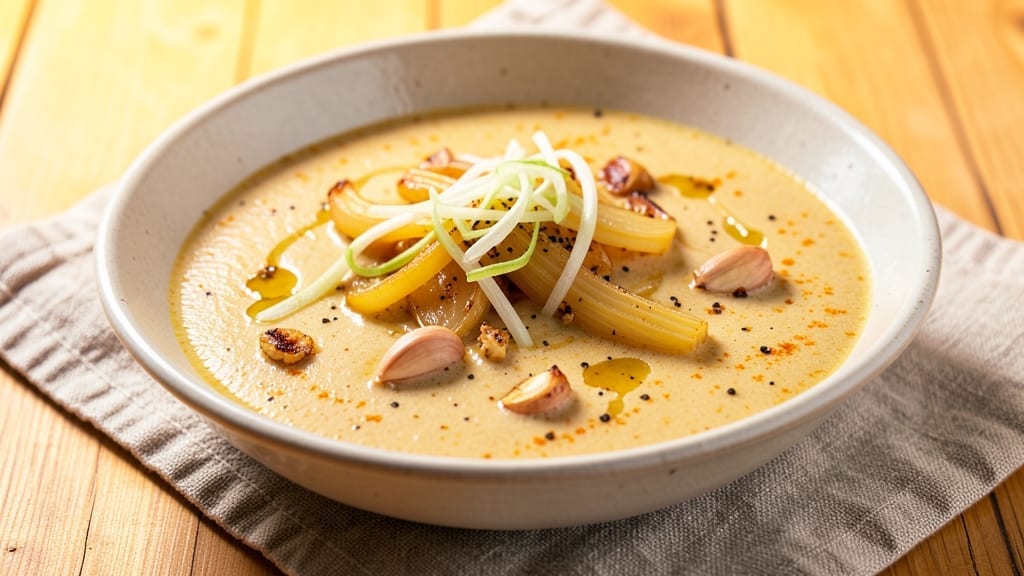
A 1 cup coconut milk recipe like this one turns velvety coconut milk into a fragrant, 30-minute curry—ideal for quick weeknight meals or easy prep ahead.
The secret lies in balancing the natural sweetness of coconut with bold spices like turmeric, cumin, and ginger, creating a velvety sauce that coats every ingredient.
I developed this dish after realizing how often coconut milk gets overlooked in favor of heavy cream, and the results are surprisingly sophisticated for a plant-based recipe.
The beauty of this recipe is its simplicity: one cup of coconut milk delivers a luxurious texture without requiring special ingredients or techniques. You’ll simmer aromatic spices in coconut oil, then add vegetables and chickpeas to soak up the fragrant sauce.
The dish is naturally vegan, packed with protein, and customizable—swap in tofu, shrimp, or your favorite protein for a complete meal. What makes it stand out is how the coconut milk’s richness enhances rather than overpowers the spices, leaving you with a dish that’s both comforting and vibrant.
By the time you’re done, you’ll have a creamy, aromatic curry with tender vegetables and protein swimming in a sauce that’s creamy yet light. The spices bloom beautifully, creating layers of warmth and earthiness that pair perfectly with basmati rice or crusty naan.
This recipe proves that coconut milk isn’t just for desserts—it’s a versatile, flavorful ingredient that elevates savory dishes with minimal effort. Let’s get cooking!
Whether you’re serving this for a cozy night in or prepping for the week, the 30-minute timeline ensures it fits seamlessly into any schedule. The dish reheats beautifully, making it ideal for meal prep, and the flavors only deepen as it sits.
Garnish with fresh cilantro or a squeeze of lime for brightness, and you’ve got a restaurant-worthy meal that’s surprisingly easy to achieve at home. Here’s how to make it!
Ingredients for 1 cup coconut milk
Creamy coconut milk and aromatic spices come together in this fragrant 30-minute vegan curry.
| Ingredient | Amount | Notes |
|---|---|---|
| Full-Fat Coconut Milk 🥥 | 1 cup | Canned, unsweetened preferred |
| Coconut Oil 🫒 | 2 tbsp | Refined for neutral flavor |
| Yellow Onion 🧅 | 1 whole | Medium size, finely diced |
| Garlic Cloves 🧄 | 4 cloves | Fresh, minced finely |
| Fresh Ginger 🌿 | 2 tbsp | Grated, about 1/2 inch piece |
| Ground Turmeric 🌶️ | 1 tsp | Freshly ground preferred |
| Ground Cumin 🌿 | 1 tsp | Toasted for deeper flavor |
| Ground Coriander 🌶️ | 1 tsp | Freshly ground preferred |
| Chickpeas 🥜 | 1 cup | Canned, drained and rinsed |
| Red Bell Pepper 🍅 | 1 whole | Medium size, diced |
| Carrot 🥕 | 1 whole | Medium size, diced |
| Vegetable Broth 💧 | ½ cup | Low-sodium preferred |
| Lime Juice 🍋 | 1 tbsp | Freshly squeezed |
| Fresh Cilantro 🌿 | ¼ cup | Chopped, for garnish |
| Sea Salt 🧂 | 1 tsp | Diamond Crystal preferred |
The coconut milk is the star here, so choose full-fat canned—it’s richer and more flavorful than the light version. I always grab Thai Kitchen or Native Forest from the international aisle, but any unsweetened brand works. The ginger and turmeric are non-negotiable for that signature warmth—freshly grated ginger has way more punch than powdered. For the spices, Penzeys or Spicewalla are my go-tos, but the bulk bins at Whole Foods or Trader Joe’s are great too. Look for vibrant colors—fresh spices smell earthy and bright, not dusty.
No fresh ginger? Powdered works at half the amount, but it’s not the same. Running low on turmeric? Curry powder at double the amount gets you close. The chickpeas can be subbed with tofu or white beans—just adjust the broth if using tofu to keep it from drying out. For the bell pepper, any color works, but red adds natural sweetness. If you’re prepping ahead, toast the spices in the coconut oil first—they’ll bloom beautifully and give that restaurant-quality depth. The lime juice is key for brightness, so don’t skip it.
This curry tastes even better the next day—flavors meld beautifully when reheated. Store leftovers in an airtight container for 4-5 days in the fridge, or freeze for 3 months. I like to portion it into containers with rice so it’s ready to grab and go. Garnish with fresh cilantro right before serving—it wilts fast, so add it last. The sauce thickens as it cools, so a splash of broth or water thins it out when reheating.
Why You’ll Love This Recipe
- Pantry Magic: That one can of coconut milk? It’s my secret weapon when I’m staring at an empty fridge at 6:30 PM. Sauté the onion, garlic, and ginger in coconut oil until fragrant—takes less time than waiting for takeout—and boom, you’ve got a base that feels like a restaurant dish.
- Rich Without Effort: Honestly, the flavor is what makes this recipe a no-brainer. The full-fat coconut milk adds this velvety depth, while the garlic and ginger sizzle into something aromatic and warm. It’s the kind of taste that makes you pause mid-bite, even if the dish isn’t fancy.
- Adaptable Anywhere: I’ve used this as a soup starter, a curry thickener, and even a sauce for stir-fried veggies—no rules. The base works for quick weeknight dinners, potluck dishes, or when I’m feeding a houseful of people who all have different tastes.
- Stretches Your Budget: Between us, coconut milk is cheaper than you’d think, and a single can feeds me for days. Freeze half the leftovers, and you’ve got a ready-made sauce for next week’s lazy dinner. Plus, the onion and garlic are staples I always have on hand.
Step-by-step instructions for creamy coconut spice soup
Transform that single cup of coconut milk into a velvety, aromatic soup that’s rich with tropical warmth.
Sauté the Aromatic Base
Heat the 2 tablespoons coconut oil in a medium pot over medium heat until shimmering but not smoking. Add the 1 whole yellow onion, 4 cloves garlic, and 2 tablespoons fresh ginger, stirring constantly for 3-4 minutes until the onion becomes translucent and the garlic releases its pungent aroma.
Here’s the thing—don’t rush this step. You’ll know it’s ready when the garlic is fragrant and the onion has softened enough to pierce easily with a knife. At this point, stir in the 1 teaspoon ground turmeric, 1 teaspoon ground cumin, and 1 teaspoon ground coriander, allowing the spices to toast for 30 seconds until their essential oils are activated and the kitchen smells like a spice market.
Build the Creamy Foundation
Pour in the 1 cup full-fat coconut milk and stir vigorously to combine with the spiced aromatics. Add the 1 cup chickpeas, 1 whole red bell pepper, and 1 whole carrot, all diced into ¼-inch pieces for even cooking. The coconut milk should begin to simmer gently, creating a frothy surface as the spices bloom.
This is where the magic happens—the coconut milk’s natural fats begin emulsifying with the spices, creating that signature velvety texture. Let the mixture simmer for 5 minutes, stirring occasionally, until the vegetables begin to soften slightly and the coconut milk loses its raw, milk-like appearance, transforming into a rich, golden sauce.
Develop Depth with Broth and Acid
Pour in the ½ cup vegetable broth and bring the mixture to a gentle boil. Reduce heat to medium-low and let it simmer uncovered for 12-15 minutes, stirring occasionally. You’re looking for the vegetables to become tender enough that a fork pierces them easily, while the coconut milk continues to thicken into a luxurious consistency.
Real talk: if the soup starts to separate, simply whisk vigorously for 30 seconds—the heat and motion will re-emulsify the coconut milk. About 5 minutes before the soup is fully cooked, add the 1 tablespoon lime juice. This brightens the flavors, cutting through the richness of the coconut and balancing the spices with a citrusy tang.
Finish with Fresh Herbs
Remove the pot from heat and stir in the 1 teaspoon sea salt and ¼ cup fresh cilantro. The cilantro should be chopped finely to distribute evenly throughout the soup. Let the soup rest for 3-5 minutes off the heat—this allows the flavors to meld completely and the coconut milk to set into its final creamy texture.
Taste and adjust seasoning if needed. I usually find the lime juice and salt work perfectly together, but if the soup tastes flat, a pinch more salt or another squeeze of lime can elevate it. Serve immediately while the soup is still steaming hot, garnished with additional cilantro if desired.
Pro Tips For Making 1 Cup Coconut Milk
- Bloom the Onion: Cut the onion into even ½-inch slices and cook them in coconut oil over medium-low heat for 8-10 minutes—until they’re soft and translucent, not browned. I used to rush this and end up with bitter, overcooked onions that ruined the whole dish. Patience here means your coconut milk won’t taste like it’s fighting with raw onion.
- Mince Ginger Like You Mean It: Use the flat side of your knife to smash the ginger root before grating it—this releases more flavor. Fresh ginger should be finely minced (about 1-2 teaspoons for 1 cup coconut milk) so it dissolves smoothly into the sauce. Skip the food processor unless you want a chunky, unbalanced texture.
- Sweat Garlic Gently: Add minced garlic to the pot after the onions are already soft, and cook it for just 30 seconds—no longer, or it’ll burn and turn bitter. I learned this the hard way when my first batch of coconut curry tasted like a gym locker. Low heat is your friend here.
- Whisk in Cold Coconut Milk: Pour the full-fat coconut milk into the pot gradually while stirring constantly—this prevents curdling and ensures a silky texture. If you dump it all at once, you’ll end up with a lumpy mess that even immersion blending can’t fix. (Yes, I’ve tried.)
Troubleshooting perfect results
Coconut Milk Separation
If your coconut milk curry looks curdled or watery after simmering, don’t panic! This happens when the fats separate from the liquid. Simply whisk vigorously for 30 seconds over medium heat—the motion will re-emulsify the coconut milk.
For extra insurance, add 1 tablespoon of coconut cream or a splash of vegetable broth to help bind the mixture back together. 🔥
Overpowering Spices
Too much spice? Start by adding ½ teaspoon of coconut milk to the pot and whisking it in. The natural fats in coconut milk help mellow out the heat.
If the flavors still feel intense, stir in 1 tablespoon of lime juice or a pinch of sugar to balance the spices. Remember, you can always add more heat later, but you can’t take it away!
Vegetables Too Crunchy
If your carrots or bell peppers aren’t tender enough, cover the pot and simmer for an additional 5-7 minutes on low heat. For extra tenderness, add 2 tablespoons of water or broth to the pot to create steam.
If using tofu, cut it into smaller pieces to ensure even cooking—it should be soft and fluffy, not rubbery. 🥕
Sauce Too Thin
A thin sauce can be fixed by simmering the curry uncovered for 5-10 minutes to let the coconut milk reduce naturally. If it’s still too runny, mash ½ of the chickpeas directly into the pot—the starch helps thicken the sauce.
For a quicker fix, stir in 1 tablespoon of cornstarch mixed with 2 tablespoons of water and simmer for 2 minutes until thickened.
Burnt Onions or Garlic
Burnt aromatics can turn your curry bitter. To prevent this, keep the heat at medium and stir frequently while sautéing the onions and garlic. If they do burn, remove the pot from heat and scrape out the burnt bits with a spoon.
Replace them with 1 teaspoon of onion powder or garlic powder to maintain flavor without bitterness. 🧅
Lime Juice Too Strong
If the lime juice overpowers the dish, balance it with a pinch of salt or a drizzle of maple syrup (just ½ teaspoon). The salt will enhance the flavors, while the maple syrup adds subtle sweetness.
For a more complex fix, stir in ½ teaspoon of ground cardamom—it complements the lime beautifully and adds depth. ✨
Nutrition facts
Frequently asked questions
Can I substitute coconut milk with another dairy-free milk?
While you can try almond or oat milk, they won’t give the same creamy texture or rich flavor. Coconut milk’s natural fats are essential for that velvety sauce. For a similar result, use 1 cup coconut cream (the thick part from a can of coconut milk) mixed with ¼ cup water to mimic the consistency.
How do I make this recipe spicier?
Add ½ teaspoon of cayenne pepper or 1 teaspoon of red pepper flakes when toasting the spices in coconut oil. For heat with depth, stir in 1 teaspoon of sambal oelek at the end—it burns off quickly but leaves behind a lingering kick. Always add heat gradually so you can adjust to taste.
Can I make this recipe without chickpeas?
Swap chickpeas for 1 cup of firm tofu (cubed), 1 cup of white beans, or even ½ cup of shrimp or chicken for a non-vegan version. If using tofu, press it first to remove excess water. For extra protein, add ½ cup of spinach—it wilts quickly and blends beautifully into the creamy sauce.
Why does my coconut milk curry taste bland?
Freshly toasted spices are key! Make sure you’re using whole spices (like cumin seeds) and toasting them in the coconut oil until fragrant. If it’s still bland, add 1 teaspoon of soy sauce or ½ teaspoon of fish sauce (for non-vegan) to deepen the umami. A squeeze of extra lime juice also brightens flavors beautifully.
How can I turn this into a complete meal?
Serve with 1 cup of cooked basmati rice or ½ cup of quinoa per person. For extra heartiness, top with ¼ cup of toasted cashews or 2 tablespoons of coconut flakes. Garnish with fresh herbs like Thai basil or mint for a vibrant finish. The creamy coconut sauce pairs perfectly with crusty bread or naan too!

- 6 Oz Chocolate Chip Cookie Recipe: Perfectly Balanced Crispy Edges and Chewy Hearts - September 25, 2026
- 6-Inch Coffee Cake Recipe: Vanilla Bean Swirls and Buttery Streusel Topping - September 25, 2026
- 1 Hour Soup Recipe: Velvety Richness Without the Wait - September 25, 2026