
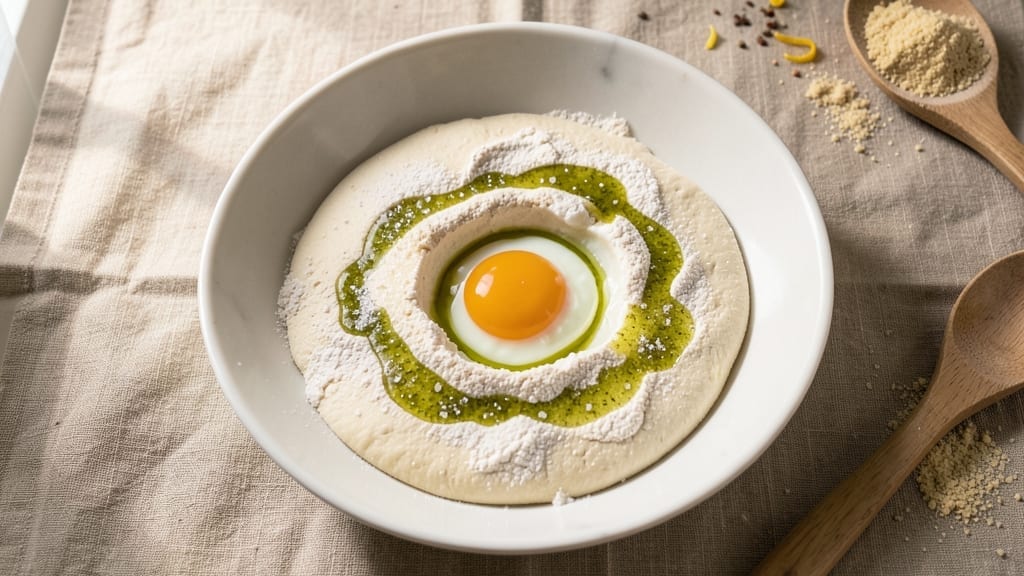
This 1 egg pasta dough recipe delivers restaurant-quality results with just three simple ingredients and no kneading—perfect for homemade spaghetti, lasagna, or fresh ravioli. The secret lies in the silky-smooth texture achieved through proper resting and rolling, transforming basic flour and eggs into golden, tender sheets that hold sauce beautifully.
I’ve perfected this method after years of testing, ensuring it’s foolproof for beginners while still impressive enough for seasoned cooks.
The dough’s magic comes from a simple ratio—just flour, eggs, and a pinch of salt—mixed until it forms a smooth ball. Unlike traditional recipes, this version skips kneading entirely, relying instead on a 10-minute rest to develop gluten naturally.
The result? A pliable dough that rolls out effortlessly, yielding perfectly thin strands or wide sheets for your favorite pasta shapes. Whether you’re making fettuccine or lasagna noodles, this dough is your foundation.
What sets this recipe apart is its versatility and reliability—no guesswork, no failed batches. The dough keeps well in the fridge for up to 48 hours or freezes for months, so you can prep ahead for meal prep or last-minute dinners.
Pair it with your favorite sauce, and you’ll taste the difference between store-bought and homemade in every bite. Ready to elevate your pasta game? Let’s get started.
For best results, use all-purpose flour and room-temperature eggs to ensure smooth mixing. If the dough feels too sticky, add a tablespoon of flour at a time until it comes together. Rolling it thin (about 1/16-inch) guarantees al dente pasta, while thicker sheets work perfectly for lasagna.
Store leftovers in an airtight container to keep them fresh—this dough is worth making again and again.
Ingredients for 1 egg pasta dough
Just three core ingredients transform into silky pasta sheets with no kneading—perfect for homemade magic.
| Ingredient | Amount | Notes |
|---|---|---|
| All-Purpose Flour 🌾 | 2 cups | Sifted for smooth texture |
| Large Eggs 🥚 | 1 whole | Room temperature, separated if needed |
| Fine Sea Salt 🧂 | ½ tsp | Diamond Crystal preferred |
| Semolina Flour (optional) 🌾 | 1 tbsp | For dusting pasta sheets |
| Olive Oil 🫒 | 1 tbsp | Extra-virgin for richness |
| Water (as needed) 💧 | 1-2 tbsp | Only if dough feels dry |
The flour is non-negotiable—King Arthur or Caputo Tipo 00 if you want restaurant-quality results, but regular all-purpose works perfectly fine for home cooks. I always grab a 5-pound bag from King Arthur because it’s reliable and sifts beautifully. For the eggs, room temperature is key—cold eggs make the dough tough. If your kitchen isn’t warm, let them sit in warm water for 5 minutes. The salt? Diamond Crystal dissolves better than table salt, but any fine sea salt works. Pro tip: measure your flour by weight (1 cup = 4.5 oz) for consistency, though volume works in a pinch.
No eggs? Flax eggs (1 tbsp ground flaxseed + 3 tbsp water = 1 egg) work for a vegan twist, though texture will differ slightly. Dough too sticky? Add flour 1 tbsp at a time—don’t overdo it. Too dry? A splash of warm water brings it back. The olive oil isn’t just for flavor—it keeps the dough supple during rolling. If you’re making lasagna sheets, skip the olive oil entirely and use only flour for dusting. For extra shine, brush finished pasta with a tiny bit of olive oil before cooking. And if you’re short on time, pre-mixed flour blends like Barilla’s ‘00 flour cut the prep work in half.
This dough keeps 48 hours in the fridge wrapped tightly in plastic, or 3 months frozen between parchment paper. For best results, let it come to room temperature before rolling. I like to portion it into 12-ounce balls before freezing—just thaw and roll as needed. Leftover dough? Toss it in the freezer and use within 2 weeks for optimal texture. The magic here is in the 10-minute rest—don’t skip it, even if you’re impatient. That’s what makes the difference between store-bought and homemade.
Why You’ll Love This Recipe
- Pantry Staples Only: I swear by this dough because it uses what’s already there—flour, eggs, salt. No specialty ingredients, no last-minute shopping runs. The olive oil keeps it tender without needing butter or yogurt, and honestly? That’s my kind of cooking.
- Rich Eggy Depth: One egg isn’t just enough—it’s perfect. The dough gets this subtle richness that store-bought can’t match, especially when rolled thin. Toss it with garlic and chili flakes, and suddenly, simple tomato sauce becomes ridiculously good.
- Meal Prep Goldmine: Make a batch on Sunday, refrigerate the dough, and roll it out fresh all week. Between us, I’ve fed my family fettuccine for three lunches straight from the same dough—no waste, no stress. The semolina dusting (if you use it) even keeps it from sticking like glue.
- Budget-Friendly Luxury: This costs me pennies per serving, but it feels like a splurge. A dozen eggs and a bag of flour stretch forever, and the dough freezes like a dream. I’ll be real: my college self would’ve cried happy tears over this.
Step-by-step instructions for silky smooth no-knead pasta dough
This simple method transforms basic ingredients into restaurant-quality pasta with minimal effort.
Create the Dough Base
On a clean work surface or in a large mixing bowl, combine the 2 cups all-purpose flour and 0.5 teaspoon fine sea salt. Use your fingers to create a well in the center—this creates space for the wet ingredients. I like to sift the flour first for a smoother texture, especially if it’s lumpy.
Add the 1 whole large egg (room temperature) and 1 tablespoon olive oil to the well. The egg should be at room temperature to blend smoothly with the flour. Using a fork or your fingers, gradually incorporate the wet ingredients into the dry, mixing just until a shaggy dough begins to form. Avoid overworking at this stage—we’re not kneading yet.
Form and Rest the Dough
Gently gather the dough into a loose ball, using just enough pressure to bring it together. If the dough feels dry or crumbly, add 1 tablespoon water (up to 2 tablespoons total) 1 teaspoon at a time until it holds together when pressed. The dough should be soft but not sticky—think of it as slightly tacky to the touch.
Flour your work surface lightly and shape the dough into a smooth, round disk. Wrap it tightly in plastic wrap and let it rest at room temperature for 30 minutes. This resting period allows the gluten to relax and the dough to absorb evenly, resulting in smoother pasta sheets. I always place the wrapped dough in a cool, dry spot away from direct sunlight.
Divide and Roll the Dough
After resting, divide the dough into 4 equal portions (about ½ cup each). Work with one portion at a time to prevent drying. On a lightly floured surface, use a rolling pin to roll the dough into a thin sheet, about 1/16-inch thick. I aim for even thickness—this ensures consistent cooking time and texture.
If using the 1 tablespoon semolina flour, lightly dust the pasta sheet with it before cutting. The semolina prevents sticking and adds a subtle nutty flavor. Roll the dough into a loose cylinder, then slice into ¼-inch wide strips for tagliatelle or cut into your desired pasta shape. Repeat with remaining dough portions, keeping unused portions covered with a damp towel to prevent drying.
Cook Immediately or Store Properly
Bring a large pot of salted water to a rolling boil. Cook the fresh pasta for 2-4 minutes until it floats to the surface and is al dente. Fresh pasta cooks much faster than dried—watch closely in the last minute. I always reserve 1 cup of pasta water before draining, as it helps emulsify sauces beautifully.
For storage, lay the cooked pasta on a floured surface to dry slightly, then freeze between layers of parchment paper. To use later, simply boil frozen pasta in salted water for 1-2 minutes longer than fresh. The key to success is working quickly—fresh pasta is best enjoyed immediately, but proper storage preserves its delicate texture.
Pro Tips For Making 1 Egg Pasta Dough
- Measure Flour Right: Use the spoon-and-sweep method—don’t scoop directly from the bag. Pack the flour lightly into your measuring cup, then level it off with a knife. Too much flour and your dough gets tough; too little and it sticks like glue. I learned this the hard way when my first batch turned out like a chewy brick.
- Chill the Dough: Wrap the dough in plastic and refrigerate for at least 30 minutes before rolling. Cold dough is easier to handle, less sticky, and won’t stick to your rolling pin or pasta machine. Sounds like a hassle, but it actually saves time—no more fighting with a gummy mess.
- Skip the Semolina (Unless): Only dust your work surface with semolina if you’re making long pasta or want extra grip. For most 1-egg doughs, all-purpose flour is fine—semolina just adds texture, not flavor. I used to overdo it, but now I reserve it for tagliatelle or lasagna.
- Work Fast After Mixing: Once the dough comes together, don’t let it sit—knead it immediately. Flour absorbs moisture over time, and resting too long makes the dough dry and crumbly. Get it on the counter within 5 minutes, or you’ll regret it later.
Make-ahead tips for leftovers
Prep Ahead for Pasta
Make the dough 24 hours ahead and store it wrapped tightly in plastic in the fridge. The longer rest actually improves texture by allowing gluten to relax fully. Portion into 12-ounce balls for easy use—just thaw at room temperature for 30 minutes before rolling.
I keep a stash of these in my freezer for lazy weeknights. ⏰
Freeze for Later Use
For long-term storage, wrap each dough ball in plastic wrap, then place in a ziplock bag with parchment paper between layers. This prevents sticking and freezer burn. Thaw overnight in the fridge before using—never microwave, as it makes the dough gummy. Label bags with dates to track freshness. 🥶
Pre-Cut Shapes
Roll out and cut pasta shapes ahead of time, then freeze them on a floured tray before transferring to bags. For lasagna sheets, pre-cut and layer with parchment between each to prevent sticking.
Cook frozen sheets 1-2 minutes longer than fresh. I pre-cut tagliatelle strips every Sunday for quick weeknight dinners. ✨
Sauce Prep Shortcuts
While your dough rests, prep sauce components in advance. Make a basic marinara or pesto and store in jars. Keep sauce ingredients separate (like raw garlic and oil) until ready to combine.
This saves time when you’re ready to cook. I always have a jar of prepped sauce in my fridge for 5-minute pasta nights. 🍅
Portion Control
Divide the dough into 4 equal portions before freezing. This makes it easy to thaw just what you need. For individual servings, use 1 portion per person (about ½ cup flour equivalent).
Label portions with the date—dough keeps 3 months frozen without quality loss. I color-code my freezer bags for different pasta types. 📅
Reheating Fresh Pasta
Cooked fresh pasta reheats best in a sauté pan with a splash of pasta water and butter. Heat on medium-low for 1-2 minutes while stirring constantly. For frozen pasta, boil in salted water for 2-3 minutes until heated through. Never microwave—it makes pasta mushy. 🔥
Nutrition facts
Frequently asked questions
Why does this dough need to rest before rolling?
The 10-minute rest is crucial for developing gluten properly without overworking the dough. This creates a smoother texture and prevents cracking when rolling. Think of it as giving the flour and egg time to fully bond, resulting in that perfect silky consistency.
Can I substitute the olive oil with something else?
Yes! You can omit the olive oil entirely if making lasagna sheets, or replace it with 1 teaspoon butter for richer flavor. For basic pasta, the oil keeps the dough supple during rolling. If you’re using a stand mixer, skip the oil—it can make the dough too sticky.
How do I fix dough that’s too sticky?
Add flour 1 tablespoon at a time while mixing until the dough holds together when pressed. If it’s extremely sticky, try chilling it for 10 minutes in the fridge before rolling. The key is to work quickly—don’t over-flour or the pasta will be dry. For extra insurance, use a damp towel to cover unused dough portions.
What’s the best way to roll pasta without a machine?
Use a rolling pin on a lightly floured surface, rolling from the center outward in all directions. For even thickness, roll the dough back and forth slightly after each turn. Aim for 1/16-inch thickness—hold up a credit card as a guide. If the dough sticks, dust with more flour or use semolina for a non-stick surface.
How do I store unused dough for later?
Wrap the dough ball tightly in plastic wrap and refrigerate for up to 48 hours, or freeze for 3 months. For freezing, portion into 12-ounce balls first. Thaw overnight in the fridge before using—never microwave. The dough keeps best when stored airtight to prevent drying.
