
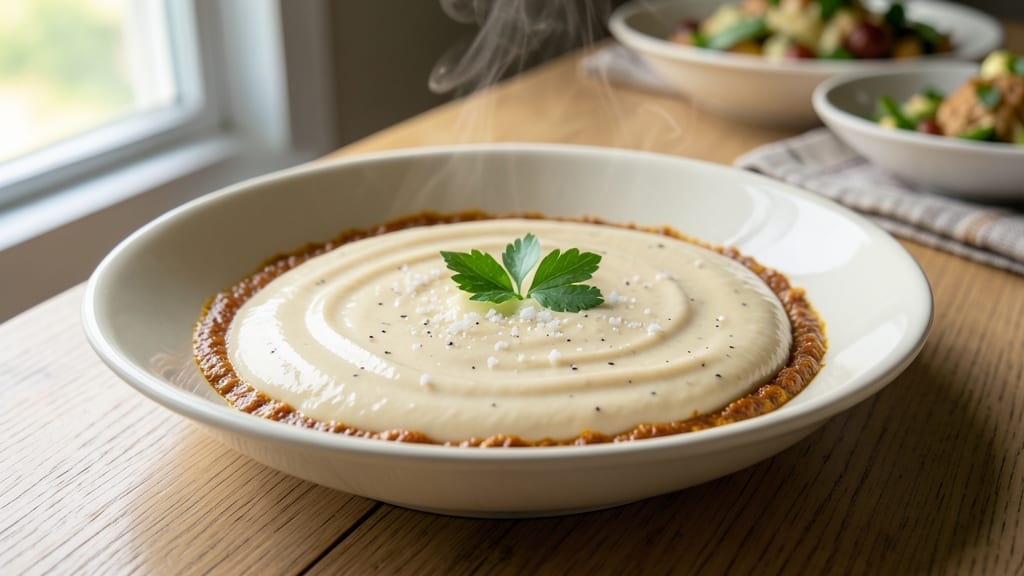
Creating a 1-gallon bechamel sauce transforms ordinary dishes into restaurant-quality masterpieces with its rich, velvety texture. This classic French sauce serves as the perfect foundation for lasagna, mac and cheese, and creamy casseroles—its versatility makes it a kitchen essential.
The secret lies in proper technique: slow cooking, constant stirring, and precise measurements to achieve that signature smooth consistency without lumps.
This recipe delivers a foolproof method for making a large batch—ideal for meal prep or feeding a crowd. With just butter, flour, and milk, you’ll create a sauce that’s creamy yet stable, holding its shape even after reheating.
The key is patience: allowing the roux to cook thoroughly before gradually whisking in warm milk ensures a silky finish. For extra richness, consider adding a splash of heavy cream or a knob of butter at the end.
Once complete, your bechamel will be ready to elevate any dish—whether layered in lasagna, mixed into creamy pasta, or used as a base for soups. Store leftovers in the fridge for up to 5 days or freeze for longer shelf life.
The possibilities are endless: cheese-lovers can stir in parmesan, while herb enthusiasts might add fresh thyme or nutmeg for depth. Let’s get started on this timeless classic.
This sauce is your secret weapon for transforming simple meals into showstoppers. The technique is straightforward, but the results are undeniably professional. Whether you’re prepping for a family dinner or stocking your freezer for busy weeks, this recipe delivers consistent, high-quality bechamel every time.
The only limit is your imagination—so experiment with flavors and uses!
Ingredients for 1 gallon bechamel sauce
Eight simple ingredients transform into a velvety, restaurant-quality bechamel base for your favorite creamy dishes.
| Ingredient | Amount | Notes |
|---|---|---|
| Unsalted Butter 🧈 | 1 ½ cups | Cold, cubed for even cooking |
| All-Purpose Flour 🌾 | 1 ½ cups | Sifted for smooth sauce |
| Whole Milk 🥛 | 4 cups | Warmed to 160°F for best results |
| Heavy Cream 🥛 | ½ cup | Optional for extra richness |
| Diamond Crystal Kosher Salt 🧂 | 1 ½ tsp | Adjust to taste |
| Freshly Ground White Pepper 🌶️ | ½ tsp | For classic bechamel flavor |
| Ground Nutmeg 🌿 | ¼ tsp | Freshly grated preferred |
| Fresh Thyme Leaves 🌿 | 1 tbsp | Optional for herbal depth |
The butter and flour form the sauce’s backbone, so quality matters. European-style butter like Plugrá or Kerrygold adds richer flavor, but any good unsalted butter works. For the flour, King Arthur or Gold Medal brands are reliable—avoid self-rising or pre-mixed flours. The milk should be whole for creaminess, but if you’re using lower-fat, warm it to 160°F to prevent curdling. Pro tip: keep your whisk handy—you’ll need it for constant stirring during the roux phase. The nutmeg is non-negotiable for authentic flavor, but if you’re sensitive to its taste, start with just 1/8 teaspoon and adjust.
No heavy cream? Extra milk or a splash of half-and-half works in a pinch. Running short on butter? Olive oil or vegetable shortening can substitute, though the flavor will differ slightly. Fresh thyme is ideal, but dried thyme at half the amount gets you close. The flour-to-butter ratio is critical—stick to the 1:1 ratio for proper thickening. For a dairy-free version, swap milk for unsweetened almond milk or oat milk**>, but expect a lighter texture. If your sauce thickens too fast, whisk in a splash of cold milk to loosen it up. And remember: patience is key—rushing the roux will lead to lumps.
This sauce stores beautifully—5 days in the fridge or 3 months in the freezer. For freezing, portion into 1-cup containers to thaw exactly what you need. Reheat gently on the stove with a splash of milk to restore creaminess. The sauce thickens as it cools, so thin with warm milk if needed. Leftovers make incredible lasagna layers or mac and cheese upgrades. Need to use it up fast? Try it as a creamy soup base or drizzled over roasted vegetables. The possibilities are endless once you’ve mastered this foolproof technique.
Why You’ll Love This Recipe
- Here’s what sold me: the heavy cream and milk combo gives it that luxurious mouthfeel, but the butter-to-flour ratio keeps it from being heavy. Honestly, it tastes like you slaved over it, even though you didn’t—just 10 minutes of stirring.
- I’ll be real: butter and cream aren’t cheap, but this recipe stretches further than store-bought sauces. A gallon feeds a crowd, and the kosher salt lets you adjust to taste—no wasted ingredients, just maximum flavor for every dollar spent.
Step-by-step instructions for perfect bechamel sauce
Here’s how to make a velvety, foolproof bechamel that works for everything from mac and cheese to lasagna.
Melt the Butter Over Gentle Heat
Place the 1.5 cups unsalted butter in a heavy-bottomed saucepan over medium-low heat. Let it melt completely, stirring occasionally with a wooden spoon until it’s fully liquid but not browned. Watch closely—if it starts to foam or smell nutty, you’ve gone too far.
This slow melt creates a smooth base without burning the butter. I like to use a saucepan with sloped sides—it makes whisking the roux easier later. Once fully melted, the butter should look clear and golden, not opaque or cloudy. Keep the heat at this gentle level throughout this step; patience here prevents a grainy sauce later.
Whisk in the Flour to Form a Roux
Reduce the heat to low and gradually whisk in the 1.5 cups all-purpose flour until fully incorporated. You’ll want to add it slowly—about 1 tablespoon at a time—to prevent lumps. Keep whisking constantly for 2-3 minutes until the mixture forms a smooth, pale golden roux.
This is your flavor foundation. The roux should look like wet sand with no dry flour remaining. If it starts to darken or smell toasty, you’ve cooked it too long. The perfect roux will bubble gently but not brown. Here’s the thing—if you rush this step, your sauce will taste raw and floury. Take your time and whisk like you mean it.
Gradually Add Warm Milk for a Smooth Sauce
Begin adding the 4 cups warm whole milk (previously heated to 160°F) very slowly while whisking vigorously. I like to use a ladle and pour it in a thin stream against the side of the pan, not directly into the roux. This gradual addition prevents lumps and helps control the thickness.
After each addition, whisk constantly until the mixture smooths out before adding more. You’ll notice the sauce will thicken dramatically as you add about half the milk. If you see any lumps forming, strain the sauce through a fine-mesh sieve immediately. The final consistency should be thick enough to coat the back of a spoon but still flow smoothly.
Season and Finish with Cream and Spices
Once all the milk is incorporated, stir in the 0.5 cup heavy cream, 1.5 teaspoons Diamond Crystal kosher salt, 0.5 teaspoon freshly ground white pepper, and 0.25 teaspoon ground nutmeg. Add the 1 tablespoon fresh thyme leaves last, giving them a quick stir before removing from heat.
Let the sauce simmer gently for 5-7 minutes to develop its flavor and thicken further. You’ll know it’s ready when it coats the spoon beautifully and has a silky texture. Taste and adjust seasoning—sometimes the nutmeg needs a little more, or the salt could use a pinch. Remember, you can always add more salt, but you can’t take it out.
Strain and Use Immediately
For the smoothest possible sauce, strain it through a fine-mesh sieve into a clean saucepan. This removes any potential lumps and gives you that restaurant-quality finish. Return the sauce to low heat and keep it warm, stirring occasionally, until ready to use.
Bechamel sauce is best used fresh, so don’t make it too far in advance. If you need to store it, let it cool completely, then refrigerate in an airtight container for up to 3 days. To reheat, warm gently over low heat, stirring constantly to prevent scorching. This sauce is incredibly versatile—use it for macaroni and cheese, lasagna, or even as a creamy base for soups.
Pro Tips For Making 1 Gallon Bechamel Sauce
- Melt Butter Slowly: I learned this the hard way—dumping cold butter into the pot at once makes the flour clump like a sad, lumpy mess. Instead, cut the butter into tablespoons and let each melt completely into the flour before adding the next. This gives you a smooth roux every time, no matter how impatient you are.
- Whisk Like Your Life Depends: The moment you stop whisking is the moment lumps form. Keep that arm moving constantly, especially when adding the milk and cream. If you’re using a hand whisk, go slow at first—adding liquid too fast turns your sauce into a gluey disaster. (Yes, even if you’re tired.)
- Salt the Milk First: Toss in half the kosher salt directly into the milk before you pour it into the roux. This way, the salt dissolves evenly, and you won’t end up with a bland sauce that suddenly tastes like the ocean halfway through. Trust me, your taste buds will notice.
- Simmer, Don’t Boil: Once everything’s combined, drop the heat to a gentle simmer—think tiny bubbles, not a rolling boil. Boiling bechamel turns it grainy and separates the fat, and no one wants that. Keep it at 180–190°F (75–85°C) the whole time, and you’ll get that silky, restaurant-quality texture.
Serving suggestions for 1 gallon bechamel sauce
Classic Comfort Dishes
This velvety bechamel transforms homemade mac and cheese into a decadent masterpiece. Mix 1 cup cooked elbow pasta with 1.5 cups shredded sharp cheddar and ½ cup grated Gruyère, then blanket with warm bechamel.
Top with breadcrumbs and a sprinkle of smoked paprika before broiling for 3-4 minutes> until golden. 🧀
Italian Showstoppers
Layer your bechamel between sheets of lasagna noodles, alternating with ricotta, mozzarella, and Italian sausage. For extra richness, add a thin layer of béchamel between the noodles and cheese—this creates that signature creamy texture in every bite.
Bake until bubbly and golden for a restaurant-quality dish. I always add a pinch of red pepper flakes to the sauce for subtle heat.
Creamy Soups & Stews
Use bechamel as the base for creamy potato leek soup or chicken and wild rice. Simmer 4 cups chicken broth> with 2 cups diced potatoes> and 1 cup sliced leeks> until tender, then stir in 1 cup bechamel sauce> and finish with fresh thyme.
The sauce adds body and richness without overpowering the other flavors. For a quick fix, blend it into cream of mushroom soup for extra depth.
Breakfast Upgrades
Elevate your morning routine with cheesy hash browns or French toast casserole. Mix 2 cups shredded hash browns> with 1 cup bechamel>, ½ cup shredded cheddar>, and 2 eggs, then bake until golden.
For French toast, soak bread in a mix of 1 cup bechamel>, 2 eggs>, and 1 tsp vanilla, then pan-fry until crispy. The sauce adds a luxurious touch that makes breakfast feel special. ✨
Vegetable Side Dishes
Transform roasted vegetables into gourmet sides by tossing them with warm bechamel. Try roasted Brussels sprouts or caramelized cauliflower—drizzle with sauce and top with toasted breadcrumbs and grated Parmesan.
The sauce clings beautifully to the veggies, creating a creamy, satisfying dish. For extra flair, add a dash of lemon zest to brighten the flavors.
Global Twists
Give your bechamel a global makeover! For Indian-style, stir in 1 tsp garam masala> and ½ tsp turmeric> to create a creamy curry base. For Mexican flair, add ½ tsp cumin>, ¼ tsp chili powder>, and a splash of lime juice.
The sauce adapts perfectly to fusion dishes—just adjust the spices to match your favorite cuisine. 🌍
Nutrition facts
Frequently asked questions
Can I make this bechamel sauce without heavy cream?
Replace the ½ cup heavy cream with an extra ½ cup warm whole milk or ¼ cup half-and-half. The sauce will still be creamy, though slightly lighter. For extra richness without cream, stir in 1 tablespoon melted butter at the end. The key is maintaining the same total liquid volume for proper consistency.
Why did my bechamel sauce turn out lumpy?
Lumps usually happen when milk is added too quickly or the roux isn’t whisked thoroughly. For next time, whisk constantly when adding milk and use a ladle to pour it slowly against the pan’s side. If lumps appear, immediately strain the sauce through a fine-mesh sieve. Always warm your milk to 160°F before adding—cold milk causes lumps too.
How can I make this sauce dairy-free?
Swap the butter for olive oil or vegan butter>, use unsweetened almond milk or oat milk> (warmed to 160°F), and replace heavy cream with coconut cream>. The texture will be lighter, but still creamy. For binding, add 1 tablespoon cornstarch> to the flour mixture. Taste as you go—dairy-free versions often need extra salt and nutmeg for flavor.
Can I make this sauce in a slow cooker?
Yes! Melt the butter and whisk in flour in a saucepan first, then transfer to a 3-4 quart slow cooker> on low. Gradually whisk in warm milk (about 1 cup at a time) until smooth. Cook on low for 2-3 hours>, stirring every 30 minutes to prevent skin formation. The slow cooker method is great for hands-off prep, but you’ll need to thin with extra milk if it gets too thick.
What’s the best way to reheat leftover bechamel?
Gently reheat over low heat> on the stovetop, stirring constantly to prevent scorching. Add a splash of warm milk if the sauce thickens too much. For microwave reheating, use 30-second intervals> on medium power, stirring between each. Never boil leftover bechamel—this breaks down the proteins and makes it grainy. If the sauce separates, whisk vigorously or blend briefly to restore smoothness.

- 77 Texas BBQ Taco Sauce Recipe: Smoky Chipotle Heat With Caramelized Depth - October 19, 2026
- 1930’s Chocolate Cake Recipe: Vintage Richness With Vanilla Bean Swirls - October 19, 2026
- 6 Ingredient Bread Recipe: No-Knead Wonder With Pantry Staples - October 19, 2026