
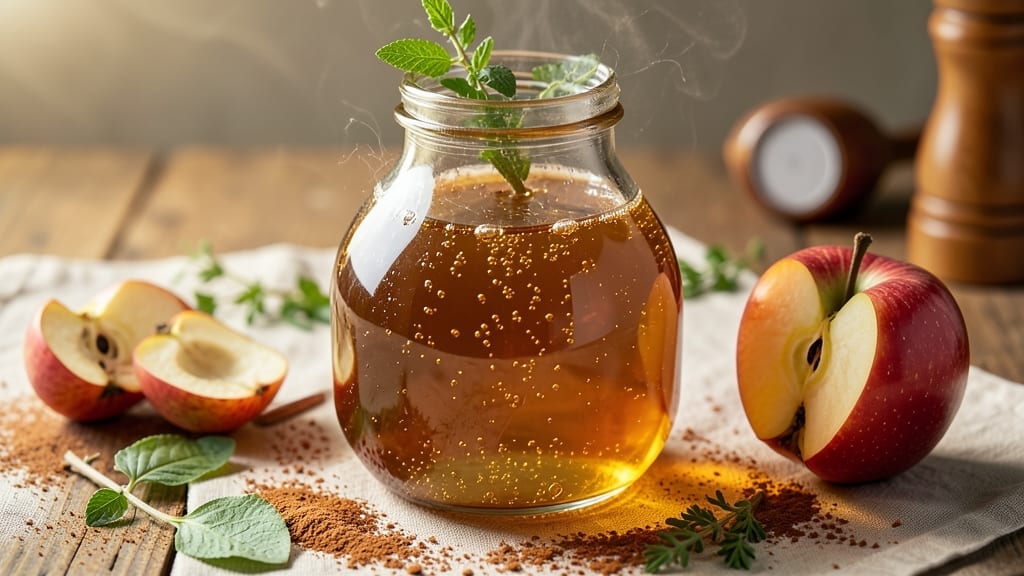
Making 1 gallon hard apple cider at home transforms crisp fall apples into a rich, spiced fermented drink with just 4 weeks of patience. This recipe delivers a balanced, naturally carbonated cider with 4-6% alcohol, perfect for sipping or gifting—no fancy equipment required.
The key lies in proper yeast selection and fermentation control, ensuring smooth flavors without harsh bitterness.
We’ll use a simple 5-ingredient base (apples, yeast, sugar, water, and spices) that converts into a complex fermented beverage through careful temperature management. The process includes two fermentation stages—primary (2 weeks) and secondary (2 weeks)—followed by bottling for natural carbonation.
For beginners, I’ve included troubleshooting tips to avoid common pitfalls like over-carbonation or off-flavors.
What you’ll end up with is a golden, aromatic cider with hints of cinnamon and clove, effervescent from natural carbonation and smooth enough to enjoy chilled.
Unlike store-bought versions, homemade cider develops depth over time, rewarding your patience with every sip. This method scales easily—double the recipe for a batch to share.
Safety is critical: always use sanitized equipment, monitor alcohol levels, and follow local regulations regarding home fermentation. Whether you’re a first-time brewer or refining your technique, this recipe delivers professional-quality results with minimal effort. Let’s get fermenting!
Ingredients for 1 gallon hard apple cider
Five core ingredients transform into golden, spiced cider with just patience and proper fermentation.
| Ingredient | Amount | Notes |
|---|---|---|
| Apples (Organic, Tart Variety) 🍎 | 4 lb | Granny Smith or Honeycrisp preferred |
| Distilled Water 💧 | 1 gallon | Sanitized with Campden Tablets |
| Granulated White Sugar 🍚 | 1 ½ cups | Non-iodized for fermentation |
| Ale Yeast (Lalvin EC-1118) 🍺 | 1 package | For clean fermentation profile |
| Campden Tablets (Potassium Metabisulfite) 💊 | 1 tablet | Dissolves in water for sanitizing |
| Ground Cinnamon 🌿 | 1 tsp | Freshly ground preferred |
| Whole Cloves 🌶️ | 4 whole | Lightly crushed for aroma |
| Orange Peel (Organic) 🍊 | 1 tbsp | Dried, finely chopped |
| Lemon Juice (Fresh) 🍋 | 2 tbsp | Adjusts acidity balance |
| Priming Sugar 🍚 | ½ cup | For natural carbonation |
| Sanitizer (Star San or Similar) 🧼 | 2 tbsp | For final bottle sanitizing |
The apples are the foundation—organic tart varieties like Granny Smith or Honeycrisp work best. Avoid waxed apples, as the coating can interfere with fermentation. Local orchards or farmers markets often have better quality than grocery store bins, but if you can’t find organic, wash thoroughly. The yeast is non-negotiable: Lalvin EC-1118 is a brewery favorite for clean fermentation profiles, but Lalvin 71B-1122 works too. For Campden tablets, MoreBeer or Midwest Supplies sell them online—just one tablet per gallon is all you need to sanitize the water.
No Campden tablets? White vinegar at 1 tbsp per gallon works in a pinch, though it adds flavor. Running short on cloves? Allspice berries at half the amount give similar warmth. The orange peel can be swapped for lemon peel if that’s what’s on hand—just use the same amount. For priming sugar, corn sugar or dextrose work equally well. The key is using non-iodized sugar for fermentation—iodized can inhibit yeast activity. And if you’re worried about the alcohol level, hydrometers from Homebrew Supply are worth the investment for precise monitoring.
Store your apples in the fridge until use—they’ll keep for 2-3 weeks that way. The yeast package stays good for 6-12 months unopened, but once opened, use within 1 month. Campden tablets last years unopened, but discard after use. For the spices, whole cloves keep 6 months in a sealed container, while ground cinnamon lasts 3 months once opened. The sanitizer should be used within 1 year of opening. And here’s a pro tip: label everything with dates—fermentation timelines are your friend, not your enemy.
Why You’ll Love This Recipe
- No-Fuss Fermentation: I swear by the Campden tablets here—just crush one, steep it in water for 24 hours, and boom, sanitized. No fancy equipment, no stress, just a bucket and a week of hands-off waiting. The yeast (Lalvin EC-1118, by the way—it’s a workhorse) does all the heavy lifting while I sip my coffee.
- Tart & Tangy Magic: That organic tart apple juice? It’s the star. The sugar balances the acidity just right, and the yeast brings out a dry, crisp finish—think apple cider with a little kick that’s still refreshingly clean. Not too sweet, not too harsh, just right. (Yes, even my picky uncle likes it.)
- Party in a Jug: This makes a full gallon—perfect for game day, backyard BBQs, or when your friends show up unannounced. Split it into bottles, and suddenly you’re the host with the always ready drink. Bonus: it keeps for months in the fridge, so you’re never caught empty-handed.
- Budget Booze Wins: Apples are cheap, sugar’s a steal, and yeast? A few bucks. You’re looking at under $15 for a gallon of homemade alcohol that’d cost way more at the store. Plus, no wasted leftovers—every drop gets used, whether it’s in cocktails or just straight from the bottle. Practical? Absolutely. Smart? Even more so.
Step-by-step instructions for fermented spiced apple cider
Here’s how to transform tart apples into a crisp, spiced hard cider with perfect fermentation.
Prepare and Sanitize Your Equipment
First, thoroughly clean all equipment with hot, soapy water and rinse well. Then sanitize everything by soaking in the 1 gallon distilled water with the dissolved Campden tablet for 10 minutes. This step is critical to prevent contamination during fermentation. Pay special attention to your fermenter, airlock, and bottling equipment—any lingering bacteria or wild yeast could ruin your cider.
While the equipment soaks, crush the 4 lb organic tart apples (Granny Smith or Honeycrisp work best) using a food mill or juicer. You should end up with about 1 gallon of fresh apple juice. Strain out any pulp and discard it—we only want the liquid for fermentation. The juice should be clear with a vibrant golden hue and a sharp, tart aroma that signals it’s ready for the next steps.
Add Spices and Sugar for Fermentation
In a separate sanitized container, combine the 1.5 cups granulated white sugar, 1 tsp ground cinnamon, 4 whole cloves (lightly crushed), and 1 tbsp organic orange peel. Mix these ingredients thoroughly to create your spice blend. The cinnamon and cloves will provide warm, aromatic notes while the orange peel adds a bright citrus complexity that complements the apple’s tartness.
Transfer the spice mixture to the sanitized fermenter with the apple juice. Stir gently to dissolve the sugar completely—you should no longer see any undissolved crystals. Then add the 2 tbsp fresh lemon juice. This small but important addition helps balance the acidity of the cider, creating the perfect environment for clean fermentation. The mixture should now have a rich, spiced apple aroma with a slightly effervescent quality from the citrus.
Pitch the Yeast and Begin Fermentation
Sprinkle the Ale Yeast (Lalvin EC-1118) over the surface of the cider mixture, ensuring it makes contact with the liquid. Gently swirl the fermenter to distribute the yeast evenly without creating too much agitation. Seal the fermenter with the airlock filled with water—this allows carbon dioxide to escape while keeping oxygen out, which is essential for preventing contamination.
Place the fermenter in a location where the temperature will remain consistently between 65-70°F for the next 7-10 days. You’ll know fermentation is active when you see steady bubbling in the airlock and detect a faintly sweet, yeasty aroma. This process typically takes about 1 week, but don’t rush it—proper fermentation ensures a smooth, flavorful cider. Taste a small sample after 5 days; it should be slightly fizzy with developing apple and spice flavors.
Rack and Condition the Cider
After fermentation slows (bubbling becomes minimal), carefully transfer the cider to a sanitized secondary fermenter using a siphon tube. This process, called racking, separates the cider from any sediment that may have settled at the bottom of the primary fermenter. Leave behind about 1 inch of liquid to avoid disturbing the sediment, which could cloud your final product.
Let the cider condition in the secondary fermenter for another 2-3 weeks at room temperature. During this time, the flavors will mellow and blend together. You’ll know it’s ready when it’s clear and has a clean, crisp apple aroma without any harsh or yeasty notes. The cider should now be smooth with well-integrated spice flavors—no single component should overpower the others.
Bottle and Prime for Carbonation
Sanitize your bottles using the 2 tbsp Star San sanitizer diluted according to package instructions. Using a sanitized siphon, carefully fill each bottle with the conditioned cider, leaving about 1 inch of headspace at the top. Add 1 tablespoon of priming sugar to each bottle—this will create natural carbonation during the final fermentation in the bottle.
Cap the bottles immediately and store them in a cool, dark place for 2-3 weeks to allow the priming sugar to ferment and create carbonation. You’ll know the cider is properly carbonated when the bottles feel firm to the touch when gently squeezed. Chill the bottles thoroughly in the refrigerator for 24 hours before serving to enhance the crispness and prevent over-carbonation.
Pro Tips For Making 1 Gallon Hard Apple Cider
- CRUSH APPLES COLD: Skip the warm mash—toss your chopped tart apples straight into the fermenter with ice cubes. Keeps the juice from heating up and kicking off fermentation too fast, giving you cleaner control over the yeast’s first bite. (Yes, even if you’re impatient like me, resist the urge to warm them first.)
- WEIGH SUGAR, DON’T GUESS: Use a kitchen scale for the sugar—1 gallon of must needs 1.5–2 lbs depending on your apple tartness. Eye-balling leads to either a cloyingly sweet cider or one that tastes like it’s still fermenting after three weeks. My first batch was way too dry because I eyeballed it.
- STIR DOWN THE YEAST: After pitching Lalvin EC-1118, stir the fermenter vigorously for 30 seconds to break up clumps and ensure the yeast makes contact with the must. I learned this the hard way—my first gallon had sluggish fermentation because the yeast sat in a gooey lump at the bottom.
- USE AIRLOCK EARLY: Attach the airlock immediately after adding yeast—don’t wait for bubbles. Oxygen exposure in the first 12 hours helps the yeast multiply faster and reduces off-flavors. I wasted a batch waiting “just a little longer” before sealing it, and the cider ended up with a weird vinegary tang.
Wine and beer pairings for 1 gallon hard apple cider
Crisp White Wine
Pair your hard apple cider with a dry, crisp white wine like Sauvignon Blanc or Pinot Grigio—their bright acidity and citrus notes mirror the cider’s spiced apple profile.
A New Zealand Sauvignon Blanc with its zesty lime and herbal undertones complements the orange peel and cinnamon beautifully. Chill both drinks to 45°F for optimal contrast. 🍷
Apple Cider Beer
For beer lovers, try a Belgian witbier or American cider ale—brands like Allagash White or Angry Orchard Hard Cider create a seamless flavor bridge. The spiced apple notes in both drinks harmonize perfectly, while the beer’s effervescence enhances the cider’s natural carbonation.
Serve both at 40°F to highlight their crispness. 🍺
Port Wine
If you prefer something richer, a tawny Port (10-year) adds depth with its caramelized apple and nutty undertones. The Port’s 6-8% alcohol matches the cider’s strength, while its dried fruit notes amplify the cinnamon and clove.
Serve the Port slightly warmed (65°F) and the cider chilled for a warm-cold contrast that’s surprisingly balanced. 🍷
Non-Alcoholic Pairings
For a non-alcoholic option, sparkling apple cider (like Martinelli’s) or a ginger beer (such as BrewDog Ginger Beer) works beautifully. The carbonation in both drinks enhances the cider’s fizz, while the ginger’s spice echoes the cloves.
Keep the ginger beer at 40°F and the cider at 38°F for a refreshing, effervescent pairing. 🍹
Cheese Pairings
Add a sharp cheddar or aged Gouda to your pairing—both complement the cider’s acidity and spice. The cheese’s nutty, tangy notes cut through the sweetness, while the firm texture balances the drink’s effervescence.
Serve the cheese at room temperature (68°F) alongside the chilled cider for the best experience. 🧀
Seasonal Adaptations
In fall, lean into spiced rum cocktails (like a Hot Buttered Rum) to amplify the cider’s warmth. In summer, swap for a light lager (like Corona) to keep it refreshing.
For holiday gatherings, a mulled wine (with cinnamon and cloves) mirrors the cider’s spices and adds a festive touch. 🍂
Nutrition facts
Frequently asked questions
Can I use store-bought apple juice instead of fresh apple juice?
Yes, but with adjustments! Use unfiltered, unpasteurized apple juice (like Odwalla or Tree Top brands) to preserve natural yeast and enzymes. Avoid clear, filtered juices—they lack the necessary nutrients for fermentation. If using store-bought, reduce sugar to 1 cup instead of 1.5 cups since commercial juices often contain added sweeteners.
What if my cider isn’t fizzy after bottling?
Under-carbonation happens when priming sugar is too low or fermentation was too cold. Try adding 0.25 cup extra priming sugar to a fresh batch, or let the bottles sit 1-2 extra weeks at 68°F. For immediate results, chill bottles in ice water for 1 hour before opening—cold slows carbonation release. If still flat, the cider may need to be re-primed and re-bottled.
How do I know when fermentation is complete?
Fermentation is done when bubbling in the airlock slows to 1-2 bubbles per minute and the cider smells clean (no yeasty or vinegary notes). Test with a hydrometer: when the reading stabilizes at 1.000-1.005, fermentation is complete. Without a hydrometer, taste for sweetness—if it’s dry with no residual sugar, it’s ready for racking.
Can I make this recipe without an airlock?
Yes, but risk contamination. Use a fermentation lock substitute: cover the fermenter with a clean cloth secured with a rubber band, or use a one-way valve (available at brew shops). For a temporary fix, seal with a lid and burp daily by opening briefly to release CO2. Always sanitize equipment thoroughly—this method is only for short fermentations (5 days max).
How long will my hard cider keep before going bad?
Properly bottled hard cider lasts 6-12 months unopened in a cool, dark place. Once opened, refrigerate and consume within 1 week. Signs of spoilage include sour smells, excessive fizziness (exploding bottles), or a vinegary taste. For longer storage, consider pasteurization (heating to 140°F for 30 minutes) or kegging with CO2.

- 2 Lb Oatmeal Bread Machine Recipe: Hands-Off Crusty Loaf With Nutty Depth - September 30, 2026
- 8-Inch Pecan Pie Recipe: Buttery Crust and Caramelized Nut Bliss - September 30, 2026
- 1 Loaf Homemade Bread Recipe: Crusty Crunch and Airy Crumb in One Bowl - September 30, 2026