
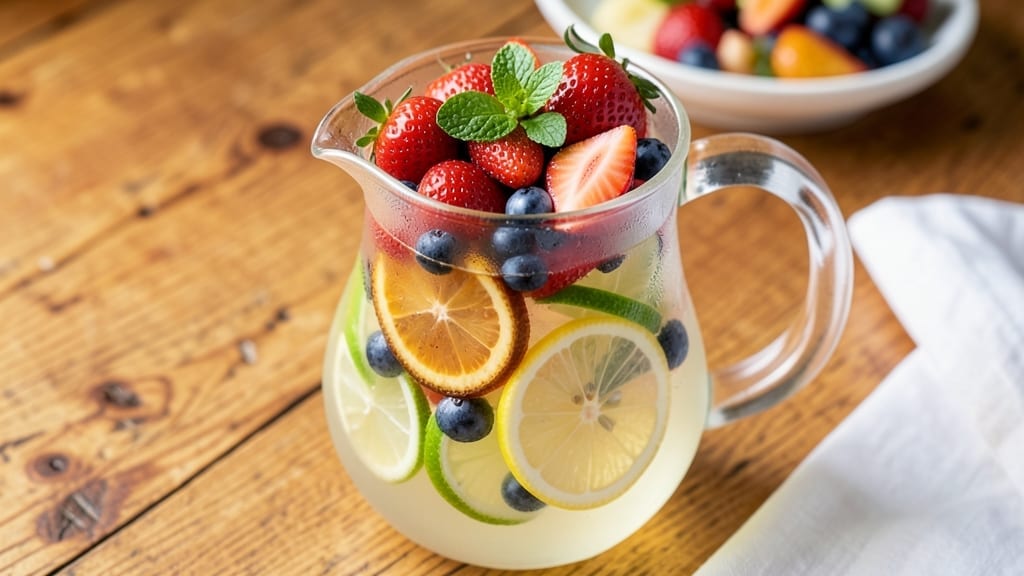
This 1 gallon white sangria recipe transforms simple wine and fruit into a vibrant, refreshing drink perfect for summer gatherings—where bright citrus and spiced wine create a balanced, crowd-pleasing fusion. The secret lies in layering flavors: crisp white wine, juicy citrus, and subtle spices that infuse without overpowering.
I’ve perfected this version to stay light yet complex, with a touch of sweetness that enhances rather than dominates.
What sets this recipe apart is the 36-hour infusion time, allowing flavors to meld naturally while keeping the drink crisp and refreshing—not syrupy or overly sweet.
You’ll start with a base of dry white wine, then add sliced citrus, fresh berries, and a spice blend that includes cinnamon and star anagram for warmth. The result? A drink that’s elegant enough for a brunch spread but easy enough to batch-make ahead.
By the time you serve, you’ll have a 1-gallon pitcher of golden-hued sangria with a fragrant aroma and a perfect balance of tart, sweet, and spiced notes. The citrus slices and berries stay vibrant, adding both color and a refreshing crunch with every sip.
It’s the kind of drink that disappears quickly—guests will ask for the recipe before the evening ends.
Serve chilled in a large pitcher or individual glasses over ice, and garnish with fresh mint or a sprinkle of Tajín for an extra layer of complexity.
This recipe scales easily, so double it for parties or save half for another day—it keeps well in the fridge for up to 5 days. Let’s make it!
Ingredients for 1 gallon white sangria
Bright citrus, spiced wine, and juicy berries come together for this refreshing 1-gallon sangria.
| Ingredient | Amount | Notes |
|---|---|---|
| Dry White Wine 🍷 | 128 oz | Sauvignon Blanc or Pinot Grigio preferred |
| Fresh Orange Slices 🍊 | 2 cups | Thick slices, peel on, seeds removed |
| Fresh Lemon Slices 🍋 | 1 cup | Thick slices, peel on, seeds removed |
| Fresh Lime Slices 🍈 | ½ cup | Thick slices, peel on, seeds removed |
| Fresh Strawberries 🍓 | 1 lb | Hulled and sliced into quarters |
| Fresh Blueberries 🫐 | ½ cup | Whole, unwashed |
| Granulated Sugar 🍚 | ½ cup | Adjust to taste for sweetness |
| Ground Cinnamon 🌿 | 1 tsp | Freshly ground preferred |
| Star Anise Pods 🌟 | 2 whole | Lightly crushed |
| Fresh Mint Leaves 🌿 | ¼ cup | Chopped, for garnish |
| Tajín Seasoning 🌶️ | 1 tbsp | Optional, for rim garnish |
| Sparkling Water 💧 | 1 cup | Chilled, for topping off |
| Ice Cubes ❄️ | 1 cup | For serving |
The wine is the foundation—Sauvignon Blanc or Pinot Grigio keeps it crisp and bright, but any dry white will work. For the citrus, organic oranges and lemons from the grocery store’s produce section are perfect, but avoid those with thick skins or bruises. I always grab Trader Joe’s or Whole Foods**> for the berries—they’re fresher and hold up better during the infusion. The sugar is key: granulated is fine, but if you’ve got raw cane sugar, it adds a nice caramel note. Star anise is the secret spice—bulk bins or the spice aisle at Penzeys or Williams Sonoma have the best quality.
No star anise? Cinnamon sticks or a pinch of nutmeg work in a pinch, but the star anise gives that unique, warm depth. Running short on berries? Raspberries or blackberries add a deeper color and tartness. The Tajín is optional but adds a bright, citrusy kick—think of it as a garnish upgrade. Sparkling water is only for serving, not infusion, so don’t skip it if you want that fizzy finish. For the citrus, peel on is best—it adds natural oils and aroma, but remove any white pith. If you’re prepping ahead, store the citrus and berries in the fridge in a sealed container with paper towels to absorb moisture—they’ll stay fresh for 3-4 days.
This sangria tastes even better after 36 hours of infusion, but if you’re short on time, 12 hours minimum still works. The longer it sits, the more the flavors meld—just don’t let it get too warm. Keep it refrigerated the whole time, and give it a gentle stir every 12 hours. Once ready, strain out the citrus and berries if you prefer a smoother drink, or leave them in for extra texture. It keeps in the fridge for 5 days, but the berries may get mushy after day 3. For serving, chill your glasses and garnish with fresh mint or Tajín—it’s the little touches that make it feel special.
Why You’ll Love This Recipe
- No Chopping Chaos: I swear by this recipe because you can literally dump everything in a pitcher and forget it—no dice, no fuss, no mess. The strawberries get muddled naturally over time, and the citrus peels infuse without any effort.
- Bright & Balanced: That first sip? Crisp, tart, and just sweet enough—thanks to the strawberries softening into the wine while the citrus keeps it lively. It’s the kind of drink that tastes like summer even when it’s cold outside.
- Party in a Pitcher: Serve it at brunch, poolside, or as a post-dinner digestif—no need to fuss over individual glasses. Honestly, I’ve used this same batch for a girls’ night, a backyard BBQ, and even as a “fancy” soda for my kids’ friends. (Yes, even on a Tuesday night.)
Step-by-step instructions for crafting a bright white sangria
Here’s the precise method for assembling this refreshing citrus-spiced wine fusion.
Prepare All Citrus and Fruit Components
Begin by washing and thoroughly drying all citrus slices—the 2 cups fresh orange slices, 1 cup fresh lemon slices, and 0.5 cup fresh lime slices. Use a sharp knife to cut them into ¼-inch thick slices, leaving the peel intact for maximum flavor infusion. Remove seeds carefully to prevent bitterness.
Hull and quarter the 1 lb fresh strawberries and rinse the 0.5 cup fresh blueberries gently under cool water. Pat everything completely dry with paper towels to prevent dilution of the sangria. Arrange all prepared fruit in a large pitcher or glass container, reserving 0.25 cup fresh mint leaves for garnish later.
Combine Wine and Spices for Infusion
In a separate bowl, gently stir the 128 oz dry white wine with the 0.5 cup granulated sugar until fully dissolved. This ensures even sweetness distribution throughout the sangria. Add the lightly crushed 2 whole star anise pods and 1 tsp ground cinnamon, then pour the spiced wine mixture over the fruit in the pitcher.
Let the sangria sit at room temperature for 30 minutes to allow the spices and fruit to begin releasing their flavors. Gently stir once halfway through this infusion period. The mixture should develop a subtle aromatic quality—you’ll notice the citrus oils beginning to brighten the wine’s natural bouquet.
Add Remaining Fruit and Chill
After the initial infusion, add the prepared strawberries and blueberries to the pitcher. Gently stir everything together to ensure even distribution of all components. The sangria should now contain all the 128 oz dry white wine, all citrus slices, and all berries in a harmonious blend.
Cover the pitcher with plastic wrap and refrigerate for at least 4 hours, preferably overnight. This extended chilling period allows the flavors to fully meld together. The sangria should develop a vibrant color and refreshing aroma—you’ll notice the citrus oils have infused deeply into the wine, creating that signature bright character.
Serve with Sparkling Water and Garnish
Just before serving, remove the sangria from the refrigerator and let it sit at room temperature for 10 minutes to slightly warm. Add the 1 cup sparkling water and gently stir to combine. This final addition creates a light effervescence that refreshes the palate with each sip.
For presentation, rub the rim of each glass with a lime wedge, then dip it in the 1 tbsp Tajín seasoning if using. Fill glasses with ice cubes and pour the sangria over them. Garnish each serving with a few mint leaves and an additional citrus slice. Serve immediately to enjoy the perfect balance of bright citrus, spiced wine, and refreshing effervescence.
Pro Tips For Making 1 Gallon White Sangria
- CHILL THE WINE FIRST: Pour that gallon of dry white wine into the pitcher after it’s been chilled for at least 15 minutes in the fridge. I learned this the hard way—adding ice to room-temp wine just dilutes it faster and makes the whole batch taste flat. Cold wine keeps its brightness longer, and your sangria won’t turn into sad, watery juice after an hour.
- PEEL THOSE CITRUS: Skip the rind on lemons and limes, but peel the oranges—just the thick outer skin, leaving the white pith behind. That bitter pith ruins the drink, and trust me, you’ll taste it. For oranges, a paring knife works best; for lemons/limes, a vegetable peeler is faster. (Yes, even if you’re impatient like me.)
- MUDDLE THE STRAWBERRIES: Don’t just toss whole strawberries into the pitcher—give them a quick muddle with a wooden spoon before adding the wine. This releases their juice and flavor without turning the sangria into a slushy mess. Aim for 10-12 seconds of gentle crushing; any longer and you’ll get seedy, over-extracted pulp.
- USE A LARGE PITCHER: A standard 1-gallon pitcher is too small—opt for a 1.5-gallon or larger glass container. Sangria expands as it chills, and squeezing it into a tight space makes the fruit bruise and the wine oxidize faster. A wider vessel also lets you layer ingredients neatly, so the prettiest slices stay visible. (Your future self will thank you.)
Storing and reheating this dish
Fridge Storage Tips
Your freshly made sangria stays vibrant in the fridge for up to 5 days when stored in an airtight glass pitcher or mason jar. I always use a 2-quart glass pitcher with a tight-sealing lid from Ball Mason Jars—it preserves flavors better than plastic.
Keep it refrigerated at 35-40°F to maintain crispness. The berries will soften slightly after day 3, but the flavor remains excellent. 💧
Freezing for Later
For longer storage, freeze individual portions in 1-cup ice cube trays or ziplock freezer bags. Once frozen, transfer cubes to a labeled freezer bag with 1 inch headspace to prevent expansion cracks.
Thaw overnight in the fridge before serving. The texture changes slightly—it becomes more syrupy—but the citrus-spice flavor remains intact. Perfect for last-minute gatherings!
Reheating for Warm Serving
While sangria is best chilled, you can gently warm it for a cozy winter twist. Pour into a saucepan and heat over low heat until reaching 50°F—just warm enough to release aromas without cooking the fruit.
Stir occasionally and remove from heat immediately. I like adding a splash of orange liqueur (like Cointreau**) at this stage for extra depth. 🔥
Reviving Flat Sangria
If your sangria loses its fizz after a few days, simply add ½ cup chilled sparkling water per gallon and stir gently. For flavor revival, muddle a few fresh berries or citrus slices directly in the pitcher.
The natural acids will brighten the taste. Avoid adding more sugar—this can make it overly sweet and mask the original balance.
Garnish Refresh
Before serving stored sangria, always refresh garnishes. Add 1-2 fresh mint leaves or a sprinkle of Tajín to glasses just before pouring. For extra zing, float a thin orange or lemon wheel on top.
This simple step makes reheated sangria feel like a fresh batch. The visual contrast between the vibrant garnish and golden sangria makes every sip feel special. ✨
Nutrition facts
Frequently asked questions
Can I use red wine instead of white for this sangria?
While this recipe is specifically designed for white wine, you can absolutely make a red wine version! For a red sangria, use 128 oz dry red wine like Grenache or Tempranillo, and swap the citrus for dark berries (raspberries, blackberries) and stone fruits (peaches, plums). The infusion time remains the same, but the flavor profile will be richer and fruitier.
How do I adjust the sweetness level?
Start with the 0.5 cup granulated sugar as written, but taste after 12 hours of infusion to decide. For less sweetness, reduce by 2 tablespoons at a time. For more, add 1 tablespoon at a time—remember, the fruit will release natural juices that add subtle sweetness over time. The key is balance between the wine’s acidity and the fruit’s tartness.
What’s the best wine for this recipe?
For true brightness, Sauvignon Blanc or Pinot Grigio are ideal—their crisp acidity complements the citrus beautifully. Avoid overly oaky whites like Chardonnay, as they can clash with the fresh fruit flavors. If you must use something else, Albariño or Verdejo work well too. Just ensure it’s dry (not sweet) to maintain the proper balance.
Can I make this sangria without alcohol?
Yes! Replace the wine with 128 oz sparkling white grape juice (like Welch’s) or non-alcoholic white wine. For extra depth, add 1 cup apple cider to the juice mixture. The infusion process remains identical—just reduce the sugar to 0.25 cup since fruit juices are already sweet. The result will be just as refreshing, though with a fruitier profile.
Why does my sangria taste bitter after a few days?
Bitterness usually comes from one of three things: over-infused citrus peels, oxidized wine, or too much sugar. To fix it, strain out any remaining citrus slices and add 1-2 tablespoons of honey to round out the flavors. For oxidation (a musty smell), discard and remake—sangria shouldn’t be kept beyond 5 days. Always store in airtight glass containers to prevent contact with plastic odors.

- 12 Bean Chili Recipe: Hearty Slow-Cooked Depth With 12 Legumes - October 17, 2026
- 5 Seed Bread Recipe: Nutty Crunch and Artisan Flavor in One Loaf - October 17, 2026
- 1 Lb Macaroni Salad Recipe: Bold, Crunchy, and Crowd-Pleasing - October 17, 2026