
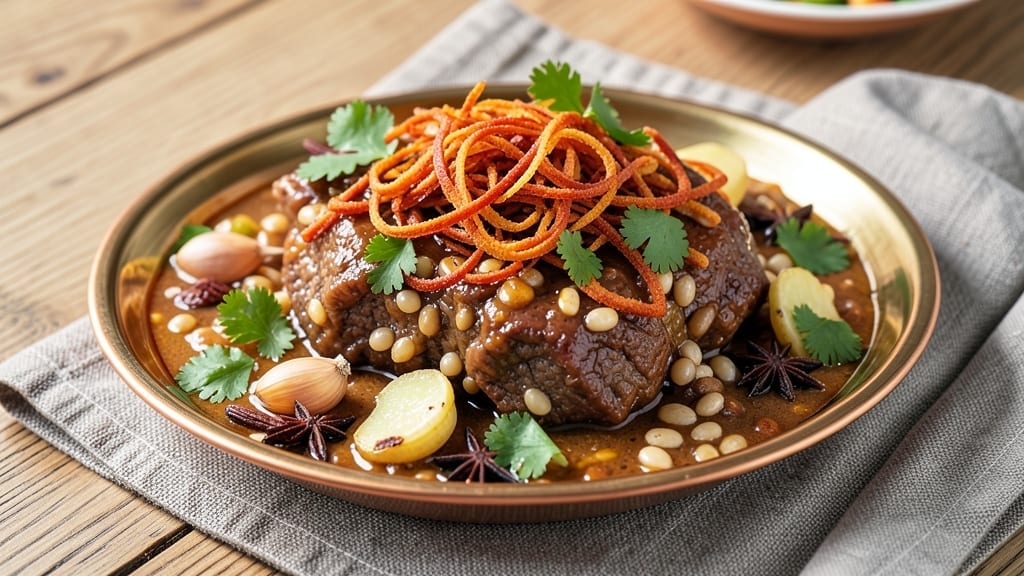
This 1 kg beef haleem recipe delivers the rich, slow-cooked comfort of South Asia’s most beloved winter dish—where tender beef and wheat berries meld into a velvety, spiced porridge. ✨ The secret lies in hours of gentle simmering, transforming tough cuts into melt-in-your-mouth perfection while developing deep, aromatic flavors from whole spices and ghee.
I’ve perfected this version to stay true to tradition while making it approachable for home cooks, using simple ingredients and a foolproof layering technique that builds flavor gradually.
The dish begins with a fragrant base of onions, garlic, and ginger sautéed in ghee until golden, forming the foundation for layers of warming spices like cumin, cardamom, and cinnamon. Beef and wheat berries cook low and slow, absorbing the spiced broth until they’re so tender they practically dissolve.
The result is a dish that’s hearty yet comforting, with a texture that’s neither too thick nor too thin—just right for spooning into bowls. This recipe serves 6-8 generously, making it ideal for family gatherings or special occasions when you want to impress with authentic South Asian hospitality.
What makes this beef haleem truly special is its ability to transform a simple meal into a celebration. The aroma alone—warm, spiced, and deeply inviting—fills your home long before the dish is ready.
Served with crispy fried onions, fresh cilantro, and a side of tangy raita or pickles, it becomes a complete experience. The slow cooking process allows the flavors to develop fully, resulting in a dish that’s far more complex than its humble ingredients suggest.
Once you taste this version, you’ll understand why haleem is a staple during festivals and cold weather across Pakistan, India, and the Middle East.
For those new to haleem, don’t be intimidated by the long cooking time—it’s what makes the dish so extraordinary. The key is patience and attention to layering the spices correctly.
Whether you’re preparing it for a holiday feast or simply craving a taste of home, this recipe delivers restaurant-quality results with a touch of tradition. Let’s get cooking—your taste buds will thank you.
Ingredients for 1 kg beef haleem
Simple ingredients, slow cooking, and layers of spice transform tough beef into melt-in-your-mouth comfort.
| Ingredient | Amount | Notes |
|---|---|---|
| Beef Chuck Roast 🥩 | 2.2 lb | Tough cut for slow cooking, bone-in preferred |
| Wheat Berries 🌾 | 1 cup | Soaked overnight for best texture |
| Yellow Onions 🧅 | 3 whole | Medium size, finely chopped |
| Garlic Cloves 🧄 | 8 cloves | Peeled and crushed for aroma |
| Fresh Ginger 🌿 | 2 tbsp | Grated, aromatic quality preferred |
| Ghee 🧈 | ½ cup | Clarified butter for rich flavor |
| Cumin Seeds 🌶️ | 1 tbsp | Toasted for deeper aroma |
| Cardamom Pods 🌿 | 10 whole | Green cardamom preferred |
| Cinnamon Sticks 🌳 | 4 whole | 1-inch pieces for infusion |
| Bay Leaves 🍃 | 2 whole | Dried, for subtle earthiness |
| Turmeric Powder 🌶️ | 1 tsp | Freshly ground preferred |
| Red Chili Powder 🌶️ | 1 tsp | Adjust for heat preference |
| Salt 🧂 | 1 ½ tsp | Kosher or sea salt |
| Fresh Cilantro 🌿 | ½ cup | Chopped, for garnish |
| Fried Onions 🧅 | ¼ cup | For topping, store-bought okay |
The beef is the star here—chuck roast with good marbling breaks down beautifully during slow cooking. Look for bone-in cuts at Indian or Middle Eastern markets if possible, as they add extra flavor. Wheat berries are key: soak them overnight to reduce cooking time and improve texture. I always grab mine from bulk bins at Whole Foods or specialty stores—they hold up better than pre-cooked wheat. For spices, Penzeys or local Indian grocers have the freshest whole spices, but don’t stress if you can’t find them—just make sure they smell aromatic, not dusty.
No ghee? Butter or coconut oil works in a pinch, but ghee gives that authentic rich flavor. Running short on cardamom? Substitute with 1/2 tsp cardamom extract or skip it entirely—it’s more about aroma than necessity. The fried onions can be homemade (sauté thinly sliced onions in oil until crispy) or store-bought from Indian markets. For the ginger, fresh is non-negotiable—ground ginger lacks the bright flavor. If you can’t find whole cardamom pods, ground cardamom at 1/4 tsp will do, though it’s not the same. The wheat berries? Don’t skip the soaking—it cuts cooking time from hours to minutes.
This dish tastes even better the next day as flavors meld. Store in an airtight container in the fridge for up to 5 days, or freeze portions for 3 months. I like to portion it into individual servings before freezing—just reheat with a splash of water until warm. The fried onions keep for 1 week in the fridge if stored in a sealed container. For serving, I always add fresh cilantro and a drizzle of ghee on top—simple but makes it feel special. The aroma alone will have everyone gathering around your table.
Why You’ll Love This Recipe
- One-Pot Magic: I swear by this recipe—just toss everything into a single pot, and let the slow cook do the work. No chopping mountains of onions or stirring for hours; the wheat berries soften while the beef melts into tender perfection.
- Deep Umami Bomb: That beef chuck roast? Slow-cooked until it’s practically falling apart, then layered with caramelized onions and fresh ginger. Honestly, the first bite makes me close my eyes—it’s rich, warm, and packed with that slow-simmered depth you can’t get anywhere else.
- Weeknight Crowd-Feeder: Between us, this is my secret weapon for unexpected guests or lazy Sundays. Double the batch, and you’ve got leftovers that taste even better reheated—plus, the wheat berries make it hearty enough to fill even the hungriest stomachs.
- Budget-Friendly Luxury: You’re getting a whole kilo of beef and a big pot of comfort for less than takeout costs. I’ll be real: my wallet thanks me every time, and my family never complains about the price tag (or the seconds).
Step-by-step instructions for slow-cooked spiced beef haleem
Here’s how to transform tough beef and wheat berries into a velvety, aromatic masterpiece.
👨🍳 Step 1: Prepare the Wheat Berries and Spice Base
First, rinse the 1 cup wheat berries thoroughly under cold water to remove any debris. Then soak them in plenty of water for at least 8 hours (overnight works best) until they’re soft but not mushy. Drain well before using.
In a large heavy pot, melt 0.5 cup ghee over medium heat. Add the 1 tbsp cumin seeds and toast them for 30 seconds until fragrant and lightly golden. Immediately add the 3 whole yellow onions (chopped) and cook for 8-10 minutes until they turn golden brown and caramelized. This creates the flavor foundation for your haleem.
🍳 Step 2: Build the Spice Infusion
Add the 8 cloves garlic cloves (crushed), 2 tbsp fresh ginger (grated), 10 whole cardamom pods, 4 whole cinnamon sticks, and 2 whole bay leaves to the pot. Cook for 2 minutes until the garlic is fragrant and the spices begin to release their aroma.
Stir in the 1 tsp turmeric powder, 1 tsp red chili powder, and 1.5 tsp salt, mixing well to distribute the spices evenly. The mixture should smell rich and complex—this is where the magic happens. Cook for another 30 seconds until the spices are fully incorporated and the oil begins to turn a beautiful golden hue.
🔥 Step 3: Cook the Beef and Combine Ingredients
Add the 2.2 lb beef chuck roast (cut into large chunks) to the pot and sear on all sides for 3-4 minutes until it develops a nice brown crust. This step is crucial for building deep flavor.
Pour in 8 cups water (enough to cover the beef by about 2 inches) and bring to a gentle boil. Reduce heat to low, cover partially, and simmer for 1 hour until the beef becomes fork-tender. Add the drained 1 cup wheat berries and simmer for another 30 minutes until the wheat berries are tender and the beef is falling apart.
🥘 Step 4: Finish and Garnish
Adjust the seasoning with more salt if needed, then stir in the 0.5 cup fresh cilantro (chopped) and 0.25 cup fried onions Serve the haleem hot in bowls, garnished with additional fried onions. The perfect haleem should have a rich, spiced broth with tender beef and wheat berries that melt in your mouth. Enjoy with warm naan or roti for the ultimate comfort meal!
Pro Tips For Making 1 Kg Beef Haleem
- SOAK WHEAT 8 HOURS MINIMUM: I used to cut this step short and ended up with grainy, undercooked wheat—no matter how long I simmered. Soak the wheat berries in warm water (not boiling) with a pinch of salt for at least 8 hours, or overnight. The longer they soak, the more they break down into that creamy, porridge-like texture haleem needs. Drain just before cooking, but don’t rinse—those starches are what thicken the dish.
- SEAR BEEF IN BATCHES: Crowding the pan turns your beef into a sad, steamed pile instead of golden, flavor-packed chunks. Work in 3-4 batches over medium-high heat, letting each batch develop a crust for 4-5 minutes. The Maillard reaction here is non-negotiable—it’s what carries the deep, savory notes through the long cook. Use a little oil, but don’t overcrowd the pan.
- BLEND ONIONS TO A PASTE: Chopped onions burn before they soften, and you’ll spend the next 3 hours scraping them off the bottom. Pulse them in a food processor until they’re a rough paste—just fine enough to dissolve into the broth. This also cuts cooking time by 20 minutes and keeps the flavor consistent. (Yes, even if you’re not a fan of food processors—trust me on this one.)
- SIMMER LOW AND COVERED: After the initial sear and boil, drop the heat to the lowest setting your stove will handle and keep that lid on tight. I’m talking “barely a bubble” heat—if you’re lifting the lid every 5 minutes to check, you’re doing it wrong. This slow cook transforms tough beef into melt-in-your-mouth pieces and keeps the wheat from turning mushy. Patience here makes the difference between good haleem and great haleem.
Regional styles of these flavors
Pakistani Style
In Pakistan, haleem is often made with a slightly richer spice profile, using more green cardamom pods (15-20) and adding 1 tsp shahi jeera (caraway seeds) for depth.
The texture is thicker, almost porridge-like, achieved by cooking with less water (6 cups instead of 8) and adding ½ cup yogurt at the end for creaminess. I like to finish it with a sprinkle of fried garlic and extra ghee for that signature Pakistani touch. 🌟
Indian Variations
Indian haleem often incorporates lentils (½ cup red lentils or masoor dal) along with wheat berries, creating a heartier, protein-packed dish. The spice blend leans more toward black pepper (½ tsp freshly cracked) and nutmeg (¼ tsp), giving it a warm, slightly peppery kick.
In Hyderabad, it’s common to add 1 tsp saffron infused in warm milk for a luxurious finish. The consistency is slightly looser than Pakistani versions. 💛
Middle Eastern Twist
Middle Eastern haleem, especially in Gulf countries, often swaps wheat berries for bulgur wheat (1 cup) and includes 1 tsp allspice and ½ tsp cloves for a sweeter, more aromatic profile.
The dish is frequently served with a side of tahini sauce (2 tbsp tahini + lemon juice) instead of raita. I’ve found that adding ½ cup chopped dates at the end balances the richness beautifully. 🌶️
Bangladeshi Adaptation
Bangladeshi haleem is known for its extra ginger (3 tbsp) and lemon juice (2 tbsp), which brightens the dish and cuts through the richness. The beef is often marinated overnight in 1 tbsp yogurt + 1 tsp garam masala before cooking.
This version also includes ½ cup chopped mint in the final garnish, adding a refreshing herbal note that’s uniquely Bangladeshi. 🌿
Modern Shortcuts
For busy cooks, I recommend using pre-soaked wheat berries (available at Indian grocery stores) to cut prep time by half. You can also replace whole spices with 1 tbsp garam masala and ½ tsp cinnamon for convenience, though the flavor won’t be as complex.
Another time-saver: pressure cooking the beef for 45 minutes before simmering—it reduces total cook time by 2 hours without sacrificing tenderness. ⏰
Nutrition facts
Frequently asked questions
Can I use a different cut of beef for this haleem?
Yes! While chuck roast is ideal, you can also use brisket or short ribs for extra richness. Avoid lean cuts like sirloin—they won’t become tender enough. For tougher cuts, increase simmering time by 30-45 minutes until fork-tender. The bone-in versions add depth of flavor, but boneless works too.
Why does my haleem turn out too thick or too thin?
Texture depends on water ratios and cooking time. For a thicker consistency (Pakistani-style), use 6 cups water and simmer longer. For thinner (Indian-style), add 1-2 cups more water during cooking. Stir occasionally and adjust gradually—adding water at the end can make it watery. The wheat berries should be tender but not mushy.
How can I make this recipe gluten-free?
Replace wheat berries with quinoa (1 cup) or buckwheat groats (1 cup)—both soak well and cook similarly. Use gluten-free ghee or oil, and check all spice blends for hidden gluten. The texture will be slightly lighter, but the spiced beef remains the star. Serve with gluten-free flatbreads like millet roti for a complete meal.
Can I prep haleem ahead of time?
Haleem tastes even better the next day. Store in an airtight container in the fridge for 5 days or freeze for 3 months. Reheat gently on low heat with a splash of water—never microwave directly from frozen. The flavors meld beautifully overnight, making it perfect for meal prep.
What are the best sides to serve with beef haleem?
Traditional pairings include warm naan or roti, tangy raita (yogurt with cucumber/mint), and pickled onions or limes to cut the richness. For extra crunch, serve with fried papadums or a simple cucumber salad. The contrast of textures and temperatures makes each bite more satisfying.

- 6 Oz Chocolate Chip Cookie Recipe: Perfectly Balanced Crispy Edges and Chewy Hearts - September 25, 2026
- 6-Inch Coffee Cake Recipe: Vanilla Bean Swirls and Buttery Streusel Topping - September 25, 2026
- 1 Hour Soup Recipe: Velvety Richness Without the Wait - September 25, 2026