
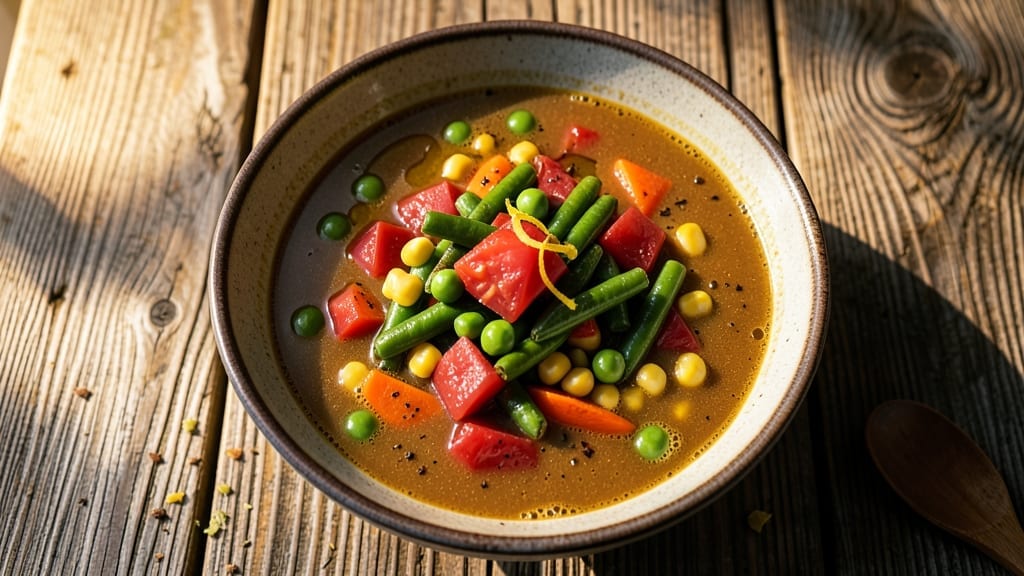
This 8-can vegetable soup transforms pantry staples into a hearty, comforting one-pot meal that requires no fresh produce or advanced skills. The beauty lies in its simplicity: eight cans of vegetables, broth, and basic seasonings come together through simmering to create a rich, flavorful soup that’s both budget-friendly and satisfying.
What makes this recipe stand out is how it elevates simple ingredients into something restaurant-worthy with just a few strategic techniques—like proper seasoning and simmering time.
The process is designed for efficiency, with all ingredients combined in one pot and left to develop deep, layered flavors over 30-45 minutes of simmering. No chopping, no peeling, and no fuss—just open cans, pour, and let the magic happen.
The result is a soup that’s creamy from blended vegetables, hearty from beans, and packed with the natural sweetness of carrots, corn, and peas. It’s the kind of meal that warms you up on chilly days while keeping your kitchen clean.
What you’ll end up with is a vegetarian-friendly soup that’s thick enough to coat the back of a spoon but still light enough to enjoy as a starter or main dish.
The texture is perfect—tender vegetables hold their shape while releasing their flavors into the broth, creating a harmonious blend that’s both comforting and nutritious. This is the kind of recipe that proves you don’t need a complicated process to make something extraordinary.
Serve it as-is for a rustic feel, or garnish with fresh herbs, a swirl of cream, or a sprinkle of cheese for added richness. It reheats beautifully, making it ideal for meal prep or leftovers.
Whether you’re feeding a family or treating yourself to a cozy night in, this soup delivers warmth and satisfaction with minimal effort.
Ingredients for 8 can vegetable soup
Eight cans of pantry vegetables plus a few staples transform into restaurant-worthy soup with zero chopping.
| Ingredient | Amount | Notes |
|---|---|---|
| Vegetable Broth 💧 | 4 cups | Low-sodium preferred, or homemade |
| Diced Tomatoes (14.5 oz can) 🍅 | 1 can | San Marzano preferred for sweetness |
| Corn Kernels (15 oz can) 🌽 | 1 can | Drained, or frozen corn works |
| Carrots (15 oz can) 🥕 | 1 can | Diced, or baby carrots chopped |
| Peas (15 oz can) 🌱 | 1 can | Drained, or frozen peas thawed |
| Green Beans (15 oz can) 🌿 | 1 can | Drained, or fresh green beans blanched |
| Mushrooms (14.5 oz can) 🍄 | 1 can | Diced, or fresh mushrooms sautéed |
| Potatoes (15 oz can) 🥔 | 1 can | Diced, or russet potatoes cubed |
| Tomato Paste (6 oz can) 🍅 | 1 can | For depth, or 2 tbsp concentrated |
| Onion Powder 🧅 | 1 tbsp | Fresh onion preferred but powder works |
| Garlic Powder 🧄 | 1 tsp | Fresh garlic preferred but powder works |
| Dried Thyme 🌿 | ½ tsp | Fresh thyme preferred but dried works |
| Salt 🧂 | 1 tsp | Diamond Crystal preferred, adjust to taste |
| Black Pepper 🌶️ | ½ tsp | Freshly ground for best flavor |
| Olive Oil 🫒 | 1 tbsp | Extra-virgin for richness, optional |
The vegetable cans are the soul of this soup—look for no-salt-added varieties at Trader Joe’s or Walmart for the best flavor control. San Marzano diced tomatoes add natural sweetness that cuts through the earthiness of mushrooms and carrots. I always grab the Libby’s or Del Monte brands for consistency, but any canned vegetable works. Fresh mushrooms or potatoes? Blanch them first—just 3 minutes in boiling water to soften them slightly before adding to the pot. The tomato paste is non-negotiable for depth; Rao’s or Muir Glen are my go-tos, but any quality brand will do.
No vegetable broth? Water plus 2 vegetable bouillon cubes works in a pinch, but it won’t taste as rich. Swapping canned veggies? Frozen works perfectly—just thaw and drain them first. The onion and garlic powders can be replaced with 1/4 cup finely chopped fresh onion and 2 cloves minced garlic if you’ve got them. For extra creaminess without dairy, blend half the soup at the end—it’ll turn velvety smooth. The olive oil is optional but adds a nice richness if you’re serving it with crusty bread.
This soup tastes even better the next day—make a double batch and freeze half for lazy weeknights. Store leftovers in the fridge for 4-5 days, or freeze for up to 3 months. I like to portion it into 2-cup containers so I can grab one straight from the freezer. Reheat gently on the stove with a splash of broth to restore creaminess. Garnish with a swirl of vegetable cream or a sprinkle of nutritional yeast for that cheesy touch without dairy.
Why You’ll Love This Recipe
- No Chopping Needed: I swear by this when I’m too tired to peel carrots or dice onions. Just dump those eight cans—tomatoes, corn, peas, carrots—right into a pot with broth, stir, and simmer. The pre-diced veggies do all the work.
- Sweet-Savory Magic: That combo of sweet peas, buttery carrots, and tangy tomatoes? It’s the kind of balance that makes you go back for a third bowl. The corn adds just enough texture to keep it from feeling too mushy.
- Meal Prep MVP: I make a double batch every Sunday and freeze half. Whether it’s a quick lunch or a side for dinner, it reheats in minutes. Honestly, it’s my go-to when I need something reliable for the week.
- Pantry Staple Power: No fresh ingredients? No problem. This soup thrives on canned veggies, so it’s cheap, lasts forever, and never goes to waste. Plus, the broth stretches to feed four for under $5.
Step-by-step instructions for one-pot vegetable soup
Transform pantry staples into a rich, hearty soup with minimal effort—this method keeps everything in one pot for easy cleanup.
Sauté Aromatics for Flavor Foundation
Heat the 1 tablespoon olive oil in a large pot over medium heat until shimmering. Add the 1 tablespoon onion powder and 1 teaspoon garlic powder, stirring constantly for 30 seconds until fragrant. This step builds the aromatic base that carries through the entire soup.
Don’t let the spices burn—they should smell warm and inviting, not acrid. If using fresh onion or garlic instead of powders, sauté them until soft and translucent before adding the vegetables. The subtle caramelization adds depth that canned versions often miss.
Build the Base with Tomato Paste
Reduce heat to medium-low and stir in the 1 can tomato paste (6 oz). Cook for 2-3 minutes, stirring frequently, until the paste darkens slightly and coats the bottom of the pot. This creates a rich, concentrated flavor that prevents the soup from tasting watery.
This is where the magic happens—the tomato paste acts as a natural thickener and flavor enhancer. If you’re using concentrated tomato paste instead of a can, reduce it by half (to 2 tablespoons) and cook it down for 1 extra minute to intensify the flavor.
Combine Vegetables and Broth
Add all the canned vegetables—1 can diced tomatoes (14.5 oz), 1 can corn kernels (15 oz), 1 can carrots (15 oz), 1 can peas (15 oz), 1 can green beans (15 oz), 1 can mushrooms (14.5 oz), and 1 can potatoes (15 oz)—along with the 4 cups vegetable broth. Stir gently to combine, then bring to a gentle boil over medium-high heat.
Once boiling, reduce heat to medium-low and let it simmer uncovered for 15 minutes. This allows the flavors to meld while preventing the potatoes from breaking down too much. If using fresh vegetables instead of canned, add them at this stage and adjust cooking time accordingly.
Season and Simmer to Perfection
Add the 0.5 teaspoon dried thyme, 1 teaspoon salt, and 0.5 teaspoon black pepper, stirring well to distribute the seasoning. Taste and adjust the salt if needed—low-sodium broth often requires extra seasoning. Simmer uncovered for another 10-12 minutes until the potatoes are tender and the flavors are fully developed.
The soup should have a thick, hearty consistency with visible chunks of vegetables. If it’s too thin, simmer uncovered for 5 more minutes to reduce. For extra richness, stir in 1 tablespoon butter or 2 tablespoons heavy cream at the end, but skip this if you prefer a lighter texture.
Finish and Serve Warm
Remove from heat and let the soup sit for 5 minutes to allow the flavors to settle. Taste again and adjust seasoning if needed—this is where you can really refine the balance of salt, acidity from the tomatoes, and earthiness from the mushrooms. Ladle into bowls and serve immediately with crusty bread or over rice.
For best results, serve within 2 hours while the soup is still steaming hot. The flavors continue to develop as it cools, so if you need to reheat, do so gently over low heat with a splash of broth to restore the original consistency.
Pro Tips For Making 8 Can Vegetable Soup
- Simmer, Don’t Boil: This soup isn’t a race—keep the heat at a gentle simmer (think tiny bubbles, not rolling) or the peas will turn to mush and the carrots stay rock-hard. I learned this the hard way after serving a soup where the peas had dissolved into the broth like overcooked pasta.
- Drain, Then Add: Open those cans of corn, tomatoes, and peas, but drain them first—especially the corn and peas. The extra liquid from the cans will dilute your broth and turn your soup into a watery glop. Trust me, skipping this step is how you end up with a sad, thin soup.
- Salt the Broth Early: Taste and season the vegetable broth before dumping in all the cans—this is the thing that matters most. Canned veggies and broth vary wildly in saltiness, and you’ll regret waiting until the end when you realize you need to add a whole extra teaspoon to fix it.
- Stir in the Corn Last: Add the corn kernels right at the end—just 2-3 minutes before serving. Corn cooks faster than you think, and if you let it sit too long, it’ll turn to paste and lose that sweet, bright crunch. (Yes, even if you’re impatient like me.)
Wine and beer pairings for this 8 can vegetable soup
Light White Wine
An Italian Pinot Grigio or Sauvignon Blanc from New Zealand balances the soup’s earthy vegetables and creamy texture beautifully. The crisp acidity cuts through the richness of mushrooms and potatoes while complementing the sweetness of corn and carrots.
I reach for Santa Margherita Pinot Grigio—its bright citrus notes refresh the palate with every sip. 🍷
Crisp Lager
A German Helles Lager like Augustiner Helles or an American Coors Light provides a clean, neutral backdrop that lets the soup’s natural flavors shine. The subtle malt sweetness pairs well with the tomatoes and peas, while the effervescence cleanses the palate between spoonfuls.
For a craft option, try a Belgian Saison—its peppery notes add an unexpected but delightful contrast. 🍺
Red Wine Option
If you prefer red, a light-bodied Gamay from Beaujolais or a Chianti with its bright acidity works surprisingly well. The fruitiness of the wine mirrors the tomatoes and carrots, while its tannins are gentle enough not to overpower the dish.
I love Domaine de la Janasse Beaujolais—it’s fruity yet earthy, mirroring the soup’s depth. 🍇
Non-Alcoholic Pairings
For a refreshing non-alcoholic match, try sparkling apple cider like Martinelli’s—its effervescence and slight tartness complement the soup’s sweetness. Alternatively, a ginger beer like Feather’s adds a zesty kick that enhances the thyme and black pepper flavors. Both options keep the meal feeling celebratory without alcohol. 🍎
Herbal Tea Enhancement
If you’re serving soup as a starter, pair it with a chamomile or peppermint tea to highlight its soothing qualities. The herbal notes harmonize with the thyme and garlic, creating a cohesive flavor experience.
For a warmer option, a rooibos tea with a splash of honey adds natural sweetness that echoes the soup’s carrots and corn. ☕
Nutrition facts
Frequently asked questions
Can I use frozen vegetables instead of canned?
Yes! Frozen vegetables work perfectly—just thaw and drain them first. Use the same quantities as the canned versions (about 1 cup per can), and add them with the broth in Step 3. Frozen veggies may need 5-10 extra minutes of simmering to soften fully. The texture will be slightly different but just as flavorful.
How do I make this soup thicker?
Simmer uncovered for 5-10 extra minutes to reduce the liquid naturally. For instant thickening, stir in 1 tablespoon cornstarch mixed with 2 tablespoons cold water and simmer for 2 minutes until clear. Alternatively, blend half the soup for a creamy consistency—just return it to the pot and reheat.
Can I make this soup in a slow cooker?
Combine all ingredients in your slow cooker and cook on Low for 6-8 hours or High for 3-4 hours. Skip the sautéing step—the spices will still infuse. The longer cook time makes the flavors even deeper, and the texture will be creamier from the potatoes breaking down more.
What if I don’t have tomato paste?
Use 1/4 cup tomato sauce instead, or add 2 extra tablespoons of concentrated tomato paste if you have it. For a non-tomato option, stir in 1/2 teaspoon smoked paprika with the spices to add depth. The soup will still be flavorful, though the color will be slightly lighter.
How do I prevent the soup from tasting too canned?
Boost freshness by adding 1/2 teaspoon lemon juice or 1 teaspoon apple cider vinegar at the end. Fresh herbs like parsley or basil (even a little) brighten the flavors. Also, simmering longer (20-25 minutes total) helps meld the flavors beyond the canned taste. A splash of cream or butter at the end adds richness too.

- 6 Oz Chocolate Chip Cookie Recipe: Perfectly Balanced Crispy Edges and Chewy Hearts - September 25, 2026
- 6-Inch Coffee Cake Recipe: Vanilla Bean Swirls and Buttery Streusel Topping - September 25, 2026
- 1 Hour Soup Recipe: Velvety Richness Without the Wait - September 25, 2026