
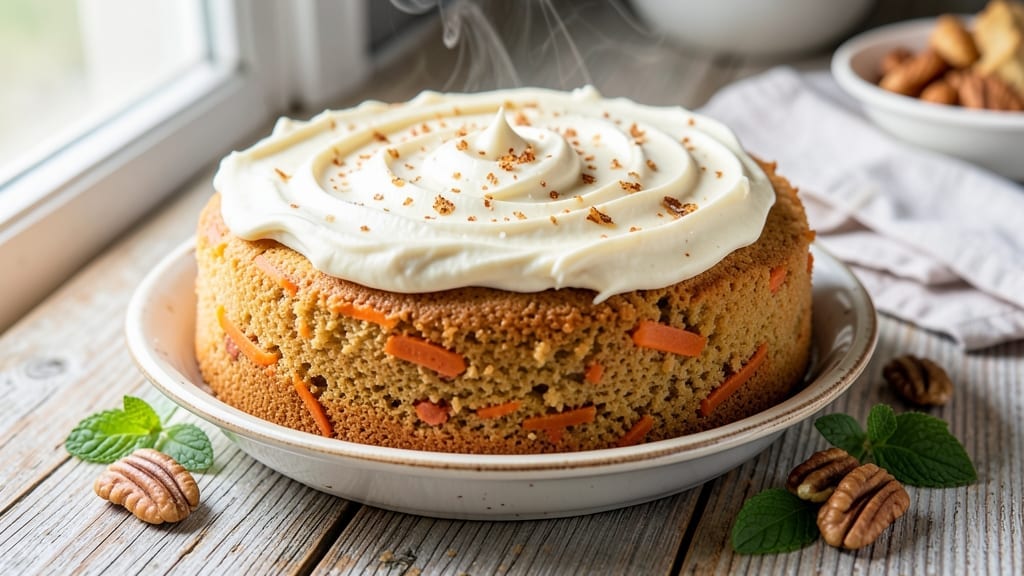
This 1-layer carrot cake recipe delivers all the classic flavors—spiced, moist, and packed with shredded carrots—without the fuss of multiple layers or complicated techniques. The secret lies in a precise balance of ingredients and baking method that ensures a tender crumb and perfect rise every time, even for beginners.
What makes this version stand out is how it achieves that signature carrot cake texture in a single pan, saving time and effort without sacrificing a single bit of flavor.
The foundation of this recipe is a simple yet effective batter that combines flour, sugar, eggs, and oil to create a moist, cake-like texture. Shredded carrots add natural sweetness and moisture, while warm spices like cinnamon, nutmeg, and ginger create that familiar aromatic profile.
Baking at the right temperature ensures a golden top and edges while keeping the center tender—no dry, crumbly results here. This approach makes it ideal for those who love the taste of traditional carrot cake but prefer a streamlined baking process.
What you’ll end up with is a moist, spice-packed cake that’s perfect for celebrations or a cozy dessert at home. The flavor is rich and satisfying, with just the right balance of sweetness and warmth from the spices.
Once baked, it’s ready for your favorite frosting—whether that’s a classic cream cheese glaze or a lighter vanilla buttercream. The simplicity of the recipe doesn’t compromise on quality, making it a reliable choice for any occasion.
This carrot cake is also versatile enough to adapt to dietary preferences, such as reducing sugar or using alternative flours, while still delivering that signature carrot cake experience.
The instructions are clear and straightforward, ensuring success even if you’re new to baking. Let’s get started on creating a dessert that’s as impressive as it is delicious.
Ingredients for 1 layer carrot cake
Simple pantry staples and a few fresh ingredients for that signature carrot cake flavor.
| Ingredient | Amount | Notes |
|---|---|---|
| All-Purpose Flour 🌾 | 2 cups | Sifted for even texture |
| Granulated Sugar 🍚 | 1 ½ cups | White or light brown |
| Vegetable Oil 🫒 | 1 cup | Light or canola preferred |
| Large Eggs 🥚 | 2 whole | Room temperature for even mixing |
| Unsweetened Applesauce 🍎 | ½ cup | For moisture without oil |
| Shredded Carrots 🥕 | 2 cups | Packed, medium size carrots |
| Ground Cinnamon 🌿 | 2 tsp | Freshly ground preferred |
| Ground Ginger 🌶️ | 1 ½ tsp | Freshly ground for warmth |
| Ground Nutmeg 🌿 | ½ tsp | Freshly grated nutmeg |
| Baking Soda 🧂 | 1 tsp | For proper rise |
| Salt 🧂 | ½ tsp | Kosher or sea salt |
| Vanilla Extract 🌸 | 1 tbsp | Pure vanilla preferred |
| Walnuts 🥜 | 1 cup | Chopped, optional topping |
The carrots are the star here—medium-sized ones give you the perfect texture when shredded. Organic carrots from the produce section at Whole Foods or your local grocery store work best, but any bright orange carrots will do. I always grab a couple extra to snack on while baking—carrot sticks with hummus are my go-to. For the spices, Penzeys or the bulk bins at Trader Joe’s have the freshest ground cinnamon and nutmeg, but regular grocery store jars work fine if they’re not past their prime. Freshly ground spices make all the difference in that warm, cozy flavor.
No walnuts? Pecans or almonds work just as well for the topping. Short on applesauce? Extra oil or yogurt keeps the cake moist—just reduce the oil by 2 tbsp if using yogurt. The baking soda is non-negotiable for that perfect rise, but if you’re worried about over-baking, add 1/4 tsp cream of tartar to stabilize it. For the sugar, light brown sugar adds subtle depth, but white sugar keeps it classic. And if you’re feeling adventurous, substitute half the sugar with coconut sugar for a caramel-like note.
This batter keeps for 2 days in the fridge if you want to prep ahead—just cover it tightly. The cake itself stays fresh for 4-5 days at room temperature, wrapped in foil. For longer storage, slice and freeze portions for up to 3 months. I always bake an extra half-pan and freeze slices for lazy days—microwave for 20 seconds to revive. The frosting? That’s your call—classic cream cheese glaze or a simple vanilla buttercream both work beautifully.
Why You’ll Love This Recipe
- One-Bowl Wonder: I swear by this recipe when I’m in a rush—just toss everything into a bowl, mix until the applesauce disappears, and you’re done. No fancy prep, no extra bowls, and honestly? That’s all I need on a Tuesday night.
- Moist Magic: The applesauce keeps it tender without drying out, while the sugar and oil create that classic carrot cake richness. It’s not too sweet, not too dense—just right, like a hug in cake form.
- Leftover Hero: This cake holds up beautifully for days, so I often bake it once and enjoy it for snacks all week. Slice it cold for a breakfast treat or warm it up with a sprinkle of cinnamon for a cozy afternoon pick-me-up.
- Budget-Friendly Staples: Using pantry basics like flour, sugar, and applesauce means I’m not breaking the bank, and the oil keeps costs low too. It’s the kind of recipe that feels special but won’t drain my wallet—win-win.
Step-by-step instructions for 1 layer carrot cake recipe
Here’s how to bake a perfectly moist, spice-packed carrot cake without the fuss of layers.
Prep Ingredients and Preheat the Oven
Start by preheating your oven to 350°F. This temperature ensures even baking without drying out the cake. While it heats, sift the 2 cups all-purpose flour into a medium bowl. This step removes any lumps and helps create a lighter texture. In a separate large bowl, whisk together the 1.5 cups granulated sugar, 1 cup vegetable oil, 2 whole large eggs, and 0.5 cup unsweetened applesauce until smooth. The applesauce replaces some of the oil, keeping the cake moist without adding extra fat.
In a small bowl, combine the 2 cups shredded carrots, 2 tsp ground cinnamon, 1.5 tsp ground ginger, 0.5 tsp ground nutmeg, 1 tsp baking soda, 0.5 tsp salt, and 1 tbsp vanilla extract. The spices should smell warm and inviting—this is where the magic happens. Chop the 1 cup walnuts if they aren’t already, as they add a nice crunch to the moist cake.
Mix Wet and Dry Ingredients
Gradually add the sifted flour mixture to the wet ingredients, mixing on low speed with a hand mixer or electric beaters until just combined. Overmixing can make the cake dense, so stop as soon as the batter comes together. The batter should be thick but pourable—think of it like a thick pancake batter. Fold in the prepared carrots and spice mixture gently with a spatula to avoid deflating any air bubbles you’ve incorporated.
This is where the applesauce really shines—it keeps the cake tender while the carrots add natural moisture. If the batter looks too thick, add a splash of water or milk (not in the ingredients list, but you can use up to 2 tablespoons if needed). The goal is a smooth, even consistency that will bake up evenly.
Prepare the Pan and Bake
Grease an 8-inch round cake pan or line it with parchment paper to prevent sticking. Pour the batter into the prepared pan and smooth the top with a spatula. Tap the pan gently on the counter a few times to release any air bubbles trapped in the batter. Sprinkle the chopped walnuts evenly over the top—this adds texture and a nice crunch that contrasts with the soft cake.
Bake in the preheated oven for 35-40 minutes, or until a toothpick inserted into the center comes out clean. The cake should be golden brown on top, and the edges should pull away slightly from the pan. If the top browns too quickly, tent it loosely with aluminum foil to prevent over-browning while the center finishes baking.
Cool and Serve
Remove the cake from the oven and let it cool in the pan for 10 minutes. This helps it set slightly before transferring to a wire rack to cool completely. The cake will still be warm but firm enough to handle. Once cooled, you can dust it with powdered sugar or drizzle with a simple glaze if you like, but it’s delicious as-is with its natural moisture and spice.
Slice into wedges and serve while still slightly warm for the best texture. The cake should be tender and moist, with a perfect balance of sweetness from the carrots and spices. The walnuts add a nice contrast, and the applesauce keeps it from being too heavy. Enjoy your perfectly moist, single-layer carrot cake!
Pro Tips For Making 1 Layer Carrot Cake
- Grease the Pan Right: Use about 2 tablespoons of vegetable oil (the same oil in your recipe) to coat the bottom and sides of your pan—don’t skip the sides. I learned this the hard way after pulling a cake that stuck like glue; a quick wipe with a paper towel after oiling removes any excess, so it’s not soggy.
- Whisk Eggs Until Ribbon-Thin: Beat those large eggs for at least 30 seconds past when they look fully mixed—you’re aiming for a slow ribbon when you lift the whisk. I used to stop when they looked “done,” but this ensures the cake stays tender and doesn’t dry out. (Yes, even if you’re impatient like me.)
- Fold in Applesauce Gently: Dump the applesauce in all at once and fold it in with a spatula in two or three big motions, cutting through the center to avoid overmixing. Overmixing makes carrot cake dense, and you don’t want that—this keeps it light and moist.
- Bake Until the Edge Pulls Clean: Check for doneness at 25 minutes, then test with a toothpick: it should come out with a few moist crumbs, not wet batter. If it’s browning too fast, tent foil loosely over the top—this recipe’s sugar can turn it into a brick if you’re not careful.
Troubleshooting great 1 layer carrot cake
Dense or Dry Cake
If your carrot cake turns out dense or dry, the issue is likely overmixing or insufficient moisture. I’ve found that mixing the batter just until combined (not smooth) prevents a tough texture. For extra moisture, add 1-2 tablespoons of water or milk if the batter looks thick.
Also, ensure your carrots are finely shredded—coarse shreds can create dry pockets. Another trick? Brush the top with 1 tablespoon of simple syrup after baking for added moisture. 💧
Cake Stuck to Pan
Sticking happens when the pan isn’t properly prepared. Always grease your 8-inch round pan with butter or oil, then line it with parchment paper for extra insurance. If the cake still sticks, it might be overbaked—check with a toothpick at 35 minutes to avoid this.
For stubborn cases, run a thin knife around the edges before cooling, then invert the cake onto a plate to release it gently. 🧼
Uneven Baking
Uneven baking often means your oven isn’t calibrated or the cake wasn’t placed correctly. Rotate the pan halfway through baking for even heat distribution. If your oven runs hot, reduce the temperature to 325°F and add 5-10 extra minutes to the bake time.
For convection ovens, reduce the temperature by 25°F to prevent over-browning. Always use an oven thermometer to confirm accuracy—mine reads 10°F hotter than the dial! 🌡️
Spices Too Strong
If the spices overpower the cake, you might’ve used too much or old spices. Freshly ground cinnamon and nutmeg make a huge difference—I swear by Penzeys spices for their vibrant flavor. Start with the listed amounts and taste the batter before baking.
For a milder spice profile, reduce the cinnamon to 1.5 tsp and nutmeg to 0.25 tsp. A pinch of salt balances warmth, so don’t skip it! 🌿
Cake Sinks in the Middle
A sunken center usually means the cake wasn’t baked long enough or the oven wasn’t hot enough. Ensure your oven is fully preheated and use an oven thermometer to confirm 350°F. If the cake starts sinking, tent it with foil to slow browning while the center finishes.
For extra support, add 1/4 tsp cream of tartar to stabilize the baking soda. Patience is key—wait until a toothpick comes out clean! 🎂
Batter Too Thin
A runny batter can happen if the applesauce or oil is too warm or if you added extra liquid. The batter should be thick but pourable—like heavy pancake batter. If it’s too thin, add 1-2 tablespoons of flour to thicken it.
For a richer texture, use 1/4 cup Greek yogurt instead of applesauce (reduce oil by 2 tbsp). Always measure ingredients by weight for precision—my kitchen scale is a game-changer! ⚖️
Nutrition facts
Frequently asked questions
Can I make this carrot cake gluten-free?
Yes! Swap the all-purpose flour with a 1:1 gluten-free baking flour blend (like Bob’s Red Mill) and add 1/4 cup extra applesauce to maintain moisture. For best results, let the batter rest for 10 minutes before baking to help the gluten-free flour activate properly.
How do I store leftover carrot cake?
Keep it fresh for 4-5 days at room temperature wrapped tightly in plastic, or refrigerate for up to 1 week. For longer storage, slice and freeze portions for 3 months. Thaw overnight in the fridge before serving.
What’s the best frosting for this cake?
A classic cream cheese frosting (mix 8 oz cream cheese, 1/2 cup butter, 3 cups powdered sugar, and 1 tsp vanilla) pairs perfectly. For a lighter option, try a vanilla glaze (powdered sugar + milk). Both enhance the spiced flavor without overpowering it.
Can I use sweet potatoes instead of carrots?
Replace the carrots with 2 cups mashed sweet potato (drained well) for a moist, slightly sweeter cake. Reduce the sugar by 2 tablespoons since sweet potatoes add natural sweetness. The texture will be denser but equally delicious.
Why does my cake crack on top?
Cracking usually happens when the oven is too hot or the cake bakes too quickly. Reduce the temperature to 325°F and tent the cake with foil after 20 minutes to slow browning. For extra insurance, place the pan on the middle rack where heat is most even.

- 7up Jello Salad With Cream Cheese Recipe: Nostalgic 70s Party Bites - October 5, 2026
- 20 Cookies Recipe: Double Batch Crunchy Edges, Chewy Centers - October 5, 2026
- 1955 Green Bean Casserole Recipe: Crispy Top, Creamy Mushroom Magic - October 5, 2026