
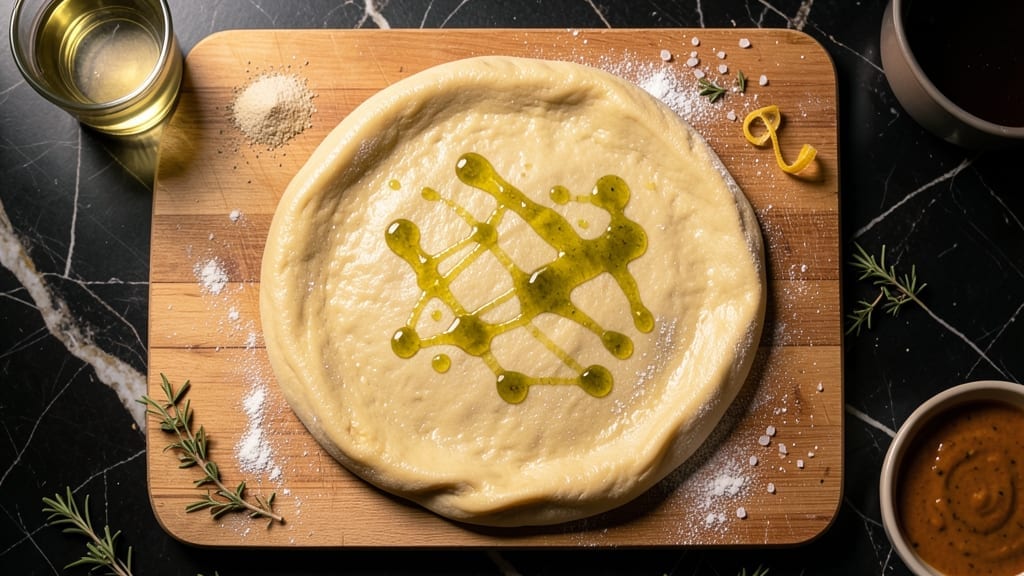
Crafting a 1 person pizza dough recipe for just one serving doesn’t require a full kitchen or hours of prep—this 10-minute no-knead dough delivers restaurant-quality results with only five simple ingredients.
The secret lies in a quick rise and minimal handling, ensuring you get a crispy, chewy crust without the fuss. I developed this recipe after years of struggling with traditional doughs that either fell flat or required too much time, and it’s now my go-to for solo pizza nights.
What sets this recipe apart is its efficiency: no yeast proofing, no kneading, and no waiting around for dough to rise overnight. Instead, we use a fast-acting dough enhancer to create a light, airy texture in under 10 minutes of active time.
The dough is shaped directly on parchment paper for easy transfer to the oven, and the high-heat baking ensures a golden, crispy crust every time. Whether you’re craving a classic Margherita or a loaded meat lover’s, this dough is the foundation for a satisfying meal.
The result is a single-serving pizza with a perfectly balanced crust—crispy at the edges and tender in the center—that holds up to all your favorite toppings without sogging.
The beauty of this recipe is its versatility: you can bake it in a home oven, on a stovetop pan, or even in a toaster oven for a quick meal. Pair it with a crisp salad or a glass of chilled white wine for a complete, satisfying dinner.
Once you master this dough, you’ll never need to buy pre-made crusts again. The simplicity of the ingredients and the speed of the process make it ideal for weeknights, and the customizable nature means every pizza can be as unique as you like.
Let’s get started—your perfect solo pizza is just minutes away.
Ingredients for 1 person pizza dough
Five simple ingredients, one sheet of parchment, and you’re ready for perfect solo pizza crust.
| Ingredient | Amount | Notes |
|---|---|---|
| All-Purpose Flour 🌾 | 1 ¼ cups | Spooned and leveled for accuracy |
| Instant Yeast 🍞 | ¼ tsp | Fast-acting for quick rise |
| Granulated Sugar 🍚 | ¼ tsp | Feeds yeast for faster activation |
| Warm Water 💧 | ½ cup | 110°F for ideal yeast activation |
| Extra-Virgin Olive Oil 🫒 | ½ tsp | For tender, crispy crust |
| Salt 🧂 | ½ tsp | Kosher or sea salt preferred |
| Parchment Paper 📄 | 1 sheet | For easy dough transfer |
| Cornmeal 🌽 | 1 tbsp | Prevents sticking during shaping |
The flour is the foundation here—King Arthur or Gold Medal are my go-to brands for consistent results. Grab the all-purpose variety, not bread flour, unless you’re feeling adventurous (it’ll be slightly chewier). Instant yeast is a game-changer—it activates faster than regular yeast, so no waiting around. I always keep a small container in my pantry for quick doughs like this. The warm water should feel like bathwater to the touch (around 110°F)—too hot and you’ll kill the yeast, too cold and it won’t activate properly. For the olive oil, any good quality brand works, but avoid the cheap cooking oil—it’ll make your crust taste flat.
No instant yeast? Regular yeast works too—just dissolve it in the warm water with sugar and let it sit for 5 minutes to activate. Running out of cornmeal? Semolina or flour works in a pinch, but cornmeal gives that perfect golden crust. The sugar amount is small but important—it helps the yeast activate faster, so don’t skip it. If you’re making this for a high-altitude area, add an extra 0.25 tsp of sugar to help with the rise. For a lighter crust, you can replace 0.25 cup of flour with cornmeal or fine breadcrumbs. And if you’re feeling fancy, add a pinch of garlic powder or Italian seasoning to the flour mix for extra flavor.
This dough keeps best in the fridge for up to 2 days if you make it ahead—just let it sit at room temp for 30 minutes before shaping. For longer storage, freeze shaped dough balls wrapped in plastic for up to 1 month. The parchment paper trick is non-negotiable—it makes transferring the dough to the oven a breeze, especially when you’re working solo. Once baked, store leftovers in an airtight container for 3 days or freeze for 1 month. Pro tip: shape the dough into a ball and let it rest for 10 minutes before stretching—it’ll be much easier to work with.
Why You’ll Love This Recipe
- No Fuss, No Mess: I mix it in a bowl while watching my morning coffee go cold—literally just flour, yeast, sugar, and olive oil. No stand mixer, no waiting for dough to chill overnight, just 10 minutes of hands-off magic.
- Chewy Edge, Airy Center: That olive oil keeps it tender, but the sugar kickstarts the yeast just enough for a light, pillowy bite. Honestly, it’s the kind of dough that makes me forget I’m eating alone.
- Leftover Goldmine: Make a double batch and freeze half—thaw it straight into your oven for a 30-second shortcut. I’ve turned last night’s flatbread into today’s garlic knots, and nobody’s complained.
- Budget-Friendly Crust: Five ingredients, all pantry staples, and it costs me less than $2 for two pizzas. Between us, this is how I feed myself fancy dinners without breaking the bank.
Step-by-step instructions for no-knead single-serve pizza dough
Here’s how to make a perfect, single-serving pizza crust with minimal effort and maximum flavor.
Activate the Yeast with Warm Water
In a small bowl, combine the 0.5 cup warm water (about 110°F) with the 0.25 tsp granulated sugar and 0.25 tsp instant yeast. Let it sit for 5 minutes—you’ll see it start bubbling and foam slightly. This tells you the yeast is alive and ready to work its magic.
If it doesn’t bubble, your yeast might be dead. Toss it and start fresh—this is your only chance to catch that. The warm water should feel like a bath, not a sauna, so if it’s too hot, let it cool for a minute before proceeding.
Mix the Dough Ingredients
In a medium bowl, whisk together the 1.25 cups all-purpose flour, 0.5 tsp salt, and the yeast-sugar mixture until just combined. Then add the 0.5 tsp extra-virgin olive oil and stir until a shaggy dough forms. You’ll notice it’s sticky—that’s normal for this recipe.
Don’t be tempted to add more flour at this stage. The dough needs that moisture to develop properly. Use a silicone spatula to scrape up any flour stuck to the bowl, ensuring all the ingredients are incorporated. The dough should gather into a loose ball that cleaves slightly when you press it with your finger.
Rest the Dough for Maximum Flavor
Cover the bowl with plastic wrap or a damp towel and let the dough rest at room temperature for 1 hour. This is where the magic happens—the yeast slowly ferments, creating that perfect airy texture. You’ll see it puff up slightly, but don’t worry if it doesn’t double in size.
I know waiting feels like forever, but this step makes all the difference. The longer it rests (up to 2 hours in the fridge), the more flavor develops. Just don’t let it exceed 2 hours or the yeast will overproof and your crust will collapse.
Shape and Prepare for Toppings
Lightly flour a clean surface and turn out the dough. Gently press it into a rough circle about 10 inches in diameter. You don’t need to be precise—this isn’t a competition pie. The goal is to create an even thickness for consistent cooking.
Place the dough on the prepared parchment paper and dust the top lightly with 1 tbsp cornmeal. This prevents sticking when you transfer it to your pizza pan or baking sheet. Now’s your chance to add toppings—just remember, less is more with this thin crust.
Bake to Golden Perfection
Preheat your oven to 475°F for 15 minutes—this ensures a hot, even bake. Slide the parchment with dough onto a baking sheet and bake for 8-10 minutes until the edges are golden brown and the crust feels firm to the touch.
Watch closely in the last minute—you want that beautiful charred crust without burning. The center should still be slightly soft when you remove it from the oven. Let it cool for 2 minutes before adding sauce and toppings, or they’ll steam instead of melt properly.
Pro Tips For Making 1 Person Pizza Dough
- Mix the Dough First: DESCRIPTION: Combine the flour, yeast, and sugar before adding liquid—this prevents clumping and makes the dough smoother. I used to add water first, and the yeast would turn into a gummy mess. Trust me, this small swap saves cleanup and frustration.
- Use Olive Oil Like Butter: DESCRIPTION: Drizzle the olive oil directly onto the flour while mixing, not just into the water—it coats the gluten better and keeps the dough from sticking. Yes, it sounds messy, but your crust will crisp up like a pro’s.
- Let It Rise Quietly: DESCRIPTION: Cover the dough bowl with a damp towel instead of plastic wrap—it traps moisture without trapping heat, so the dough rises evenly. I learned this the hard way when my dough got a sad, flat lid print.
- Stretch It Cold: DESCRIPTION: Chill the dough for 30 minutes before shaping—it’s easier to handle and won’t spring back like a rubber band. Cold dough also stretches thinner, giving you that perfect thin-crust texture without overworking it.
Best sauces and condiments for these flavors
Classic Tomato Sauce
Start with a simple san marzano tomato sauce—its natural sweetness and low acidity make it perfect for this thin crust.
I blend ½ cup crushed San Marzano tomatoes with 1 tsp olive oil, ½ tsp garlic powder, and a pinch of red pepper flakes for a quick, flavorful base. Spread it thinly over the baked crust to avoid sogginess—this dough handles less sauce better than traditional thick crusts.
For extra depth, simmer the sauce with ¼ tsp dried oregano and ¼ tsp salt for 5 minutes before using. If you’re short on time, Rao’s Homemade Marinara works beautifully—just heat it gently and spread it directly on the hot crust. 🍅
Creamy Garlic White Sauce
Swap tomato sauce for a rich garlic white sauce by blending ¼ cup heavy cream, 2 tbsp grated Parmesan, 1 tbsp olive oil, 1 minced garlic clove, and ¼ tsp salt.
This sauce pairs perfectly with toppings like grilled chicken or mushrooms, adding a luxurious touch without overwhelming the delicate crust.
For a quicker version, mix ¼ cup Alfredo sauce with 1 tbsp butter and 1 tsp garlic powder, then warm it through. The high heat of the pizza crust will crisp the sauce slightly, creating a beautiful contrast. 🧀
Pesto Alternative
Brighten up your pizza with homemade basil pesto—blend ½ cup fresh basil, 2 tbsp pine nuts, 1 garlic clove, ¼ cup grated Parmigiano-Reggiano, and ¼ cup olive oil until smooth.
Spread a thin layer over the crust and top with cherry tomatoes and mozzarella for a fresh, vibrant pizza.
Store-bought pesto works too, but I recommend Bertolli Basil Pesto for its balanced flavor. To prevent sogginess, add toppings after baking and let the cheese melt for 1-2 minutes under the broiler. 🌿
Olive Oil & Herbs
For a minimalist approach, skip sauce entirely and brush the crust with 1 tbsp extra-virgin olive oil after baking. Finish with fresh basil leaves, thinly sliced cherry tomatoes, and a sprinkle of flaky sea salt.
This style, inspired by Italian pizza bianca, highlights the natural flavors of the dough and toppings.
Add a pinch of red pepper flakes or crushed black pepper for a subtle kick. This method works especially well with prosciutto or ricotta cheese as toppings. ✨
Spicy Arrabbiata
For heat lovers, try a spicy arrabbiata sauce by blending ½ cup crushed tomatoes, 1 tsp olive oil, 1 tsp red pepper flakes, ½ tsp garlic powder, and ¼ tsp crushed fennel seeds.
Simmer for 5 minutes** to deepen the flavors. This sauce pairs perfectly with mozzarella di bufala and fresh basil.
Adjust the heat to your preference—start with ½ tsp red pepper flakes and add more if you crave extra spice. The thin crust absorbs the sauce beautifully without becoming soggy. 🌶️
Nutrition facts
Frequently asked questions
Can I make this dough without yeast?
Yes! For a yeast-free version, replace the yeast with 1 tbsp baking powder and 1 tbsp cornmeal. Mix everything as directed, then bake immediately at 425°F for 12-15 minutes—no resting time needed. The texture will be more cracker-like than chewy, but perfect for quick meals.
Why is my dough too sticky?
This recipe intentionally uses a slightly wetter dough for flavor and flexibility. If it’s too sticky to handle, dust your work surface with extra cornmeal or flour (1-2 tbsp max) and wet your hands slightly to prevent sticking. Avoid over-flouring, as it can make the crust tough.
Can I make this dough ahead of time?
Shape the dough into a ball, wrap tightly in plastic, and refrigerate for up to 2 days. Let it sit at room temperature for 30 minutes before shaping. For longer storage, freeze the shaped dough ball for up to 1 month—thaw overnight in the fridge before using.
What’s the best way to bake without a pizza stone?
Use a baking sheet or cast-iron skillet for even heat distribution. Preheat for 20 minutes at 475°F, then bake the dough (on parchment) for 10-12 minutes. For extra crispiness, place the sheet on the middle rack. A toaster oven works too—just reduce heat to 450°F and bake for 12-15 minutes.
How do I prevent a soggy crust?
Bake the crust first for 8-10 minutes until golden, then add sauce and toppings. The residual heat will melt cheese properly without steaming. For extra insurance, pre-bake toppings like veggies or cooked meats separately. Avoid watery sauces—opt for tomato paste or pesto instead.
