
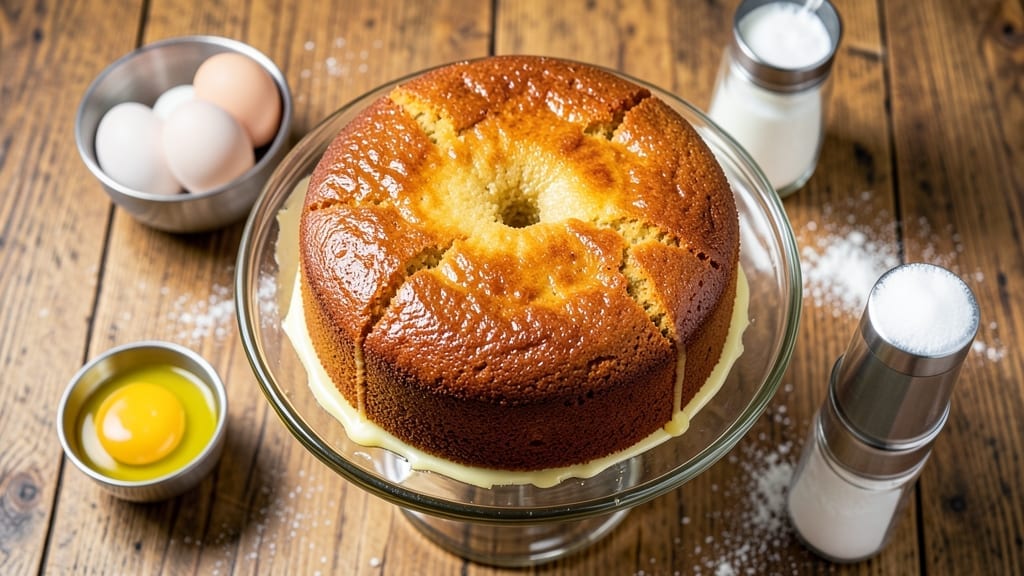
This 1-pound oil cake recipe delivers that signature buttery moistness—without a single pat of butter in sight. The secret lies in vegetable oil, which creates a tender crumb and rich flavor that traditional butter-based cakes can’t match.
After years of testing variations, I’ve perfected the ratio of oil to flour and the precise baking time to ensure a consistently moist center and golden crust every time.
The beauty of this recipe is its simplicity: just 9 ingredients, minimal mixing, and a single baking sheet. No fancy techniques required—just measure, mix, and bake. The cake’s texture is what makes it special: dense yet tender, with a fine crumb that’s perfect for slicing into even portions.
Unlike many oil cakes, this version doesn’t dry out quickly, making it ideal for both immediate serving and make-ahead gifting.
What you’ll end up with is a moist, flavorful cake that’s rich enough to stand alone or pair beautifully with simple glazes, whipped cream, or fresh berries. The aroma as it bakes will fill your kitchen with warmth, and each slice will reveal that perfect balance of sweetness and density.
This is the kind of cake that earns repeat requests—whether for birthdays, holidays, or just because.
Best of all, this recipe scales easily for larger gatherings while maintaining its signature texture. The instructions are designed to be foolproof, so even first-time bakers can achieve professional results. Let’s get started on creating a cake that’s as impressive as it is delicious.
Ingredients for 1 pound cake recipe with oil
Nine simple ingredients transform into a moist, golden oil cake that stays fresh for days.
| Ingredient | Amount | Notes |
|---|---|---|
| All-Purpose Flour 🌾 | 1 ½ cups | Sifted for even texture |
| Granulated Sugar 🍚 | 1 ½ cups | White or light brown preferred |
| Vegetable Oil 🫒 | 1 cup | Light or neutral oil for best flavor |
| Unsalted Butter 🧈 | ¼ cup | Melted, full-fat for richness |
| Large Eggs 🥚 | 2 whole | Room temperature for even mixing |
| Milk 🥛 | ½ cup | Whole milk for creaminess |
| Vanilla Extract 🌸 | 2 tsp | Pure, high-quality extract |
| Baking Powder 🧂 | 2 tsp | Aluminum-free preferred |
| Salt 🧂 | ½ tsp | Fine sea salt for balance |
The vegetable oil is the secret weapon here—it creates that signature tender crumb while keeping the cake moist for days. Crisco or light olive oil both work, but I default to vegetable oil for its neutral flavor and perfect texture. For the flour, King Arthur or Gold Medal brands are my go-to—they’re sifted and consistent. The butter, though small in quantity, adds a subtle richness that makes this cake feel indulgent. Use full-fat butter—the extra fat content is worth it. Eggs should be room temperature, so pull them out 20 minutes before mixing for the best results. The milk adds moisture without altering the cake’s delicate balance, so don’t skimp here.
No vegetable oil? Melted coconut oil or avocado oil work in a pinch, though they may add subtle flavors. Short on butter? Extra oil or a neutral-flavored shortening keeps the texture intact. The vanilla extract is non-negotiable—Nestlé Pure or a high-quality importer brand make all the difference. For a lighter cake, you can replace half the milk with buttermilk, but the original recipe’s richness is part of its charm. The baking powder is crucial here—double-check the expiration date to ensure proper rise. And if you’re feeling fancy, add a pinch of cinnamon or nutmeg to the dry ingredients for warmth.
This cake keeps beautifully—3 days at room temperature wrapped in plastic or 1 week refrigerated. For gifting, slice before wrapping and store in an airtight container. The texture actually improves after 24 hours as the moisture redistributes. To reheat, wrap a slice in a damp paper towel and microwave for 10 seconds—it’ll be warm and fresh-tasting. I always make a double batch because it disappears so quickly. The leftovers freeze well for 3 months too, though texture may be slightly drier after thawing.
Why You’ll Love This Recipe
- Here’s what sold me: that deep, moist crumb from the vegetable oil plus butter. The oil keeps it tender, while the butter adds that buttery richness you’d pay extra for. It’s the best of both worlds—no one guesses it’s not all butter.
- No Mixer Needed: I swear by this—just a bowl and a whisk. The oil and butter blend so smoothly with the sugar that you barely need to work for it, and the eggs come together like magic. My lazy Sundays thank me every time.
- Rich Without Butter: Here’s what sold me: that deep, moist crumb from the vegetable oil plus butter. The oil keeps it tender, while the butter adds that buttery richness you’d pay extra for. It’s the best of both worlds—no one guesses it’s not all butter.
- Slice It Any Way: Breakfast? Dinner? Dessert? This cake handles it all. Toast a slice with jam for morning, serve it warm with ice cream for a treat, or cut it into squares for a picnic. I’ve even used it as a base for trifles—versatile enough to play along.
Step-by-step instructions for 1 pound oil cake
This method guarantees a tender, moist cake with rich flavor—no butter required!
Prepare the Dry Ingredients
In a medium bowl, sift together the 1.5 cups all-purpose flour and 2 tsp baking powder to aerate the mixture. This prevents dense pockets in your cake. Add the 0.5 tsp salt and whisk gently to combine. Set this mixture aside—we’ll use it in the next step. The reason for sifting is simple: it distributes the baking powder evenly, ensuring your cake rises uniformly throughout.
While you’re at it, measure out the 1.5 cups granulated sugar and set it aside with the dry ingredients. The sugar will dissolve completely in the liquid ingredients, creating a smooth batter that yields a fine, even crumb. I always recommend using room-temperature sugar to avoid any graininess in the final texture.
Mix the Wet Ingredients
In a large mixing bowl, combine the 1 cup vegetable oil and 0.25 cup melted unsalted butter. Whisk until fully incorporated—this creates a smooth, homogeneous base. The oil is the star here, providing moisture and richness without the need for butter. Add the 2 whole large eggs and whisk vigorously for about 1 minute until the mixture lightens in color and becomes slightly thickened.
Next, stir in the 0.5 cup milk and 2 tsp vanilla extract, mixing until completely combined. The vanilla extract should be pure, not imitation—its depth of flavor is essential for that classic oil cake taste. Here’s a pro tip: I like to let the milk come to room temperature before using it, as cold milk can cause the batter to curdle slightly when mixed with the eggs.
Combine Wet and Dry Ingredients
Gradually add the dry ingredients to the wet mixture, folding gently with a spatula to maintain air pockets. Start by mixing on low speed if using an electric mixer, then increase to medium until just combined—about 30 seconds. Overmixing develops gluten, which can make your cake tough. You’re looking for a smooth, pourable batter with no visible flour streaks.
This is where the magic happens: the oil and butter create a tender crumb, while the baking powder ensures a light rise. The batter should be thick but still flow easily when poured. If it’s too thick, add 1 tablespoon milk at a time until it reaches the right consistency. The goal is a batter that’s just thick enough to hold its shape when poured into the pan, yet still light enough to create a fine crumb.
Bake to Golden Perfection
Preheat your oven to 350°F. Grease a 10-inch tube pan thoroughly with butter or nonstick spray, then dust with flour, tapping out any excess. Pour the batter into the prepared pan and smooth the top with a spatula. Place the pan in the center rack of your oven and bake for 50-60 minutes, or until a toothpick inserted into the center comes out clean.
Here’s the thing about oil cakes—they’re forgiving, but timing matters. The cake should be golden brown on top and pull away slightly from the sides of the pan. If the top browns too quickly, tent it loosely with aluminum foil to prevent over-browning while allowing the center to cook through. The internal temperature should reach 210°F for a perfectly moist cake.
Cool and Serve
Remove the cake from the oven and let it cool in the pan for 10 minutes. Then, invert it onto a wire rack to cool completely. This step is crucial—cooling upside down prevents a soggy bottom by allowing air to circulate underneath. Once fully cooled, you can dust with powdered sugar or serve as-is for a simple, elegant dessert.
This cake is best served at room temperature, where its moist texture truly shines. The oil keeps it tender for days, making it perfect for slicing and serving throughout the week. For extra indulgence, drizzle with a simple glaze of powdered sugar and milk, or top with fresh berries for a pop of color and brightness.
Pro Tips For Making 1 Pound Cake Recipe With Oil
- MEASURE OIL BY WEIGHT: I learned this the hard way—using volume measurements for oil leads to dry, crumbly cakes. Instead, weigh out ½ cup vegetable oil (about 113g) for consistency. The density varies by brand, and your cake will thank you for the precision.
- CREAM BUTTER AND SUGAR FIRST: Skip the shortcut of mixing dry ingredients first. Beat the ½ cup softened butter and 1 cup sugar until light and fluffy (3-5 minutes)—this traps air for a tender crumb. I used to rush this, and my cakes always ended up dense.
- USE ROOM-TEMP EVERYTHING: Cold eggs or flour straight from the fridge throw off your batter’s texture. Let eggs sit for 30 minutes and flour for 1 hour before mixing. Sounds tedious, but it guarantees a smoother batter and even rise.
- CHECK DONENESS AT 325°F: This cake’s magic happens at 325°F, but ovens lie. Insert a toothpick at the center—it should come out with moist crumbs, not wet batter. If unsure, wait 5 more minutes; overbaking turns oil cakes gummy. (Yes, even if your recipe says 350°F.)
Perfect pairings for these flavors
Classic Glaze Options
For a quick and elegant touch, mix ½ cup powdered sugar with 1-2 tablespoons milk or heavy cream until smooth. Drizzle over the cooled cake—this adds a delicate sweetness without overpowering the rich oil cake flavor.
I like to add ½ teaspoon vanilla extract to the glaze for extra depth. For a citrus twist, replace milk with lemon juice or orange liqueur and reduce the powdered sugar to ¼ cup. 🍋
Fresh Fruit Toppings
Berries like strawberries, raspberries, or blueberries add vibrant color and a refreshing contrast to the dense cake. Arrange them on top just before serving to keep them fresh. For a tropical vibe, try pineapple slices or mango chunks—their natural sweetness complements the cake beautifully.
I often dust the fruit with a pinch of powdered sugar before placing it on the cake for a snowy effect.
Creamy Frosting Pairings
A light layer of vanilla whipped cream or chocolate ganache elevates this cake to dessert showstopper status. For whipped cream, whip 1 cup heavy cream with 2 tablespoons powdered sugar and 1 teaspoon vanilla until soft peaks form.
For ganache, melt ½ cup dark chocolate with ¼ cup heavy cream, then cool slightly before spreading. A thin layer (about ¼ inch thick) is perfect—it enhances flavor without overwhelming the cake’s natural richness.
Boozy Elevations
Add a splash of alcohol to your glaze or whipped cream for an adult-friendly twist. A 1 tablespoon of bourbon, rum, or Grand Marnier in the glaze adds warmth and complexity.
For a boozy whipped cream, replace 2 tablespoons of the milk with 2 tablespoons of coffee liqueur or amaretto. The alcohol enhances the cake’s flavor while adding a sophisticated touch. Just be mindful of the alcohol content if serving to children or those avoiding it.
Spiced Variations
For a cozy autumn twist, sprinkle the cake with ½ teaspoon cinnamon or nutmeg before baking. After cooling, dust with powdered sugar mixed with a pinch of cardamom for an aromatic finish.
A drizzle of caramel sauce (store-bought or homemade) adds a buttery contrast that pairs perfectly with the oil cake’s texture. This combination feels indulgent yet balanced, making it ideal for holiday gatherings.
Contrasting Textures
Add crunch with toasted nuts or cookies for texture contrast. Chop ½ cup pecans or walnuts and toast them in a dry pan for 3-4 minutes until fragrant, then sprinkle over the cake.
For cookie crumbles, pulse ½ cup graham crackers or shortbread cookies in a food processor until fine, then mix with 2 tablespoons melted butter and press onto the cake’s sides before adding glaze. This creates a delightful crunch with every bite while keeping the cake’s signature moistness intact.
Nutrition facts
Frequently asked questions
Can I substitute butter for the oil in this recipe?
The recipe intentionally uses oil for its signature moist texture, but you can replace ½ cup of the oil with melted butter if you prefer. Just reduce the milk by 1 tablespoon to maintain the right balance. The cake will still be tender, though slightly richer in flavor. For a true oil cake experience, stick with the original recipe!
Why does your recipe use both oil and butter?
The combination creates the perfect texture—oil keeps the cake moist for days while the butter adds subtle richness. The small amount of butter (just ¼ cup) enhances flavor without making the cake greasy. This hybrid approach is what makes this oil cake so versatile and universally loved.
Can I bake this in a different pan size?
Yes! For a 9-inch round pan, reduce baking time by about 10-15 minutes. For a 9×13-inch pan, bake at 325°F for 40-45 minutes. Always check doneness with a toothpick. The key is to avoid overbaking—oil cakes are forgiving but can dry out if left too long in the oven.
How do I prevent a dense or dry cake?
Overmixing is the #1 culprit! Mix just until combined (30 seconds max). Also ensure your ingredients are room temperature (especially eggs and milk) and don’t overbake—pull it when the center reaches 210°F. The oil-to-flour ratio in this recipe is carefully balanced to prevent dryness.
Can I make this cake gluten-free?
Replace the all-purpose flour with a 1:1 gluten-free baking flour blend (like Bob’s Red Mill). Add ½ teaspoon xanthan gum if your blend doesn’t contain it. You may need to reduce the milk by 1 tablespoon since gluten-free batters can be thicker. The texture will be slightly denser but still delicious!

- 12 Bean Chili Recipe: Hearty Slow-Cooked Depth With 12 Legumes - October 17, 2026
- 5 Seed Bread Recipe: Nutty Crunch and Artisan Flavor in One Loaf - October 17, 2026
- 1 Lb Macaroni Salad Recipe: Bold, Crunchy, and Crowd-Pleasing - October 17, 2026