
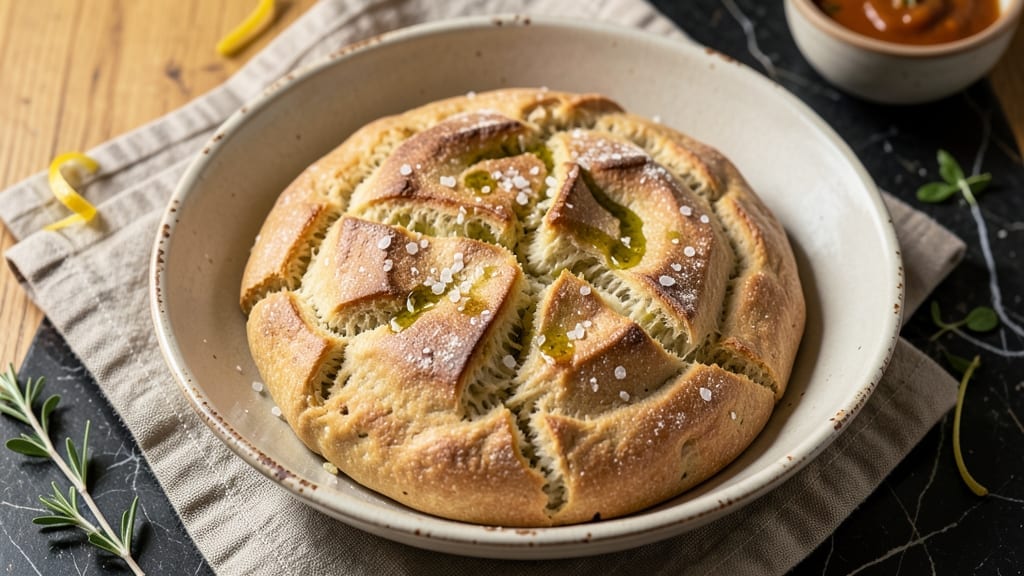
A no-knead rustic loaf using just 3 cups flour delivers artisanal-quality bread with minimal effort—perfect for home bakers who want crispy crust and airy crumb without the fuss. This recipe transforms simple pantry staples into a golden, fragrant loaf that rivals bakery bread, all in one bowl.
The secret lies in proper yeast activation and slow fermentation, which develop flavor and texture without requiring kneading or advanced techniques.
With only 5 core ingredients—flour, water, yeast, salt, and a touch of sugar—this recipe proves you don’t need complicated methods to achieve professional results. The dough rests overnight, allowing gluten to relax naturally for a tender crumb, while high-heat baking creates that coveted crispy crust.
Whether you’re feeding a family or prepping for meal prep, this loaf delivers restaurant-quality texture with zero stress.
What you’ll end up with is a golden-brown crust that shatters at the touch, revealing a soft, open crumb with pockets of air—ideal for toast, sandwiches, or serving alongside soups.
The aroma alone will transform your kitchen into a bakery. Best of all, this recipe accommodates variations (whole wheat, seeds, or herbs) while keeping the base simple and foolproof.
Ready to bake? The instructions walk you through every step—from activating yeast to scoring the loaf—with troubleshooting tips for sticky dough or uneven baking. No special tools required, just patience and a hot oven. Let’s make bread that tastes like it came from a bakery, not a box.
Ingredients for 3 cups flour bread
Five ingredients, one bowl, bakery-style bread without the fuss.
| Ingredient | Amount | Notes |
|---|---|---|
| All-Purpose Flour 🌾 | 3 cups | Unbleached preferred for better texture |
| Active Dry Yeast 🍞 | ¼ tsp | Fresh yeast if available (1 packet) |
| Granulated Sugar 🍬 | ½ tsp | For yeast activation |
| Kosher Salt 🧂 | 1 tsp | Diamond Crystal preferred |
| Warm Water 💧 | 1 ½ cups | 110°F (43°C) for yeast activation |
| Extra-Virgin Olive Oil 🫒 | ½ tsp | For dough elasticity |
| Cornmeal or Semolina 🌽 | ¼ cup | For dusting bowl and baking sheet |
Flour is the backbone here—King Arthur or Bob’s Red Mill are my go-tos for consistent results. The yeast? Fresh is ideal but active dry works fine (just make sure it’s not expired—sprinkle in warm water with sugar, wait 5 minutes for bubbles). Warm water is key: too hot kills the yeast, too cold and it won’t activate. 110°F is perfect—think lukewarm, like bathwater. The olive oil might seem like a small amount, but it makes the dough silky and prevents cracking. If you’re short on time, instant yeast cuts activation time by half.
No yeast? Sourdough starter at 1/4 cup works in a pinch, but fermentation time doubles. Swap granulated sugar for honey or maple syrup if you prefer—just use the same amount. Diamond Crystal kosher salt is less dense than Morton, so if you grab Morton, use 1/4 tsp less. For extra flavor, add 1 tsp dried herbs or garlic powder directly to the flour. The cornmeal/semolina is non-negotiable for that crispy bottom crust—don’t skip it, even if you’re using a baking stone.
This dough is a 24-hour project, but worth it. Store the bowl in the fridge between mix and bake to slow fermentation—up to 72 hours if you’re prepping ahead. The loaf keeps 3 days wrapped at room temp or 1 week frozen. For reheating, wrap in foil and warm at 300°F for 10 minutes. Pro tip: Spritz with water before baking for that bakery-style shine.
Why You’ll Love This Recipe
- Pantry Staples Only: I swear by this recipe because it uses what’s already in my cupboard—no specialty ingredients, no last-minute grocery runs. Just flour, yeast, sugar, salt, and water. That’s it. The yeast blooms in minutes, and the dough comes together faster than I can scroll through my phone.
- Golden Crust Magic: The sugar in the dough caramelizes into this irresistible crust that’s crispy on the outside but still soft inside. Honestly, it’s the kind of bread where the first slice disappears before I even think about saving it. My kids call it “the good stuff,” and I don’t argue.
- Weeknight Workhorse: This bread is my go-to for sandwiches, toast, or even a quick garlic butter dip. I bake a loaf on Sundays, and it lasts me all week—perfect for busy mornings when I’m grabbing toast on the way out the door. No sad, dry bread here; it stays fresh and delicious.
- Budget-Friendly Baking: Three cups of flour, a pinch of salt, and a teaspoon of sugar—that’s less than a dollar per loaf. Between us, this is the kind of recipe that makes me feel like I’m feeding my family something special without breaking the bank. Plus, the leftovers? They’re even better the next day.
Step-by-step instructions for no-knead rustic loaf
Here’s how to make a perfectly textured, crusty bread with minimal effort—no kneading required.
Activate the Yeast and Mix the Dough
In a large bowl, combine the 1.5 cups warm water (test temperature with your finger—it should feel warm but not hot to the touch), 0.5 tsp granulated sugar, and 0.25 tsp active dry yeast. Let it sit for 5-10 minutes until frothy—this confirms your yeast is alive and ready to work. If it doesn’t bubble, your yeast may be dead, and you’ll need to start over.
Once bubbly, add the 3 cups all-purpose flour and 1 tsp kosher salt to the bowl. Stir with a wooden spoon until a shaggy dough forms. Then drizzle in the 0.5 tsp extra-virgin olive oil and mix until just combined. The dough will be sticky, but that’s exactly what we want for this no-knead method. Don’t worry if it looks messy—this is normal.
Let the Dough Rest and Develop
Cover the bowl loosely with plastic wrap or a damp kitchen towel, then let the dough rest at room temperature for at least 12 hours (overnight is ideal). This long fermentation develops deep flavor and a light, airy crumb. During this time, the dough will rise dramatically and may even overflow the bowl—this is a good sign!
After resting, the dough should look puffy and nearly double in size. If it hasn’t risen much, place it in a warmer spot (like near the oven with the light on) for another hour. The goal is to see visible bubbles and a soft, jiggly texture when you press the surface gently with your finger.
Shape and Prepare for Baking
Lightly flour a clean work surface and turn out the dough. Gently shape it into a round loaf by folding the edges toward the center and tucking them underneath. Place the shaped dough seam-side up on a baking sheet dusted with 0.25 cup cornmeal or semolina. This creates a crispy bottom crust and prevents sticking.
Cover the dough again and let it rise for another 1-2 hours until it’s puffy and has expanded noticeably. The dough should feel springy when pressed lightly—this is your signal that it’s ready for the oven. Preheat your oven to 425°F while the dough rises to ensure it’s hot when you bake.
Bake for a Crispy, Golden Loaf
Bake the dough for 30-35 minutes until the crust is deep golden brown and sounds hollow when tapped on the bottom. For extra crustiness, I like to spray the inside of the oven with water right before baking—this creates steam that makes the crust even more appealing.
If the top browns too quickly, tent the loaf with aluminum foil. The bread is done when the internal temperature reaches 190-200°F (use an instant-read thermometer) and the crust is crisp. Let it cool on a wire rack for at least 1 hour before slicing—this prevents a gummy texture.
Slice and Serve
Once cooled, slice the loaf and admire the open, airy crumb. The crust should be crispy on the outside with a soft, chewy interior. This no-knead method delivers professional-quality bread with minimal effort—perfect for beginners and experienced bakers alike.
Store leftovers wrapped in a bread bag at room temperature for 2-3 days, or freeze slices for up to 3 months. The flavor actually improves as the bread stales slightly, making it even better for toast or sandwiches the next day.
Pro Tips For Making 3 Cups Flour Bread
- Bloom Yeast Properly: Mix the yeast with warm water and sugar first, then wait 5 full minutes for it to foam before adding flour. I used to skip this, and my bread always rose slower—now it doubles reliably every time.
- Measure Flour Right: Spoon flour into the cup, then level it with a knife—don’t scoop directly from the bag. That extra 1-2 tablespoons of packed flour makes your dough denser than it should be.
- Knead Until Silky: Stop when the dough springs back slowly after pressing it (about 8-10 minutes by hand). Over-kneading glues the gluten, and your bread turns tough—trust the stretch test, not the clock.
- Let It Rise Twice: First rise (1-2 hours) builds flavor; second rise (30-60 minutes) ensures lightness. Skip the second, and your bread stays flat—even if the recipe says “optional.” (Yes, I learned this the hard way.)
Regional styles of this 3 cups flour bread
Southern-Style Cornbread Loaf
In the South, bread isn’t just for sandwiches—it’s a centerpiece. Swap 1 cup of the all-purpose flour for 1 cup fine cornmeal and add 1 cup buttermilk (instead of water) for a tender, crumbly loaf.
Fold in ½ cup shredded sharp cheddar and ½ cup diced jalapeños for a spicy-sweet twist. Bake at 400°F for 25 minutes, then brush the crust with melted butter while hot. This version pairs perfectly with chili or fried chicken. 🌶️
Italian Focaccia-Style Flatbread
For a Mediterranean twist, flatten the dough into a ½-inch thick rectangle on a parchment-lined baking sheet. Dimple the top with your fingers, then drizzle with 2 tbsp olive oil and sprinkle with ½ tsp dried rosemary and ½ tsp flaky sea salt.
Bake at 425°F for 20 minutes until golden. Finish with a sprinkle of coarse kosher salt and fresh thyme. Serve warm with balsamic glaze or as a base for bruschetta. 🍅
German Pretzel Loaf
Transform this into a pretzel-inspired loaf by dissolving 1 tbsp baking soda in ½ cup warm water and brushing it over the shaped dough before baking. Sprinkle with 1 tbsp coarse salt and bake at 450°F for 25 minutes.
The result? A shiny, crackly crust with a soft interior—perfect for dipping in mustard or beer cheese. This version is a crowd-pleaser at holiday gatherings. 🍺
French Fougasse Twist
Shape the dough into a rustic oval and use a sharp knife to cut decorative slits along the edges. Dimple the top and bake at 425°F for 30 minutes. Brush the warm loaf with garlic-infused olive oil and sprinkle with flaky sea salt.
This rustic bread is ideal for serving with charcuterie or soups. The open texture makes it perfect for soaking up flavors. ✨
Mexican Pan Dulce Adaptation
For a sweet version, replace ½ cup flour with ½ cup ground corn tortillas and fold in ½ cup brown sugar and 1 tsp cinnamon. Shape into a round loaf and bake at 375°F for 35 minutes.
Drizzle with honey or piloncillo syrup after baking. This bread is a hit for breakfast or dessert—try toasting it with a sprinkle of cajeta (goat’s milk caramel). 🍯
Herbed Boule for French Bakers
For a classic French approach, shape the dough into a round boule and bake in a preheated Dutch oven at 450°F for 40 minutes. Add 1 tbsp fresh thyme or lavender to the dough for an aromatic twist.
The high heat creates a crispy crust with a soft, airy interior—ideal for serving with butter and jam. This version elevates your bread game with minimal effort. 🌿
Nutrition facts
Frequently asked questions
Can I use whole wheat flour instead of all-purpose?
Yes, but replace ½ cup all-purpose flour with ½ cup whole wheat flour to maintain texture. Whole wheat absorbs more moisture, so you may need 1-2 extra tablespoons water if the dough feels dry. The flavor will be nuttier and denser—great for heartier sandwiches!
Why is my dough too sticky?
Sticky dough is normal for no-knead bread! If it’s unbearable, add 1 tablespoon flour at a time until it’s manageable. Avoid overhandling—wet hands help prevent sticking when shaping. A lightly floured surface and cornmeal on the baking sheet will also help. The stickiness ensures a soft, airy crumb.
How do I know when the bread is fully baked?
Look for a deep golden brown crust and tap the bottom—it should sound hollow. Use an instant-read thermometer for accuracy: the internal temp should reach 190-200°F. If the top browns too fast, tent with foil. The crust should be crispy while the center remains soft.
Can I make this bread without yeast?
Not with this recipe—yeast is essential for the no-knead method’s rise and texture. For yeast-free bread, try flatbreads (like naan) using baking powder/soda. This recipe relies on yeast’s fermentation for flavor and structure. If you’re allergic, use a sourdough starter (replace yeast with ¼ cup activated starter and ferment longer).
What’s the best way to reheat stale bread?
Wrap the loaf in foil and warm at 300°F for 10-15 minutes to restore softness. For quick toast, slice and heat in a dry skillet over medium heat for 1-2 minutes per side. Avoid the microwave—it makes bread gummy. The flavor actually improves slightly as it stales, making it perfect for croutons or French toast.

- 12 Bean Chili Recipe: Hearty Slow-Cooked Depth With 12 Legumes - October 17, 2026
- 5 Seed Bread Recipe: Nutty Crunch and Artisan Flavor in One Loaf - October 17, 2026
- 1 Lb Macaroni Salad Recipe: Bold, Crunchy, and Crowd-Pleasing - October 17, 2026