
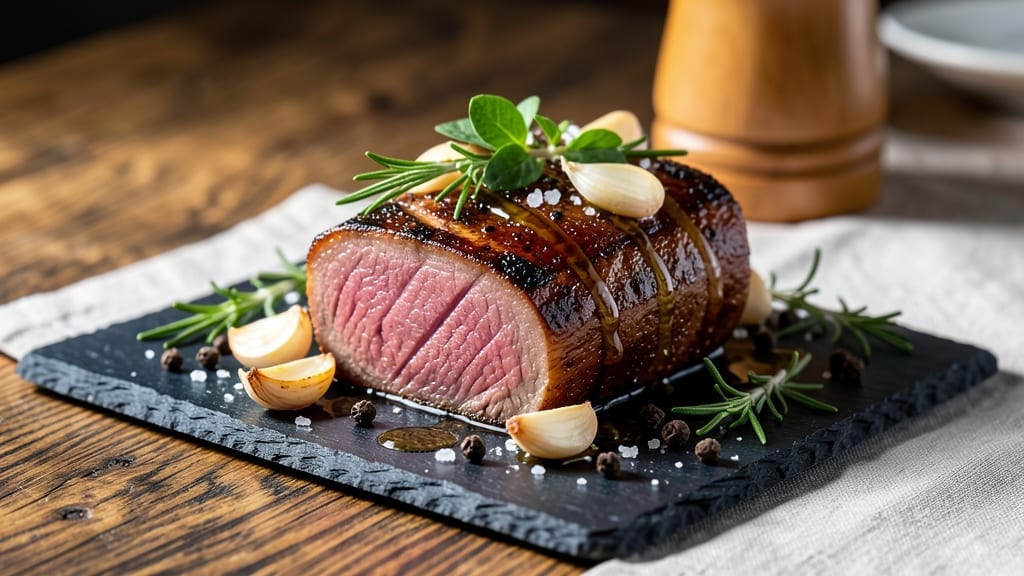
A 10 lb beef tenderloin cooked to juicy pink perfection requires precision—this reverse-seared method delivers melt-in-your-mouth tenderness with a caramelized crust. The secret lies in low-and-slow roasting followed by a high-heat sear, ensuring even doneness without drying out the massive cut.
I’ve perfected this technique after years of hosting dinner parties where guests always ask for seconds, and it never fails to impress.
What sets this recipe apart is the reverse-sear technique, which guarantees a perfectly pink center while developing deep, savory flavors in the crust.
You’ll start with a gentle oven roast at 225°F to bring the internal temperature to 110°F, then finish with a broiler sear for that coveted golden-brown exterior. This method works flawlessly for large cuts, ensuring every slice is tender and juicy, not tough or overcooked.
The result is a juicy pink core with a crisp, caramelized crust that’s impossible to resist. The beef rests for 30 minutes before slicing, locking in moisture and making each cut effortlessly clean.
Serve with classic sides like garlic mashed potatoes or a fresh herb salad to balance the richness, and pair with a bold red wine for the ultimate dining experience.
This recipe is designed for special occasions—whether it’s a holiday feast, a celebratory dinner, or a showstopping centerpiece for a crowd. With careful temperature control and the right technique, you’ll achieve restaurant-quality results at home, every time. Let’s get started on creating a centerpiece that steals the show.
Ingredients for 10 lb beef tenderloin
Precision-cut beef tenderloin paired with aromatic herbs and bold flavors for a showstopping centerpiece.
| Ingredient | Amount | Notes |
|---|---|---|
| Beef Tenderloin 🥩 | 10 lb | Center-cut, trimmed of silver skin |
| Kosher Salt 🧂 | 1 ½ tbsp | Diamond Crystal preferred, freshly ground |
| Freshly Ground Black Pepper 🌶️ | 1 ½ tbsp | Coarse grind for texture |
| Extra-Virgin Olive Oil 🫒 | ½ cup | High-quality, fruity variety |
| Garlic Cloves 🧄 | 8 cloves | Peeled, smashed for infusion |
| Fresh Rosemary 🌿 | ¼ cup | Finely chopped, stems removed |
| Fresh Thyme 🌿 | ¼ cup | Leaves only, stems discarded |
| Unsalted Butter 🧈 | ½ cup | Cold, cubed for searing |
| Red Wine 🍷 | 1 cup | Bold, dry variety like Cabernet Sauvignon |
| Beef Bone Broth 🍲 | 1 cup | Homemade or high-quality store-bought |
| Balsamic Vinegar 🍶 | 1 tbsp | Aged, for depth of flavor |
| Garlic Mashed Potatoes 🥔 | 8 cups | For serving, homemade preferred |
| Fresh Herb Salad 🥗 | 1 lb | Mixed greens with arugula and basil |
The beef tenderloin demands the highest quality—look for a center-cut roast with even grain and bright red color, indicating freshness. Whole Foods Market or local butcher shops often carry premium cuts, but even major grocery stores like Kroger or Walmart stock good options. Trim any silver skin before seasoning, as it can be tough. For a 10 lb roast, budget $50-$70 depending on your location; this is a splurge worth making for special occasions. The marbling should be minimal but present—too much fat can make the crust greasy during searing. If your butcher offers dry-aged beef, request it—this enhances tenderness and flavor significantly.
No extra-virgin olive oil? Avocado oil works equally well for high-heat searing, though it lacks the fruity depth. Fresh herbs are non-negotiable here—dried thyme or rosemary won’t deliver the same aroma. Substitute with 1 tbsp dried herbs if needed, but taste first. The red wine can be swapped for beef broth + 1 tbsp balsamic vinegar for a non-alcoholic version. Bone broth should be homemade or high-quality (avoid low-sodium versions). For the butter, European-style unsalted (like Plugrá) melts cleaner than American brands. Prep ahead: Mix the kosher salt, pepper, and herbs into a paste with olive oil for even coating—this ensures maximum flavor penetration during the slow roast.
Store the raw tenderloin in its original packaging on the bottom shelf of the fridge for up to 3 days before cooking. Butter cubes should be kept in an airtight container in the freezer for up to 3 months. Once seared, the caramelized crust develops best when served immediately, but leftover slices reheat beautifully in a 375°F oven for 10-15 minutes wrapped in foil. Portion leftovers into vacuum-sealed bags for up to 5 days in the fridge or 3 months frozen. Herb salad keeps for 2 days if stored in a sealed container with a paper towel to absorb moisture. Mashed potatoes freeze well—portion and freeze before adding butter.
Why You’ll Love This Recipe
- I’ll be real: most big roasts turn into sad, dry scraps. Not this. The slices stay rich and flavorful for days—perfect for sandwiches, salads, or just reheating with a splash of red wine. My freezer’s always stocked with portions, and no one complains.
- No-Fuss Prep: I swear, this takes less effort than deciding what to watch on Netflix. Just a quick rub of olive oil, crushed garlic, and salt—no marinating, no fuss—then let the oven do the work while you sip wine and pretend you’re a sous chef.
- Butter-Soft Perfection: That tenderloin? So juicy it practically melts in your mouth. The garlic and pepper sear into the crust while the center stays impossibly tender—like biting into a cloud that tastes like a steakhouse, not a weeknight.
- Party in a Pan: Between us, this is my go-to for gatherings. One massive roast feeds a crowd, and the leftovers? Still better than takeout. Honestly, I’ve served it at birthdays, holiday dinners, and even my book club—no one ever questions why I brought beef.
Step-by-step instructions for reverse-seared 10 lb beef tenderloin
Master this technique for a perfectly tender center with a crisp exterior—every slice will be juicy pink throughout.
Prepare and Season the Beef Tenderloin
Begin by removing the beef tenderloin from the refrigerator and patting it dry completely with paper towels. This step is crucial as moisture prevents the crust from forming properly. Using your hands, gently press the 1.5 tablespoons kosher salt and 1.5 tablespoons freshly ground black pepper into the surface of the meat, working it into all sides and ends. The goal is to create a uniform seasoning layer that will enhance flavor penetration during the low-temperature cook.
Allow the seasoned tenderloin to sit at room temperature for 1 hour before cooking. This resting period ensures even cooking throughout the meat. While it rests, prepare your oven by placing a rack in the middle position and preheating to 275°F. The low temperature is key to achieving that coveted pink center while maintaining perfect tenderness.
Low-Temperature Roast to Medium Rare
Place the seasoned beef tenderloin on a wire rack set inside a roasting pan. The rack allows for proper air circulation, which is essential for even cooking. Roast in the preheated oven for 1 hour and 45 minutes until the internal temperature reaches 120°F at the thickest part. Use a meat thermometer for accuracy—this is the critical point where the meat is perfectly pink and tender throughout.
During this time, prepare your reverse-sear components. In a small saucepan, combine 1 cup red wine, 1 cup beef bone broth, 1 tablespoon balsamic vinegar, 8 smashed garlic cloves, ¼ cup fresh rosemary, and ¼ cup fresh thyme. Simmer gently for 15 minutes to infuse flavors, then strain and set aside. This aromatic liquid will later be used to baste the beef.
Sear for Perfect Crust and Rest
Remove the beef tenderloin from the oven and let it rest for 10 minutes on a cutting board. While it rests, heat a large skillet over high heat until it’s screaming hot. Add ½ cup extra-virgin olive oil and ½ cup cubed unsalted butter, allowing the butter to foam and melt completely.
Working quickly, sear the beef tenderloin on all sides for 2-3 minutes per side until it develops a deep golden-brown crust. The high heat creates a flavorful bark while preserving the tender interior. During the last minute of searing, spoon the reserved wine reduction over the beef, allowing it to baste and penetrate the surface. This step adds depth of flavor and ensures moisture retention.
Slice and Serve with Accompaniments
Using a sharp carving knife, slice the beef tenderloin into 12 even portions, cutting against the grain for optimal tenderness. The slices should be approximately 1-inch thick to showcase the perfect pink center. Arrange the slices on a warm platter and drizzle with any remaining pan juices and wine reduction.
Serve immediately with 8 cups garlic mashed potatoes and 1 lb fresh herb salad. The contrast of creamy potatoes and crisp greens complements the rich, juicy beef perfectly. Each bite should deliver that signature tender texture with a flavorful crust—proof that reverse searing delivers restaurant-quality results at home.
Pro Tips For Making 10 Lb Beef Tenderloin
- Trim the Fat Pockets: Tenderloin hides little fat pockets—don’t leave them. Use kitchen shears to snip these out before seasoning; they’ll burn on high heat and ruin your crust. I learned this after one batch turned into a sad, smoky mess.
- Salt Like You Mean It: Kosher salt isn’t just for sprinkling—go heavy. Aim for 1.5 teaspoons per pound of meat, pressing it into the surface so it sticks. My first attempt used half that, and the seasoning vanished into the crust.
- Sear in Batches: A 10-pound roast won’t fit on one pan. Work in 3-4 batches for even browning, using the same oil each time. Skipping this means some sides get steamed, not seared—your guests will notice the difference.
- Garlic Cloves, Not Paste: Smash whole garlic cloves onto the roast’s surface before roasting—their skins burst, infusing flavor without bitterness. Garlic paste burns and tastes like regret. (Yes, even if you’re impatient like me.)
Creative variations of this recipe
Herb-Crusted Version
For a richer, more aromatic crust, mix ½ cup finely chopped fresh rosemary and ½ cup fresh thyme with 2 tablespoons Dijon mustard and ¼ cup breadcrumbs. Spread this paste over the tenderloin after the initial seasoning, then proceed with the reverse-sear method.
The crust becomes deeply caramelized and packed with herbaceous notes, adding complexity to every bite. 🌿
Red Wine Reduction Glaze
After searing, deglaze the pan with 1 cup dry red wine and reduce by half to create a glossy glaze. Brush this reduction generously over the beef before slicing. The glaze adds a silky finish and enhances the wine’s depth, making it ideal for special occasions.
For extra richness, stir in 1 tablespoon balsamic vinegar at the end. 🍷
Spicy Chipotle Twist
Infuse the reverse-sear method with smoky heat by adding 1 tablespoon adobo sauce (from canned chipotle peppers) to the wine reduction. Simmer this with the garlic and herbs, then baste the beef with the spiced mixture during the final sear.
The result is a tenderloin with a subtle kick that pairs perfectly with creamy sides like mashed potatoes or roasted sweet potatoes. 🌶️
Balsamic-Fig Compote Pairing
Serve slices of the tenderloin topped with a warm balsamic-fig compote. Simmer 1 cup balsamic vinegar, ½ cup chopped dried figs, and 1 tablespoon honey until thickened.
The sweet-tangy contrast elevates the beef’s richness, creating a restaurant-worthy presentation. This variation works especially well for holiday feasts or elegant dinner parties. 🍇
Beer-Braised Finish
Replace the red wine reduction with a dark beer braise (like Guinness or stout) combined with 1 cup beef broth and 1 tablespoon brown sugar.
Simmer until reduced by half, then baste the seared beef. The malty depth complements the tenderloin beautifully, making it a crowd-pleaser for beer lovers. 🍺
Seasonal Mushroom Topping
For a fall or winter twist, top each slice with a wild mushroom duxelles (finely chopped mushrooms sautéed with garlic and thyme). The earthy umami of the mushrooms pairs perfectly with the beef’s richness.
Prepare the duxelles ahead and reheat gently before serving to maintain texture. This variation adds a gourmet touch without complicating the cooking process. 🍄
Nutrition facts
Frequently asked questions
How do I know when my 10 lb beef tenderloin is done?
Use a meat thermometer to check the internal temperature—120°F for medium-rare pink perfection. The reverse-sear method ensures even cooking, so monitor the thickest part. Never rely on color alone, as large cuts can develop uneven doneness.
Can I cook a 10 lb tenderloin without reverse searing?
Yes, but you risk drying out the center. Try a 325°F oven> for 20-25 minutes per pound>, basting frequently with butter and herbs. The crust won’t be as crispy, though. For a foolproof method, stick with reverse searing for that perfect pink core.
How long should I rest the beef after cooking?
Always rest for 30 minutes> before slicing. This lets juices redistribute, preventing dry slices. Place it on a warm platter, tent loosely with foil, and keep it out of the fridge—this is critical for a moist, tender result.
What’s the best way to slice a 10 lb tenderloin?
Use a sharp carving knife> and cut against the grain> (look for the muscle fibers) into 1-inch thick slices>. This maximizes tenderness. For even portions, weigh each slice or use a ruler to guide thickness—aim for consistency.
How far ahead can I prep the seasoning mix?
Mix the kosher salt, pepper, and herbs> with olive oil up to 2 days>** ahead and store in an airtight container. This gives flavors time to meld, but add fresh garlic just before seasoning for maximum aroma. Keep it refrigerated until ready to use.

- 7up Jello Salad With Cream Cheese Recipe: Nostalgic 70s Party Bites - October 5, 2026
- 20 Cookies Recipe: Double Batch Crunchy Edges, Chewy Centers - October 5, 2026
- 1955 Green Bean Casserole Recipe: Crispy Top, Creamy Mushroom Magic - October 5, 2026