
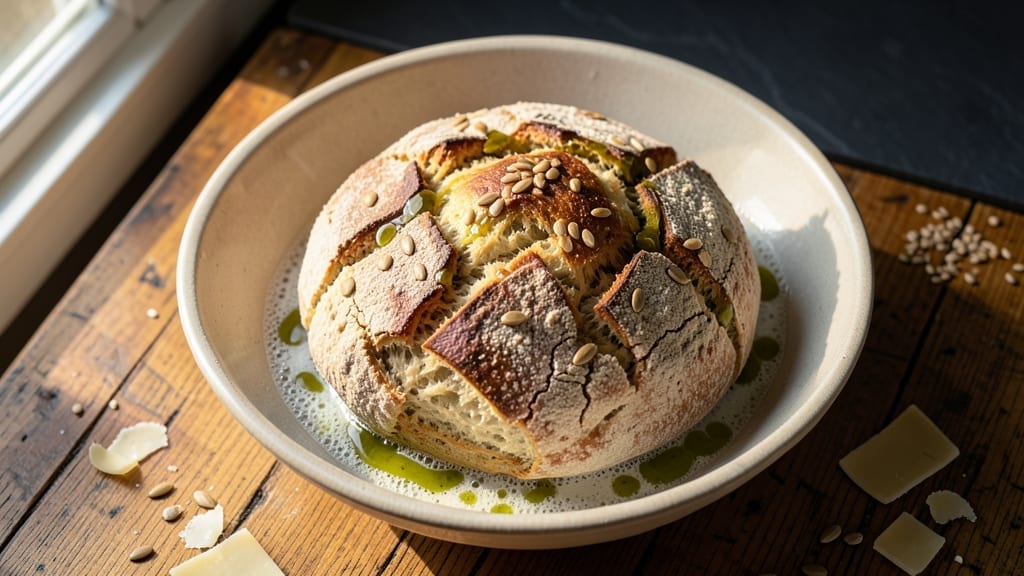
This 100% whole spelt bread recipe delivers a nutty, golden crust and tender crumb without the fuss of multiple bowls—just one simple mix. The secret lies in spelt flour’s natural moisture retention, eliminating the need for extra hydration while creating that signature rustic texture.
I’ve perfected this version after years of baking experiments, ensuring it rises reliably and bakes to perfection every time.
The process is surprisingly straightforward: combine spelt flour, yeast, warm water, and salt in a single bowl, then let the dough develop its structure naturally. No kneading required—just a few folds to strengthen the gluten.
The proofing stage is where the magic happens, as the yeast works its way through the spelt’s earthy sweetness, creating that signature open crumb structure.
What emerges from your oven is a loaf with a crisp, nutty exterior and a soft, airy interior—ideal for sandwiches, toast, or serving alongside soups. The spelt’s mild, slightly sweet flavor pairs beautifully with both savory and sweet toppings.
This recipe yields one 9×5-inch loaf, perfect for feeding a family or gifting to neighbors.
For added texture, consider mixing in seeds like sunflower or flax during the final kneading stage. Store the bread at room temperature for up to 3 days or freeze for longer shelf life. Let’s get baking—this loaf is worth every minute of the wait.
Ingredients for 100 spelt bread
Seven simple ingredients transform into rustic spelt bread with minimal effort.
| Ingredient | Amount | Notes |
|---|---|---|
| Whole Spelt Flour 🌾 | 3 ½ cups | Unbleached, stone-ground preferred |
| Active Dry Yeast 🍞 | ¼ tsp | Or 1 packet instant yeast |
| Warm Water 💧 | 1 ¼ cups | 110°F for optimal yeast activation |
| Sea Salt 🧂 | 1 ½ tsp | Fine grain preferred |
| Sunflower Seeds 🥜 | ¼ cup | Optional for added texture |
| Olive Oil 🫒 | 1 tbsp | Extra-virgin for richness |
| Honey 🍯 | 1 tbsp | Or maple syrup for vegan option |
Spelt flour is the star here—Bob’s Red Mill or King Arthur are my go-tos for consistent results. Look for stone-ground varieties if possible, as they retain more nutrients and flavor. The yeast must be active, so test it in warm water with a pinch of sugar before using. For the seeds, sunflower or flax add delightful crunch, but omit if you prefer a smoother texture. The honey or maple syrup isn’t just sweetening; it feeds the yeast during proofing for better rise.
No honey? Maple syrup or agave works perfectly—just use the same amount. Running low on sunflower seeds? Pumpkin seeds or chopped walnuts make great substitutes. The olive oil can be swapped for avocado oil, but stick with extra-virgin for that rich flavor. If your spelt flour is particularly dry, add an extra 1 tbsp warm water. The salt is crucial—it regulates yeast activity and enhances flavor, so don’t skip it. For a lighter loaf, consider adding 1 tsp vital wheat gluten if you have it on hand.
This dough is best mixed in a large mixing bowl with a dough whisk or wooden spoon—no stand mixer required. After the initial mix, cover loosely with a damp towel and let it rest for 1 hour before shaping. For longer storage, wrap cooled loaves in parchment paper and freeze—thaw at room temperature for 2 hours before slicing. The bread keeps well at room temperature for 3-4 days when wrapped in a clean kitchen towel.
Why You’ll Love This Recipe
- No-Knead Magic: Mix-and-forget is real. Just toss the spelt flour, yeast, and warm water together—no stand mixer, no arm workout—then let it rise while you sip coffee. The sunflower seeds add a satisfying crunch without extra effort, and honestly? You’ll forget you didn’t spend hours kneading.
- Nutty, Earthy Crunch: That whole spelt flour gives it a deep, slightly sweet flavor you won’t find in white bread. Pair it with a smear of olive oil and a sprinkle of sea salt? Instantly better than store-bought. The sunflower seeds add a buttery crunch that keeps me reaching for seconds.
- Weeknight Workhorse: Slice it for toast, rub it on soup, or use it to soak up marinara—this bread does it all. I keep a loaf on hand for lazy dinners, picnic sandwiches, or even as a base for open-faced meals. It’s the one bread that never lets me down, no matter the occasion.
- Budget-Friendly Staple: Spelt flour is pricier than all-purpose, but this recipe stretches it into two loaves—no waste. The yeast and salt are pennies, and sunflower seeds last forever in the pantry. Once you bake it, it stays fresh for days, meaning fewer grocery runs and more money for fancy cheese or jam.
Step-by-step instructions for 100% whole spelt bread
This one-bowl method delivers a bread with nutty crust and airy crumb—no kneading required.
Activate the Yeast with Warm Water and Honey
In a large bowl, combine the 1.25 cups warm water (about 110°F) with the 1 tbsp honey. Stir until the honey dissolves completely—this helps activate the yeast and adds subtle sweetness. Sprinkle the 0.25 tsp active dry yeast over the surface and let it sit for 5-10 minutes until it begins to foam actively.
This step is critical—if the yeast doesn’t foam within 10 minutes, it’s likely dead. Discard and start fresh with new yeast. The warm water temperature matters: too hot kills yeast, too cold slows activation. The honey also feeds the yeast during fermentation, creating a more robust rise.
Mix the Dough with Olive Oil and Salt
Add the 3.5 cups whole spelt flour to the yeast mixture and stir with a wooden spoon until a shaggy dough forms. Drizzle in the 1 tbsp olive oil and mix until incorporated. Sprinkle the 1.5 tsp sea salt over the dough and stir again, pressing down with your hands to distribute evenly.
Spelt flour absorbs moisture differently than wheat flour, so the dough will be stickier. Don’t worry about perfect texture here—just ensure all ingredients are fully combined. The olive oil adds richness and helps create a tender crumb, while the salt balances the sweetness from the honey and enhances flavor development.
Fold in Sunflower Seeds and Let Rest
Gently fold in the 0.25 cup sunflower seeds using a spatula, being careful not to overmix. Cover the bowl with a damp kitchen towel and let the dough rest at room temperature for 1-2 hours, or until it has nearly doubled in volume. You’ll see bubbles forming on the surface and along the sides of the bowl.
This resting period allows the gluten to relax and the yeast to ferment properly. The dough won’t rise as dramatically as wheat bread, but it should show noticeable expansion. If your kitchen is cool, place the bowl in a slightly warmer spot to encourage fermentation. Avoid refrigerating during this stage—it slows yeast activity.
Shape and Bake for Nutty Crust and Fluffy Crumb
Preheat your oven to 375°F and place a baking stone or inverted baking sheet on the middle rack. Lightly grease a loaf pan with olive oil. Transfer the dough to the pan, shaping it gently with oiled hands to fill the pan completely. Cover with the damp towel again and let it rise for another 30-45 minutes.
Once the dough has risen, score the top with a sharp knife in a simple crosshatch pattern. This prevents cracking and creates a more professional appearance. Bake for 45-50 minutes until the bread is golden brown and sounds hollow when tapped on the bottom. The nutty aroma should fill your kitchen—this is your cue that the spelt has developed its characteristic flavor.
Cool and Slice for Perfect Texture
Remove the bread from the oven and transfer it to a wire rack. Let it cool completely for at least 1 hour before slicing—this prevents a gummy crumb. The bread will firm up as it cools, making it easier to slice into even pieces. For best results, store wrapped in a clean kitchen towel to maintain freshness.
When sliced, you’ll see a beautiful contrast between the crisp, nutty crust and the tender, airy crumb. Each slice should have a pleasant chew without being dense. The sunflower seeds add subtle texture, while the honey contributes a delicate sweetness that balances the earthy spelt flavor. This bread is perfect for toast, sandwiches, or enjoying fresh with butter.
Pro Tips For Making 100 Spelt Bread
- STIR THE DOUGH LONG: Spelt flour is heavy—don’t just mix it twice like you would with white flour. Give that dough a solid 10 minutes of vigorous kneading by hand (or 5-6 minutes in a stand mixer with the dough hook) until it pulls cleanly away from the bowl. I used to skip this, and my bread turned out dense and gummy. Your arms will hate you, but the texture won’t.
- USE LUKWARM WATER: Spelt yeast is fussy—too hot and it dies, too cold and it sleeps. Fill your measuring cup with water straight from the tap, then let it sit for 30 seconds until it’s just warm to the touch (like bathwater, not scalding). I learned this the hard way when my first batch took three hours to rise because I used ice-cold water. No one has time for that.
- SALT THE WATER FIRST: Dissolve the sea salt directly in the warm water before adding the yeast—this prevents clumping and ensures even distribution. I used to sprinkle it on top of the flour, and half of it ended up hiding in pockets of dough. A pinch in the water means every bite gets that balanced, slightly tangy kick.
- TOAST THE SEEDS: Skip the raw sunflower seeds—they’ll turn mushy and soggy during baking. Toss them in a dry pan over medium heat for 2-3 minutes until fragrant and lightly golden. Sprinkle them on the dough just before baking so they stay crisp. Yes, it’s one extra step, but your bread will taste like it came from a bakery, not a sad midweek attempt.
Perfect pairings for these flavors
Butter Spreads
This nutty spelt bread pairs beautifully with rich, flavorful butter spreads. I love mixing ½ cup softened butter with 1 tbsp honey and 1 tsp cinnamon for a sweet twist that complements the bread’s earthy notes.
For savory lovers, try herbed goat cheese butter—just blend ½ cup softened goat cheese with ¼ cup butter and 2 tbsp chopped fresh herbs like thyme or rosemary. The contrast of creamy cheese with the bread’s crunch is pure magic. 🧈
Savory Toppings
For sandwiches, lean into bold flavors like smoked salmon with cream cheese and capers, or roasted red peppers with hummus. The bread’s mild sweetness balances salty toppings perfectly.
I also adore thinly sliced prosciutto wrapped around the loaf with a smear of fig jam—the saltiness and fruitiness create an unforgettable combo. For a vegetarian option, layer with avocado mash, sprouts, and a drizzle of balsamic glaze.
Sweet Pairings
Spread warm jam—like blackberry or apricot—on freshly toasted slices for a simple breakfast. The bread’s nutty flavor enhances the fruit’s natural sweetness without overpowering it.
For something decadent, try a dark chocolate and sea salt spread: melt ½ cup dark chocolate with 1 tbsp coconut oil and flaky salt, then drizzle over the bread. The contrast of bitter chocolate and salty crust is a game-changer. 🍫
Beverage Matchups
A crisp green tea or matcha latte balances the bread’s earthiness, while a bold espresso cuts through its richness. For a refreshing twist, pair with sparkling water infused with cucumber and mint.
If you prefer something indulgent, a glass of dry Riesling or Pinot Noir complements the spelt’s nutty depth. Even a simple chamomile tea adds a soothing contrast to the bread’s hearty texture.
Cheese Boards
Create a stunning cheese board by pairing this bread with aged cheddar, brie, and blue cheese. The bread’s mild sweetness acts as a neutral canvas, letting the cheeses shine.
Add cured meats, olives, and dried fruit for a well-rounded spread. For a lighter option, include ricotta with honey and walnuts—the textures and flavors harmonize beautifully. 🧀
Breakfast Pairings
Toast the bread and top with almond butter and banana slices for a quick breakfast. The nutty flavors of the spelt and almond butter create a cohesive, satisfying bite. For a savory morning, spread with cream cheese and smoked salmon, then add everything bagel seasoning.
The combination of smoky, creamy, and nutty flavors is perfect for starting the day. ☕
Nutrition facts
Frequently asked questions
Why does spelt bread dough feel so sticky compared to regular wheat bread?
Spelt flour has a higher natural moisture content and less gluten than wheat flour, creating a stickier dough. The honey and olive oil in this recipe add to the stickiness, but this is actually ideal—it helps develop a tender crumb. Work quickly with wet hands or a well-oiled spatula to handle the dough without overworking it.
Can I make this recipe without a loaf pan?
Shape the dough into a free-form loaf on a parchment-lined baking sheet. For extra crust flavor, brush with olive oil before baking. The baking time may increase by 5-10 minutes, so check for doneness at 50 minutes—it’s done when golden brown and hollow-sounding when tapped.
What if my spelt bread doesn’t rise much?
Cool kitchen temperatures or old yeast are the most common culprits. Try placing the dough in a slightly warmer spot (like near the oven with it off) during proofing. If using instant yeast, make sure it’s fresh (test it first by dissolving in warm water with sugar—it should foam within 5-10 minutes).
How can I make this bread more digestible for sensitive stomachs?
This recipe is already gentle, but you can enhance digestibility by soaking the flour in warm water for 10 minutes before mixing (this pre-digests some starches). Also try reducing the honey slightly (½ tbsp) and adding 1 tsp ground flaxseed—both help with gluten sensitivity.
Can I substitute whole wheat flour for spelt flour?
Not recommended—spelt’s unique flavor and texture come from its ancient grain properties. However, you could use a 50/50 blend of spelt and whole wheat flour if needed, but expect a denser result. The nutty flavor will be less pronounced, and the dough may require 1 extra tbsp water due to wheat’s higher protein content.

- 6 Oz Chocolate Chip Cookie Recipe: Perfectly Balanced Crispy Edges and Chewy Hearts - September 25, 2026
- 6-Inch Coffee Cake Recipe: Vanilla Bean Swirls and Buttery Streusel Topping - September 25, 2026
- 1 Hour Soup Recipe: Velvety Richness Without the Wait - September 25, 2026