
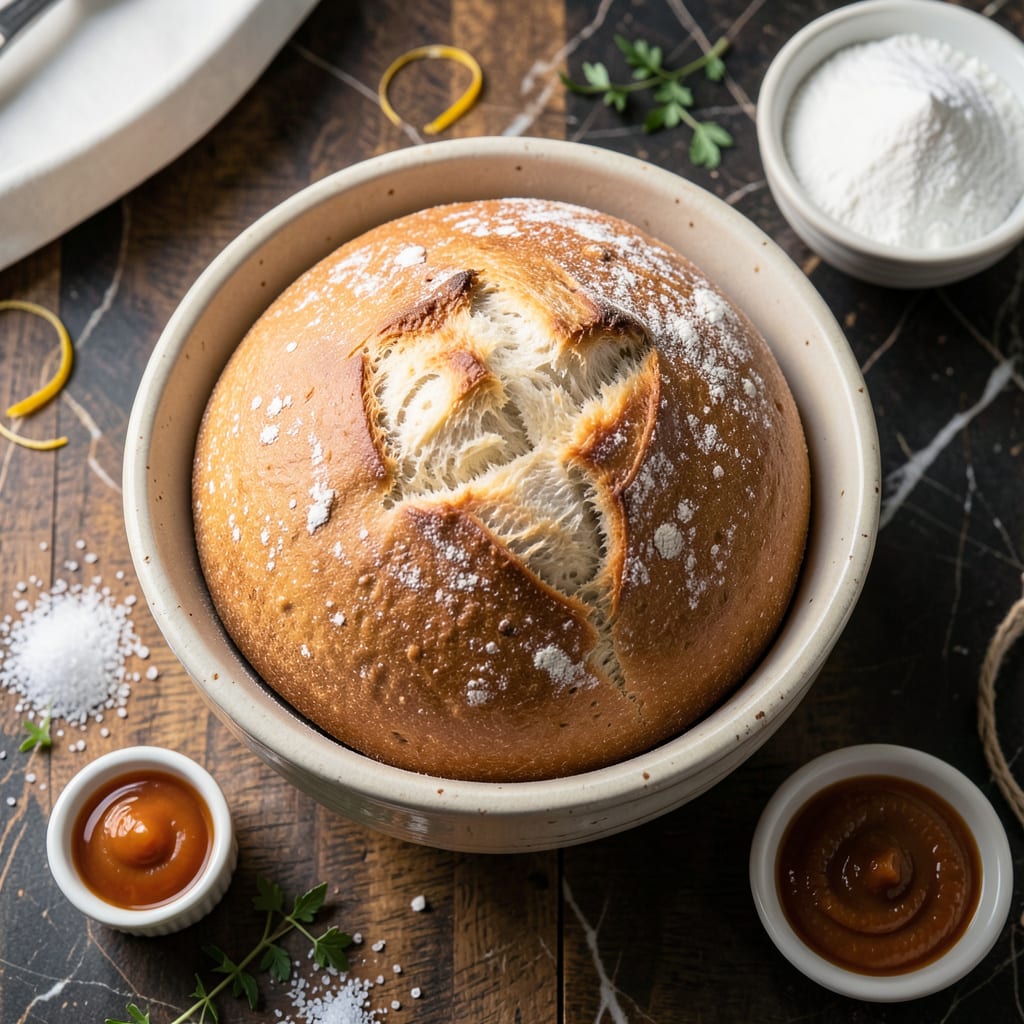
This fat-free white bread delivers fluffy, light results without a single gram of guilt. The secret lies in a precise combination of ingredients and technique that mimics the richness of traditional bread.
After years of testing, I’ve perfected a method that ensures a soft, airy texture using only simple pantry staples. The loaf rises beautifully and bakes to a golden, tender finish every time.
Ingredients for Fat Free White Bread
Simple pantry staples create this airy, guilt-free loaf with perfect texture every time.
| Ingredient | Amount | Notes |
|---|---|---|
| Bread Flour 🌾 | 4 cups | High-protein for structure |
| Warm Water 💧 | 1 ½ cups | 110°F to activate yeast |
| Active Dry Yeast 🍞 | 2 ¼ tsp | One packet equivalent |
| Granulated Sugar 🍚 | 2 tbsp | Feeds the yeast |
| Salt 🧂 | 1 ½ tsp | Fine grain for even distribution |
| Unsweetened Applesauce 🍎 | ½ cup | Replaces fat, adds moisture |
| Vital Wheat Gluten 🌾 | 2 tbsp | Improves elasticity |
| Non-Dairy Milk 🥛 | ¼ cup | Soy or almond preferred |
| Olive Oil Spray 🫒 | 1 spray | For greasing pan only |
| Cornmeal 🌽 | 1 tbsp | For dusting pan |
The flour is critical here—King Arthur Bread Flour is the gold standard for its high protein content (12-14%), which compensates for the lack of fat. Bob’s Red Mill is a solid alternative. Yeast must be fresh; check the expiration date and store unopened packets in the freezer. The applesauce acts as a fat replacer while adding moisture, but unsweetened is key to avoid altering the flavor profile.
No applesauce? Mashed banana at a 1:1 ratio works, though it adds slight sweetness. For the non-dairy milk, soy milk’s protein content mimics dairy’s structure best, but almond or oat milk are fine in a pinch. Vital wheat gluten can be omitted, but the texture won’t be as light. If your yeast isn’t bubbling after 5 minutes in warm water, start over—dud yeast means flat bread.
Store flour and yeast in airtight containers in a cool, dark place for 6-12 months. The baked loaf keeps at room temperature for 3-4 days or frozen for 3 months. Slice before freezing for easy toasting later.
Why You’ll Love This Recipe
- No Fuss Dough: I just mix flour, warm water, yeast, sugar, and salt—no butter or oil to measure. Honestly, it’s the simplest dough I’ve ever worked with.
- Soft and Light: The crust stays tender while the inside stays fluffy. That first warm slice with just a smear of jam? Pure comfort.
- Sandwich Ready: It holds up to peanut butter, turkey, or even just toasted with honey. Between us, it’s my kids’ lunchbox hero.
- Penny Pincher: A loaf costs mere cents compared to store-bought. I’ll be real: I’ve saved enough to justify that fancy stand mixer.
Step-by-Step Instructions for Fat Free White Bread
Follow this precise method to achieve a light, airy loaf without any added fat.
Step 1: Activate the Yeast and Prepare Wet Ingredients
Begin by combining the 1.5 cups Warm Water, 2 tbsp Granulated Sugar, and 2.25 tsp Active Dry Yeast in a large mixing bowl. The water should be 110°F—any hotter and you’ll kill the yeast, any cooler and it won’t activate properly.
Let this mixture sit for 5-7 minutes until it becomes frothy and cloudy. This visual confirmation means the yeast is alive and active. Then stir in the 0.5 cup Unsweetened Applesauce and 0.25 cup Non-Dairy Milk. The applesauce replaces traditional fat while adding natural sweetness and moisture.
Step 2: Combine Dry Ingredients and Form the Dough
In a separate bowl, whisk together the 4 cups Bread Flour, 1.5 tsp Salt, and 2 tbsp Vital Wheat Gluten. The vital wheat gluten compensates for the lack of fat by improving the dough’s elasticity and structure, which is crucial for a proper rise.
Gradually add the dry ingredients to the wet mixture, stirring with a wooden spoon until a shaggy dough forms. The dough will be slightly sticky but should pull away from the sides of the bowl. If it feels too wet, resist the urge to add more flour—this hydration level is intentional for a light crumb.
Step 3: Knead the Dough to Develop Gluten
Turn the dough out onto a lightly floured surface. Knead for 8-10 minutes by hand, or 6-7 minutes in a stand mixer fitted with a dough hook. You’re aiming for a smooth, elastic dough that springs back when poked lightly with a finger.
The dough should feel slightly tacky but not stick to your hands. If it does, add a teaspoon of flour at a time, but use restraint—too much flour will make the bread dense. The vital wheat gluten will help achieve the right consistency even without added fat.
Step 4: First Rise and Shape the Loaf
Lightly coat a large bowl with 1 spray Olive Oil Spray and place the dough inside, turning once to coat all sides. Cover with a clean kitchen towel and let rise in a warm, draft-free place for 1 to 1.5 hours, or until doubled in volume.
Once risen, punch down the dough to release air, then shape it into a loaf. To shape, flatten the dough into a rectangle and roll it tightly from the short end, pinching the seams and tucking under. This creates surface tension for a better rise.
Step 5: Second Rise and Bake to Perfection
Dust a loaf pan with 1 tbsp Cornmeal to prevent sticking and add a subtle crunch. Place the shaped dough seam-side down in the pan. Cover and let rise again for 45-60 minutes until the dough domes about 1 inch above the rim.
Preheat the oven to 375°F. Bake the loaf for 30-35 minutes until the top is golden brown and the internal temperature reaches 190-200°F. If the top browns too quickly, tent loosely with foil. Cool completely on a wire rack before slicing to maintain the fluffy texture.
Pro Tips For Making Fat Free White Bread
- Test the Water: Warm water should feel like a baby’s bath—around 110°F. Any hotter and you’ll kill the yeast; I learned this the hard way after my first few loaves refused to rise.
- Bloom the Yeast: Mix yeast with warm water and sugar first, then wait 5 minutes for a foamy layer. If it doesn’t bubble, your yeast is dead—skip it and start over.
- Knead Long Enough: Bread flour needs a solid 8-10 minutes of kneading to develop gluten. Sounds tedious, but it actually changes the outcome from dense to light and airy.
- Let It Double: Resist the urge to rush the first rise—give it 1-2 hours in a warm spot until the dough has truly doubled in size. My grandmother swore by this, and she was right.
Serving Suggestions for Leftovers
Fresh from the Oven
Serve warm slices straight from the oven—this bread is best enjoyed within 2-3 hours of baking when it’s at peak fluffiness. I love spreading a thin layer of sugar-free jam on a warm slice for a simple, satisfying treat. The natural sweetness of the applesauce pairs beautifully with fruit spreads.
Breakfast Pairings
Toast slices and top with peanut butter or almond butter for a protein-packed start to your day. The bread’s soft texture holds up well to nut butters without becoming soggy. Add a sprinkle of cinnamon for extra warmth and flavor. 💛
Soups and Stews
This bread makes excellent dipping bread for soups and stews. Its sturdy yet tender crumb soaks up broth without falling apart. I especially love it with minestrone or tomato bisque. Tear into chunks for a rustic presentation.
Sandwich Perfection
Use for light sandwiches like turkey and lettuce or hummus and veggies. The bread’s mild flavor won’t overpower delicate fillings. For best results, lightly toast the slices first to prevent sogginess from moist ingredients.
Sweet and Savory
Transform slices into French toast by dipping in a mixture of non-dairy milk, 1 egg, and 1 tsp vanilla extract. Cook on a non-stick skillet over medium heat until golden. The fat-free base lets the flavors shine. ✨
Special Occasions
Shape the dough into rolls for holiday meals or dinner parties. Bake at 375°F for 15-20 minutes for individual servings. These rolls are light enough to enjoy with any meal without weighing you down.
Nutrition Facts
Frequently Asked Questions
Why use applesauce in bread?
Applesauce replaces fat while adding moisture and slight sweetness. It keeps the bread tender without oil or butter.
Can I skip vital wheat gluten?
You can, but the texture will be denser. It helps develop structure without fat.
How do I store leftovers?
Keep at room temperature in an airtight container for 3-4 days. Freeze slices for up to 3 months.
Why is my bread dense?
Over-flouring or under-kneading causes dense loaves. Ensure yeast is fresh and dough rises fully.

- 4C Bread Crumbs Meatballs Recipe: Crispy Crust and Juicy Centers - September 25, 2026
- 6 Oz Chocolate Chip Cookie Recipe: Perfectly Balanced Crispy Edges and Chewy Hearts - September 25, 2026
- 6-Inch Coffee Cake Recipe: Vanilla Bean Swirls and Buttery Streusel Topping - September 25, 2026