
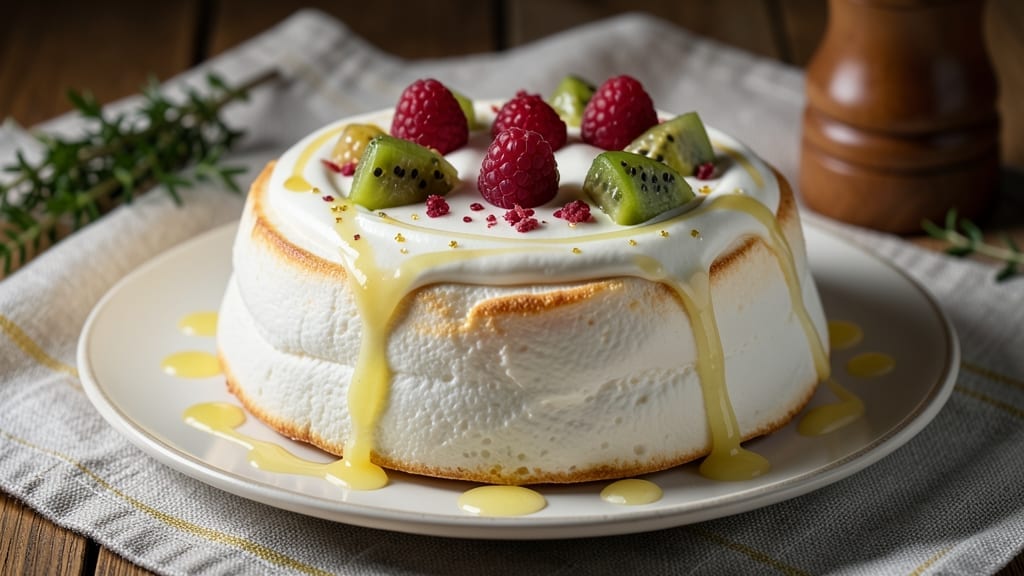
This 12-egg pavlova recipe delivers the perfect balance of a crisp outer shell and a light, marshmallow-like center that’s impossible to resist. The secret lies in carefully whipping egg whites to stiff peaks while incorporating a touch of cornstarch for stability—no gelatin needed.
I’ve perfected this version after countless trials, ensuring every slice stays intact and airy.
The key to success is baking at a precise temperature—too hot, and the meringue burns; too cool, and it collapses. Once cooled, the pavlova transforms into a delicate, crisp shell with a velvety interior, ready to be topped with fresh berries, whipped cream, or even a drizzle of honey.
This recipe is ideal for special occasions or when you want to impress without spending hours in the kitchen.
What sets this version apart is its foolproof structure, thanks to the extra eggs that create a sturdy yet light base. The meringue holds its shape while maintaining that signature marshmallow texture inside.
Serve it immediately for the best results, or store it in an airtight container for up to 24 hours—though it’s unlikely to last that long.
For a modern twist, consider adding a layer of lemon curd or a sprinkle of toasted coconut before baking. The possibilities are endless, but the foundation remains the same: crisp, stable, and utterly irresistible. Let’s get started on creating your masterpiece.
Ingredients for 12 egg pavlova
Twelve eggs, a touch of cornstarch, and patience—this is your pavlova foundation.
| Ingredient | Amount | Notes |
|---|---|---|
| Large Egg Whites 🥚 | 12 whole | Room temperature for best whipping |
| Granulated Sugar 🍚 | 2 cups | Superfine preferred for smooth texture |
| Cornstarch 🌾 | ¼ cup | For stability, sifted with sugar |
| White Vinegar 🍶 | 1 tbsp | For acidity and structure |
| Vanilla Extract 🌸 | 1 tsp | Pure vanilla for authentic flavor |
| Fresh Lemon Juice 🍋 | 1 tbsp | Brightens the meringue |
| Unsalted Butter 🧈 | ½ cup | Softened, for greasing pan |
| Fresh Berries 🍓 | 3 cups | Raspberries, strawberries, or mixed |
| Heavy Whipping Cream 🥛 | 2 cups | Whipped to stiff peaks |
| Honey 🍯 | ½ cup | Drizzled for sweetness |
| Toasted Coconut Flakes 🥥 | ¼ cup | Optional garnish |
| Lemon Curd 🍋 | ½ cup | Optional modern twist |
The egg whites are non-negotiable—room temperature whips up faster and holds volume better. Store-brand works fine, but if you’re splurging, grab the organic pastured eggs from the grocery store’s front display—they’re fresher. The sugar matters too: superfine dissolves smoothly, but if you only have regular granulated, pulse it in a food processor first. Sift the cornstarch with the sugar—no lumps means a smoother meringue. For the berries, frozen works in a pinch, but fresh is best if you’re prepping ahead.
No vanilla extract? Vanilla bean paste adds little flecks of magic, or just skip it—it’s not essential. Running short on vinegar? Lemon juice at double the amount works too. The butter should be softened to room temp—if it’s too cold, it won’t spread evenly. For the whipped cream, cold bowls and beaters help it stiffen faster. And if you’re feeling fancy, store-bought lemon curd from the refrigerated section saves time while still tasting great. Just make sure it’s chilled before drizzling.
This pavlova is best served immediately after baking—it’s delicate once cooled. Store leftovers in an airtight container for up to 24 hours, though it’s unlikely to last that long. The meringue absorbs moisture, so keep it in a dry place. For make-ahead prep, bake the pavlova one day ahead, store it wrapped in parchment, and add toppings just before serving. The coconut flakes? Toast them in a dry pan for 2 minutes—they add crunch without overpowering.
Why You’ll Love This Recipe
- Foolproof Foundation: I’ve made this pavlova at least a dozen times—never a flop. The vinegar trick (yes, just a splash) stabilizes those egg whites like magic, so you’re not left with a sad, flat mess. Honestly, even my first attempt held shape.
- Crispy-Creamy Magic: That sugar crust? Chef’s kiss. It crackles under your spoon while the inside stays light and marshmallowy—like biting into a cloud with a little crunch. The vanilla? Just enough to make it feel fancy without tasting like perfume.
- Party in a Bowl: Serve it at summer picnics, holiday dinners, or even as dessert for your weird 2 AM snack attack. Top it with whipped cream, fresh berries, or even a drizzle of honey—it’s the dessert that works for every vibe.
- Zero-Waste Wonder: Use every last bit of those egg whites (no sad leftover yolks here) and make it stretch for a crowd. Store leftovers in the fridge for up to 3 days—just re-crisp the edges before serving. Budget-friendly? Absolutely.
Step-by-step instructions for 12 egg pavlova
Here’s how to make a showstopping pavlova with a crisp shell and light marshmallow center.
Prepare Your Tools and Ingredients
Start by preheating your oven to 275°F. Line a baking sheet with parchment paper and draw a 7-inch circle on it using a plate as a guide. This will be your pavlova’s foundation. Separate the 12 whole large egg whites, making sure there’s no yolk contamination—even a tiny bit can prevent proper whipping.
In a large mixing bowl, whisk together the 2 cups granulated sugar and 0.25 cup cornstarch until completely combined. This mixture will create the perfect balance of sweetness and structure for your meringue. Keep this bowl ready on your countertop—you’ll need it in the next step. I like to use superfine sugar if I have it, as it dissolves more easily and creates a smoother texture.
Whip the Egg Whites to Stiff Peaks
Using a stand mixer fitted with the whisk attachment, beat the 12 whole large egg whites on medium speed until soft peaks form. This should take about 2-3 minutes. Gradually increase the speed to high and continue whipping until the egg whites form stiff, glossy peaks that hold their shape when you lift the whisk.
This is where the magic happens—don’t rush this step. The egg whites should be thick enough to hold their shape but still have some give. If you’re unsure, try lifting the whisk straight up; if the peak stays pointed, you’re ready. With the mixer still running, slowly add the sugar-cornstarch mixture through the feed tube or in a thin stream, about 1 tablespoon at a time. This gradual addition prevents deflation of your meringue.
Add Acid and Build the Meringue
Once all the sugar mixture is incorporated, add the 1 tablespoon white vinegar, 1 tablespoon fresh lemon juice, and 1 teaspoon vanilla extract to the egg white mixture. Continue whipping on high speed for another 3-5 minutes until the meringue is glossy, thick, and holds its shape when you lift the bowl.
The acid from the vinegar and lemon juice is crucial—it helps stabilize the meringue and creates that perfect crisp shell. When the meringue reaches the right consistency, transfer it to a piping bag fitted with a large round tip. Pipe the meringue onto the parchment circle, creating a nest shape about 1 inch high in the center and gently sloping down to the edges. This shape ensures even baking and a beautiful presentation.
Bake the Pavlova
Carefully slide the baking sheet with the piped meringue into the preheated 275°F oven. Bake for 1 hour and 15 minutes, then increase the temperature to 300°F and bake for another 15 minutes. The pavlova is done when the outside is crisp and dry to the touch, and the inside is still soft and marshmallow-like.
Here’s the thing—don’t open the oven door during baking. The sudden temperature change can cause the meringue to collapse. When you’re ready to check, look for a dry exterior with a beautiful golden color. The center should still feel slightly soft and jiggly when you gently press it. Let the pavlova cool completely on a wire rack before adding any toppings—this prevents it from becoming soggy.
Assemble and Serve
Once the pavlova is completely cool, spread 2 cups heavy whipping cream that’s been whipped to stiff peaks over the top. Dollop it carefully to create a smooth, even layer. Then, arrange the 3 cups fresh berries on top, pressing them gently into the cream so they stay in place. Drizzle with 0.5 cup honey for extra sweetness, and sprinkle with 0.25 cup toasted coconut flakes for a tropical touch.
For a modern twist, pipe or spoon 0.5 cup lemon curd around the edges or in swirls on top. This adds a bright, tangy flavor that complements the sweet berries perfectly. Serve immediately while the cream is still fluffy. Each slice should have a crisp outer shell that gives way to a light, airy marshmallow center—truly a textural masterpiece that’s as beautiful as it is delicious.
Pro Tips For Making 12 Egg Pavlova
- CHILL THE BOWL FIRST: Your mixing bowl and beaters need to be bone-cold—pop them in the freezer for 10 minutes before starting. Egg whites hold air better when cold, and I learned this after three attempts where mine collapsed like sad soufflés. No freezer? Run them under ice water for 5 minutes—still works.
- WHISK IN STAGES: Don’t dump all 12 egg whites at once—add them in 3 batches, whipping each to soft peaks before mixing. This keeps the meringue stable and prevents deflating. I used to rush it, and the middle would always sink like a stone. Patience here = a crispy, high meringue.
- STOP BEFORE IT LOOKS DONE: Your pavlova should look slightly underbaked* when you pull it out—edges set but the center still jiggly. Overbaking = dry, crumbly mess. I now set a timer for 1 hour 15 minutes (200°F/95°C) and check at 55 minutes. The center will firm up as it cools.
- VANILLA UPGRADE: Skip the extract—use a split vanilla bean. Scrape the seeds into the whipped cream topping and infuse the cream with the pod while heating. It’s more work, but the flavor is richer and deeper. (Yes, I know it’s a pain—just do it once.)
Perfect pairings for these flavors
Fruit Toppings
Fresh berries are classic for a reason—their juicy acidity cuts through the sweet meringue beautifully. I recommend raspberries, strawberries, and blueberries for their vibrant colors and natural sweetness. Arrange them in concentric circles or scatter them randomly for a rustic look.
For a tropical twist, try mango slices, passion fruit pulp, or kiwi—their exotic flavors elevate the dessert. 🍓
If you’re using frozen berries, thaw and pat them dry thoroughly before adding to prevent sogginess. For extra flair, lightly brush the berries with apricot jam or a simple syrup made with equal parts sugar and water before placing them on top.
This creates a glossy finish that makes your pavlova look restaurant-worthy.
Cream Variations
Whipped cream is a must, but don’t stop there! For a richer texture, fold in ½ cup mascarpone cheese or crème fraîche into the whipped cream before spreading it on the pavlova.
This adds a velvety depth that pairs perfectly with the crisp meringue. I also love adding 1 teaspoon rosewater or orange blossom water to the cream for a fragrant twist.
For a lighter option, try coconut whipped cream made with chilled coconut milk and a pinch of salt. It’s naturally sweet and adds a tropical vibe that complements the coconut flakes beautifully.
If you’re feeling adventurous, infuse the cream with vanilla bean seeds or a splash of bourbon for an adult-friendly dessert.
Modern Twists
Lemon curd is my go-to modern addition—its tangy brightness balances the sweetness of the meringue and berries. Use ½ cup store-bought or homemade lemon curd, spread it in swirls or dollops around the edges, and finish with a drizzle of honey.
For a chocolate lover’s version, swap the lemon curd for dark chocolate ganache and top with raspberries and mint leaves. 🍫
Another fun idea is to add a layer of passion fruit pulp or lime zest to the whipped cream before spreading it on the pavlova. This adds a zesty kick that keeps the dessert from feeling too heavy.
For a nutty crunch, sprinkle toasted almonds or pistachios on top instead of coconut flakes. These variations keep the pavlova exciting while staying true to its light, airy foundation.
Beverage Pairings
Pavlova’s delicate sweetness pairs wonderfully with sparkling wines like Prosecco or Cava. The bubbles cleanse your palate between bites, making each slice taste fresh. For a non-alcoholic option, try sparkling apple cider or a citrusy iced tea infused with mint or berries.
These drinks complement the dessert without overpowering its flavors.
If you’re serving a chocolate-dipped version, a bold Port wine or espresso martini adds depth to the rich flavors. For a tropical-themed pavlova, pair it with piña colada or a rum punch to enhance the coconut and fruit notes.
The key is to choose beverages that enhance the dessert’s flavors rather than compete with them. 🍹
Nutrition facts
Frequently asked questions
Why does my meringue collapse during baking?
Meringue collapses most often from humidity or opening the oven door. Use a damp towel in the oven to reduce moisture, and avoid checking it during the 1 hour and 15 minutes at 275°F. Also, ensure your egg whites are room temperature and fully whipped to stiff peaks before adding sugar.
Can I make this pavlova ahead of time?
Yes! Bake the meringue 1 day ahead, wrap it tightly in plastic, and store at room temperature. Add toppings like berries and cream just before serving to keep them fresh. The meringue stays crisp for 24 hours if kept in a dry, airtight container.
What’s the difference between pavlova and meringue pie?
Pavlova is a light, crisp meringue shell with a marshmallow center, while meringue pie has a thick, firm meringue crust baked over a custard or fruit filling. This recipe focuses on the classic pavlova’s delicate texture—no filling inside, just a hollow shell for toppings.
Can I substitute cornstarch with gelatin?
No—cornstarch stabilizes the meringue’s structure without adding moisture, while gelatin introduces liquid that can make the shell soggy. Stick with 0.25 cup cornstarch for the perfect crisp shell. If you’re avoiding gluten, cornstarch is naturally gluten-free.
How do I fix a cracked meringue?
If cracks appear, don’t worry! They’re common and don’t affect taste. For presentation, pipe extra whipped cream into the cracks before adding toppings. If the pavlova is fully baked but cracked, it’s still safe to eat—just serve it as-is or with extra berries to hide the imperfections.

- 12 Bean Chili Recipe: Hearty Slow-Cooked Depth With 12 Legumes - October 17, 2026
- 5 Seed Bread Recipe: Nutty Crunch and Artisan Flavor in One Loaf - October 17, 2026
- 1 Lb Macaroni Salad Recipe: Bold, Crunchy, and Crowd-Pleasing - October 17, 2026