
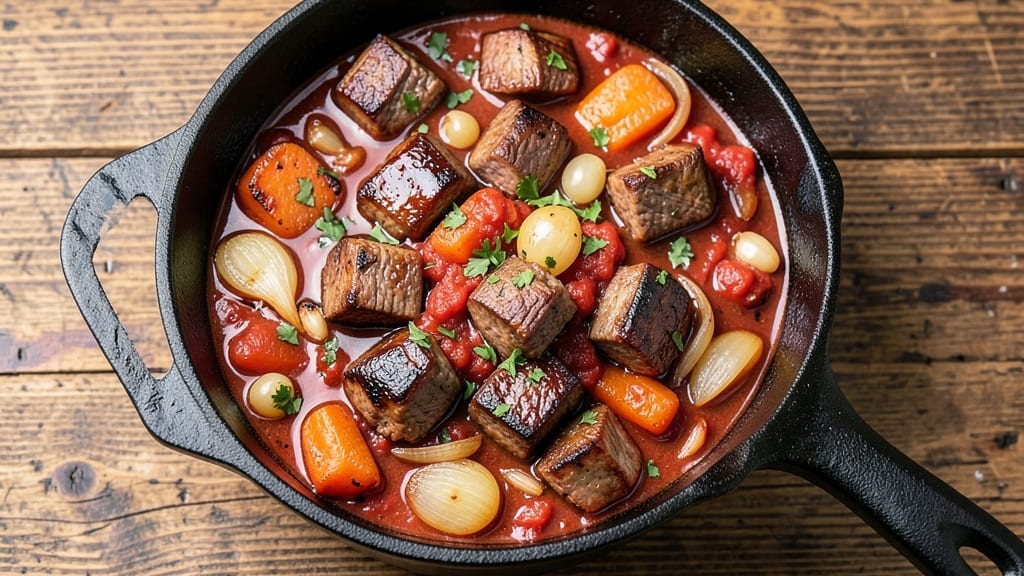
A 4-hour beef stew transforms tough cuts into melt-in-your-mouth perfection, with flavors deepening as it simmers. This recipe delivers restaurant-quality results at home, where slow cooking breaks down collagen for rich, velvety broth and tender meat.
The key lies in proper browning and layering spices—each step builds complexity that comes together beautifully after hours of gentle heat.
What sets this stew apart is its versatility—whether you use a stovetop pot, slow cooker, or pressure cooker, the 4-hour process ensures maximum flavor extraction. The beef develops a caramelized crust while the vegetables soften just enough to soak up the savory broth.
A splash of red wine and tomato paste adds depth, while herbs like thyme and bay leaf infuse subtle earthiness.
By the final hour, your kitchen will smell like a cozy country inn, and the stew will have transformed from simple ingredients into a hearty, comforting meal.
The beef will pull apart easily, the vegetables tender but still holding their shape, and the broth reduced to a perfect consistency—neither too thin nor gluey. Serve with crusty bread to soak up every last drop of that aromatic liquid gold.
This isn’t just dinner—it’s a foolproof way to turn weeknights into special occasions. The beauty of this recipe is how it rewards patience; the longer it cooks, the more incredible it becomes. Let’s get started on creating a stew that’ll have everyone asking for seconds.
Ingredients for 4 hour beef stew
Restaurant-quality beef stew starts with these 14 ingredients that build rich, layered flavor over four hours.
| Ingredient | Amount | Notes |
|---|---|---|
| Chuck Roast 🥩 | 3 lb | Pre-cut into 1.5-inch cubes |
| Yellow Onions 🧅 | 2 whole | Peeled, cut into wedges |
| Carrots 🥕 | 4 medium | Peeled, cut into 2-inch chunks |
| Garlic Cloves 🧄 | 6 cloves | Peeled, smashed |
| Tomato Paste 🍅 | ½ cup | High-quality, no sugar added |
| Dry Red Wine 🍷 | 1 cup | Bold variety like Cabernet |
| Beef Broth 💧 | 4 cups | Low-sodium preferred |
| Fresh Thyme 🌿 | 2 sprigs | Or 2 tsp dried thyme |
| Bay Leaves 🍃 | 2 whole | Standard size |
| Olive Oil 🫒 | 2 tbsp | Extra-virgin for richness |
| All-Purpose Flour 🌾 | 2 tbsp | For thickening |
| Salt 🧂 | 1 ½ tsp | Kosher or sea salt |
| Ground Black Pepper 🌶️ | 1 tsp | Freshly ground preferred |
| Dried Parsley 🌿 | 1 tbsp | For garnish |
The chuck roast is non-negotiable here—look for well-marbled cuts at your butcher or grocery store’s meat counter. Costco or Whole Foods typically carry excellent chuck roast pre-cut into cubes, which saves prep time. If buying whole, ask for it to be cut into 1.5-inch pieces. The beef should feel firm but yield slightly when pressed—bright red color means freshness. For the wine, any bold, dry red works—Cabernet Sauvignon or Merlot are classic choices, but whatever’s open in your cabinet will do. The tomato paste? San Marzano is ideal, but any quality brand without added sugar will work fine.
No red wine? Substitute with beef broth plus 1 tbsp balsamic vinegar—it adds similar depth. Fresh thyme is ideal, but dried works at one-third the amount. The carrots can be baby carrots if that’s what you’ve got, though the larger ones hold up better during long cooking. For the flour, King Arthur or Gold Medal brands are reliable choices. If you’re worried about gluten, omit it entirely—the stew will still thicken slightly from the tomato paste and beef juices. The beef broth should be low-sodium to control seasoning, but if you only have regular, reduce the added salt by half.
This stew tastes even better the next day, so make extra if you can. Portion into containers for easy reheating—2-3 days in the fridge or 3 months in the freezer. For freezing, let it cool completely first. The flavor continues developing as it sits, so don’t rush the final hour. If you’re using a slow cooker, brown the meat first on the stovetop—that caramelization is what builds deep flavor. Store leftovers with a layer of broth on top to prevent a skin from forming.
Why You’ll Love This Recipe
- Rich Without Effort: That tomato paste and garlic? They’re the secret weapons. The chuck roast melts into tender perfection while the carrots stay crisp—no mushy veggies here. Honestly, the first bite makes you forget it took zero active work.
- Leftovers That Beg: This stew tastes better the next day, which is basically a free meal. I’ve reheated mine three times and still get compliments. (Yes, even on a Tuesday night.)
- Budget Meal for Crowds: A single chuck roast feeds six, and the rest of the ingredients cost pennies. It’s my go-to for game nights, potlucks, or when I’m broke but refuse to eat sad food. Solid every time.
Step-by-step instructions for 4-Hour beef stew
Here’s the method for rich, tender beef stew that develops deeper flavor with each passing hour.
Sear the Chuck Roast and Vegetables
Heat the 2 tablespoons olive oil in a heavy Dutch oven over medium-high heat. Working in batches, add the 3 lb chuck roast cut into 1.5-inch cubes and sear for 3-4 minutes per side until deeply browned on all sides. This step is crucial—it develops the Maillard reaction that creates deep, savory flavors.
Remove the beef and set aside. In the same pot, add the 2 whole yellow onions cut into wedges and 4 medium carrots cut into 2-inch chunks. Cook for 5-6 minutes, stirring occasionally, until the onions soften and begin to caramelize. Add the 6 cloves garlic and cook for 30 seconds until fragrant. Don’t let the garlic burn—it should smell sweet and nutty, not bitter.
Build the Flavor Base
Reduce heat to medium and stir in the 0.5 cup tomato paste, spreading it evenly over the bottom of the pot. Cook for 1-2 minutes until it darkens slightly and begins to release its rich, umami flavors. This creates a flavorful crust that forms the foundation of your stew.
Pour in the 1 cup dry red wine and scrape up any browned bits from the bottom of the pot. Let it simmer for 3-4 minutes until reduced by half. This step concentrates the wine’s flavors and removes some of the alcohol. Add the 4 cups beef broth, 2 sprigs fresh thyme, and 2 whole bay leaves. Return the beef to the pot and bring everything to a gentle boil.
Simmer Until Tender
Reduce heat to low and cover the pot. Let the stew simmer gently for 3-3.5 hours, stirring occasionally. You’re looking for a steady simmer where small bubbles occasionally break the surface—this ensures even cooking without toughening the meat. The meat should be fork-tender and easily pull apart when tested.
After 3 hours, check the consistency. If the stew is too thin, mix the 2 tablespoons all-purpose flour with 1 tablespoon cold water to make a slurry. Stir this into the stew and simmer for another 15-20 minutes until thickened to your desired consistency. Season with 1.5 teaspoons salt and 1 teaspoon ground black pepper. The flavors will develop even more as it cooks longer.
Finish and Rest
Once the beef is tender, remove the bay leaves and thyme sprigs. Taste and adjust seasoning if needed—this is your chance to balance flavors before serving. The stew should be rich, savory, and well-seasoned with a perfect balance of acidity from the wine and sweetness from the carrots and onions.
Let the stew rest for 15-20 minutes before serving. This allows the flavors to meld completely and the juices to redistribute throughout the meat. Garnish with 1 tablespoon dried parsley just before serving. The stew will continue to improve overnight, making it even more flavorful the next day.
Pro Tips For Making 4 Hour Beef Stew
- SEAR THE ROAST FIRST: I learned this the hard way—skipping the sear means flavorless beef. After browning the chuck roast in batches (yes, even if it’s messy), you’ll get that deep, caramelized crust that turns into rich, meaty bits in the stew. Use a hot pan with 1 tablespoon of oil per side, and don’t rush it—wait for those golden patches.
- CUT ONIONS SMALLER THAN YOU THINK: Big onion chunks? They’ll turn to mush. Dice those yellow onions into ¼-inch pieces—small enough to disappear but big enough to hold shape. My grandmother swore by this, and she was right: they’ll soften without dissolving into the broth, keeping texture in every bite.
- DEGLAZE WITH BEER OR BROTH: After searing the meat, don’t just add water to the pan—scrape up those browned bits with a splash of beer (or beef broth if you’re avoiding alcohol). It cuts through the richness and adds depth. I was skeptical until I tried it: the stew tastes more complex without extra effort.
- SIMMER LOW AND COVERED: Four hours isn’t just time—it’s about gentle heat. Keep the stew at a barely simmer (tiny bubbles, not a rolling boil) with the lid on, or the liquid will evaporate too fast. After burning three batches, I finally figured out: 170°F (lowest setting on most ovens) is the sweet spot for tender beef without drying it out.
Creative variations of these flavors
Slow Cooker Adaptation
For a hands-off version, brown the beef and vegetables on the stovetop first, then transfer everything to your slow cooker. Add the wine, broth, and spices, then cook on LOW for 8 hours or HIGH for 5 hours.
The slow cooker’s gentle heat ensures tender meat without drying it out. I love this method for weeknight dinners—just throw everything in and let it work its magic. 💫
Pressure Cooker Shortcut
Use an Instant Pot to cut cooking time to 45 minutes on high pressure. Sear the beef and vegetables first, then add all ingredients and pressure cook. After releasing pressure, let it sit for 10 minutes before serving.
This method delivers restaurant-quality results in a fraction of the time while preserving all the deep flavors. 🔥
Vegetarian Twist
Swap the beef for portobello mushrooms or extra-firm tofu cut into cubes. Marinate the mushrooms in soy sauce, garlic, and smoked paprika for 30 minutes before cooking.
The tofu works best when pressed and pan-fried first. Both options absorb the rich broth beautifully while keeping the dish hearty and satisfying. 🌱
Global Variations
French Version: Add 1 tbsp Dijon mustard and a splash of cognac when deglazing the pot. Garnish with fresh parsley and a drizzle of crème fraîche. Italian Style: Stir in 1 can diced tomatoes and add Italian sausage along with the beef. Moroccan Twist: Include 1 tsp ground cumin, ½ tsp cinnamon, and 1 tbsp harissa paste for warmth. 🌍
Spice Level Boost
For heat lovers, add 1-2 tbsp chipotle powder when building the flavor base, or stir in 1 tbsp hot sauce at the end. If you prefer fresh heat, toss in 1-2 sliced jalapeños or ½ tsp cayenne pepper.
The slow cooking mellows the heat while keeping the flavors vibrant. 🌶️
Make-Ahead Magic
This stew tastes even better after 24 hours in the fridge as flavors meld. Double the recipe and freeze half for future meals. When reheating, add ¼ cup water or broth to prevent thickening. I always make extra—it’s perfect for lazy Sundays or unexpected company. ❄️
Nutrition facts
Frequently asked questions about 4-Hour beef stew
Can I use a different cut of beef for this recipe?
While chuck roast is ideal for its marbling and tenderness, you can substitute with brisket or stew meat cut from the round. Avoid lean cuts like sirloin—they’ll dry out during the long cooking time. For best results, choose a cut with visible fat marbling to keep the stew moist and flavorful.
Why does my stew taste bland after 4 hours?
Bland flavor usually means insufficient browning or under-seasoning. Always brown the beef thoroughly to develop deep flavors, and taste as you go—adding a splash of red wine or tomato paste at the end can boost umami. Remember, flavors deepen during resting time, so let it sit 15-20 minutes before serving.
What’s the best way to thicken stew that’s too watery?
Make a slurry with 1 tbsp flour + 1 tbsp cold water, stir it into the simmering stew, and cook for 10-15 minutes until thickened. For a gluten-free option, use ½ cup mashed potatoes or 1 tbsp cornstarch mixed with water. Never thicken with raw flour—it can create lumps.
Can I make this stew in a regular pot on the stovetop?
Use a heavy Dutch oven with a tight-fitting lid to maintain even heat. Keep the stew at a gentle simmer (small bubbles) rather than a rolling boil to prevent toughening the meat. Stir occasionally and add broth as needed to maintain liquid levels.
How do I know when the beef is fully tender?
The beef should easily pull apart with a fork and have no resistance when pierced. Test a piece after 2.5-3 hours—if it’s still tough, continue cooking. For extra tenderness, add 1 extra cup of broth if the stew gets too thick during cooking. The longer it cooks past tender, the more flavorful it becomes!

- 12 Bean Chili Recipe: Hearty Slow-Cooked Depth With 12 Legumes - October 17, 2026
- 5 Seed Bread Recipe: Nutty Crunch and Artisan Flavor in One Loaf - October 17, 2026
- 1 Lb Macaroni Salad Recipe: Bold, Crunchy, and Crowd-Pleasing - October 17, 2026