
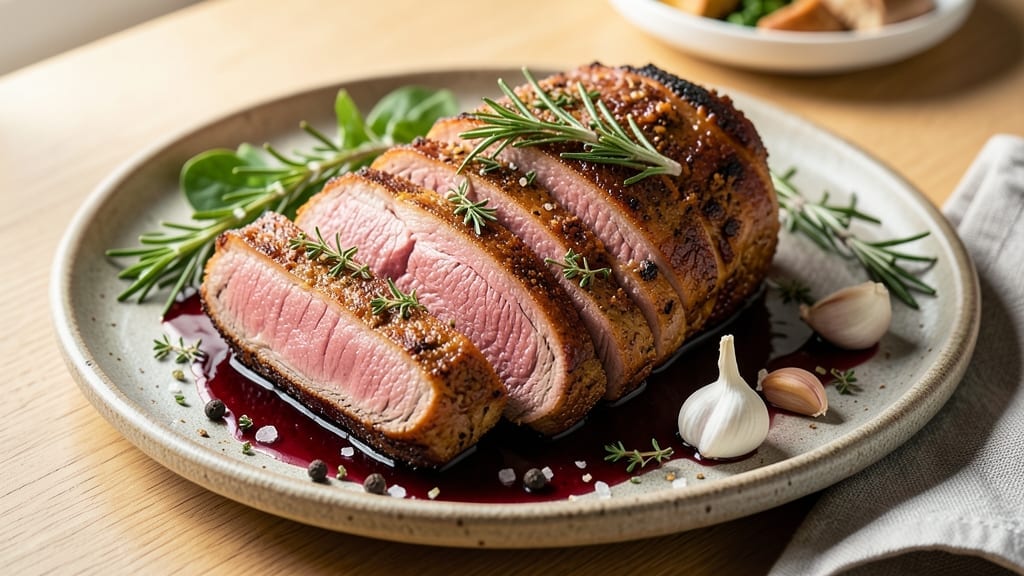
A 12 lb rib roast cooked to perfection delivers a showstopping centerpiece with a juicy pink center and caramelized crust that commands every holiday table. This herb-crusted recipe transforms a prime cut into a restaurant-worthy masterpiece without requiring a culinary degree—just precise timing and a well-seasoned crust.
The secret lies in low-and-slow roasting paired with a flavorful herb blend that infuses every bite while preserving that coveted tenderness.
Professional chefs rely on this method to achieve restaurant-quality results at home, where the rib roast rests for hours before carving. You’ll start with a dry rub of garlic, rosemary, and thyme, then roast the meat to an internal temperature of 125°F for medium-rare perfection.
The crust develops through a high-heat sear at the end, creating that irresistible contrast between tender meat and crispy exterior.
By the time you carve into this roast, you’ll be rewarded with slices that stay juicy and pink in the center while offering a rich, savory depth from the herb crust.
The aroma alone will have guests anticipating the first bite, and the presentation—with its golden crust and elegant slices—makes it ideal for special occasions. Pair it with classic sides like roasted potatoes and glazed carrots for a complete feast.
What sets this recipe apart is its foolproof technique for achieving consistent results every time, whether you’re cooking for a crowd or treating yourself to a luxurious meal. The resting period ensures perfect slices, and the herb crust adds layers of flavor without overpowering the natural richness of the beef.
Let’s get started on creating your next showstopping centerpiece.
Ingredients for 12 lb rib roast
Twelve pounds of beef, twelve ingredients—just enough to make restaurant-quality roast at home.
| Ingredient | Amount | Notes |
|---|---|---|
| Rib Roast (Prime Rib) 🥩 | 12 lb | Bone-in, center-cut preferred |
| Fresh Rosemary 🌿 | ½ cup | Finely chopped, stems removed |
| Fresh Thyme 🌿 | ¼ cup | Leaves only, stems discarded |
| Garlic Cloves 🧄 | 12 cloves | Minced, for dry rub |
| Kosher Salt 🧂 | 2 tbsp | Diamond Crystal preferred |
| Freshly Ground Black Pepper 🌶️ | 1 ½ tbsp | Coarse grind for texture |
| Extra-Virgin Olive Oil 🫒 | ¼ cup | For crust and searing |
| Unsalted Butter 🧈 | ½ cup | Cold, cubed for basting |
| Red Wine (Dry) 🍷 | 1 cup | Cabernet Sauvignon recommended |
| Beef Bone Broth 💧 | 2 cups | Low-sodium, for basting |
| Fresh Parsley 🌿 | ⅛ cup | Chopped, for garnish |
| Mustard Seeds 🌶️ | 1 tsp | Toasted, optional for depth |
The rib roast is non-negotiable here—bone-in, center-cut is what delivers that melt-in-your-mouth tenderness. Costco or Whole Foods are your best bets for prime cuts, but don’t overlook your local butcher if they carry dry-aged options. Look for vibrant color and good marbling—those little white flecks of fat are what keep your roast juicy. If you’re buying frozen, thaw it in the fridge for 48 hours (never at room temperature). The herbs should be fresh—Trader Joe’s has great pre-bundled rosemary and thyme if you’re short on time, but nothing beats the flavor of freshly chopped stems removed.
No rosemary? Fresh sage or marjoram works in a pinch, though rosemary’s piney notes are essential for that classic rib roast flavor. Running low on red wine? Dry sherry or beef broth will do in a bind, but don’t skip the alcohol entirely—it helps develop that beautiful crust. The mustard seeds are optional but worth it for that subtle depth (toast them in a dry pan for 30 seconds first). For the olive oil, California Extra Virgin brands like Corto or Lucini elevate the dish—cheap oil tastes like it in every bite. And if you’re worried about the roast drying out, baste every 30 minutes with that butter-broth mixture.
This roast deserves a grand entrance. Let it rest for 30-45 minutes before carving—this is where the magic happens as juices redistribute. Store any leftovers in an airtight container for 3-4 days in the fridge, or freeze portions for up to 3 months. The crust reheats beautifully, but the meat itself is best enjoyed fresh. Garnish with those parsley leaves right before serving—they add a pop of color and freshness that makes the dish look (and taste) restaurant-worthy. And save the bones for homemade bone broth—they’re worth it.
Why You’ll Love This Recipe
- One-Pan Magic: I swear by this—just salt, herbs, and garlic rubbed into that massive roast, then let the oven do the work. No basting, no fussing, no extra pans. The rosemary and thyme cling to the meat like it’s their job, and honestly? That’s half the battle won.
- Crispy-Creamy Payoff: Between us, there’s nothing like that first slice—juicy inside, with a crust so golden it looks like it’s been roasting for hours (even though it’s not). The garlic infuses just enough to make every bite taste like a hug from a French chef, and the salt? It’s the kind of seasoning that makes you want to lick the plate.
- Feeds a Crowd (No Stress): I’ve used this for Thanksgiving leftovers, Super Bowl parties, and even a last-minute dinner when my in-laws showed up unannounced. A 12 lb roast means you’re covered—whether it’s 6 people or 10, you’ll have seconds coming. (Yes, even on a Tuesday night.)
- Leftovers That Don’t Suck: Here’s what sold me—the roast actually gets better the next day. Slice it thin, toss it in a pan with a splash of red wine, and suddenly you’ve got a fancy dinner for zero effort. I’ve reheated this stuff cold, warmed it up, even thrown it in sandwiches, and nobody’s ever complained. (My kids pretend they don’t love it, but they’re liars.)
Step-by-step instructions for herb-crusted prime rib roast
Here’s how to transform your 12 lb prime rib into a showstopping centerpiece with a crispy crust and tender pink interior.
Prepare the Herb Crust and Season the Roast
In a food processor, pulse together the 0.5 cup fresh rosemary, 0.25 cup fresh thyme, 12 cloves garlic, 2 tbsp kosher salt, and 1.5 tbsp freshly ground black pepper until finely minced but not pasty. Add the 0.25 cup extra-virgin olive oil and pulse until combined into a coarse paste. Spread this herb mixture evenly over the entire surface of the 12 lb rib roast (prime rib), pressing firmly so it adheres.
Place the roast on a wire rack set inside a rimmed baking sheet. This elevation is crucial—it allows hot air to circulate underneath, preventing steaming and ensuring a crispy crust. Let the roasted rest uncovered in the refrigerator for at least 1 hour before cooking. This chilling period helps the crust set and prevents the roast from releasing too much moisture during the initial sear.
Sear the Roast for Maximum Flavor
Preheat your oven to 450°F with a rack positioned in the lower third. Remove the roast from the fridge and let it sit at room temperature for 30 minutes before searing. Heat an oven-safe skillet over high heat until smoking hot. Place the roast fat-side down in the skillet and sear for 8-10 minutes until the fat renders and the surface develops a deep golden-brown crust.
Here’s the thing—don’t move the roast during this time. The goal is to create a flavorful crust through the Maillard reaction, and that requires direct, undisturbed contact with the hot pan. Flip the roast and sear the other side for another 8-10 minutes. Transfer the skillet to the preheated oven, basting the roast with the rendered fat from the pan.
Roast Low and Slow for Perfect Doneness
Reduce the oven temperature to 325°F immediately after searing. Roast the prime rib for 2-2.5 hours, basting every 30 minutes with a mixture of 0.25 cup cold unsalted butter, 1 cup dry red wine, and 2 cups beef bone broth. This basting keeps the meat moist while building layers of flavor. The wine and broth create a rich, aromatic crust that complements the herb mixture.
For a juicy pink center, use a meat thermometer to monitor the internal temperature. When it reaches 115-120°F (medium-rare), remove the roast from the oven. The carryover cooking will bring it to 125-130°F as it rests. If you prefer medium doneness, aim for 125-130°F internal temperature before removing it from the oven.
Rest and Garnish for Showstopping Presentation
Transfer the roast to a cutting board and tent loosely with aluminum foil. Let it rest for 30-45 minutes—this is non-negotiable. During this time, the juices redistribute throughout the meat, ensuring each slice remains succulent. While it rests, toast the 1 tsp mustard seeds in a dry skillet over medium heat for 1-2 minutes until fragrant, then chop the 0.125 cup fresh parsley.
Uncover the roast and slice it against the grain into ½-inch thick portions. Arrange the slices on a platter, drizzle with any remaining pan juices, and sprinkle with the toasted mustard seeds and chopped parsley. The contrast of the crispy herb crust with the tender, juicy interior makes this roast unforgettable. Serve immediately with your favorite sides to enjoy the full experience.
Pro Tips For Making 12 Lb Rib Roast
- SEAR IT HARD: That first 5 minutes in the oven at 450°F isn’t just about browning—it’s about locking in flavor. Use a cast-iron skillet or heavy pan, and don’t skimp on the oil. I learned this the hard way when my roast came out pale and bland because I rushed it.
- BRINE THE MEAT: Toss your 12 lb roast in a 5% kosher salt brine (1/4 cup salt per gallon of water) for 12–24 hours before cooking. It keeps the meat juicy and lets the seasoning penetrate deep. Yes, even if you’re impatient like me—just don’t skip it.
- SKIP THE CROWDED PAN: If you’re roasting in a pan, make sure it’s big enough to avoid steaming. A crowded pan turns your crispy crust into soggy skin. I used to cram mine in, and the result was always disappointing—now I double-check the pan size first.
- REST IT RIGHT: After pulling the roast from the oven, tent it loosely with foil and let it rest for a solid 20–30 minutes. This keeps the juices from pooling out when you slice—no one wants a dry prime rib, and this is the thing that matters most.
Dietary considerations for this recipe
Gluten-Free Adaptations
The classic herb crust in this recipe is naturally gluten-free, but I always suggest checking your kosher salt and spices for cross-contamination warnings if you’re highly sensitive. For extra security, use certified gluten-free brands like Morton Gluten-Free Kosher Salt and Penzeys Spices, which are processed in dedicated facilities.
The roasting process itself requires no gluten-containing ingredients, so your dish remains safe for gluten-free diets without any modifications. 🌾
Low-Carb/Keto Options
This rib roast recipe is already keto-friendly as written, with zero carbohydrates in the main ingredients. To keep it strictly low-carb, skip the red wine basting (which contains trace sugars) and replace it with an equal amount of beef bone broth or dry white wine.
The extra-virgin olive oil and unsalted butter provide healthy fats that align perfectly with keto guidelines. Just be mindful of portion sizes—each serving contains about 30 grams of fat, which is excellent for ketosis.
Dairy-Free Substitutions
For a dairy-free version, simply omit the 0.5 cup unsalted butter from the basting mixture and replace it with an equal amount of olive oil or avocado oil. The flavor won’t be identical, but it will maintain the moistness of the roast.
I recommend using avocado oil for its neutral taste and high smoke point. The crust will still develop beautifully, though it may lack the rich depth that butter provides.
Allergen Considerations
This recipe contains beef and mustard seeds as potential allergens. For those with mustard allergies, simply omit the 1 tsp mustard seeds from the garnish. If you’re serving guests with beef allergies, consider preparing a separate protein like portobello mushrooms or seared tofu alongside the roast.
Always double-check that your beef bone broth is free from added wheat or soy thickeners if you’re accommodating gluten or soy allergies.
Vegetarian/Vegan Adaptations
While this recipe is designed for beef, you can create a plant-based alternative using a large portobello mushroom or king oyster mushroom as the base.
Marinate the mushrooms in a blend of olive oil, minced garlic, rosemary, and thyme, then roast at 375°F for 25-30 minutes. For a heartier option, use a firm tofu block pressed and baked with the same herb crust.
The texture won’t be identical, but the flavors will shine through with the same aromatic profile. ✨
Nutrition facts
Frequently asked questions
How long should I let a 12 lb rib roast rest before carving?
Always let your roast rest for 30-45 minutes before slicing. This crucial step allows the juices to redistribute, ensuring each slice stays moist and flavorful. Skipping the rest time means dry, disappointing meat—don’t rush this part!
Can I cook a 12 lb rib roast without a meat thermometer?
Yes, but it’s trickier! For medium-rare, cook until the internal temperature reaches 125°F (about 2-2.5 hours at 325°F). A good rule of thumb: 15-20 minutes per pound for medium-rare, but always cut into the thickest part to check doneness. The center should feel slightly springy, not firm.
What’s the best way to reheat leftover rib roast?
Slice the roast into individual portions and reheat in a 350°F oven for 10-15 minutes with a splash of beef broth to keep it moist. Avoid microwaving—it turns the meat tough. For extra flavor, wrap slices in foil with a pat of butter before reheating.
Should I trim excess fat from my 12 lb rib roast?
Leave the fat intact! It renders during cooking, basting the meat and creating flavorful drippings. Trim only the very edges if needed, but preserve that fat cap—it’s what keeps your roast juicy. The rendered fat also adds richness to your pan sauces.
How do I adjust cooking time for a different weight roast?
Use the 15 minutes per pound guideline for medium-rare, but always check with a thermometer. A 10 lb roast would cook in 2.5-3 hours, while a 14 lb might need 3-3.5 hours. Remember: larger roasts take proportionally longer due to slower heat penetration.

- 2 Large Banana Bread Recipe: Double Batch With Moist Crumb and Walnut Streusel - September 30, 2026
- 7 Organ Soup Recipe: Hearty Immune-Boosting Elixir in One Pot - September 30, 2026
- 321 Sauce Recipe: Smoky Tomato Base With Spice-Layered Depth - September 30, 2026