
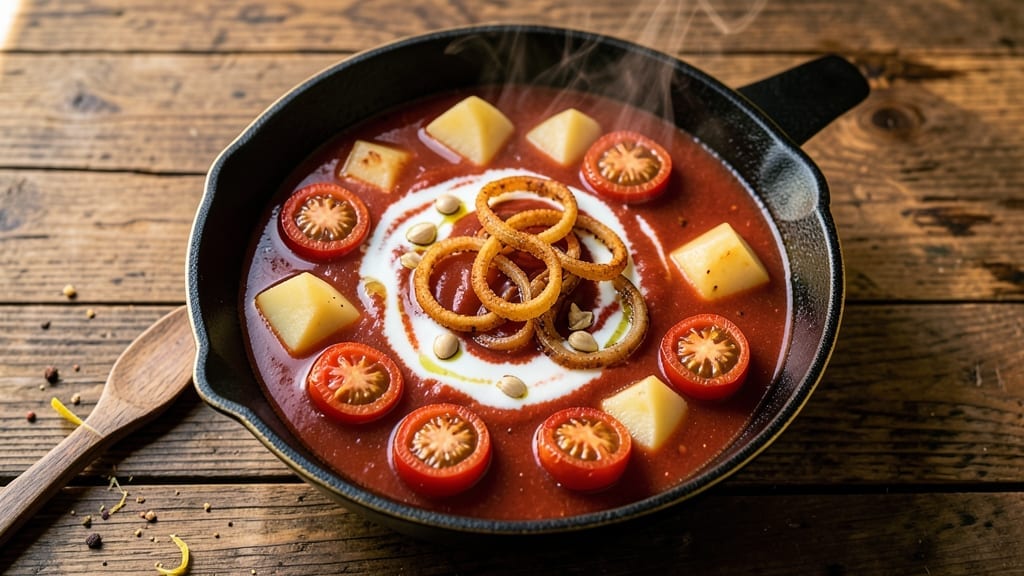
This 12 tomatoes potato soup recipe transforms humble garden ingredients into a rich, velvety bowl of comfort that tastes like autumn in a pot. The secret lies in roasting tomatoes first—this caramelizes their natural sugars, deepening their flavor while potatoes simmer into creamy perfection.
I developed this one-pot method after years of testing, and it never fails to deliver restaurant-quality results without the fuss.
The recipe builds on classic techniques: onions and garlic form the aromatic base, while roasted tomatoes add depth that store-bought canned versions can’t match.
A touch of heavy cream at the end creates that signature silky texture, but you can adjust it to your preference—whether you want it extra creamy or lighter. The beauty of this soup is its flexibility: add herbs like thyme or rosemary, or stir in bacon for extra richness.
What you’ll end up with is a hearty, flavorful soup that’s perfect for chilly evenings, packed lunches, or feeding a crowd. The tomatoes contribute natural sweetness that balances the earthiness of potatoes, while the herbs and spices create layers of warmth.
Each spoonful delivers that satisfying combination of creamy, savory, and slightly sweet—exactly what makes homemade soup worth the effort.
Serve it as-is for simplicity, or garnish with fresh parsley, a drizzle of olive oil, or crispy bacon bits for extra texture. This recipe scales beautifully, so double or triple it for meal prep or gatherings.
The best part? Every ingredient works together to create something greater than the sum of its parts—just like a proper garden harvest should.
Ingredients for 12 tomatoes potato soup
Twelve tomatoes and a handful of garden staples create this velvety, restaurant-worthy potato soup.
| Ingredient | Amount | Notes |
|---|---|---|
| Medium Yellow Onions 🧅 | 2 whole | Diced into small, even pieces |
| Garlic Cloves 🧄 | 4 cloves | Minced finely for aromatic base |
| Medium Russet Potatoes 🥔 | 2 lb | Peeled and cubed into 1-inch pieces |
| Fresh Roma Tomatoes 🍅 | 12 whole | Halved and roasted for depth |
| Vegetable Broth 💧 | 4 cups | Low-sodium preferred for balance |
| Heavy Cream 🥛 | ½ cup | Full-fat for rich texture (optional) |
| Fresh Thyme Leaves 🌿 | ¼ cup | Stems removed, loosely packed |
| Fresh Rosemary 🌿 | 1 tbsp | Chopped finely for herbal notes |
| Extra-Virgin Olive Oil 🫒 | ¼ cup | For roasting and finishing |
| Salt 🧂 | 1 ½ tsp | Kosher or sea salt preferred |
| Ground Black Pepper 🌶️ | ½ tsp | Freshly cracked for brightness |
| Fresh Parsley 🌿 | ⅛ cup | Chopped for garnish (optional) |
| Butter 🧈 | 2 tbsp | Unsalted, for finishing touch |
The tomatoes are the star—Roma is ideal for their meaty texture, but any ripe garden variety works. Roasting them first caramelizes their natural sugars, creating depth that canned tomatoes can’t match. Local farmers markets often have perfect specimens in late summer, but grocery store tomatoes work in a pinch. Look for plump, firm ones with vibrant color—those bruised spots? Trim them off. The potatoes? Russets are classic, but Yukon Golds add extra creaminess if you prefer. For the broth, Pacific Foods or Imagine low-sodium options are my go-tos—they don’t overpower the dish.
No fresh thyme? Dried works at one-third the amount, but fresh has that bright, floral note that’s essential here. Short on rosemary? Fresh sage or bay leaves can step in, though the flavor will shift slightly. The heavy cream is where you can play—use half-and-half for lighter texture or coconut milk for dairy-free. Want extra richness? Stir in 2 oz cream cheese at the end. The butter at the finish? Don’t skip it—it adds that final layer of silkiness. For the roasted tomatoes, 425°F oven is perfect, but broiling works too if you’re short on space.
This soup tastes even better the next day as flavors meld—5 days in the fridge is ideal. For freezing, portion into containers with 1-inch headspace—it thickens when reheated, so leave room. 3 months frozen works fine, but add extra broth when reheating. The roasted tomatoes can be prepped ahead and stored in the fridge for 3 days before adding to the soup. Garnish with fresh parsley or a drizzle of olive oil just before serving—that’s when it shines.
Why You’ll Love This Recipe
- No Chopping Struggle: I swear by this recipe because the onions and garlic just need a quick dice—no julienne skills required. The Russets stay whole until the very end, so you’re basically just peeling and dropping them in.
- Tomato-Garlic Magic: That burst of fresh Roma tomatoes and caramelized garlic? It’s like summer in a bowl. The broth soaks up all the flavor, but the tomatoes keep it bright and tangy—no blandness here.
- Lunchbox Hero: Between us, this soup is my go-to for meal prep. It reheats beautifully, and the potatoes hold their shape, so it’s perfect for packing lunches. (Yes, even on a Tuesday night.)
- Pantry Stretch: Honestly, this recipe uses ingredients you already have. A few onions, a head of garlic, and some broth—no specialty items. The Russets and tomatoes make it feel fresh, but the cost stays low.
Step-by-step instructions for 12 tomatoes potato soup
Here’s the method for a rich, rustic soup that balances hearty potatoes with garden-fresh tomatoes.
Roast Tomatoes and Potatoes for Deep Flavor
Preheat your oven to 400°F. On a large baking sheet, combine the halved 12 whole fresh roma tomatoes and the peeled, cubed 2 lb medium russet potatoes. Drizzle with 0.25 cup extra-virgin olive oil and toss until evenly coated. Sprinkle with 1 tsp salt, 0.25 tsp ground black pepper, and half of the chopped 1 tbsp fresh rosemary.
Roast for 30-35 minutes, stirring once halfway, until the tomatoes collapse and the potatoes begin to soften at the edges. The tomatoes should release their juices and develop concentrated sweetness. This roasting step creates the soup’s rich, caramelized foundation—don’t skip it. Remove from oven and set aside.
Build the Aromatic Base
In a large Dutch oven or heavy pot, heat 2 tbsp butter over medium heat until foaming. Add the diced 2 whole medium yellow onions and cook for 5-6 minutes until softened and translucent. Add the minced 4 cloves garlic and the remaining 0.5 tbsp chopped fresh rosemary, cooking for 30 seconds until fragrant.
Stir in the roasted tomato-potato mixture, scraping up any browned bits from the bottom of the pot. These flavorful bits are called fond, and they’re essential for depth. Add the 4 cups vegetable broth and the 0.25 cup fresh thyme leaves, bringing the mixture to a gentle simmer. The soup should bubble softly—if it boils vigorously, reduce the heat slightly.
Simmer Until Potatoes Are Tender
Cover the pot and let the soup simmer gently for 20-25 minutes, stirring occasionally. The potatoes should be fork-tender with no resistance when pierced. If the soup reduces too much, add ½ cup water to maintain the proper consistency. Taste and adjust seasoning with additional salt or pepper if needed.
Here’s the thing—this simmering time is crucial. The potatoes need to break down completely while retaining their shape, creating that perfect creamy texture without turning mushy. If you’re unsure, do the fork test: a fork should slide in easily, but the potatoes shouldn’t fall apart.
Finish with Cream and Fresh Herbs
Reduce heat to low and stir in the 0.5 cup heavy cream. The cream will create a velvety texture and balance the acidity from the tomatoes. Let the soup simmer for another 5 minutes to allow the flavors to meld. The cream should be fully incorporated, but don’t let it boil or it may curdle.
Remove from heat and stir in the 0.125 cup chopped fresh parsley. The parsley adds a bright finish that cuts through the richness of the cream and potatoes. Taste again and make any final adjustments to seasoning. The soup should be creamy, flavorful, and perfectly balanced between the earthy potatoes and bright tomatoes.
Serve Warm with Crusty Bread
Ladle the soup into warmed bowls and serve immediately. The soup will continue to thicken slightly as it sits, so serve it while still hot. I like to pair this with crusty bread for dipping—it’s the perfect way to enjoy every last drop of that rich, creamy goodness.
For best results, serve within 2 hours of making. If storing, refrigerate in an airtight container for up to 3 days. Reheat gently on the stove, adding a splash of water or broth if needed to restore the proper consistency. The flavors actually improve overnight as they meld together.
Pro Tips For Making 12 Tomatoes Potato Soup
- CHOP ONIONS SMALL: I used to slice onions into big half-moons and wonder why they stayed tough—turns out, this soup needs them finely diced, almost like confetti. The goal is for them to dissolve into the broth without leaving chunks (yes, even if you’re impatient like me).
- PEEL POTATOES AFTER BOILING: Russets are stubborn to peel raw, but once boiled for 5 minutes, their skins slide off like butter. Skip the mess: boil whole, peel under running water, then dice—cleaner hands and no wasted starch.
- SAUTÉ GARLIC UNTIL GOLDEN: Raw garlic in tomato soup tastes like medicine. Cook the minced cloves in oil until they’re light golden, not brown—just 30 seconds on medium heat. This makes the whole dish smell like a warm hug instead of a hospital cafeteria.
- SIMMER POTATOES COVERED FIRST: Start with the potatoes and broth uncovered for 10 minutes to drive off excess starch (which makes soup gluey). Then cover and simmer—this keeps them creamy without turning to mush. (Your future self will thank you.)
Make-ahead tips for this dish
Prep Ahead for Efficiency
Roast the 12 tomatoes and potatoes 1 day ahead—store them in an airtight container in the fridge. This step is time-consuming but worth it. The flavors deepen overnight, and you’ll save 30 minutes on cook day. Just reheat gently in the pot before adding to your soup base. 💡
Freezer-Friendly Components
Divide the finished soup into quart-sized freezer bags or airtight containers, leaving 1-inch headspace for expansion. Label with the date—it keeps for 3 months. When ready to eat, thaw overnight in the fridge, then reheat on the stove with ½ cup extra broth to restore creaminess.
The texture stays velvety if handled gently. ❄️
Herb Prep Shortcut
Chop all fresh herbs—thyme, rosemary, parsley—and store in small airtight containers in the fridge for up to 5 days. This saves time during cooking and keeps flavors vibrant.
I keep a dedicated “herb jar” in my fridge for quick access. The parsley stays fresh longest if stored with a paper towel to absorb moisture. 🌿
Broth Boost for Later
Make extra vegetable broth while you’re cooking—simmer onion scraps, carrot peels, and celery ends with 4 cups water for 30 minutes. Strain and store in the freezer.
Use this homemade broth later to thin soups or sauces. It adds depth that store-bought can’t match, and you’ll never waste vegetable scraps again. 💧
Make-Ahead Garnishes
Toast 2 tbsp breadcrumbs with 1 tbsp butter in a dry pan for 3 minutes—these make perfect garnishes. Store in a jar at room temperature for 1 week.
Or crisp 4 oz bacon in batches, then crumble and freeze in 1-tbsp portions. Add to soup when reheating for instant flavor and texture. 🧈
Portion Control for Meal Prep
Use 2-cup glass containers for individual portions—they’re microwave-safe and stack neatly. Freeze filled containers directly (no pre-cooling needed) for 2 months. When ready to eat, microwave on medium power for 3-4 minutes, stirring halfway. The glass containers keep soup hot longer than plastic. Perfect for busy weeknights! 📅
Nutrition facts
Frequently asked questions
Why roast the tomatoes and potatoes together?
Roasting them together creates a concentrated, caramelized flavor that builds the soup’s depth. The tomatoes release their juices while the potatoes begin to soften, creating a rich base that canned tomatoes can’t match. This step also saves time by doing both prep steps simultaneously.
Can I make this soup without heavy cream?
For a lighter version, substitute the heavy cream with ½ cup half-and-half or ½ cup coconut milk for a dairy-free option. If you prefer extra richness, add 2 oz cream cheese at the end instead. The soup will still be delicious, just with a slightly different texture.
How do I fix soup that’s too thick or too thin?
For thick soup, stir in ½ cup warm broth and simmer for 5 minutes. For thin soup, mash some potatoes with a fork or simmer uncovered for 5-10 minutes to reduce the liquid. The key is adjusting while warm—never add cold liquid to hot soup.
What’s the best way to store leftovers?
Store in an airtight container in the fridge for up to 5 days. For freezing, portion into containers with 1-inch headspace—it thickens when reheated. Thaw overnight in the fridge, then reheat gently on the stove with ½ cup extra broth to restore creaminess. The flavors actually improve overnight!
Can I use canned tomatoes instead of fresh?
While fresh tomatoes give the best flavor, you can use 2 (14.5 oz) cans diced tomatoes in a pinch. Drain them well and skip the roasting step—just add them directly to the pot with the broth. For deeper flavor, stir in 1 tbsp tomato paste along with the canned tomatoes.

- Baked Potatoes in Crock Pot Recipe: Buttery Interiors and Crispy Top Magic - November 1, 2026
- Braised Beef Short Ribs Recipe: Crock Pot Fall-Off-Bone Magic in 6 Hours - November 1, 2026
- Crock Pot Cocoa Recipe: Velvety Warmth With Hidden Spice Magic - November 1, 2026