
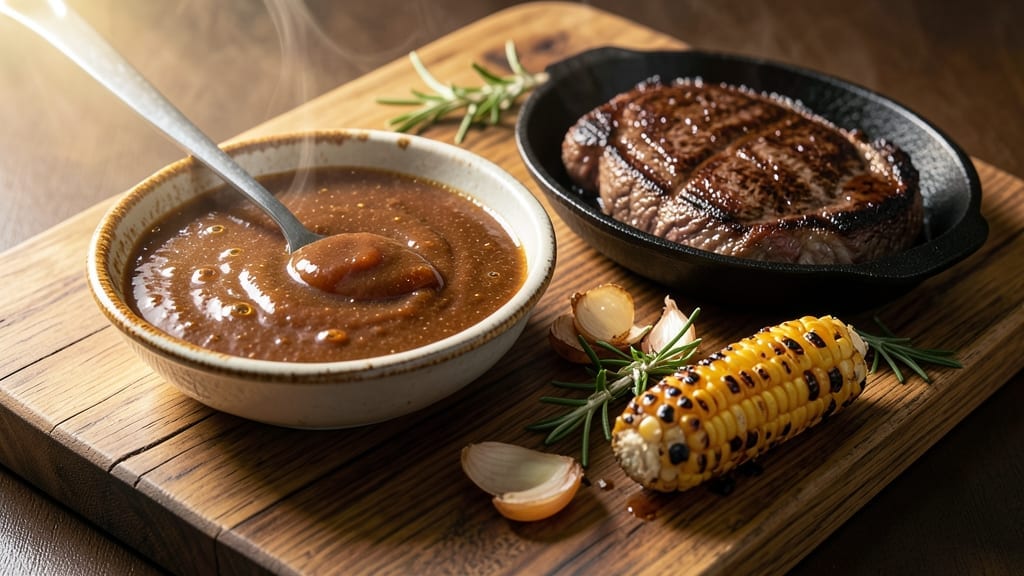
This 17th Street barbecue sauce recipe delivers the signature smoky-sweet heat that makes ribs unforgettable—no shortcuts, just deep flavor built through slow simmering and careful spice balancing.
I developed this version after years of perfecting my own take on the classic, where the molasses caramelizes into a rich, slightly sticky sauce while the vinegar keeps it bright and tangy.
The key lies in the blend of spices: just enough cayenne for heat without overpowering, and a touch of brown sugar to round out the smokiness.
The sauce starts with a simple tomato base, but it’s the cooking method that transforms it into something special. We’re talking 30 minutes of gentle simmering on the stove, allowing all those flavors to meld together until it reaches that perfect balance—sweet, smoky, and just a little spicy.
No need for fancy equipment: a heavy-bottomed pot and a whisk are all you’ll need to create restaurant-quality sauce at home. The result? A sauce that clings to ribs like it was born to be there, with layers of complexity that come from letting the flavors develop naturally.
What sets this apart is the depth of flavor you can’t get from store-bought versions. The molasses adds a caramelized richness, the apple cider vinegar cuts through the sweetness, and the spices—black pepper, cayenne, and a hint of mustard—bring that signature 17th Street kick.
The sauce thickens as it simmers, creating a glossy finish that makes it irresistible. Once you taste the difference, you’ll never go back to bottled sauce again.
This recipe makes enough to coat a full rack of ribs or bottle for future cookouts—just store it in the fridge for up to two weeks or freeze for months.
The beauty of homemade barbecue sauce is that every batch gets better as the flavors meld over time. Ready to elevate your BBQ game? Let’s get started.
Ingredients for 17th street barbecue sauce
Nine simple ingredients transform into the iconic 17th Street sauce that makes ribs unforgettable.
| Ingredient | Amount | Notes |
|---|---|---|
| Ketchup 🍅 | 1 cup | High-quality, smooth variety |
| Molasses 🍯 | ½ cup | Unsulphured for best flavor |
| Apple Cider Vinegar 🍎 | ½ cup | Raw and unfiltered preferred |
| Brown Sugar 🍚 | ½ cup | Light or dark, packed |
| Worcestershire Sauce 🍶 | 2 tbsp | Vegan version if needed |
| Garlic Cloves 🧄 | 4 cloves | Freshly minced or grated |
| Onion 🧅 | ½ cup | Finely chopped yellow onion |
| Cayenne Pepper 🌶️ | 1 tsp | Adjust for heat preference |
| Black Pepper 🌶️ | 1 tsp | Freshly ground preferred |
| Mustard 🥬 | 1 tbsp | Dijon or yellow preferred |
| Salt 🧂 | 1 tsp | Kosher or sea salt |
The ketchup is your base—Heinz or Hunt’s work best for that smooth texture. Grab unsulphured molasses from the baking aisle for deeper flavor (the sulphured kind tastes bitter). Apple cider vinegar makes all the difference—Bragg or Texas Pete are my go-tos, but any raw, unfiltered brand will do. The brown sugar should be packed into the cup; don’t scoop it. For Worcestershire, Lea & Perrins is classic, but check labels for anchovies if you’re avoiding them. Fresh garlic and onion are non-negotiable here—they’re the aromatic backbone of the sauce. If you’re short on time, pre-minced garlic from a jar works, but fresh is always better.
No ketchup? Tomato paste thinned with water gets you close—just use half the amount. Molasses substitute? Maple syrup at three-quarters the amount, though it won’t caramelize the same way. Vinegar swap: White vinegar or lemon juice, but apple cider’s tang is irreplaceable. No Dijon mustard? Yellow mustard plus a pinch of sugar mimics the depth. Cayenne too spicy? Reduce to 0.5 tsp or swap for smoked paprika. The onions can be red or white if that’s what you’ve got, but yellow adds that classic sweetness. And if you’re out of Worcestershire, soy sauce plus a dash of garlic powder is a decent stand-in.
This sauce tastes even better the next day as the flavors meld. Store in an airtight container in the fridge for up to 2 weeks—it thickens as it sits, so add a splash of water if it gets too stiff. For longer storage, freeze in ice cube trays for perfect portions. The sauce reheats beautifully—just warm it gently on the stove, stirring often. If you make a big batch, bottle it in clean jars for gifts or future cookouts. Trust me, you’ll go through it faster than you think.
Why You’ll Love This Recipe
- Pantry Magic: I swear by this sauce because it uses stuff I already have—no special trips to the store. That molasses and vinegar combo? It’s the secret that turns basic ketchup into something richer, like a hug in a bottle.
- Sweet Heat Balance: The brown sugar and Worcestershire give it this perfect sweet-tangy punch that sticks with you. Honestly, it’s the kind of sauce that makes you reach for seconds without even thinking.
- Game for Any Meal: Slather it on ribs, drizzle it over baked beans, or toss it with grilled chicken—it’s that versatile. I’ve even used it to glaze roasted carrots, and yes, my kids still asked for more.
- Budget-Friendly Batch: A big batch costs me pennies and lasts forever. Freeze half for next month, and you’ve just saved yourself a trip to the grocery store. That’s real money in my pocket.
Step-by-step instructions for 17th Street barbecue sauce
Here’s how to make this iconic sauce that balances smoky depth with sweet, tangy heat.
Sauté the Aromatics
Heat a medium saucepan over medium heat and add the 0.5 cup chopped onion and 4 cloves minced garlic. Cook for 5-6 minutes until the onion becomes translucent and the garlic releases its fragrant aroma. You’ll know it’s ready when the mixture smells deeply aromatic and the onion begins to soften and caramelize slightly.
This step builds the flavor foundation. If you notice the garlic starts to brown too quickly, reduce the heat slightly to prevent bitterness. Stir occasionally to ensure even cooking, but don’t rush this process—properly sautéed aromatics make all the difference in the final sauce.
Combine Wet Ingredients
Once the aromatics are fragrant, remove the pan from heat and let it cool for 1 minute. Then add the 1 cup ketchup, 0.5 cup molasses, 0.5 cup apple cider vinegar, 0.5 cup brown sugar, 2 tbsp Worcestershire sauce, and 1 tbsp mustard. Stir well to fully incorporate all ingredients and dissolve the brown sugar completely.
I like to use a wooden spoon for this step—it helps scrape up any stuck-on bits from the previous sautéing. The mixture will look thick and syrupy at first, but that’s normal. Return the pan to medium-low heat and let the sauce begin to simmer gently.
Simmer and Thicken
Bring the sauce to a gentle simmer and let it cook uncovered for 20-25 minutes, stirring occasionally. You’re looking for the sauce to reduce and thicken until it coats the back of a spoon. The color should deepen to a rich, glossy mahogany hue.
This is where the magic happens—the sauce develops its signature balance of sweet, tangy, and slightly smoky flavors. If you notice the sauce is thickening too quickly, add 1-2 tablespoons of water to maintain the right consistency. The sauce should be thick enough to cling to ribs but still have a smooth, pourable texture.
Season and Finish
Once the sauce has thickened to your liking, remove it from heat and stir in the 1 tsp salt, 1 tsp black pepper, and 1 tsp cayenne pepper. Taste and adjust the seasoning as needed—add more salt if it tastes bland, more cayenne if you want more heat, or a touch more vinegar if it needs more tang.
Let the sauce cool completely before using it on ribs or other dishes. The flavors will continue to meld and deepen as it cools. For best results, store it in the refrigerator for at least 24 hours before using—this allows all the flavors to fully develop and harmonize.
Pro Tips For Making 17th Street Barbecue Sauce
- Simmer Slow and Steady: Start on medium heat and let the sauce bubble gently—no need to rush. I learned this the hard way after scorching the bottom of my pot twice. A low simmer (around 200°F) lets the molasses and brown sugar meld without burning, giving that deep, caramelized flavor the sauce needs.
- Use Real Molasses, Not Syrup: Blackstrap molasses is non-negotiable here. It’s thicker, richer, and packed with minerals that cut through the sweetness. I used regular molasses once—ended up with a sauce that tasted like dessert, not barbecue. Measure it out first; it’s sticky and messy when it gets on your hands.
- Deglaze the Pot First: After simmering, scrape up those browned bits from the bottom of the pan with a wooden spoon. Add a splash of apple cider vinegar and stir—this adds depth and prevents a dull, flat taste. It’s the difference between a sauce that’s just okay and one that’s actually worth making.
- Balance the Vinegar Last: Add the apple cider vinegar slowly at the end, tasting as you go. Too much upfront makes the sauce taste harsh and one-dimensional. I now taste after each addition—it’s the only way to get that perfect tang without overpowering the molasses and ketchup. (Yes, it’s tedious, but it works.)
Dietary considerations for these flavors
Gluten-Free Adaptation
This sauce is naturally gluten-free since it doesn’t contain any wheat-based ingredients like flour or traditional thickeners. However, always double-check your Worcestershire sauce—some brands contain wheat. I recommend Annie’s or Heinz Gluten-Free Worcestershire to ensure safety.
The molasses, vinegar, and ketchup are also typically gluten-free, but verify labels if you’re highly sensitive. 🌱
Vegan-Friendly Version
To make this sauce vegan, simply swap the Worcestershire sauce for a vegan alternative like Coca-Cola or vegan Worcestershire sauce (I like Bragg’s Vegan Worcestershire). The mustard can be any plant-based variety, and ensure your ketchup is vegan-certified.
The rest of the ingredients are already vegan-friendly, so no other changes are needed. Trust me, it tastes just as rich and complex!
Lower Sugar Options
If you’re watching your sugar intake, reduce the brown sugar to ¼ cup and add 1 tbsp of molasses-free maple syrup for depth. You can also use monk fruit sweetener or erythritol (about 2 tbsp) to maintain sweetness without the caramelization.
The sauce will still develop that signature stickiness, though it may be slightly less glossy. Taste as you go and adjust to your preference.
Spice-Free Alternative
For those avoiding cayenne, simply omit it entirely and add ½ tsp smoked paprika for depth without heat. If you want to keep some warmth, use ¼ tsp cayenne plus ½ tsp paprika for a milder kick.
The black pepper still adds complexity, so don’t skip that—it’s what gives the sauce its signature backbone. This version works beautifully on pulled chicken or baked beans for a kid-friendly option.
Allergy Considerations
If you have mustard allergies, skip it entirely—the sauce will still be delicious, though slightly less tangy. For onion or garlic sensitivities, use asafetida powder (½ tsp) as a substitute; it adds depth without the allergens.
Always check labels on ketchup and molasses for potential cross-contamination warnings if you’re highly sensitive. When in doubt, I recommend making a small batch first to test tolerances.
Nutrition facts
Frequently asked questions
Why does this sauce need to simmer for so long?
The 20-25 minute simmer is what develops the deep, complex flavors that make this sauce special. This time allows the molasses to caramelize slightly, the vinegar to mellow, and all the spices to meld together. Skipping this step means you’ll end up with a thinner, less flavorful sauce that lacks that signature 17th Street richness. Patience pays off with every stir!
Can I make this sauce without ketchup?
Use ½ cup tomato paste thinned with ½ cup water as a substitute. The sauce will have a slightly deeper tomato flavor, but the overall balance of sweet, tangy, and smoky will remain. Just remember that homemade tomato paste (simmered crushed tomatoes) works even better than canned for that authentic touch.
How do I know when the sauce is thick enough?
The sauce is ready when it coats the back of a spoon smoothly and holds its shape when drizzled. It should be thick enough to cling to ribs but still pourable. If it thickens too quickly, add 1-2 tablespoons of water to maintain the right consistency. The final texture should be glossy and slightly sticky—this is what makes it perfect for glazing.
Can I make this sauce in a slow cooker?
Yes! Combine all ingredients in your slow cooker and cook on low for 2-3 hours, stirring occasionally. The slow cooker method gives you more time to develop the flavors without watching the stove. Just be sure to check the consistency after 2 hours—if it’s too thin, simmer it on the stove for 10-15 minutes to thicken it up.
What’s the best way to store leftover sauce?
Store in an airtight container in the fridge for up to 2 weeks, or freeze in ice cube trays for perfect portions. The sauce actually improves as it sits—flavors meld and deepen over time. If it thickens too much in the fridge, simply add a splash of water or vinegar to loosen it up before using.
