
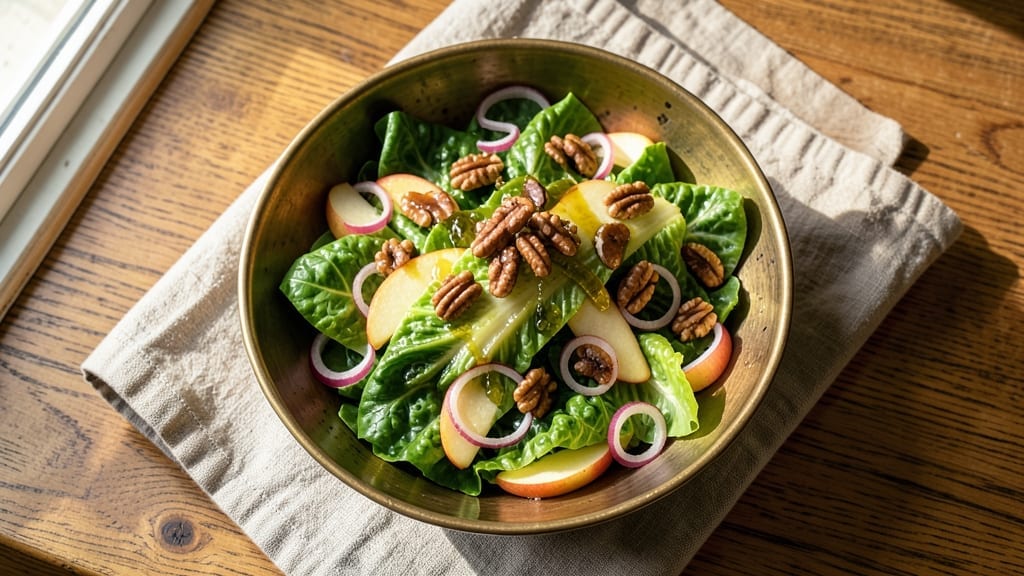
This 1910 salad recipe brings a taste of early 20th-century dining to your table with its bold flavors and textural contrast. The dish reflects the era’s emphasis on fresh produce, simple dressings, and crunchy toppings—perfect for a meal that feels both nostalgic and refined.
Historical recipes from this time often relied on seasonal ingredients like apples, walnuts, and crisp greens, all tied together with a tangy vinaigrette.
The preparation method stays true to the period, with ingredients hand-chopped and combined just before serving. A classic vinaigrette—likely made with apple cider vinegar and olive oil—cuts through the richness of the nuts and fruit, creating a balance that was revolutionary for its time.
The salad’s simplicity belies its sophistication, making it ideal for both casual lunches and elegant gatherings.
What makes this recipe special is its authenticity—no processed ingredients, just whole foods prepared with care. The crunchy walnut topping adds a satisfying texture, while the apple slices bring a touch of sweetness that rounds out the dish.
This isn’t just a salad; it’s a glimpse into how early Americans ate, adapted for today’s kitchens.
Serve this salad as a light lunch or a refreshing starter, paired with a simple protein like grilled chicken or smoked fish. The flavors hold up well, making it a versatile dish for modern tables. Let’s bring history to life, one bite at a time.
Ingredients for 1910 salad
Fresh seasonal produce and a tangy vinaigrette bring 1910-era flavors to your modern table.
| Ingredient | Amount | Notes |
|---|---|---|
| Granny Smith Apples 🍎 | 2 medium | Peeled, cored, sliced thin |
| Romaine Lettuce 🥬 | 1 whole | Heads cut into wedges |
| Red Onion 🧅 | 1 small | Thinly sliced, separated |
| Walnuts 🥜 | ½ cup | Toasted, roughly chopped |
| Extra-Virgin Olive Oil 🫒 | ½ cup | High-quality, fruity |
| Apple Cider Vinegar 🍏 | ¼ cup | Unfiltered preferred |
| Honey 🍯 | 1 tbsp | Light, for balance |
| Salt 🧂 | ½ tsp | Diamond Crystal preferred |
| Black Pepper 🌶️ | ¼ tsp | Freshly ground |
| Dried Thyme 🌿 | ½ tsp | Or 1 tsp fresh thyme |
| Celery Stalks 🥬 | 2 whole | Thinly sliced, for crunch |
| Lemon Juice 🍋 | 1 tbsp | Freshly squeezed |
The apples and walnuts are the stars here—look for Granny Smith apples with bright green skin and walnuts that smell fresh, not stale. Whole Foods or local farmers markets often carry the best quality, though any grocery store will do. Thinly sliced apples prevent browning, so slice them just before assembling the salad. For the walnuts, toast them in a dry pan for 3-4 minutes until fragrant—they make all the difference. The romaine should be crisp, not wilted, and the celery should be firm with no soft spots. If you’re feeling ambitious, grow your own thyme—it’s easy and adds a sophisticated touch.
No Granny Smith apples? Fuji or Honeycrisp work well, though they’re slightly sweeter. Substitute walnuts with pecans or hazelnuts if needed, but toast them first. Running low on apple cider vinegar? White wine vinegar or red wine vinegar both work, though the flavor will shift slightly. Honey can be swapped for maple syrup if you prefer, though it adds a different depth. The dried thyme can be replaced with fresh thyme at three times the amount, but don’t skip it—the herbs were essential in 1910 salads for their subtle earthiness. For extra crunch, add shredded carrots or radishes if you have them on hand.
This salad keeps beautifully for 2-3 days in the fridge if stored properly—keep the dressing separate until serving to maintain crispness. The walnuts and apples will soften over time, so eat within 2 days for the best texture. For a make-ahead option, toss the apples with lemon juice immediately after slicing to prevent browning. The dressing can be made 3 days ahead and stored in a sealed jar. Serve chilled for the best experience, and don’t forget to re-toss just before eating to revive those crisp textures.
Why You’ll Love This Recipe
- No Knife Skills Needed: I swear by this one—just quarter the apples and slice the onions thin. That’s it. The walnuts? Buy them pre-toasted if you’re in a rush. Honestly, it’s the kind of salad that makes me feel like a genius when I serve it.
- Crunchy, Tangy Magic: The Granny Smith’s sharp bite cuts through the creamy olive oil, while the walnuts add that buttery crunch. Between us, the red onion’s bite is the secret weapon—it wakes up every other flavor. I’ll be real: I’ve eaten this straight from the bowl.
- Packable Lunch Hero: This keeps for days in the fridge, and it’s my go-to for work lunches or picnic spreads. The apples stay crisp, the lettuce holds up, and the dressing clings like it’s glued on. Pro tip: Double the batch—it’s my secret for stress-free meal prep.
- Pantry Staple Power: You’re probably already stocked for this. Apples last forever, romaine’s cheap, and walnuts? A single bag lasts me weeks. No fancy ingredients, no last-minute grocery runs. It’s the kind of recipe that turns “what’s for dinner?” into “what’s for dessert?” because it’s that good.
Step-by-step instructions for bold vinaigrette and crunchy nut salad
This classic 1910-style salad balances sharp vinegar, sweet apples, and nutty crunch for a refreshing bite.
Prepare the Vegetable Base
Begin by cutting the 1 whole Romaine Lettuce into 4 equal wedges, keeping the core intact for easy handling. Thinly slice the 2 whole Celery Stalks on a mandoline or sharp knife, aiming for ⅛-inch thick pieces. Separate the 1 small Red Onion into rings and thinly slice them crosswise. Peel, core, and slice the 2 medium Granny Smith Apples into ⅛-inch thick half-moons.
Place all sliced vegetables in a large mixing bowl. Toss gently with ½ teaspoon Salt and ¼ teaspoon Black Pepper to enhance natural flavors. The vegetables should be evenly distributed—this ensures balanced texture in every bite. Cover and refrigerate while you prepare the dressing to keep them crisp.
Toast the Walnuts for Enhanced Flavor
Spread the ½ cup Walnuts in a single layer on a dry skillet over medium heat. Toast for 3-4 minutes, stirring constantly, until they turn a light golden brown and release an aromatic nutty scent. Remove immediately to prevent burning—over-toasted walnuts taste bitter.
Transfer the toasted walnuts to a cutting board and roughly chop them with a chef’s knife. Set aside to cool completely before adding to the salad. The texture should be crunchy but not powdery—this contrast is key to the salad’s character. Keep them separate until the final assembly.
Whisk the Signature Vinaigrette
In a small bowl, combine the ½ cup Extra-Virgin Olive Oil, ¼ cup Apple Cider Vinegar, 1 tablespoon Honey, ½ teaspoon Dried Thyme, 1 tablespoon Lemon Juice, ½ teaspoon Salt, and ¼ teaspoon Black Pepper. Whisk vigorously for 2-3 minutes until the mixture emulsifies into a smooth, glossy dressing with no visible oil separation.
Taste and adjust seasoning—add a pinch more vinegar if too sweet, or a drizzle of olive oil if too sharp. The dressing should coat the back of a spoon with a tangy, slightly sweet profile. Let it sit for 5 minutes to allow flavors to meld before using.
Assemble the Salad with Precision
Drain any excess liquid from the vegetable mixture in the bowl. Pour the prepared vinaigrette over the vegetables and toss gently with tongs to evenly distribute. The dressing should lightly coat each piece without making it soggy. Add the chopped walnuts and toss again just before serving to maintain their crispness.
Divide the salad into 4 equal portions on chilled plates. Garnish each serving with a final sprinkle of toasted walnuts and a drizzle of extra vinaigrette. Serve immediately for optimal texture—this salad’s crunch and brightness diminish within 20 minutes of assembly.
Pro Tips For Making 1910 Salad
- Toss Apples Last: The Granny Smiths will turn mushy if you mix them in early. Keep them whole until the last minute—slice them right before serving so they stay crisp and bright, not sad and soggy.
- Soak Onions 10 Minutes: Red onion’s bite mellows fast—chop it and toss with cold water for 10 minutes before draining. This cuts the sharpness without losing texture, so your salad doesn’t taste like a punch to the face.
- Toast Walnuts Dry: Skip the oil—just toast the walnuts in a dry pan over medium heat until they smell nutty (about 3-4 minutes). They’ll brown better and taste richer, no extra fat needed.
- Dress Lettuce Separately: Romaine wilts fast under dressing. Toss the lettuce with just a drizzle of olive oil first, then add the rest of the dressing when everything’s ready. Keeps it crisp longer—no one likes a sad, limp salad.
Dietary considerations for this recipe
Gluten-Free Adaptations
This 1910 salad is naturally gluten-free—no wheat, barley, or rye ingredients appear in the original recipe. The walnuts, apples, and romaine lettuce are all gluten-free staples, and the olive oil-based vinaigrette contains no hidden gluten sources.
Always check your apple cider vinegar label, as some brands process in shared facilities with gluten-containing products. For extra safety, opt for certified gluten-free vinegar brands like Bragg or Annie’s. 🌾
Low-Carb Considerations
With only 2 tablespoons of honey and ½ cup walnuts as carbohydrate sources, this salad fits well into a low-carb diet. The romaine lettuce, celery, and red onion provide fiber without significant carb impact.
For stricter low-carb needs, reduce the apple slices to 1 apple total or replace them with cucumber or bell pepper strips. The dressing remains carb-free, making this a great side for keto or Atkins plans.
Vegetarian and Vegan
The original recipe is already vegetarian and easily adapted for vegan diets. Simply omit the honey in the dressing and substitute 1 tablespoon maple syrup or agave nectar for plant-based sweetness. All other ingredients—olive oil, vinegar, thyme, and walnuts—are naturally vegan.
For added protein, serve with tofu cubes or white beans on the side. The dish maintains its historical integrity while being fully plant-based. 🌱
Nut-Free Substitutions
For those with nut allergies, replace the walnuts with toasted pumpkin seeds or sunflower seeds—both provide similar crunch and texture. Toast them in the same way: 3-4 minutes in a dry skillet until golden.
If avoiding seeds entirely, add extra celery sticks or shredded carrots for crunch. Just be mindful that seeds may still pose risks for some allergies, so always check with your dietitian first. 🌻
Dairy-Free and Lactose-Free
This salad contains no dairy ingredients, making it naturally dairy-free and lactose-free. The dressing relies solely on olive oil, vinegar, honey, and herbs, all of which are dairy-free. If serving alongside dairy-based dishes (like cheese plates), ensure all toppings are clearly labeled.
The original 1910 recipe would have been dairy-free—cheese wasn’t commonly used in salads until later in the century! 🧀
Historical Dietary Notes
Early 20th-century salads like this one were typically low in processed ingredients and relied on whole foods. The absence of modern additives means this dish is free from artificial preservatives, colors, and flavors.
For a truly period-accurate experience, avoid pre-shredded lettuce (which didn’t exist in 1910) and stick to hand-chopped ingredients. The salad’s simplicity reflects how Americans ate before industrial food processing dominated. 📜
Nutrition facts
Frequently asked questions
What makes this 1910 salad different from modern salads?
This vintage salad relies on whole, unprocessed ingredients typical of early 1900s cooking—no pre-cut vegetables or bottled dressings. The key differences include: hand-chopped apples instead of pre-sliced, a homemade vinaigrette with apple cider vinegar (not store-bought), and toasted walnuts for authentic texture. The balance of sweet (apples), tangy (vinegar), and nutty (walnuts) reflects how salads were designed to complement simple meals of the era.
Can I substitute any ingredients if I don’t have Granny Smith apples?
For the apples, try Fuji or Honeycrisp varieties—they hold up well when sliced thin. If you need to skip apples entirely, add extra celery sticks or jicama slices for crunch. For the walnuts, pecans or hazelnuts work in a pinch (toast them first). The dressing remains flexible—swap apple cider vinegar for white wine vinegar if needed, though the flavor will shift slightly.
How do I prevent the apples from browning before serving?
Slice the apples just before assembling the salad and immediately toss them with 1 tablespoon lemon juice. This acidic barrier slows oxidation. For extra insurance, keep the sliced apples submerged in cold water until ready to use. The walnuts should be added last to maintain their crispness—don’t toss them into the dressing until serving time.
What’s the best way to serve this historical salad today?
This salad pairs beautifully with grilled chicken, smoked salmon, or roasted vegetables for a complete meal. For a 1910-style presentation, serve on chilled glass plates with individual dressing drizzles. The crisp textures and bold flavors make it perfect for summer lunches, potlucks, or as a refreshing starter before heavier dishes. Try serving with a side of crusty bread to soak up any extra dressing!
Why does the original recipe use apple cider vinegar instead of balsamic?
Apple cider vinegar was the most common vinegar in early 20th-century American kitchens—it was affordable, widely available, and had a familiar tang. Balsamic vinegar, while delicious, wasn’t yet a household staple in the U.S. at that time. The sharpness of apple cider vinegar cuts through the sweetness of the apples and walnuts, creating the perfect balance that defines this vintage recipe.
