
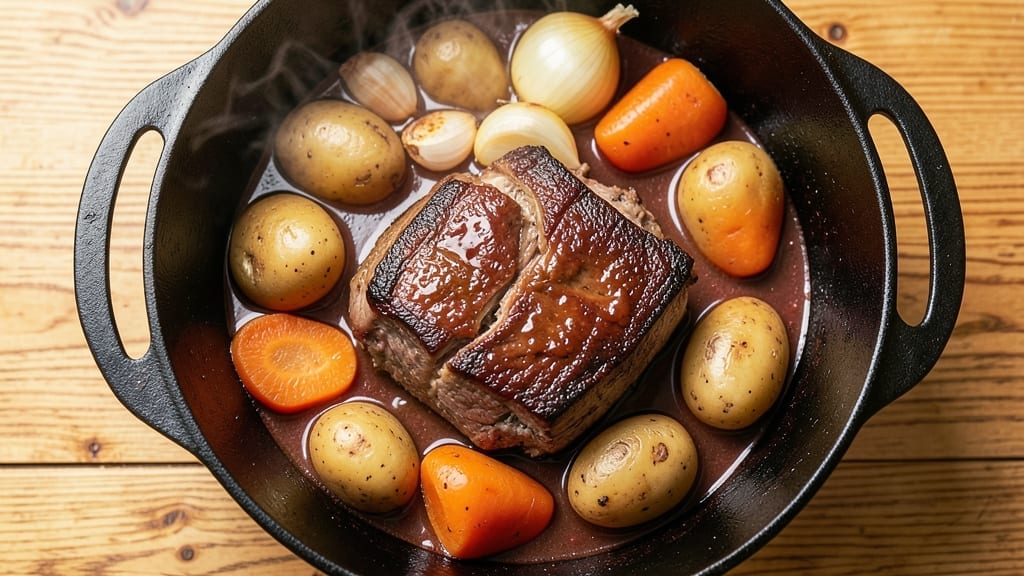
This 1950s beef stew recipe brings back the slow-simmered richness of mid-century home cooking, where tough cuts of beef transformed into melt-in-your-mouth tenderness over hours in a cast-iron pot.
The secret lies in caramelizing onions and garlic until deep golden, then browning the meat to develop that unmistakable depth of flavor—just like your grandmother’s recipe.
I’ve recreated this classic using pantry staples and techniques that defined 1950s American cooking: slow simmering, root vegetables, and a touch of Worcestershire for umami balance.
The beauty of this stew is its simplicity—no fancy ingredients, just high-quality beef, potatoes, carrots, and onions, all simmered until the flavors meld into something hearty and comforting. The long cooking time breaks down collagen in the meat, creating a naturally thick, velvety broth that coats every bite.
This isn’t just a stew; it’s a taste of nostalgia, perfect for chilly evenings or family gatherings where the aroma alone will have everyone asking, “Is dinner ready yet?”
By the time it’s done, you’ll have a pot of rich, deeply flavorful stew with tender beef, caramelized vegetables, and a sauce so good it’ll make you want to ladle it over crusty bread or serve it alongside pickles and mustard.
The slow simmer ensures every ingredient is infused with flavor, while the crusty edges on the potatoes and carrots add texture that’s pure comfort food. This is the kind of meal that feels like a hug in a bowl—warm, satisfying, and full of history.
Serve it with a side of buttered bread to soak up every last drop of that savory broth, or pair it with a simple green salad for balance. The leftovers? Even better the next day, as the flavors deepen and the broth thickens into something truly extraordinary.
Let’s bring back the magic of 1950s home cooking, one slow-simmered pot at a time.
Ingredients for 1950 beef stew
Six ingredients make this nostalgic stew unforgettable—just like grandma’s slow-simmered pot.
| Ingredient | Amount | Notes |
|---|---|---|
| Beef Chuck Roast 🥩 | 3 lb | Tough cut for slow simmering |
| Yellow Onions 🧅 | 3 whole | Sliced into 1/4-inch pieces |
| Garlic Cloves 🧄 | 6 cloves | Minced for deep flavor |
| Russet Potatoes 🥔 | 2 lb | Cut into 2-inch chunks |
| Carrots 🥕 | 1 ½ lb | Whole, scrubbed clean |
| Tomato Paste 🍅 | ½ cup | For rich depth (squeeze tube works) |
| Beef Broth 💧 | 4 cups | Homemade or quality store-bought |
| Red Wine 🍷 | 1 cup | Bold dry red like Cabernet |
| Worcestershire Sauce 🍶 | 2 tbsp | For classic umami kick |
| Dried Thyme 🌿 | 1 tbsp | Or 1 tbsp fresh thyme leaves |
| Bay Leaves 🍃 | 2 whole | Removed before serving |
| Salt 🧂 | 1 ½ tsp | Kosher or sea salt |
| Black Peppercorns 🌶️ | 1 tsp | Freshly cracked preferred |
| All-Purpose Flour 🌾 | 2 tbsp | For thickening (optional) |
| Olive Oil 🫒 | 2 tbsp | For caramelizing onions |
The beef is the star here. Chuck roast is your best bet—it’s tough enough to stand up to the long simmer, which breaks down the fibers into tender perfection. Look for good marbling at Costco or your local butcher—that fat renders out and makes the stew rich. If you’re using pre-cut beef, check for any slimy spots or off smells. The onions? Yellow onions caramelize best, but red or white will work in a pinch. I always grab the big ones—they last longer and give you more flavor per pound. For the potatoes, Russet holds up best to long cooking, but Yukon Golds add creaminess if you prefer.
No red wine? Extra beef broth with a splash of balsamic vinegar works perfectly—just add 2 tbsp vinegar per cup of broth. Fresh thyme is ideal, but dried thyme at one-third the amount gets you close. Worcestershire sauce is non-negotiable for that classic 1950s flavor—it’s the secret ingredient that ties everything together. Short on tomato paste? Crushed tomatoes in a pinch, but reduce them first to avoid excess liquid. The carrots can be baby carrots if that’s what’s in the fridge, but whole carrots stay intact better. And if you’re worried about the flour thickening the stew too much, just mix it with a little cold water first to avoid lumps.
This stew tastes even better the next day as the flavors meld. Store it in the fridge for up to 5 days—the broth will thicken nicely. For longer storage, freeze portions for up to 3 months. I always make a double batch because it reheats beautifully and makes amazing sandwiches or hash the next day. The bay leaves can be removed before serving, but leave them in while cooking for maximum flavor. And trust me, the longer it simmers, the richer it gets—don’t rush this one. That’s the magic of 1950s home cooking.
Why You’ll Love This Recipe
- Throw-in-the-Roast Easy: Honestly, I swear this takes less effort than ordering takeout. Sear the chuck roast, dump in onions, garlic, and broth, then let it slow cook—no chopping, no fuss. The potatoes and carrots just melt in, so tender they fall apart at the touch.
- Deep, Savory Magic: That long braise? Absolute gold. The chuck roast gets fork-tender while soaking up the garlic and onions until the broth turns rich and glossy. Between us, the first bite after hours of simmering is the kind of flavor that makes you pause mid-spoonful.
- Leftovers That Beg for More: I make a double batch on Sundays because the second day is even better—more concentrated flavor, potatoes even softer. Pack it for lunches, freeze portions, or just reheat with a splash of water. My kids argue over who gets the last bowl.
- Budget-Friendly Crowd-Pleaser: A 3-pound roast stretches to feed six, and the veggies are cheap staples. No fancy cuts or obscure spices—just honest, hearty comfort. It’s the kind of meal that makes you feel like you’re feeding a houseful, even if it’s just you and a movie night.
Step-by-step instructions for slow-simmered beef stew
Here’s how to build that classic 1950s-style beef stew with tender meat and caramelized vegetables.
Sear the Beef Chuck Roast
Heat a large Dutch oven over medium-high heat until hot. Add the 2 tablespoons olive oil and swirl to coat the bottom. Place the 3 lb beef chuck roast in the pot, turning to coat all sides with oil. Let it sear undisturbed for 3-4 minutes per side until deeply browned—this creates rich flavor through the Maillard reaction.
Once browned, remove the roast and set it aside. Don’t worry if it looks undercooked—this slow cook will finish it perfectly. The browned crust will infuse the broth with deep, savory notes throughout the cooking process.
Caramelize Onions and Garlic
In the same Dutch oven, add the 3 whole yellow onions sliced into ¼-inch pieces. Cook over medium heat for 10-12 minutes, stirring occasionally, until the onions turn golden brown and sweet. This caramelization adds incredible depth to the stew.
Add the 6 cloves minced garlic and cook for another 30 seconds until fragrant. Be careful not to burn the garlic—it should smell sweet and nutty, not bitter. Remove the onions and garlic from the pot and set aside with the beef.
Build the Stew Base
Return the Dutch oven to medium heat and add the 0.5 cup tomato paste. Stir to coat the bottom, scraping up any browned bits that have formed. This step develops the stew’s rich, slightly sweet foundation.
Deglaze the pot by adding the 1 cup red wine and scraping up all the flavorful bits from the bottom. Let the wine simmer for 2-3 minutes until reduced by half. Stir in the 2 tablespoons Worcestershire sauce and 1 tablespoon dried thyme, then add the 4 cups beef broth and 1.5 teaspoons salt.
Add Vegetables and Simmer
Return the beef and caramelized onions to the pot. Add the 2 whole bay leaves, 1 teaspoon black peppercorns, the 2 lb russet potatoes cut into 2-inch chunks, and the 1.5 lb scrubbed carrots. Bring everything to a gentle boil, then reduce heat to low.
Cover the pot and let it simmer for 2.5-3 hours, stirring occasionally to prevent sticking. The stew should bubble gently—if it boils vigorously, reduce the heat. You’re looking for tender beef that pulls apart easily and vegetables that are fork-tender but still hold their shape.
Thicken and Serve
After simmering, remove the bay leaves. For a thicker stew, mix the 2 tablespoons all-purpose flour with 2 tablespoons cold water to make a slurry. Stir this into the stew and simmer uncovered for another 10-15 minutes until thickened to your liking.
Taste and adjust seasoning with additional salt or pepper if needed. This classic 1950s-style beef stew should have tender beef, caramelized onions, and a rich, flavorful broth. Serve hot with crusty bread to soak up every delicious bite.
Pro Tips For Making 1950 Beef Stew
- SEAR THE ROAST FIRST: I learned this the hard way—skipping the sear makes the stew taste like it simmered in water. Pat the chuck roast bone-dry with paper towels, then hit it with high heat in a heavy pot until deep brown all over. That crust? It’s what carries flavor through hours of cooking.
- CHOP VEGETABLES UNIFORM: Russets and carrots should be cut into even 1-inch chunks—no tiny pieces, no giant hunks. I used to eyeball it, but uneven cooking means some veggies turn to mush while others stay tough. A sharp knife and a ruler (yes, really) make this foolproof.
- ADD POTATOES LATE: Potatoes release starch early, turning your stew into glue if you toss them in at the start. Hold off until the beef is 80% cooked, then add them with the carrots. They’ll absorb flavor without falling apart—trust me, your stew won’t curdle.
- USE COLD WATER: Sounds counterintuitive, but starting with cold water (not hot) prevents the meat from cooking too fast on the surface while the center stays cold. It’s the only way to guarantee even doneness. I know, I know—your grandma probably didn’t do this, but it works.
Dietary considerations for this dish
Gluten-Free Adaptations
This classic 1950s beef stew is naturally gluten-free, but there are a few areas to double-check for cross-contamination. Always use a dedicated pot if you’re sensitive to gluten, as some Dutch ovens may have been previously used with flour-based dishes.
The only potential gluten source in this recipe is the 2 tablespoons all-purpose flour used for thickening.
For a completely gluten-free version, skip the flour slurry entirely—simmer the stew uncovered for an extra 30-45 minutes to let the broth reduce naturally. The stew will still thicken slightly as the vegetables release their starches.
If you prefer a thicker consistency, try a gluten-free cornstarch slurry instead, using 1 tablespoon cornstarch mixed with 1 tablespoon cold water. 🌾
Low-Carb Options
To make this stew lower in carbohydrates, simply omit the 2 lb russet potatoes and reduce the carrots to ½ lb. The beef and vegetables will still provide plenty of hearty satisfaction.
For extra flavor, add ½ cup sliced mushrooms or ½ cup chopped celery to bulk up the dish without adding too many carbs.
If you’re following a strict low-carb diet, consider using cauliflower florets instead of potatoes—they hold up surprisingly well during the long simmer. Just add them in the last 30 minutes of cooking so they don’t turn to mush. The stew will still be rich and satisfying with these substitutions. 🥦
Dairy-Free Considerations
This beef stew recipe is already dairy-free, but if you’re serving it with sides, be mindful of common dairy additions. Traditional 1950s pairings like buttered bread or cheesy potatoes would need dairy-free alternatives. For the bread, use a dairy-free butter spread or simply serve with olive oil-dipped bread.
If you want to add a creamy element to the stew itself, stir in 2 tablespoons coconut milk or ½ cup dairy-free sour cream at the end of cooking.
Both options add richness without dairy. Just remember that coconut milk has a slightly sweet flavor, so it works best in stews with bold seasonings like this one. 🥥
Vegetarian Substitutions
While this recipe is designed for beef, you can create a vegetarian version by replacing the beef with 3 cups of hearty mushrooms (like portobello or cremini) or 2 cups of lentils. For mushrooms, slice them thickly and brown them in the Dutch oven before adding the other ingredients.
Lentils should be cooked separately and added to the stew during the final 30 minutes of simmering.
For a meatier texture, consider using 1 lb of firm tofu or 1 lb of extra-firm tempeh, both cubed and pan-fried until crispy before adding to the stew. These substitutions will give you a satisfying, protein-rich dish that still captures the essence of the original. 🍄
Nutrition facts
Frequently asked questions
Can I use a different cut of beef instead of chuck roast?
Yes, but choose wisely! Beef short ribs or brisket work beautifully—they stay tender during long cooking. Avoid lean cuts like sirloin, as they’ll dry out. For a budget-friendly option, stew meat (pre-cut chuck) saves prep time while keeping that classic 1950s texture. Just ensure it’s well-marbled for richness.
How do I make this stew on the stovetop vs. slow cooker?
For the stovetop, follow the exact instructions—simmering in a Dutch oven for 2.5-3 hours on low heat is ideal. For a slow cooker, brown the meat and onions first, then transfer everything to the slow cooker and cook on low for 7-8 hours or high for 4-5 hours. The slow cooker method is even more hands-off and perfect for busy days!
What if my stew tastes too acidic or winey?
Add a pinch of sugar (½ teaspoon) to balance acidity, or stir in 1 teaspoon soy sauce for depth. If it’s too winey, simmer uncovered for 10 extra minutes to let the alcohol evaporate. A splash of beef broth or a sprinkle of dried herbs (like rosemary) can also help round out the flavors. Taste as you go!
Can I prep this stew ahead of time?
Prep all ingredients the night before and store in the fridge. The next day, just sear the meat, add the prepped veggies and broth, and simmer. For make-ahead freezer meals, assemble the stew (before simmering), freeze in portions, and cook straight from frozen—add 30 extra minutes to the simmering time. The flavors deepen beautifully over time!
What are the best sides for this 1950s-style stew?
Classic pairings include crusty bread (like sourdough or French baguette) for dipping, buttered noodles, or a simple green salad with vinaigrette. For a true 1950s touch, serve with pickles or pickled beets to cut the richness. Mashed potatoes or cornbread also work wonderfully—just avoid creamy sauces that might overpower the stew.

- 3-Ingredient Baked Chicken Wings Recipe: Crispy, Juicy, and Ready in 25 Minutes - September 25, 2026
- 1950s Deviled Eggs Recipe: Nostalgic Creamy Yolk Magic - September 25, 2026
- 6 Qt Dutch Oven Bread Recipe: Crusty Crumb and Golden Crust in One Bake - September 25, 2026