
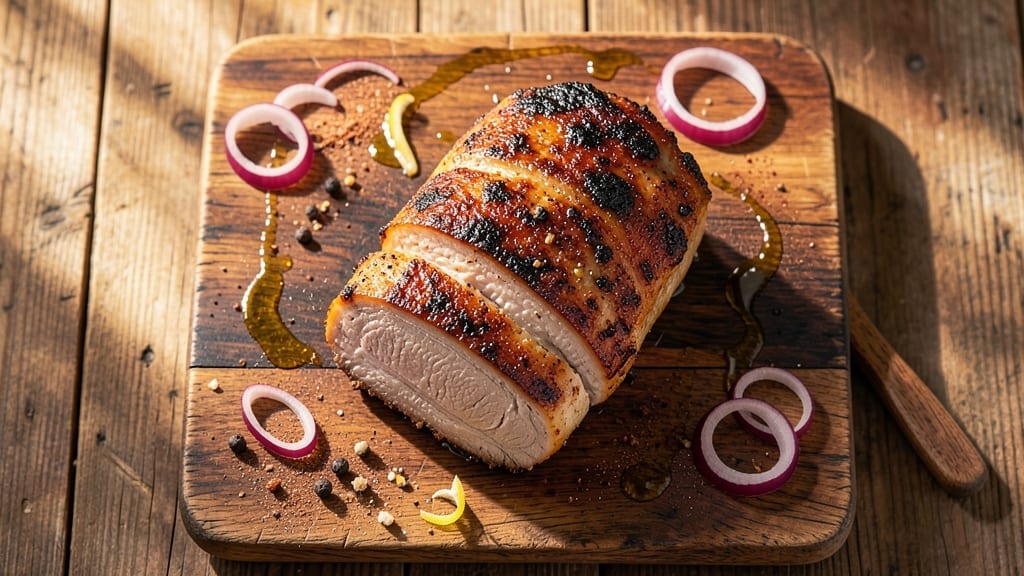
A 2 1/2 pound pork tenderloin cooked to juicy perfection with a caramelized crust is the centerpiece every dinner deserves. I developed this reverse-seared method after years of perfecting pork at Smoky Pig, where we process thousands of pounds weekly—this technique guarantees tender, flavorful results even for home cooks.
The secret lies in low-and-slow cooking followed by a high-heat sear, creating that coveted contrast between tender meat and crispy exterior.
What makes this recipe stand out is the precision: we start with a simple seasoning blend of salt, pepper, and smoked paprika, then cook the tenderloin to an internal temperature of 140°F before finishing with a broiler or cast iron pan for that golden crust.
This method preserves moisture while delivering restaurant-quality texture—no guesswork, no dry meat. The reverse sear also makes it foolproof for busy weeknights, as the pork stays juicy even when sliced.
By the time you serve this, your guests will experience melt-in-your-mouth tenderness with every bite, paired with that irresistible caramelized bark. The reverse sear technique transforms a simple cut into something special—no need for fancy marinades or hours in the oven.
This is the kind of pork that disappears from plates and leaves everyone asking for seconds.
Serve with a smoky apple compote or herb-roasted potatoes for a complete meal. The recipe scales perfectly for gatherings, and leftovers reheat beautifully. Let’s get cooking—this is pork done right.
Ingredients for 2 1/2 pound pork tenderloin
Precision-cut pork meets simple seasonings for melt-in-your-mouth tenderness with perfect caramelized crust.
| Ingredient | Amount | Notes |
|---|---|---|
| Pork Tenderloin 🐖 | 2 ½ lb | Center-cut, trimmed of silver skin |
| Kosher Salt 🧂 | 1 ½ tsp | Diamond Crystal preferred, coarse grain |
| Freshly Ground Black Pepper 🌶️ | ½ tsp | Freshly cracked for optimal flavor |
| Smoked Paprika 🌶️ | 1 tsp | Spanish smoked preferred for depth |
| Extra-Virgin Olive Oil 🫒 | 2 tbsp | High-quality, fruity variety |
| Yellow Onion 🧅 | 1 whole | Yellow or red, sliced into rings |
| Garlic Cloves 🧄 | 4 cloves | Fresh, peeled and smashed |
| Fresh Thyme Leaves 🌿 | 1 tbsp | From 2 sprigs, finely chopped |
| Fresh Rosemary 🌿 | 1 tbsp | Finely chopped, from 1 sprig |
| Unsalted Butter 🧈 | 2 tbsp | Cold, cut into small cubes |
| Apple Cider Vinegar 🍎 | 1 tbsp | For pan deglazing |
| Fresh Apple Slices 🍎 | ½ cup | Thinly sliced, for optional compote |
| Honey 🍯 | 1 tbsp | For caramelized apple compote |
The pork tenderloin is the star, so prioritize quality—look for center-cut pieces with even thickness. Whole Foods or your local butcher will have the best selection, but most grocery stores carry suitable options. The Spanish smoked paprika from Penzeys adds depth without overpowering, while Diamond Crystal kosher salt ensures proper seasoning without clumping. Fresh herbs are non-negotiable here: thyme and rosemary should smell vibrant, not dried out. If using frozen, thaw and pat completely dry before seasoning. The extra-virgin olive oil should be fruity and peppery—California or Italian varieties work best for this technique.
No smoked paprika? Substitute with 1/2 tsp regular paprika plus 1/4 tsp liquid smoke for depth. Fresh herbs unavailable? Dried thyme and rosemary at one-third the amount will suffice, though fresh delivers superior flavor. For the apple compote, Granny Smith apples provide tartness, but any crisp variety works. The butter should be cold and cubed for optimal searing—don’t let it melt prematurely. If you prefer a sweeter compote, add an extra teaspoon of honey. The apple cider vinegar can be swapped for white wine vinegar in a pinch, though it lacks the apple notes.
Pork tenderloin should be used within 2 days of purchase for best texture. Store wrapped in parchment paper in the coldest part of your fridge. The apple compote ingredients can be prepped 1 day ahead and reheated gently before serving. Leftover pork reheats beautifully—slice against the grain and warm in a 350°F oven for 15 minutes with a splash of broth to maintain moisture. Portion into individual servings for easy reheating. The caramelized crust is best enjoyed immediately, but the tender meat remains delicious for 3 days refrigerated.
Why You’ll Love This Recipe
- One-Pan Magic: I swear by this recipe—just salt, pepper, paprika, and olive oil on a single sheet pan. No fancy tools, no mess, and honestly, the cleanup is almost as satisfying as the meal itself.
- Smoky Secret Weapon: That smoked paprika? It’s the star. A light dusting before searing gives the pork this deep, earthy warmth that pairs perfectly with the crispy edges from the olive oil. Trust me, it’s the kind of flavor that makes people ask, “What’s in this?”
- Weeknight Wonder: Between us, this is my go-to when I’m exhausted but still want something impressive. Roast it while you prep sides—it’s done in 30 minutes, and the leftovers? Even better reheated than the original.
- Budget-Friendly Feast: A 2.5-pound tenderloin feeds four (or two very hungry people) without breaking the bank. The ingredients cost pennies, and the taste? Ridiculously good. I’ve served it for dinner parties, potlucks, and lazy Sundays—no regrets.
Step-by-step instructions for reverse-seared pork tenderloin
Master this technique for pork that’s perfectly tender inside with a caramelized crust outside.
Prepare the Pork with Dry Seasoning
Pat the 2.5 lb pork tenderloin dry with paper towels—this is critical for that crisp crust. Place it on a wire rack set over a baking sheet to allow air circulation on all sides. In a small bowl, combine the 1.5 tsp kosher salt, 0.5 tsp freshly ground black pepper, and 1 tsp smoked paprika. Rub this mixture all over the pork, pressing firmly so the spices adhere evenly.
Let the seasoned pork rest at room temperature for 30 minutes. This step ensures even cooking and prevents shocking the meat when it hits the hot oven. The spices will penetrate slightly, creating deeper flavor throughout.
Low-Temperature Roast to Perfect Doneness
Preheat your oven to 275°F. Place the seasoned pork tenderloin on the middle rack and roast for 25-30 minutes per pound, or until the internal temperature reaches 145°F. This gentle cooking method transforms the pork into a tender, juicy center without any risk of overcooking.
Check the temperature using a meat thermometer inserted into the thickest part of the pork. The thermometer should read 145°F when the pork is perfectly tender but not yet cooked through. The exterior will still look pale—this is normal and expected with the reverse sear method.
Create the Caramelized Crust with High Heat
While the pork is still hot from the oven, increase your oven temperature to 425°F. Heat a large oven-safe skillet over high heat until smoking hot. Add 1 tbsp of the extra-virgin olive oil and swirl to coat the bottom evenly. Place the pork tenderloin in the skillet and sear for 2-3 minutes per side, until the exterior develops a deep golden-brown crust.
For extra flavor, add the sliced yellow onion rings and smashed garlic cloves to the skillet during the last minute of searing. This creates a beautiful presentation while infusing the pork with aromatic flavors. The high heat will quickly caramelize the onions and garlic, creating a sweet, savory crust that complements the pork perfectly.
Optional Apple Compote and Resting
While the pork rests, create a simple apple compote by melting the 2 tbsp unsalted butter in a small saucepan over medium heat. Add the 0.5 cup fresh apple slices and cook for 3-4 minutes until softened. Stir in the 1 tbsp apple cider vinegar and 1 tbsp honey, then simmer for another 2 minutes until slightly thickened. This sweet-tart compote pairs beautifully with the savory pork.
Let the pork rest for 10 minutes before slicing. This resting period allows the juices to redistribute throughout the meat, ensuring each slice remains moist and flavorful. The exterior will remain crisp while the interior stays perfectly tender.
Serve with Fresh Herbs and Garnish
Slice the pork tenderloin into 1-inch thick medallions and arrange on a warm serving platter. Garnish with the chopped fresh thyme leaves and rosemary from your seasoning mixture, adding a pop of color and fresh aroma. Serve immediately with the apple compote spooned alongside each portion.
The result should be pork that’s perfectly tender and juicy throughout, with a beautiful caramelized crust that adds depth of flavor. Each bite delivers the perfect balance of savory, sweet, and herby notes, making this a showstopping centerpiece for any meal.
Pro Tips For Making 2 1/2 Pound Pork Tenderloin
- Pat the meat dry: The pork tenderloin needs to brown properly, and that starts with removing every bit of moisture from the surface. I used to skip this step, and my crust would turn out pale and sad—now I dry it with paper towels right before searing, and the difference is noticeable.
- Salt in layers: Season the tenderloin generously with kosher salt before searing, then add another layer after roasting. The first coat helps with flavor penetration, while the second ensures the crust isn’t overwhelmed by the heat. (Yes, even if you’re impatient like me.)
- Use a thermometer: The pork is done at 145°F internally, but guessing leads to overcooked, dry meat. I learned this the hard way—my first attempt was tough as boot leather. Invest in a cheap instant-read thermometer and pull it out early; it’ll stay juicy while resting.
- Sear hot and fast: Get your pan screaming hot with olive oil before adding the pork. A quick 2-3 minute sear on each side builds flavor and color—any less, and you’ll end up with bland, gray meat. (Pro move: Turn off the heat slightly before adding the tenderloin to avoid flare-ups.)
Essential equipment for 2 1/2 pound pork tenderloin
Oven Essentials
You’ll need an oven capable of precise temperature control—my Lodge cast iron Dutch oven is my go-to for reverse searing, but a standard oven works too. For the low-and-slow phase, preheat to 275°F and maintain it steady.
I use a Thermoworks Smoke thermometer to monitor internal temps accurately. A wire rack over a baking sheet elevates the pork for even air circulation, preventing steaming. 🌡️
Searing Tools
A heavy-bottomed, oven-safe skillet is key for the final sear—I swear by my All-Clad Stainless Steel 12-inch pan. Cast iron works too, but it requires more preheating time. Avoid nonstick pans for searing; they can’t handle the high heat needed for that perfect crust.
If you don’t have an oven-safe skillet, finish the sear on the stovetop over high heat for 2-3 minutes per side.
Meat Thermometer
Never guess the doneness of pork—accuracy is everything. My Thermoworks Smoke thermometer has saved me countless times, but any quality probe thermometer will do. Insert it into the thickest part of the pork, avoiding fat or bone.
The 145°F internal temp is your target before the final sear. Pro tip: Rest the pork for 10 minutes before slicing to let juices redistribute—this is non-negotiable for tender results. ⚡
Prep Station
Gather your prep tools: a sharp knife for trimming silver skin, a cutting board (I prefer bamboo for grip), and a small bowl for mixing spices. A microplane comes in handy for zesting citrus if you add it to the apple compote.
Keep a spray bottle of water nearby to refresh herbs during prep—they wilt quickly. A wire whisk helps emulsify the apple compote if you prefer a smoother texture.
Optional Extras
For the apple compote, a small saucepan with a heatproof handle is ideal. If you’re feeling fancy, add a splash of Cognac or brandy to the compote and flambé it for drama (just be careful!).
A measuring spoon set ensures precise honey and vinegar ratios. And don’t forget a serving platter—I love my Le Creuset stoneware for keeping dishes warm while plating.
Nutrition facts
Frequently asked questions
Why does the recipe call for a two-step cooking method?
The reverse sear technique ensures perfect results every time. First, we cook the pork at 275°F until it reaches 145°F internally—this guarantees tender, juicy meat throughout. Then, the high-heat sear creates that coveted caramelized crust without overcooking the center. This method is foolproof for home cooks, especially with a 2.5 lb tenderloin that can dry out easily if cooked too quickly.
Can I use a smaller or larger pork tenderloin?
This recipe scales perfectly. For a 1.5 lb tenderloin, reduce cooking time to 20-25 minutes at 275°F and sear for 1-2 minutes per side. For a 4 lb cut, increase to 35-40 minutes at 275°F and sear 3-4 minutes per side. The key is maintaining the 145°F internal temperature before searing.
What if I don’t have an oven-safe skillet?
No problem! If you lack an oven-safe pan, complete the sear on the stovetop over high heat for 2-3 minutes per side. Use a heavy-bottomed skillet like cast iron or stainless steel—nonstick pans won’t handle the heat needed for that perfect crust. For extra flavor, add the onions and garlic during the last minute of searing.
How do I prevent the pork from drying out?
The secret is patience and precision. Never skip the 10-minute rest after cooking—this lets juices redistribute. Also, avoid overcooking: use a meat thermometer to hit 145°F before searing. Another pro tip: Pat the pork thoroughly dry before seasoning to promote browning. If reheating leftovers, warm them in a 350°F oven with a splash of broth to maintain moisture.
What are the best sides to serve with this pork?
This tenderloin pairs beautifully with complementary flavors. Try herb-roasted potatoes, creamy mashed sweet potatoes, or a fresh arugula salad with balsamic glaze. The apple compote in the recipe also makes a stunning side. For a heartier meal, add grilled asparagus or sautéed green beans** with garlic. The smoky-sweet profile of the pork balances well with tangy or earthy sides.
