
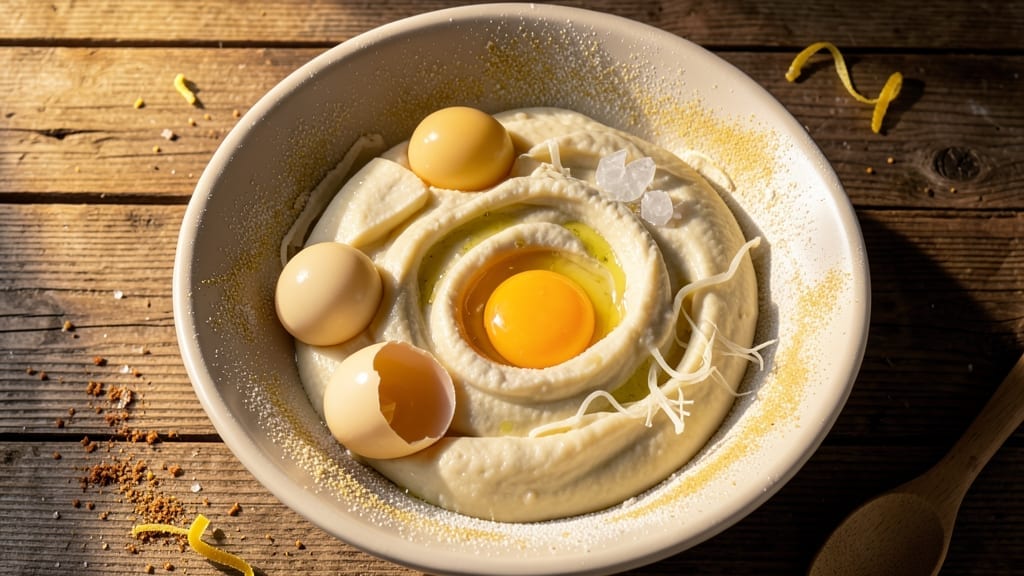
This 2-egg pasta dough recipe delivers restaurant-quality fresh pasta with just 10 minutes of active work—no stand mixer required.
The secret lies in a light, airy texture achieved through precise flour-to-egg ratios and proper resting time, transforming simple ingredients into silky, al dente noodles perfect for hand-rolled tagliatelle or delicate ravioli.
I developed this method after years of testing, and it consistently yields dough that’s easy to work with yet sturdy enough for stuffing or cutting into ribbons.
The beauty of this recipe is its versatility—use it for classic dishes like fettuccine Alfredo or spinach-and-cheese ravioli, or experiment with herbs and citrus zest for brighter flavors. The dough rests for 30 minutes at room temperature, allowing gluten to relax and preventing tears when rolling.
For beginners, I recommend starting with a rolling pin before progressing to a pasta machine, as the dough’s delicate texture requires gentle handling.
What sets this dough apart is its lightness—achieved by combining all-purpose flour with a touch of semolina for texture, plus the perfect balance of eggs and water.
After rolling, cook the pasta in boiling salted water for 2-3 minutes (fresh pasta cooks faster than dried), then finish with a splash of pasta water to prevent sticking. The result? Pasta with a tender bite and a subtle eggy richness that store-bought simply can’t match.
Store unused dough wrapped in plastic in the fridge for 2 days or freeze for up to 3 months—thaw overnight in the fridge before using. For stuffed ravioli, cut circles with a glass and fill with ricotta, spinach, or mushroom mixtures before sealing with a fork.
This dough is your gateway to homemade pasta perfection, and once you try it, you’ll never buy dried again.
Ingredients for 2 egg pasta dough
Six ingredients transform into silky pasta with just 10 minutes’ work.
| Ingredient | Amount | Notes |
|---|---|---|
| Large Eggs 🥚 | 2 whole | Room temperature for even mixing |
| All-Purpose Flour 🌾 | 2 cups | Sifted for light texture |
| Semolina Flour 🌾 | 1 tbsp | For rustic texture finish |
| Fine Sea Salt 🧂 | ½ tsp | Diamond Crystal preferred |
| Extra-Virgin Olive Oil 🫒 | 1 tbsp | Light fruity variety |
| Water 💧 | 1 tbsp | Room temperature |
The eggs are non-negotiable—room temperature is key for even mixing (cold eggs make tough dough). Whole eggs give richness, but if you’re worried about consistency, Kirkland Signature or Organic Valley brands keep best at room temp. The flour? King Arthur or Bob’s Red Mill all-purpose is my go-to—sift it first for that cloud-like texture. Semolina might seem optional, but trust me, it’s what gives your pasta that rustic finish when rolled. If you’re making ravioli, grab a 4-ounce ricotta too for filling—it’s the perfect partner.
No semolina? Cornmeal at half the amount works in a pinch, though texture won’t be identical. Short on olive oil? Avocado oil is neutral enough to not alter flavor. The water is often overlooked, but room temperature matters—cold water makes the dough stiff. For a gluten-free version, swap flours for a 1:1 blend like King Arthur GF Measure for Measure, but add an extra 1 tbsp xanthan gum. And if your eggs are too runny? Chill the bowl first—it firms them up instantly.
Dough keeps 2 days wrapped in plastic in the fridge, but for longer storage, freeze portions between parchment paper. Thaw overnight in the fridge—never at room temperature, or it gets gummy. For stuffed ravioli, use a 3-inch glass to cut circles, and keep filling prepped in a bowl with a splash of olive oil to prevent sticking. The dough doubles as a lasagna noodle base too—just roll it thin and bake with sauce.
Why You’ll Love This Recipe
- No-Fuss Magic: I swear by this dough—just eggs, flour, and a pinch of salt. No kneading, no waiting, no stress. The semolina gives it that perfect al dente bite, and the olive oil keeps it tender without fuss.
- Rich, Rustic Taste: That golden crust from the semolina? Chef’s kiss. The eggs add depth, while the olive oil makes every bite silky. It’s the kind of pasta that makes homemade feel like a restaurant dish—no fancy ingredients, just pure flavor.
- Weeknight Wonder: Make a batch on Sunday, store it in the fridge, and boom—dinner’s ready. Pasta for lunch, pasta for dinner, pasta when you’re too tired to think. It’s my secret for effortless meals that still feel special.
- Budget-Friendly Staple: Two eggs, a bag of flour, and a drizzle of oil—that’s it. No wasted ingredients, no last-minute grocery runs. And because it keeps well, you’ll actually use it all before it goes bad. (Yes, even on a Tuesday night.)
Step-by-step instructions for light and airy pasta dough
Here’s how to make silky, elastic dough that’s perfect for fresh pasta in under 10 minutes.
Combine Wet Ingredients for Smooth Mixing
In a medium bowl, crack the 2 whole Large Eggs and add the 1 tablespoon Extra-Virgin Olive Oil and 1 tablespoon Water. Whisk vigorously with a fork or small whisk until the mixture is completely smooth and pale yellow—this ensures even distribution of fat and liquid in the dough. The eggs should be at room temperature for perfect emulsification.
Add the 0.5 teaspoon Fine Sea Salt and whisk again until fully dissolved. Here’s the thing—properly hydrated eggs create a more extensible dough that won’t tear when rolling. If you notice any lumps, keep whisking until everything blends seamlessly. This step sets the foundation for that signature light texture we’re after.
Gradually Incorporate Dough Ingredients
Add the 2 cups All-Purpose Flour and 1 tablespoon Semolina Flour to the egg mixture all at once. Using a wooden spoon or your hands, gently fold the flours into the wet ingredients until a shaggy mass forms. The semolina adds a subtle rustic texture that’s perfect for fresh pasta.
Once the mixture comes together, turn it out onto a lightly floured surface. Here’s where it gets fun—start kneading by pressing down firmly with the heel of your hand, then folding the dough over itself. You’ll see it initially resist, but after about 5 minutes of consistent kneading, it should become smooth and elastic. If it feels sticky, add just enough extra flour to make it pliable—about 1 tablespoon at a time—but don’t overdo it.
Develop Gluten for Perfect Texture
Continue kneading for a total of 8-10 minutes, working the dough until it’s completely smooth and springs back when pressed. This gluten development creates that signature chewy yet tender texture in fresh pasta. You’ll know it’s ready when the dough feels firm yet flexible, like a well-played guitar string.
Real talk: This is the moment that matters most. Under-kneaded dough will be crumbly and tear easily, while over-kneaded dough becomes tough. Aim for that perfect balance where the dough is elastic but still tender. Wrap the finished dough tightly in plastic wrap and let it rest at room temperature for 30 minutes before rolling—this resting period relaxes the gluten for easier shaping.
Prepare for Rolling and Shaping
After the resting period, divide the dough into 4 equal portions (about 1 cup each) for easier handling. Dust your work surface with a thin layer of semolina flour to prevent sticking. Here’s my pro tip: Use a pasta machine or rolling pin to gradually thin the dough to your desired thickness—start with the widest setting and work your way down.
The semolina flour on the surface gives your pasta that beautiful golden finish while preventing it from sticking to the machine or board. If you notice the dough tearing while rolling, let it rest for another 10 minutes before continuing. This dough is now ready to be cut into your favorite shapes—tagliatelle, fettuccine, or even ravioli fillings.
Pro Tips For Making 2 Egg Pasta Dough
- Crack Eggs Cold: Grab eggs straight from the fridge—room temperature eggs release fat unevenly, making your dough greasy and hard to handle. Cold yolks blend cleaner and give a smoother texture, especially with just two eggs where every bit of control matters.
- Mix by Hand First: Skip the mixer for the first 2 minutes—use your fingers to break up flour clumps and distribute the olive oil evenly. The dough’s structure starts here, and a mixer can overwork it before it’s ready, leading to gummy strands. (Yes, it’s messy, but worth it.)
- Semolina Dust, Don’t Coat: Lightly dust your work surface with semolina before shaping, not after—it sticks better and prevents sticking without making the dough dry. A thin layer is enough; you’re not breading chicken here.
- Rest 30 Minutes Minimal: Wrap the dough in plastic and let it sit just 30 minutes before rolling—longer risks drying out the semolina’s edge, which can turn your pasta into a chewy disaster. Cold dough is easier to handle, but don’t overdo it.
Common mistakes when making this recipe
Over-Kneading the Dough
I can’t tell you how many times I’ve seen home cooks go overboard with kneading, thinking more time equals better pasta. But here’s the deal: over-kneading for more than 10 minutes turns your silky dough into tough, chewy rubber.
The gluten strands become too tight, and your pasta loses that delicate al dente texture. Instead, aim for smooth but still tender—when pressed, it should spring back slowly, not bounce like a trampoline. 💫
Skipping the Rest Period
That 30-minute rest isn’t optional—it’s what makes the difference between tear-prone dough and perfect pasta. Without it, the gluten stays tight, and you’ll struggle when rolling. If you’re impatient (I’ve been there!), at least let it rest 15 minutes—but trust me, the full time is worth it.
Pro tip: Cover the dough with a damp towel to prevent drying while it rests.
Using Cold Eggs or Flour
Cold ingredients throw off the whole recipe. Room-temperature eggs mix evenly, while cold flour absorbs hydration unevenly, creating pockets of dry dough. If your kitchen is chilly, let eggs sit out for 15 minutes before starting.
For flour, store it in a cool, dry place (like a pantry) but bring it to room temp before measuring. I’ve ruined dough this way more times than I’d admit!
Adding Too Much Flour
That extra flour “just in case” makes dough dry and crumbly. The recipe’s measurements are precise—2 cups all-purpose flour is all you need for this light dough. If it feels sticky during kneading, use just 1 tablespoon more, then knead vigorously to incorporate.
Over-flouring is the #1 reason homemade pasta turns out tough instead of tender. 🌾
Ignoring the Semolina
Semolina isn’t just for show—it’s what gives fresh pasta that rustic finish and prevents sticking. If you skip it, your pasta will stick to the rolling pin or machine, and the texture won’t be as refined.
Use 1 tablespoon as written, and dust your work surface lightly with more if needed. For a quick swap, cornmeal works in a pinch, though texture won’t be identical.
Not Testing for Doneness
Fresh pasta cooks in 2-3 minutes—way faster than dried. If you pull it out at the same time as dried pasta, it’ll be mushy. Taste a small piece 30 seconds after it floats to the surface.
It should be al dente with a slight bite. Reserve ½ cup pasta water to toss with sauce—it’s liquid gold for emulsifying. 💡
Nutrition facts
Frequently asked questions about 2-Egg pasta dough
Can I substitute all-purpose flour for semolina?
You can use all-purpose flour for the entire recipe, but the semolina adds a beautiful golden finish and prevents sticking during rolling. For a quick swap, replace the 1 tablespoon semolina with ½ tablespoon cornmeal—it won’t be identical but works in a pinch. The texture will be slightly less rustic, though.
How thin should I roll the pasta dough?
For most fresh pasta like tagliatelle or fettuccine, aim for a thickness of about 1/16-inch (1.5mm) when rolled. If using a pasta machine, start at the widest setting and gradually thin it. For stuffed ravioli, roll slightly thicker—around 1/8-inch—to hold filling without tearing. Always dust with semolina between rolls!
Why does my dough tear when rolling?
Tearing usually means the dough wasn’t rested long enough or is too cold. Let it rest another 10-15 minutes at room temperature before trying again. If it’s still tearing, it might be too dry—spritz with a tiny bit of water and knead briefly to redistribute moisture. Cold dough resists rolling, so keep your work surface and rolling pin at room temperature too.
Can I make this dough ahead of time?
Wrap the dough tightly in plastic wrap and refrigerate for up to 2 days. For longer storage, freeze portions between parchment paper for up to 3 months. Thaw overnight in the fridge—never at room temperature, or it’ll get gummy. The texture holds up beautifully when properly stored.
What’s the best way to test if fresh pasta is cooked?
Fresh pasta cooks in 2-3 minutes—way faster than dried. Taste a small piece 30 seconds after it floats to the surface. It should be al dente with a slight bite. Reserve ½ cup pasta water to toss with sauce—it’s liquid gold for emulsifying rich sauces like Alfredo or carbonara.
