
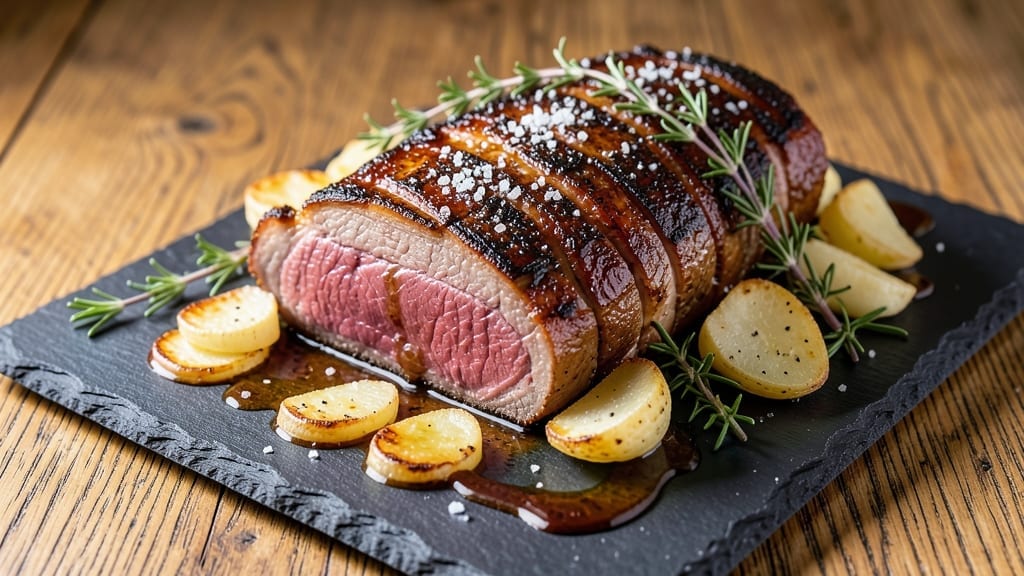
A 2-rib roast beef with a juicy pink center and crispy bark transforms Sunday dinners into a showstopping centerpiece. 🔥 This recipe delivers restaurant-quality results with precise temperature control and a foolproof reverse sear technique that ensures perfect doneness every time.
The secret lies in patience—letting the roast come to room temperature before cooking and monitoring internal temps like a pro.
What sets this apart is the crispy bark achieved through high-heat searing after an initial low-and-slow roast. This method preserves moisture while creating that coveted caramelized crust.
You’ll need a meat thermometer (non-negotiable) and about 2.5 hours total time for a 2-rib roast weighing 3-4 pounds—plenty for a family gathering or special occasion.
By the time you carve into this masterpiece, you’ll have tender, melt-in-your-mouth beef with a crust that cracks satisfyingly under the knife. The reverse sear technique guarantees juicy pink centers while the high-heat finish delivers that crispy bark everyone craves.
Serve with classic roasted garlic potatoes and a rich red wine reduction for the full experience.
This isn’t just another roast recipe—it’s a game-changer for home cooks who want restaurant-quality results without the guesswork. The key is timing, temperature, and technique. Let’s get started on creating your most impressive roast yet.
Ingredients for 2 rib roast beef
Precision-crafted ingredients deliver that coveted crispy bark and juicy pink center every time.
| Ingredient | Amount | Notes |
|---|---|---|
| 2-Rib Roast Beef 🥩 | 3 ½ lb | Center-cut, bone-in preferred |
| Kosher Salt 🧂 | 1 ½ tbsp | Diamond Crystal preferred |
| Freshly Ground Black Pepper 🌶️ | 1 tbsp | Coarse grind for texture |
| Extra-Virgin Olive Oil 🫒 | 2 tbsp | For high-heat sear |
| Fresh Thyme Sprigs 🌿 | 4 whole | Tied with kitchen twine |
| Fresh Rosemary Sprigs 🌿 | 2 whole | Tied with kitchen twine |
| Garlic Cloves 🧄 | 6 cloves | Smashed for infusion |
| Yellow Onion 🧅 | 1 whole | Quartered, peeled |
| Beef Tallow or Duck Fat 🧈 | 2 tbsp | For crispy bark finish |
| Red Wine 🍷 | ½ cup | Bold Cabernet Sauvignon |
| Balsamic Vinegar 🍶 | 1 tbsp | For reduction glaze |
| Unsalted Butter 🧈 | 2 tbsp | Cold, cubed for basting |
| Meat Thermometer 🌡️ | 1 whole | Instant-read preferred |
The 2-rib roast is non-negotiable for this technique—center-cut, bone-in delivers the best flavor and moisture retention. Local butchers often have superior cuts compared to grocery store pre-packaged roasts. Look for good marbling and ask when it was butchered—fresher is always better. For a 3.5 lb roast, plan on 2.5 hours total time using the reverse sear method. Costco and Whole Foods typically carry high-quality beef suitable for this recipe. If you can’t find a 2-rib roast, a top round roast works as a backup, though it won’t have the same flavor profile.
No extra-virgin olive oil? Avocado oil works equally well for high-heat searing. The red wine can be swapped for beef broth if you’re avoiding alcohol, though it will lack depth. For the herbs, dried thyme and rosemary work at half the amount if fresh isn’t available—just crush them between your fingers to release the oils. The balsamic vinegar is crucial for that glossy finish; aged balsamic glaze from Trader Joe’s works in a pinch. If you’re concerned about fat content, the beef tallow can be replaced with ghee for a similar crispy result without dairy.
Let the roast sit at room temperature for 1 hour before cooking—this ensures even doneness. The meat thermometer is mandatory; 125°F internal temp before searing guarantees that juicy pink center. For storage, wrap the cooked roast tightly in butcher paper (better than foil for crisp retention) and refrigerate for up to 4 days. Slice against the grain for maximum tenderness. Leftovers reheat beautifully—350°F oven for 20 minutes restores that crispy bark. Freeze portions in vacuum-sealed bags for up to 3 months for future game-day victories.
Why You’ll Love This Recipe
- Minimal Prep, Maximum Impact: I swear by this—just salt, pepper, and a quick rub of olive oil before the oven. No chopping, no fuss, and the thyme sprigs release their aroma while it roasts. Honestly, I’ve made it while scrolling through my phone.
- Rich Without the Hassle: The crust from the kosher salt and black pepper? Crispy perfection. Inside stays tender, and the thyme’s earthy note cuts through the beef’s richness. It’s the kind of flavor that makes you close your eyes and sigh.
- Leftovers That Don’t Suck: This roast actually improves the next day—sliced thin, it’s perfect for sandwiches or grain bowls. I meal prep half the roast and freeze it; reheating it in the oven keeps it juicy. No sad, dry meat here.
- Weeknight Hero for Crowds: Whether it’s a dinner party or a lazy Sunday, this feeds a group without stress. I’ve served it at holiday dinners and casual BBQs—same effort, always a hit. (Yes, even on a Tuesday night.)
Step-by-step instructions for perfect 2-Rib roast beef
Here’s how to achieve that coveted crispy bark with a perfectly pink center every time.
🔥 Step 1: Prep the Roast for Maximum Flavor and Crisp
Remove the 3.5 lb 2-rib roast beef from the refrigerator and let it sit at room temperature for 1 hour before cooking. This ensures even cooking throughout. Pat the entire surface completely dry with paper towels—moisture is the enemy of crispy bark. I press firmly, especially in the crevices between the ribs and along the fat cap.
In a small bowl, combine the 1.5 tbsp kosher salt and 1 tbsp freshly ground black pepper. Rub this mixture all over the roast, including inside any cavities. The coarse grind of the pepper adds texture that contrasts beautifully with the tender meat. Let the seasoned roast rest uncovered on a wire rack for 30 minutes while you prepare your oven.
🍳 Step 2: Sear for Deep Flavor and Crispy Foundation
Preheat your oven to 450°F with a rack positioned in the middle position. Heat a large oven-safe skillet over medium-high heat until very hot. Add the 2 tbsp extra-virgin olive oil and let it shimmer for 1 minute. Place the roast beef fat-side down in the skillet and sear for 5 minutes until the fat is golden and beginning to render.
Flip the roast and sear the other side for another 5 minutes. The goal is to create a deep golden crust while building layers of flavor. Transfer the skillet to the preheated oven and roast for 10 minutes. This initial high-heat phase jumpstarts the cooking process and creates that coveted bark.
🥘 Step 3: Build Aromatics and Create Reduction Sauce
While the roast sears, prepare your aromatic base. In a small saucepan, combine the 0.5 cup red wine, 1 tbsp balsamic vinegar, 6 smashed garlic cloves, and the 1 whole quartered yellow onion. Bring to a simmer over medium heat and cook for 8-10 minutes until reduced by half and the liquid has deepened in color to a rich amber.
Strain the reduction through a fine-mesh sieve to remove the solids, pressing gently to extract all the flavor. Tie the 4 whole fresh thyme sprigs and 2 whole fresh rosemary sprigs together with kitchen twine and place them on top of the roast in the skillet. Pour the reduction evenly over the roast, being careful not to disturb the crust.
⏰ Step 4: Finish with Fat and Butter for Ultimate Moisture
Return the skillet to the oven and reduce heat to 325°F. Cook for 20-25 minutes until the internal temperature reaches 125°F (for medium-rare). Here’s where the magic happens: remove the roast from the oven and carefully spoon the 2 tbsp beef tallow or duck fat and 2 tbsp cold cubed unsalted butter over the surface.
Return to the oven for another 5 minutes to allow the fat to render and baste the meat. This creates a luxurious finish while keeping the interior juicy. The roast is done when the meat thermometer inserted into the thickest part (avoiding bone) reads 125-130°F for medium-rare. For medium, aim for 135°F.
🔪 Step 5: Rest and Slice for Maximum Juiciness
Transfer the roast to a cutting board and let it rest for 15-20 minutes before slicing. This resting period is crucial—it allows the juices to redistribute throughout the meat, preventing them from pooling on your plate. During this time, tent loosely with foil to keep warm.
Slice the roast against the grain into ½-inch thick slices. The fat cap should be crispy and golden, while the meat should be perfectly pink in the center with a beautiful crust. Serve immediately with the pan juices reduced by half and spooned over the top. Each bite should deliver that perfect balance of crispy bark and tender, juicy beef.
Pro Tips For Making 2 Rib Roast Beef
- SEAR HARD FIRST: Get that roast screaming hot in the pan—no half-measures—until you’ve got deep brown crusts on all sides. I used to rush this, and the meat always tasted dull; now I let it sit there, hissing like a dragon, until the oil shimmers. That crust locks in flavor and keeps the meat juicy.
- SALT THE THYME: Lightly coat those fresh thyme sprigs with kosher salt before tucking them into the roast. Sounds weird, but it works: the salt amplifies the thyme’s aroma as it roasts, giving you that restaurant-quality herbal punch without overpowering the beef.
- SKIP THE CROWDED PAN: Don’t overfill that pan with oil—just enough to coat the bottom, about 2 tablespoons. I learned this the hard way when my roast turned into a sad, greasy mess. Too much oil = steam bath, not sear.
- REST UNDER FOIL: Give it a solid 5-10 minutes under foil after pulling it from the oven—yes, even if you’re impatient like me. This keeps the juices from pooling on the cutting board, so every slice stays tender and doesn’t turn into beef jerky.
Wine and beer pairings for these flavors
Bold Red Wine Pairings
The rich, beefy flavors of your 2-rib roast demand a bold red wine with enough tannins to stand up to the dish. I always reach for a Cabernet Sauvignon from Napa Valley—its dark fruit notes and firm structure complement the crispy bark beautifully.
A Malbec from Argentina offers similar depth but with softer tannins, perfect if you prefer smoother sips. For something truly luxurious, try a Barolo from Piedmont—its earthy complexity enhances the roast’s herbal aromatics. 🍷
Malbec for Everyday Elegance
If you’re serving this roast for a casual gathering, a well-priced Argentinian Malbec like Catena Zapata delivers incredible value. The dark plum and blackberry flavors harmonize with the beef’s natural richness, while its velvety texture cuts through the fat.
For a budget-friendly option, Bodega Norton Malbec offers consistent quality at under $20. Both wines provide that perfect balance of fruit and structure without overwhelming the meal.
Beer Pairings for Craft Lovers
For beer enthusiasts, a Belgian Dubbel like Westmalle Oude Speciale offers a surprising match—the caramel and raisin notes complement the roast’s caramelized crust. If you prefer hoppier options, a German Dunkelweizen with its spicy, malty profile stands up to the beef’s richness.
For something more approachable, a dark amber ale with chocolate malt notes works beautifully. I’ve even enjoyed a stout with this dish—its coffee undertones pair surprisingly well with the beef’s herbal seasoning. 🍺
Vintage Port for Special Occasions
When you’re celebrating a truly special occasion, break out a 10-year-old Tawny Port from Graham’s. The nutty, caramelized notes mirror the roast’s crust and reduction sauce, creating a luxurious pairing. Serve it slightly chilled to enhance its complexity.
For a non-alcoholic alternative, a black tea-infused syrup with orange zest offers similar depth and richness without the alcohol. Both options elevate the dining experience to restaurant-quality levels.
Wine Temperature Tips
Never underestimate the importance of proper wine temperature. Red wines should be served at 60-65°F—too warm and they lose their delicate aromatics. I use an ice bucket with water for quick cooling or a wine refrigerator for longer storage.
For beer, serve at 45-50°F—colder temperatures mute the flavors, so don’t over-chill. The right temperature makes all the difference in how the flavors interact with your perfectly cooked roast. ✨
Make Your Own Reduction Sauce
While we’re on the topic of pairings, why not use your leftover red wine to create an even better sauce? After your roast is done, deglaze the pan with ½ cup red wine and reduce it with 1 tbsp balsamic vinegar and 1 tsp brown sugar.
This creates a glossy sauce that enhances both the beef and your wine pairing. The acidity cuts through the richness, making each bite more balanced and flavorful. 💫
Nutrition facts
Frequently asked questions
Why does a 2-rib roast need to rest before slicing?
Resting for 15-20 minutes after roasting lets the juices redistribute evenly throughout the meat. If you slice too soon, those precious juices will pool on your plate instead of staying in the beef. This step is especially critical for larger cuts like rib roasts where the internal temperature varies more dramatically.
Can I cook a 2-rib roast without a meat thermometer?
While possible, it’s risky without a thermometer. The reverse sear method relies on hitting 125°F internal temp before the final sear. Without one, you risk overcooking or serving underdone beef. If you don’t have a thermometer, use the finger test: press gently—if it feels very firm, it’s overcooked; if it yields slightly, it’s perfect for medium-rare.
What’s the difference between a 2-rib and prime rib roast?
A 2-rib roast comes from the ribeye section (ribs 2-3) and has more marbling than prime rib (ribs 6-7). Prime rib is larger, often bone-in, and comes from the ribeye’s upper portion. The 2-rib offers better flavor but less volume—ideal for family meals. Prime rib is better for large gatherings but can be tougher if not cooked properly due to its size.
How do I store leftovers to keep the crispy bark?
Wrap the roast tightly in butcher paper (not foil) and refrigerate for up to 4 days. For reheating, bake at 350°F for 20 minutes covered with foil to restore moisture, then crisp under the broiler for 2-3 minutes. The butcher paper preserves the bark better than plastic wrap or foil.
Can I use this recipe for other beef cuts?
This method works best for rib roasts, but you can adapt it for top round roast or chuck roast. For tougher cuts, increase cooking time and use more fat (like beef tallow) to keep them moist. The reverse sear technique won’t work as well for thin cuts—it’s designed specifically for 2-3 pound roasts with good fat content.

- Baked Potatoes in Crock Pot Recipe: Buttery Interiors and Crispy Top Magic - November 1, 2026
- Braised Beef Short Ribs Recipe: Crock Pot Fall-Off-Bone Magic in 6 Hours - November 1, 2026
- Crock Pot Cocoa Recipe: Velvety Warmth With Hidden Spice Magic - November 1, 2026