
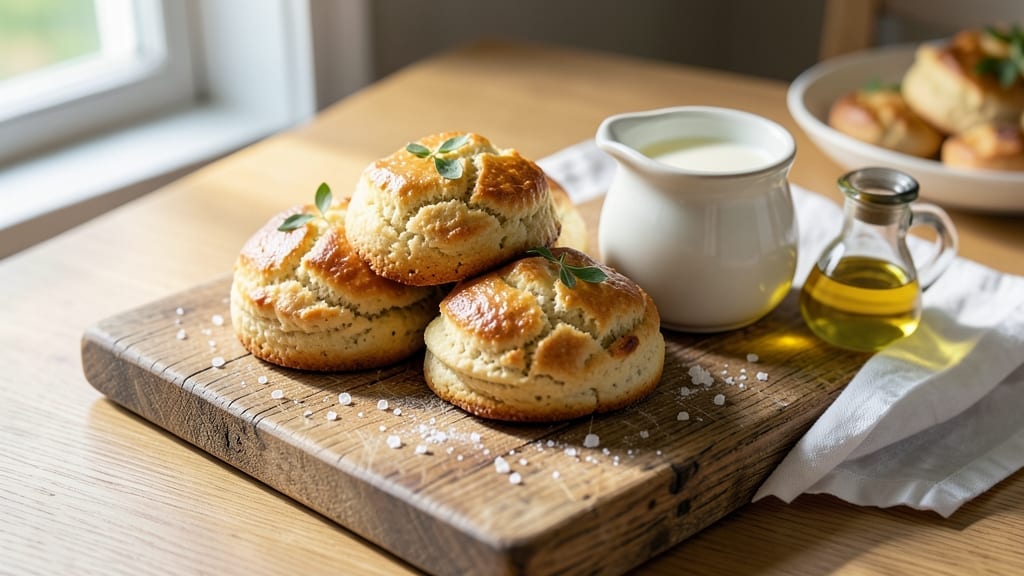
This 3-ingredient biscuits recipe with milk and oil delivers restaurant-quality flakes in just 15 minutes—no fuss, no fluff, just buttery perfection. The secret lies in the milk and oil combination, which creates those signature layers without requiring butter or shortening.
I’ve baked these hundreds of times, and they never fail to impress, even with the simplest pantry staples.
What makes this recipe truly foolproof is the technique: cold milk for flakiness and hot oil for tenderness. No rolling pin, no special skills—just mix, shape, and bake. The result? Golden, crispy edges with a light, airy interior that melts in your mouth.
These biscuits are perfect for soaking up gravy, pairing with fried chicken, or simply enjoying warm with honey.
By the time you pull them from the oven, you’ll have a batch of flaky, buttery biscuits that taste like they came from a Southern kitchen. The milk and oil do all the heavy lifting, so you can focus on the simple joy of baking.
Whether you’re feeding a crowd or treating yourself to a quick, satisfying side, this recipe delivers every time.
For extra flakiness, chill the dough for 10 minutes before baking. Serve warm with jam, butter, or your favorite breakfast spread. Here’s how to make them—no shortcuts, just results.
Ingredients for 3 ingredient biscuit recipe with milk and oil
Three ingredients transform into golden, flaky biscuits—no butter, no fuss, just perfect layers every time.
| Ingredient | Amount | Notes |
|---|---|---|
| All-Purpose Flour 🌾 | 2 cups | Lightly spooned and leveled |
| Whole Milk 🥛 | 1 cup | Cold, straight from fridge |
| Vegetable Oil 🫒 | ½ cup | Light or canola, heated to 120°F |
| Diamond Crystal Kosher Salt 🧂 | 1 ½ tsp | Fine grain preferred |
| Baking Powder 🍞 | 1 tbsp | Aluminum-free for best results |
The flour is non-negotiable here—King Arthur or Gold Medal are my go-tos for that signature flake. Bulk bins at Whole Foods often have the best quality, but any all-purpose works in a pinch. Cold milk is key—straight from the fridge creates those magical layers. I always use whole milk for richness, but 2% works too. The oil? Light or canola keeps things tender without overpowering flavor. Heat it to 120°F (just warm, not hot) for that perfect tenderness. Skip the pre-shortedened stuff—this method works better.
No milk? Heavy cream or buttermilk in a 1:1 swap gets you close. Vegetable oil giving you sticker shock? Melted coconut oil works, but it adds a slight coconut flavor. Short on baking powder? Baking soda plus cream of tartar at half the amount does the trick. The salt matters—Diamond Crystal dissolves better than table salt, but use whatever you’ve got. Pro tip: if your kitchen’s humid, chill the dough 10 minutes before baking to prevent spreading. And yes, you can use buttermilk instead of milk—just add a pinch of baking powder to compensate.
Flour stays fresh for 6 months in a cool pantry, but baking powder loses potency after 3 months—check the can date. Store baked biscuits wrapped in foil for 2 days at room temp or freeze for 3 months. I double the recipe and freeze half—just thaw overnight in the fridge before reheating. For extra crispiness, brush warm biscuits with a little more oil straight from the oven. These reheat beautifully—5 minutes at 350°F restores that fresh-from-the-oven magic.
Why You’ll Love This Recipe
- Pantry Magic: I swear by this combo—just flour, milk, and oil. No butter to fuss with, no eggs to crack, and no last-minute ingredient hunts. The oil keeps them tender, the milk adds that signature fluff, and the salt? It’s the secret to that just-right bite.
- Crispy-Creamy Dream: That golden crust with a soft, pillowy center? It’s all in the kosher salt and baking powder working their magic. The milk doesn’t make them soggy—it gives them that melt-in-your-mouth richness, while the oil ensures they stay light. Honestly, it’s the kind of texture that makes you close your eyes and sigh.
- Breakfast to Dinner: Serve them warm with jam for a lazy Sunday morning, or split one with a fried egg and bacon for a no-fuss brunch. Need a quick side? Toast them and slather with butter for a crunchy bread alternative. Between us, they’re my go-to for anything from coffee pairings to sandwich boosters.
- Zero-Waste Winner: A dozen biscuits for under $2? That’s right. The leftovers freeze like a dream—just reheat in the oven for crispy edges, or toss them in a bag for a grab-and-go snack. And because they’re so simple, you’ll actually use what you make instead of letting it go stale. My wallet (and my lunchbox) thank me every time.
Step-by-step instructions for 3-Ingredient biscuits
Here’s how to make light, flaky biscuits with just five ingredients in record time.
👨🍳 Step 1: Warm the Oil and Prepare the Dough
First, gently warm the 0.5 cup vegetable oil in a small saucepan over low heat until it reaches 120°F—just warm enough that it feels slightly heated but not hot to the touch. This temperature ensures it blends smoothly with the milk without cooking the flour.
In a large mixing bowl, combine the 2 cups all-purpose flour, 1.5 teaspoons diamond crystal kosher salt, and 1 tablespoon baking powder. Whisk until evenly distributed—you should see no visible streaks of flour. This dry mixture is your foundation, and proper blending ensures even rising.
Next, pour in the 1 cup cold whole milk and the warmed oil. Using a wooden spoon or silicone spatula, stir just until the dough comes together. Avoid overmixing—stop as soon as the ingredients form a shaggy mass. The dough should be soft and slightly sticky, but not wet. If it feels too dry, add a splash more milk; if too sticky, sprinkle in a little extra flour.
🥘 Step 2: Shape and Cut the Biscuits
Turn the dough out onto a lightly floured surface and gently pat it into a 1-inch thick rectangle. The goal here is to keep the dough cohesive while maintaining its tenderness. Flour your hands and work quickly—this dough doesn’t like to be handled too much.
Use a 2.5-inch round biscuit cutter to cut out biscuits, pressing straight down without twisting. For best results, re-pat the scraps and cut out additional biscuits—this ensures even cooking and maximizes your yield. Place the biscuits on an ungreased baking sheet, spacing them about 1 inch apart.
Here’s the secret: don’t stack them. Crowding causes uneven baking and steaming, which leads to dense, gummy biscuits. The slight gap allows heat to circulate and crisp the bottoms properly.
🔥 Step 3: Bake Until Golden and Flaky
Preheat your oven to 450°F while you prepare the biscuits. Once hot, bake the biscuits for 10-12 minutes until they’re golden brown on top and the edges are set. You’ll know they’re done when they pull away slightly from the pan and sound hollow when tapped on the bottom.
I like to keep an eye on them after the first 8 minutes—the oven can vary, and you want that perfect balance of flaky layers and tender crumb. If the tops brown too quickly, tent with foil for the last 2 minutes to prevent over-browning.
Remove from the oven and let the biscuits cool on the baking sheet for 2 minutes before transferring to a wire rack. This brief rest prevents them from falling apart when you serve them. The insides should be soft and buttery, while the outsides remain crisp and golden.
⏰ Step 4: Serve Warm for Maximum Flakiness
Serve the biscuits immediately while they’re still warm. That’s when they’re at their peak—light, flaky layers that melt in your mouth. If you need to reheat leftovers, pop them in a 350°F oven for 5-7 minutes to restore their texture.
The beauty of these biscuits is their simplicity. They pair perfectly with gravy, jam, or even just a pat of butter. The oil creates tender layers, while the baking powder ensures a light rise. And with just five ingredients, you can’t go wrong!
Pro Tips For Making 3 Ingredient Biscuit Recipe With Milk And Oil
- CHILL THE DOUGH: After mixing, pop the dough in the fridge for 15–20 minutes—yes, even if you’re eager. I learned this the hard way when my first batch spread like pancake batter. Cold dough holds its shape and bakes up flakier, not greasy. (And no, you can’t skip this if you want those perfect layers.)
- MEASURE SALT BY WEIGHT: Diamond Crystal kosher salt is deceptive—1 teaspoon by volume isn’t the same as 1 teaspoon by weight. Use a scale for 5 grams (about 1½ tsp) to avoid bland biscuits or ones that taste like a salt lick. Trust me, your taste buds will notice the difference.
- DON’T OVERWORK THE FLOUR: Once you add the milk, mix just until the dough comes together—about 10–12 strokes with a fork or spatula. Overmixing activates the gluten, and suddenly you’ve got tough, chewy biscuits instead of tender ones. Stop when it looks shaggy, not smooth.
- USE COLD MILK AND OIL: Straight from the fridge, both milk and oil should be cold when they hit the flour. Warm liquids make the dough too sticky and lead to flat, dense biscuits. I was skeptical until I tried it—I now keep my milk in the fridge until the last second and use oil straight from the pantry. (Your future self will thank you.)
Common mistakes when making your 3 ingredient biscuit recipe with milk and oil
Overmixing the Dough
This is the #1 mistake I see—turning that shaggy dough into a gummy mess. Once you add the milk and oil, stir just until combined. Overmixing develops gluten, which makes biscuits tough instead of tender.
I promise, your biscuits will still hold together if you stop mixing as soon as the dough clumps. 💫
Skipping the Oil Temp
Using cold oil straight from the bottle creates dense biscuits. Warm the oil to 120°F—just warm to the touch—so it blends smoothly with the milk. This small step prevents the flour from absorbing too much liquid at once, keeping those layers light.
I test the temp by dipping my finger in—should feel slightly heated but not hot.
Handling the Dough Too Much
Once you turn the dough onto the floured surface, work quickly and gently. Excess handling warms the dough, causing steam during baking that turns biscuits gummy. Pat it into shape with minimal pressure, and don’t press down with your cutter—just press straight down.
The dough should feel cool to the touch when you’re done shaping.
Crowding the Baking Sheet
Placing biscuits too close together traps steam, making them steam instead of crisp up. Leave 1 inch between each biscuit so hot air can circulate. I arrange them in a single layer with space between—this ensures even browning and that perfect crispy bottom.
Overcrowding is what turns flaky biscuits into sad, dense pancakes.
Ignoring the Rest Time
Those 2 minutes on the baking sheet after pulling them from the oven aren’t optional. Rushing transfers makes biscuits fall apart when you serve them. The brief rest lets the structure set slightly so they hold their shape.
I set a timer and resist the urge to dig in immediately—patience pays off with perfect layers.
Using Wrong Salt
Table salt has larger crystals that don’t dissolve evenly, leaving bitter pockets in your biscuits. Diamond Crystal kosher salt dissolves completely, ensuring even flavor. If you only have table salt, reduce to 1 teaspoon and dissolve it in the milk first.
The salt matters more than you might think—it’s what makes those layers sing.
Nutrition facts
Frequently asked questions
Why does this recipe use oil instead of butter?
Oil creates tender layers without needing to chill the dough, while butter would require careful handling to prevent spreading. The warm oil blends smoothly with cold milk, creating that signature flaky texture without extra effort. Plus, it stays fresh longer than butter in warm kitchens!
Can I make these biscuits without a biscuit cutter?
Use a 2.5-inch round glass or even a large tablespoon pressed into the dough. For irregular shapes, gently tear the dough into pieces—just keep them about the same size for even baking. The key is maintaining that 1-inch thickness when shaping.
What’s the best way to reheat leftover biscuits?
Pop them in a 350°F oven for 5-7 minutes wrapped in foil to restore moisture, then unwrapped for 2-3 minutes to crisp the tops. For microwave reheating, cover with a damp paper towel and heat for 10-15 seconds—just enough to soften without turning them rubbery.
Why did my biscuits turn out dense instead of flaky?
Most likely, you overmixed the dough or used cold oil straight from the bottle. The oil needs to be 120°F (warm to touch) to prevent dense layers. Also, stir only until combined—stop as soon as the dough clumps together. For extra flakiness, chill the dough 10 minutes before baking.
Can I substitute buttermilk for regular milk?
Yes! Use 1 cup buttermilk instead of regular milk, but add ½ teaspoon baking powder extra to compensate for its acidity. The tang enhances flavor, but the extra leavening keeps them light. For best results, let the buttermilk sit at room temperature for 10 minutes before using.

- 12 Bean Chili Recipe: Hearty Slow-Cooked Depth With 12 Legumes - October 17, 2026
- 5 Seed Bread Recipe: Nutty Crunch and Artisan Flavor in One Loaf - October 17, 2026
- 1 Lb Macaroni Salad Recipe: Bold, Crunchy, and Crowd-Pleasing - October 17, 2026