
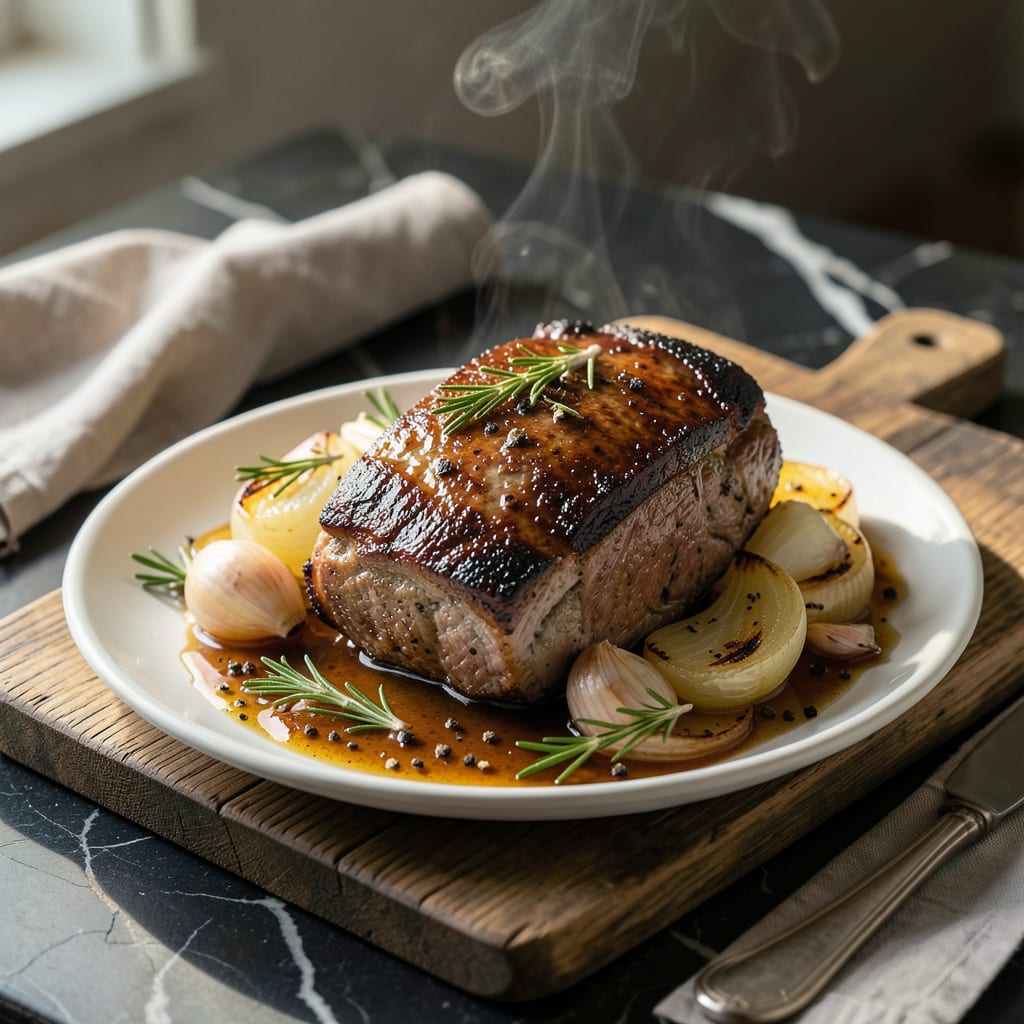
This Dutch oven pot roast transforms a 3 lb chuck roast into fall-apart tender meat through slow braising.
The method locks in moisture while root vegetables soak up rich, savory flavors. Expect perfectly tender results every time with this proven technique.
Ingredients for 3 Lb Pot Roast
Transform a 3 lb chuck roast and root vegetables into deeply flavorful comfort food.
| Ingredient | Amount | Notes |
|---|---|---|
| Chuck Roast 🥩 | 3 lb | Well-marbled, trimmed of excess fat |
| Kosher Salt 🧂 | 1 ½ tsp | Diamond Crystal preferred for texture |
| Freshly Ground Black Pepper 🌶️ | 1 tsp | Coarse grind for depth |
| Olive Oil 🫒 | 2 tbsp | High smoke point variety |
| Yellow Onion 🧅 | 1 whole | Large, roughly chopped |
| Garlic Cloves 🧄 | 4 cloves | Smashed for robust flavor |
| Carrots 🥕 | 3 whole | Peeled, cut into 2-inch chunks |
| Celery Stalks 🌿 | 2 whole | Cut into 2-inch pieces |
| Russet Potatoes 🥔 | 1 ½ lb | Peeled, quartered if large |
| Low-Sodium Beef Broth 🍲 | 2 cups | High-quality for depth of flavor |
| Dry Red Wine 🍷 | 1 cup | Full-bodied like Cabernet Sauvignon |
| Tomato Paste 🍅 | 2 tbsp | Double-concentrated preferred |
| Fresh Thyme Sprigs 🌿 | 3 whole | Tied together for easy removal |
| Fresh Rosemary Sprig 🌿 | 1 whole | Woody stem removed before use |
| Bay Leaf 🍃 | 1 whole | Dried, for aromatic depth |
[recipeingredientscaler]
The chuck roast is non-negotiable for this dish. Opt for well-marbled cuts from a reputable butcher or Whole Foods—fat equates to flavor and tenderness. For the red wine, a bold Cabernet Sauvignon or Merlot provides the acidity needed to balance the richness. Avoid pre-cut vegetables; whole, fresh root vegetables ensure better texture and flavor absorption during the long braise.
Out of red wine? Substitute with an additional cup of beef broth and 1 tbsp of balsamic vinegar for acidity. No fresh thyme or rosemary? Dried herbs at one-third the quantity work in a pinch, though the flavor profile will be slightly muted. For a gluten-free version, ensure your beef broth is certified as such—Pacific Foods is a reliable brand.
Store the chuck roast in its original packaging in the coldest part of your refrigerator for up to 3 days before cooking. Leftovers keep beautifully, sealed in an airtight container, for 4-5 days in the fridge or 3 months in the freezer. Always allow the roast to come to room temperature before searing for even cooking.
Why You’ll Love This Recipe
- Set It and Forget: I brown the chuck in olive oil, then the oven does the rest while I tackle the laundry.
- Feeds the Whole Crew: Three pounds means Sunday dinner plus Monday’s sandwiches—no extra cooking.
- Budget Hero: Chuck roast is cheap, onions are cheaper, and it tastes like a million bucks.
Step-by-Step Instructions for Dutch Oven Pot Roast with Root Vegetables
This method ensures tender beef and vegetables with rich, developed flavors.
Step 1: Sear the Chuck Roast
Pat the 3 lb chuck roast dry with paper towels, then season all sides generously with the 1.5 tsp kosher salt and 1 tsp freshly ground black pepper. This drying step is crucial for achieving a deep, flavorful sear rather than steaming the surface.
Heat the 2 tbsp olive oil in a Dutch oven over medium-high heat until shimmering. Add the chuck roast and sear undisturbed for 4-5 minutes per side until a deep, mahogany crust forms. You’ll know it’s ready to flip when it releases easily from the pot.
Step 2: Build the Flavor Base
Remove the seared chuck roast and set aside. In the same pot, add the 1 whole yellow onion, 3 whole carrots, and 2 whole celery stalks. Sauté for 5-6 minutes until the vegetables begin to soften and develop color.
Stir in the 2 tbsp tomato paste and cook for 1-2 minutes until it darkens slightly and coats the vegetables. This step intensifies the umami depth of the final dish. Add the 4 cloves garlic cloves and cook for 30 seconds until fragrant.
Step 3: Deglaze and Add Liquids
Pour in the 1 cup dry red wine and scrape up all the browned bits from the bottom of the pot with a wooden spoon. These fond bits contain concentrated flavor that will enrich your braising liquid.
Add the 2 cups low-sodium beef broth, 3 whole fresh thyme sprigs, 1 whole fresh rosemary sprig, and 1 whole bay leaf. Return the chuck roast to the pot along with any accumulated juices. The liquid should come about halfway up the meat.
Step 4: Braise with Vegetables
Bring the liquid to a simmer, then reduce heat to medium-low. Cover the pot and return to a gentle simmer. After 1 hour, add the 1.5 lb russet potatoes to the pot, nestling them into the liquid.
Continue braising covered for 2 to 2.5 hours total until the chuck roast is fork-tender and the potatoes are easily pierced with a knife. The meat should pull apart with minimal resistance when tested with a fork.
Step 5: Rest and Serve
Remove the 3 lb chuck roast and vegetables from the pot and transfer to a serving platter. Skim excess fat from the braising liquid if desired, then pour the remaining sauce over the meat and vegetables.
Let the dish rest for 10 minutes before serving to allow the juices to redistribute. The vegetables should be tender but still hold their shape, and the sauce should have a rich, velvety consistency from the reduced braising liquid.
Pro Tips For Making 3 Lb Pot Roast
- Sear it hard: I learned this the hard way—get your oil smoking hot before adding the chuck roast, and don’t move it for at least 2-3 minutes per side to develop that deep brown crust that actually changes the outcome.
- Salt aggressively: Use about 1 tablespoon of kosher salt for that 3 lb roast—sounds like a lot, but the long cook time mellows it, and undersalting is the thing that matters most with tough cuts.
- Don’t crowd the pan: After burning three batches, I finally figured out that searing the onion separately (not with the meat) prevents steaming and gives you that caramelized base you’re after.
- Let it rest: Give it a solid 15-20 minutes under foil before slicing—I skip this when I’m lazy, but the dish is noticeably better when I don’t, and the juices stay put instead of running all over the cutting board.
Storing and Reheating 3 lb pot roast
Refrigerator Storage
Let your pot roast cool for no more than 2 hours before transferring to airtight containers. Store in the fridge at 40°F or below for up to 4-5 days. The flavors meld beautifully overnight, making leftovers even more delicious. ❄️
Freezer Storage
This dish freezes exceptionally well for up to 3 months without quality loss. I recommend using flat freezer bags to save space. Leave 1 inch of headspace for expansion and squeeze out excess air to prevent freezer burn.
Stovetop Reheating
My preferred method for best texture: pour leftovers into a heavy pot, add ¼ cup beef broth to prevent sticking, and heat over medium-low for 10-15 minutes. Stir occasionally and taste for seasoning.
Microwave Reheating
For quick meals, cover individual portions with a damp paper towel. Heat on 70% power for 2-3 minutes, stir, then continue in 1-minute intervals until reaching 165°F. Add a splash of water if it looks dry. 🔥
Oven Reheating
Preheat oven to 300°F, cover your pot roast in an oven-safe dish with foil, and heat for 20-25 minutes. This method maintains moisture and tenderness beautifully. Check internal temperature before serving.
Nutrition Facts
Frequently Asked Questions
How long does it take to cook?
Total cooking time is about 2.5 to 3 hours, including 4-5 minutes per side for searing and 2-2.5 hours for braising. The meat is done when fork-tender.
Can I use a different cut of beef?
Chuck roast is ideal for its marbling, but brisket or round roast work too. Avoid lean cuts like sirloin—they won’t become as tender.
What if my sauce is too thin?
Remove the meat and vegetables, then simmer the liquid uncovered over medium-high heat for 5-10 minutes to reduce. Stir occasionally for even thickening.
Do I need to brown the meat first?
Yes! Searing creates a flavorful crust and deepens the dish’s taste. Skip this, and you’ll miss out on rich, caramelized notes.

- 4C Bread Crumbs Meatballs Recipe: Crispy Crust and Juicy Centers - September 25, 2026
- 6 Oz Chocolate Chip Cookie Recipe: Perfectly Balanced Crispy Edges and Chewy Hearts - September 25, 2026
- 6-Inch Coffee Cake Recipe: Vanilla Bean Swirls and Buttery Streusel Topping - September 25, 2026