
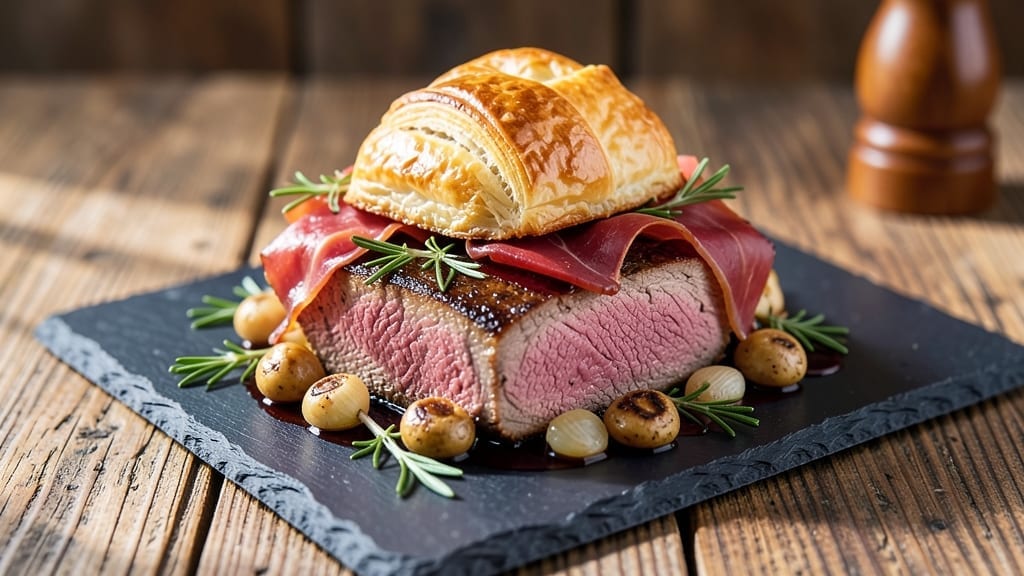
A 3lb Beef Wellington transforms a simple roast into a showstopping centerpiece that demands attention at every table. 💛 The secret lies in the perfect balance of tender beef, finely textured mushroom duxelles, and delicate puff pastry—each layer working in harmony to create a dish that’s as impressive to serve as it is to eat.
This isn’t just dinner; it’s an experience that elevates any occasion, whether it’s a holiday feast or a special weekend celebration.
The foundation starts with a well-seasoned beef tenderloin, wrapped in prosciutto and encased in a golden, flaky pastry that crisps to perfection. What sets this apart is the mushroom duxelles—finely chopped mushrooms sautéed until dry and fragrant, creating a rich, earthy heart that complements the beef without overpowering it.
The key to success? Patience in the prep and precision in the cooking, ensuring the beef reaches medium-rare (125°F internal) while the pastry stays crisp and the filling remains moist.
By the time you slice into this masterpiece, you’ll reveal layers of tender beef, savory mushrooms, and a pastry crust that shatters with every bite. The aroma alone—warm, buttery, and deeply aromatic—will have your guests anticipating each forkful.
This isn’t just a recipe; it’s a foolproof method for achieving restaurant-quality results at home, with every detail accounted for to ensure perfection.
Pair it with a bold red wine reduction and roasted root vegetables for a complete, elegant meal. The beauty of this dish is in its versatility—prepare the components ahead of time, then assemble and bake when ready, making it ideal for stress-free entertaining.
Let’s bring this classic to your table with confidence.
Ingredients for 3lb beef wellington
Pantry staples meet restaurant-quality ingredients for this showstopping Wellington.
| Ingredient | Amount | Notes |
|---|---|---|
| Beef Tenderloin 🥩 | 3 lb | Center-cut, trimmed of fat and silver skin |
| Prosciutto 🥓 | ½ lb | Thinly sliced, high-quality |
| Puff Pastry 🍞 | 1 sheet | Store-bought or homemade, thawed |
| Cremini Mushrooms 🍄 | 1 ½ lb | Finely chopped for duxelles |
| Shallots 🧅 | 4 whole | Minced for duxelles |
| Garlic Cloves 🧄 | 6 cloves | Minced for duxelles |
| Unsalted Butter 🧈 | ½ cup | Cold, cubed for duxelles |
| Fresh Thyme Leaves 🌿 | ¼ cup | Chopped, for duxelles |
| Dijon Mustard 🟡 | 2 tbsp | For beef seasoning |
| Kosher Salt 🧂 | 1 ½ tsp | Diamond Crystal preferred |
| Freshly Ground Black Pepper 🌶️ | 1 tsp | Coarsely ground |
| Egg 🥚 | 1 whole | For egg wash |
| Heavy Cream 🥛 | ¼ cup | For egg wash |
| Red Wine 🍷 | ½ cup | Dry, for deglazing |
| Beef Stock 💧 | ½ cup | For deglazing |
The beef tenderloin is non-negotiable—center-cut, trimmed of fat and silver skin—for even cooking and maximum tenderness. Grab one from Whole Foods or your local butcher; they’ll often trim it for you. For the prosciutto, high-quality slices make all the difference—skip the pre-packaged kind. If you’re using store-bought puff pastry, thaw it overnight in the fridge for easier handling. The mushrooms? Cremini have the right texture, but shiitake adds an extra layer of umami if you’re feeling fancy. Look for firm, dry mushrooms at Trader Joe’s or the produce section of your grocery store.
No prosciutto? Thinly sliced smoked ham works in a pinch, though it lacks the delicate flavor. Short on time? Pre-minced shallots and garlic from the jar save steps, but fresh is always better. The Dijon mustard is key—no substitutions here. For the duxelles, if you can’t find cremini mushrooms, white mushrooms work, but they’ll be less flavorful. The butter should be cold and cubed when you start cooking—this prevents the duxelles from turning into mush. And if you’re worried about the pastry browning too fast, brush it with egg wash halfway through baking.
The duxelles can be made 2 days ahead—it actually tastes better after the flavors meld. Wrap it tightly in plastic and refrigerate. The assembled Wellington keeps for 1 day in the fridge before baking, but don’t prep it too early—the prosciutto can get soggy. Once baked, it’s best served immediately, but leftovers reheat beautifully in a 350°F oven for 15-20 minutes, covered with foil. For a stress-free dinner, prep all components the day before—just assemble and bake when ready.
Why You’ll Love This Recipe
- One-Pan Magic: I swear by this for lazy Sundays—just sear the beef, nestle it in mushrooms and shallots, wrap it all in prosciutto, then slap on that puff pastry. No flipping, no fussing, just boom—done.
- Prosciutto Perfection: That salty-sweet prosciutto layer? It’s the secret weapon. The first bite—when the crust gives way and the prosciutto melts into the beef—is like a hug for your taste buds. (Yes, even on a Tuesday night.)
- Weekend Hero: Between us, this is my go-to for dinner parties or when in-laws visit. A 3lb roast feeds a crowd, and the leftovers? Sliced in sandwiches the next day? Absolute gold.
- Budget-Friendly Luxury: Here’s what sold me—you’re using a pricier cut, but the prosciutto and mushrooms stretch the flavor so well. The puff pastry adds drama without breaking the bank, and the leftovers reheat like a dream. Fancy without the guilt.
Step-by-step instructions for beef Wellington with mushroom-duxelles heart
Here’s how to assemble and bake your Beef Wellington like a pro—crispy pastry, tender beef, and rich mushroom filling every time.
👨🍳 Step 1: Prepare the Mushroom-Duxelles Filling
Start by finely chopping the 1.5 lb cremini mushrooms—they should be almost paste-like in texture. In a large skillet over medium heat, melt the 0.5 cup cold cubed unsalted butter and add the mushrooms. Cook for 10-12 minutes until all moisture evaporates and they turn golden brown.
Add the 4 minced whole shallots and 6 minced garlic cloves, cooking for another 3-4 minutes until fragrant. Stir in the 0.25 cup chopped fresh thyme leaves and remove from heat. Let cool completely before spreading—this prevents soggy pastry later. The duxelles should be thick and jammy, not watery.
🔪 Step 2: Season and Assemble the Beef
Pat the 3 lb beef tenderloin dry with paper towels—this is critical for a good sear. Season generously with 1.5 tsp kosher salt and 1 tsp freshly ground black pepper, pressing it into the surface. Spread 2 tbsp Dijon mustard evenly over the entire surface to help the prosciutto stick.
Layer the 0.5 lb thinly sliced prosciutto evenly over the mustard-coated beef, slightly overlapping the slices. Then spread the cooled mushroom-duxelles mixture evenly over the prosciutto, creating a thick but even layer. Roll the beef tightly in plastic wrap and refrigerate for 30 minutes to firm up before shaping.
🥘 Step 3: Wrap and Shape the Wellington
Unwrap the beef and place it on a sheet of parchment paper. Using the parchment to help, roll the beef tightly into a log shape, keeping the prosciutto and duxelles contained. Trim any uneven edges for a clean finish.
Unfold the 1 sheet thawed puff pastry and brush it lightly with the 1 whole egg mixed with 0.25 cup heavy cream for the egg wash. Place the beef log in the center of the pastry, then carefully wrap it completely, sealing the edges by pinching them together. Trim any excess pastry, leaving about ½ inch overhang. Brush the entire surface with more egg wash for a golden finish.
🔥 Step 4: Bake to Golden Perfection
Preheat your oven to 400°F and place a rack in the lower third. Transfer the Wellington to a baking sheet lined with parchment paper and bake for 30-35 minutes, rotating the pan halfway through, until the pastry is deep golden brown and the internal temperature reaches 125°F (it will rise to 130°F while resting).
Remove from the oven and let rest for 15 minutes before slicing—this ensures the juices redistribute. For extra flavor, deglaze the pan with 0.5 cup red wine and 0.5 cup beef stock while it bakes, then reduce by half for a quick pan sauce. Serve with roasted vegetables or mashed potatoes for a showstopping main course.
Pro Tips For Making 3lb Beef Wellington
- SEAR THE BEEF HARD: The tenderloin’s exterior is where flavor lives, so don’t treat it like a delicate fillet—get it screaming hot in a dry pan for 3-4 minutes per side. I used to rush this, and the prosciutto wrapper would stick like glue; now I turn the heat to max and let it develop that crust before even thinking about the mushrooms.
- TRIM THE FAT, KEEP THE JUICE: A 3lb tenderloin has more fat than you’d expect—trim it aggressively but leave a thin layer (about 1/8-inch) on the sides. That fat renders into the pan and baste the meat while it roasts, which is the difference between dry and melt-in-your-mouth. (Yes, even if the butcher says it’s lean.)
- DON’T OVERWORK THE MUSHROOM PASTE: After sautéing shallots and mushrooms, mash them into a rough paste with a fork—just enough to bind, not a smooth purée. I learned this after making a gloppy mess that oozed out of the prosciutto when sliced. A little texture keeps the filling intact and prevents a soggy center.
- WRAP TIGHT, SEAL FAST: Lay the prosciutto in a single overlapping layer, then press the edges firmly with your fingers before tying with kitchen twine. The goal is zero gaps—if you’re lazy and leave spaces, the filling will bulge out when it hits 130°F, and your pastry will look like a sad, lumpy blanket. (Trust me, I’ve served that.)
Troubleshooting great 3lb beef wellington
Pastry Too Pale?
If your puff pastry emerges from the oven looking pale instead of golden, it’s likely due to insufficient egg wash or oven temperature fluctuations.
Brush the pastry with an extra layer of egg wash—1 whole egg + 0.25 cup heavy cream—before baking, and ensure your oven is fully preheated to 400°F.
For even browning, place a baking sheet on the lower rack and use a second sheet on the middle rack to create a convection effect. 💛
Beef Overcooked?
Beef Wellington is tricky because the pastry needs 30-35 minutes to crisp while the beef hits 125°F internal. If yours is overdone, try this: Start baking at 375°F instead of 400°F and use an oven thermometer to verify accuracy.
Remove the Wellington when it reaches 120°F—it’ll rise another 5°F while resting. For next time, consider a meat thermometer like the ThermoWorks Smoke for precision.
Prosciutto Sticking?
The Dijon mustard is your secret weapon to prevent the prosciutto from sliding off during rolling. If it still sticks too much, chill the beef for an extra 15 minutes after seasoning to firm it up.
For stubborn slices, lightly toast the prosciutto in a dry pan for 30 seconds per side before layering—this adds a subtle crispness that helps it adhere better. I’ve also found that using high-quality prosciutto (like Parma) makes a noticeable difference in texture.
Duxelles Too Wet?
If your mushroom filling feels damp, you likely didn’t cook it long enough. The duxelles should be completely dry and almost jammy—this prevents soggy pastry. Cook the mushrooms over medium heat until they release all moisture (10-12 minutes), then spread them on a baking sheet to cool completely.
For extra insurance, sprinkle 1 tsp cornstarch over the mushrooms while cooking to absorb any lingering moisture. Let it cool fully before assembling.
Uneven Rolling?
Rolling a 3lb beef into a neat log can be challenging, but parchment paper is your best friend. Place the beef on a large sheet, then use the parchment to help roll it tightly—this prevents the filling from spilling out.
If the log feels uneven, trim the edges with kitchen shears for a clean finish. For extra stability, wrap the beef in plastic wrap before rolling, then remove it just before wrapping in pastry. This keeps the shape intact during assembly.
Pastry Leaking?
Leaky pastry usually means the duxelles wasn’t cool enough or the pastry wasn’t sealed properly. Ensure the mushroom filling is completely cool before assembling, and pinch the edges of the pastry tightly to create a seal. For extra reinforcement, use a bit of egg wash to glue the seams together.
If you notice filling oozing while baking, reduce the oven temperature to 375°F and cover the Wellington loosely with foil for the last 10 minutes to slow cooking.
Nutrition facts
Frequently asked questions
Can I make the mushroom duxelles ahead of time?
The duxelles actually tastes better when made 2 days ahead. Store it tightly wrapped in plastic in the fridge, and it’ll keep its rich, jammy texture perfectly. Just let it come to room temperature before spreading it on the beef—this prevents soggy pastry later.
What’s the best way to reheat leftover Beef Wellington?
Leftover Wellington reheats beautifully in a 350°F oven for 15-20 minutes, covered with foil to keep it moist. For a quick fix, slice it and warm in a skillet with a splash of beef stock until heated through. Never microwave—it’ll make the pastry rubbery!
How do I prevent the prosciutto from sliding off while rolling?
The Dijon mustard is your secret weapon—it creates a sticky bond. If slices still slip, chill the beef for an extra 15 minutes after seasoning to firm it up. For extra grip, lightly toast the prosciutto in a dry pan for 30 seconds per side before layering—this adds subtle crispness that helps adhesion.
Can I use store-bought duxelles instead of making my own?
While homemade duxelles gives the best texture and flavor, you can use store-bought in a pinch. Look for high-quality versions with no added water. For best results, spread it on a baking sheet and dry it in the oven at 200°F for 10 minutes to remove any moisture before assembling.
What wine pairs best with Beef Wellington?
A bold Cabernet Sauvignon or Syrah complements the rich flavors perfectly. For something more elegant, try a Pinot Noir—its acidity cuts through the buttery pastry. Serve at 60-65°F to enhance the wine’s aromas alongside your dish.

- Baked Potatoes in Crock Pot Recipe: Buttery Interiors and Crispy Top Magic - November 1, 2026
- Braised Beef Short Ribs Recipe: Crock Pot Fall-Off-Bone Magic in 6 Hours - November 1, 2026
- Crock Pot Cocoa Recipe: Velvety Warmth With Hidden Spice Magic - November 1, 2026