
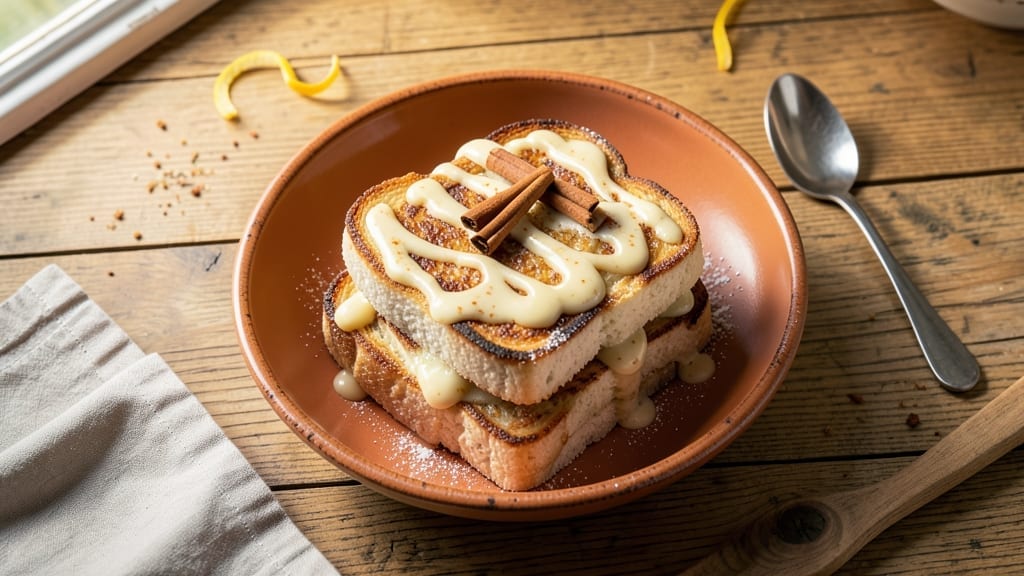
Mastering 4-egg French toast transforms simple bread into a towering breakfast masterpiece with crispy-golden edges and a custardy center—this recipe delivers restaurant-quality results at home. The secret lies in the perfect egg-to-bread ratio, where each slice absorbs just enough custard to stay tender while developing that signature caramelized crust.
I’ve perfected this technique over years of trial and error, ensuring every bite achieves that ideal balance of texture and flavor.
This recipe starts with thick-cut bread soaked in a velvety egg mixture, then cooked low and slow to create a crispy exterior without drying out the interior.
The 4-egg batter ensures generous coverage for maximum height, while a touch of vanilla and cinnamon adds warmth that pairs beautifully with classic toppings like maple syrup or fresh berries. No special equipment is needed—just a nonstick skillet and patience for the perfect sear.
What you’ll end up with is a stack of golden-brown French toast that’s crispy at the edges yet pillowy inside, ready to be drizzled with syrup or dusted with powdered sugar. Each slice holds its shape beautifully, making it ideal for sharing or enjoying solo.
The technique is straightforward but requires attention to timing—cook each side until deeply golden before flipping, and resist the urge to rush the process.
Serve immediately for the best texture, or keep warm in a low oven until ready to enjoy. This recipe scales perfectly for brunch crowds or a special weekend treat, proving that homemade French toast can rival your favorite café’s version. Here’s how to make it.
Ingredients for 4 egg french toast
Four eggs, thick bread, and a few pantry staples create golden, towering French toast perfection.
| Ingredient | Amount | Notes |
|---|---|---|
| Large Eggs 🥚 | 4 whole | Room temperature for best mixing |
| Thick-Cut White Bread 🍞 | 8 slices | Stale or day-old preferred |
| Whole Milk 🥛 | ½ cup | Full-fat for creaminess |
| Vanilla Extract 🌿 | 1 tsp | Pure extract preferred |
| Ground Cinnamon 🌶️ | 1 tsp | Freshly ground for warmth |
| Unsalted Butter 🧈 | 2 tbsp | For cooking, melted |
| Maple Syrup 🍁 | ¼ cup | Grade B for rich flavor |
| Powdered Sugar 🍚 | 2 tbsp | For dusting |
| Salt 🧂 | ¼ tsp | Fine sea salt |
| Fresh Berries 🍓 | ½ cup | Optional garnish |
| Lemon Juice 🍋 | 1 tsp | Brightens flavor |
The bread makes all the difference—day-old or stale slices absorb the custard beautifully without falling apart. Texas toast or sourdough work best, but any sturdy bread will do. I grab mine from the bakery section at Whole Foods or Trader Joe’s—look for slices at least 1-inch thick. The eggs should be room temperature when you crack them (takes 10 minutes in warm water), and vanilla extract should be pure, not imitation. If you’re in a rush, a splash of lemon juice helps tenderize the bread faster, but it’s optional.
No vanilla extract? Almond extract at half the amount works in a pinch, though it has a slightly different flavor. Short on maple syrup? Honey or agave nectar are great swaps, but maple’s depth is unmatched. The butter should be unsalted**—salted can make the custard too briny. For extra richness, add a pinch of nutmeg to the batter. And if you’re feeling fancy, brioche bread takes this to the next level, though it’s pricier. The key is keeping everything balanced—too much milk makes it soggy, too little makes it dry.
This custard keeps best in the fridge for 2 days, though it’s best fresh. If you’re prepping ahead, store the dry bread and egg mixture separately, then combine when ready to cook. The cooked French toast reheats beautifully in a 200°F oven for 10 minutes—just cover with foil to keep it moist. I always make extra because it’s the best breakfast leftovers ever. Freeze slices between parchment paper for up to 1 month—they toast up perfectly in a skillet later.
Why You’ll Love This Recipe
- Four Eggs, Zero Stress: I swear by this ratio—four eggs mean rich, custardy slices without over-mixing. Just crack, whisk, dip, and cook. That’s it. No measuring cups, no guesswork, just reliable results every time.
- Vanilla-Cinnamon Magic: Honestly, the vanilla and cinnamon combo transforms basic bread into something special. The warmth of the cinnamon pairs perfectly with the creamy egg-milk mixture, giving each bite a cozy, slightly sweet depth that feels like a hug.
- Breakfast or Dessert: Here’s what sold me—this works for brunch and late-night cravings. Serve it with berries and maple syrup for a proper meal, or dust it with powdered sugar for an after-dinner treat. My kids don’t even question why it’s on the menu.
- Budget Breakfast Wins: Four eggs stretch thin bread into generous portions, and the ingredients? Pantry staples. No fancy cheeses or gourmet add-ins needed—just milk, bread, and a pinch of cinnamon. It’s my go-to when I’m broke but still want something satisfying.
Step-by-step instructions for stacked French toast
Here’s how to create towering, golden-brown French toast that’s crispy on the outside and custardy inside.
Create the Perfect Egg Custard
In a large bowl, whisk together the 4 whole Large Eggs until no streaks remain. Add the 0.5 cup Whole Milk, 1 tsp Vanilla Extract, 1 tsp Ground Cinnamon, 0.25 tsp Salt, and whisk again until fully combined. I like to use a fork first to break up the eggs, then switch to a whisk for a smooth, lump-free batter. This mixture should be pale yellow and slightly thicker than milk—it’s ready when it coats the back of a spoon smoothly.
Here’s the thing—room temperature eggs mix better and create a lighter custard. If your eggs are straight from the fridge, let them sit in warm water for 5 minutes first. The warmer the eggs, the better they’ll emulsify with the milk, giving you that signature French toast texture. Don’t rush this step; proper whisking ensures every bite is perfectly custardy.
Prepare the Bread for Maximum Absorption
While the custard rests, arrange the 8 slices Thick-Cut White Bread on a wire rack. If using fresh bread, toast it lightly in a 350°F oven for 3-4 minutes until just firm—this prevents sogginess. The key here is to use slightly stale bread; it absorbs the custard better and holds its shape when stacking. For extra flavor, brush each slice lightly with 1 tbsp melted Unsalted Butter on both sides.
Here’s where it gets fun—dip each slice into the egg mixture, letting it soak for 5-7 seconds per side. You’ll see the bread turn translucent and golden as it absorbs the custard. I press down gently on the bread during dipping to ensure even saturation. Don’t skip this—proper soaking is what gives French toast its signature height and texture. Place the soaked slices on a plate lined with paper towels to drain excess custard.
Cook to Crispy-Golden Perfection
Heat a large skillet over medium heat and melt the remaining 1 tbsp Unsalted Butter. Once the butter foams but doesn’t brown, add the soaked bread slices. Cook for 2-3 minutes per side until the edges are deep golden brown and the underside is crispy. This is the moment that matters: you’ll know it’s ready when you see bubbles forming on the surface and the edges lift easily from the pan.
Real talk: don’t walk away. French toast burns faster than you think. If it starts to brown too quickly, reduce the heat slightly. I like to keep the heat steady at medium—too high and you’ll get burnt edges before the center is cooked. For extra crispiness, I press down gently on the fillet during the first minute—this prevents it from curling and ensures even contact with the pan.
Stack and Finish with Warm Maple Syrup
Transfer the cooked French toast to a warm plate and dust immediately with 2 tbsp Powdered Sugar while still hot. In a small saucepan, warm the 0.25 cup Maple Syrup with the 1 tsp Lemon Juice over low heat for 1-2 minutes until just bubbly. The lemon juice brightens the syrup’s flavor and cuts through the richness beautifully. Keep the syrup warm while you assemble your stacks.
To create the signature stacked look, alternate slices to build 4 towers of French toast. Drizzle warm syrup generously over each stack and let it soak in for 30 seconds. Garnish with the 0.5 cup Fresh Berries for a pop of color and freshness. Serve immediately while the bread is crispy and the custard is warm and gooey—this is when French toast shines brightest.
Pro Tips For Making 4 Egg French Toast
- Whisk Like You Mean It: I learned this the hard way—sloppy whisking means lumpy French toast. Beat those eggs and milk hard for 30 seconds after adding the vanilla and cinnamon. You want ribbons, not clumps. (Yes, even if you’re impatient like me.)
- Soak Just Long Enough: Dipping bread in the egg mix for 10–15 seconds per side is enough—any longer and it turns soggy. Let excess drip off before cooking, or you’ll steam your pan instead of sear it. Trust me, you don’t want a waterfall of egg in your skillet.
- Medium-Low Heat Wins: Crank the burner to medium-high for the first 30 seconds to get a golden crust, then drop to medium-low. After burning three batches, I finally figured out that rushing the heat gives you a burnt outside and raw inside—no one wants that.
- Butter the Pan Twice: Coat the pan with butter before the first piece hits, then add a fresh pat after each flip. The first layer prevents sticking, and the second adds flavor. Skip this, and you’re left with dry, sad toast. (Your future self will thank you.)
Troubleshooting great 4 egg french toast
Bread Too Soggy
If your French toast turns out soggy instead of crispy, it’s likely from over-soaking the bread or using fresh slices. I’ve found that day-old or lightly toasted bread absorbs custard perfectly without falling apart. For extra insurance, pat the soaked slices dry with paper towels before cooking.
Also, make sure your custard isn’t too runny—whisk the eggs and milk until thick enough to coat the back of a spoon. 🥞
Burnt Edges
Burnt edges happen when the heat is too high or the butter isn’t hot enough. Start with medium heat and adjust as needed—you want the butter to foam but not brown before adding the bread.
I like to press down gently on the slices with a spatula during the first minute to ensure even contact with the pan. If it starts browning too quickly, reduce the heat slightly and give it more time to cook through.
Custard Too Thin
A runny custard usually means the eggs and milk weren’t whisked enough or the bread soaked too long. To fix this, whisk the eggs and milk until they’re thick enough to leave a trail on the whisk. For extra stability, add 1 tbsp cornstarch to the custard mixture.
Also, don’t let the bread sit in the egg mixture longer than 7 seconds per side—any longer and it’ll absorb too much, making the custard watery.
Uneven Cooking
Uneven cooking often happens when the pan isn’t hot enough or the bread isn’t pressed down firmly. Make sure your skillet is preheated over medium heat and the butter is melted but not smoking.
Press down on the slices with a spatula during the first minute to flatten them slightly—this ensures even contact with the pan. If one side cooks faster, reduce the heat slightly and cook the other side at a lower temperature.
Bread Falling Apart
If your French toast crumbles when you try to flip it, the bread wasn’t sturdy enough. Use thick-cut or slightly stale bread—fresh bread absorbs too much custard and loses its structure. For extra stability, brush the bread lightly with melted butter before dipping it in the egg mixture.
Also, let the soaked slices drain on a wire rack for 10-15 seconds before cooking to remove excess custard.
Lack of Flavor
If your French toast tastes bland, it’s likely missing key flavor boosters. Always include vanilla extract and cinnamon in the custard—these add warmth and depth. A pinch of salt enhances all the flavors, and a splash of lemon juice in the syrup brightens everything up.
For extra richness, add a dash of nutmeg or a splash of orange liqueur to the custard. Don’t skip the powdered sugar either—it adds a sweet contrast to the crispy edges. ✨
Nutrition facts
Frequently asked questions
Can I make this French toast ahead of time?
Freshly made French toast is best, but you can prep components ahead. Store the dry bread and egg mixture separately in the fridge for up to 2 days, then combine when ready to cook. For cooked slices, reheat in a 200°F oven for 10 minutes covered with foil to maintain moisture. Freeze cooked slices between parchment paper for up to 1 month—they toast up beautifully in a skillet later.
What’s the secret to crispy edges without burning?
Use medium heat and melted butter that foams but doesn’t brown. Press down gently on the slices with a spatula during the first 1-2 minutes to ensure even contact with the pan. Cook until edges are golden brown but the center is still slightly soft—this creates that perfect crispy-custardy contrast.
Can I use whole wheat bread for this recipe?
Yes, but it requires adjustments. Whole wheat bread absorbs custard differently, so dip slices for only 3-4 seconds per side and use slightly more egg mixture. Toast the bread lightly first to prevent sogginess. For extra binding, add 1 tbsp cornstarch to the custard. The texture will be denser but still delicious!
How do I make this vegan?
Replace eggs with ¼ cup unsweetened almond milk + 2 tbsp cornstarch + ½ tsp turmeric (for color). Use vegan butter for cooking and ensure your bread is sturdy. The texture will be slightly different but still satisfying. For extra richness, add 1 tbsp maple syrup to the custard mixture.
Why does my French toast stick to the pan?
This usually happens from insufficient butter or too-low heat. Always use 2 tbsp butter per batch and ensure it’s melted but not smoking. A nonstick skillet helps, but even with that, maintain medium heat and avoid moving the pan while cooking. If it sticks, gently wiggle the spatula to loosen it before flipping.

- 12 Bean Chili Recipe: Hearty Slow-Cooked Depth With 12 Legumes - October 17, 2026
- 5 Seed Bread Recipe: Nutty Crunch and Artisan Flavor in One Loaf - October 17, 2026
- 1 Lb Macaroni Salad Recipe: Bold, Crunchy, and Crowd-Pleasing - October 17, 2026