
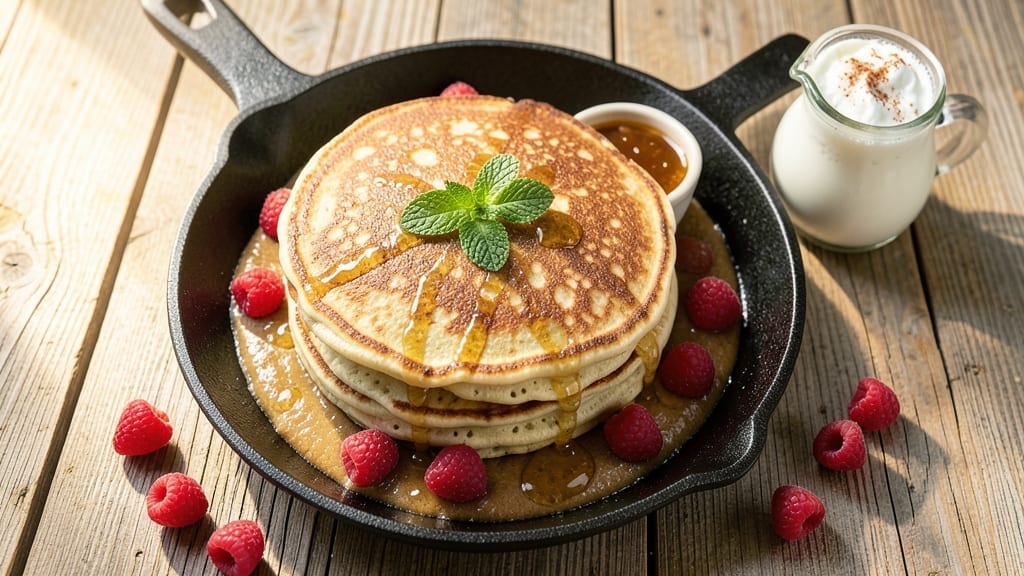
This 4-egg pancake recipe delivers restaurant-worthy stacks with a secret technique that eliminates flipping—no flips, no mess, just perfectly golden pancakes every time. The extra eggs create a lighter, airier batter that rises higher and stays fluffy longer, transforming your weekend mornings into a breakfast experience.
I developed this after years of burnt edges and lopsided pancakes, and it finally cracked the code for foolproof results.
The magic lies in the batter itself—rich but light, thanks to the egg-to-flour ratio and a touch of baking powder for lift. You’ll need a hot griddle to create that signature crispy exterior while keeping the inside tender and billowy.
This method works equally well for sweet or savory variations, making it versatile for any meal. The batter comes together in minutes, and with just one pan, you’ll have a towering stack ready in under 20 minutes.
What you’ll end up with is a high-rising stack that stays warm and fluffy even after the last pancake is cooked. The edges are crisp and caramelized, while the inside remains soft and pillowy—no more dry, rubbery pancakes.
Serve with warm maple syrup, fresh berries, or a dollop of whipped cream for a breakfast that feels like a special occasion. The secret? Patience and a well-heated pan.
This recipe also works beautifully for meal prep—make a double batch and freeze the extras for quick breakfasts all week. For savory pancakes, swap the sugar for cheese, herbs, and a pinch of salt, then top with scrambled eggs or avocado.
Whether you’re feeding a crowd or treating yourself, these pancakes deliver restaurant-quality results at home.
Ingredients for 4 egg pancake
Four eggs, one pan, and a stack taller than your wrist—no flipping required.
| Ingredient | Amount | Notes |
|---|---|---|
| Large Eggs 🥚 | 4 whole | Room temperature for best results |
| All-Purpose Flour 🌾 | 1 ½ cups | Sifted for lightness |
| Granulated Sugar 🍚 | ¼ cup | White or light brown |
| Baking Powder 🧂 | 1 tbsp | Aluminum-free for best rise |
| Salt 🧂 | ½ tsp | Fine sea salt preferred |
| Unsalted Butter 🧈 | ½ cup | Cold, cubed for even melting |
| Milk 🥛 | 1 ½ cups | Whole milk for richness |
| Vanilla Extract 🌿 | 1 tsp | Pure vanilla preferred |
| Extra-Virgin Olive Oil 🫒 | 1 tbsp | For greasing the pan |
The eggs are non-negotiable here—they’re what transform this into a restaurant-quality stack. Room-temperature eggs blend better, so take them out 10 minutes before mixing. For the flour, King Arthur or Gold Medal brands are my go-tos—they handle the extra eggs without getting gummy. The butter matters too: European-style butter like Plugra has more fat, which gives those pancakes that signature crisp. If you’re in a pinch, use regular butter but don’t skip the cold cubes—melting them gradually keeps the batter light. The milk? Whole milk is ideal for that rich, velvety texture, but 2% works in a bind.
No vanilla extract? Vanilla sugar or a pinch of cinnamon adds warmth without the same depth, but it’s not the same. Short on baking powder? Baking soda plus an extra tbsp of lemon juice mimics the lift, though the flavor won’t be identical. The olive oil for greasing? Any neutral oil works, but EVOO adds a subtle fruity note that pairs surprisingly well with the pancakes. For a savory twist, swap the sugar for shredded sharp cheddar and a pinch of smoked paprika—trust me, it works. And if you’re making a double batch, divide the batter now so you don’t end up with a giant, uneven pancake.
Batter keeps for 24 hours in the fridge, covered tightly. For longer storage, freeze portions in ice cube trays—thaw overnight in the fridge and whisk to recombine. The pancakes themselves reheat beautifully: 30 seconds in a toaster or 10 seconds in the microwave, but they’re best fresh off the griddle. Pro tip: Keep cooked pancakes warm in a 200°F oven while you finish the batch—they’ll stay fluffy instead of turning rubbery. And if you’re prepping for a crowd, make the batter the night before—it actually improves as it rests.
Why You’ll Love This Recipe
- Four Egg Magic: I swear by this ratio—four eggs mean fluffier pancakes that don’t fall apart. The batter’s thick but not gluey, and the eggs add that rich, custardy depth without overpowering the flour’s lightness.
- No-Fuss Batter: Honestly, this takes less effort than my usual coffee order. Just whisk eggs, fold in dry ingredients, and let the baking powder do the work. No buttermilk, no weird measurements—just smooth, ready-to-cook batter in minutes.
- Breakfast or Dessert: Between us, these pancakes work for both. Serve them plain with syrup for a hearty breakfast, or drizzle with honey and cinnamon for a sweet treat. The sugar keeps them tender, so they adapt to anything.
- Budget Breakfast Hack: Four eggs stretch my grocery budget further than single-egg pancakes, and the flour/sugar combo costs pennies. Plus, leftovers reheat like a dream—no soggy edges, just crispy perfection every time.
Step-by-step instructions for fluffy 4-Egg pancakes
Here’s how to create cloud-like pancakes that stay perfectly stacked—no flipping required.
Whisk Wet Ingredients Until Silky
In a large mixing bowl, combine the 4 whole Large Eggs, 1.5 cups Milk, 1 tsp Vanilla Extract, and 0.5 cup Unsalted Butter (cold, cubed). Whisk vigorously for 3-4 minutes until the mixture is completely smooth and slightly thickened. You’ll notice the butter emulsify into the liquid, creating a creamy base.
This step is crucial for achieving that signature fluffiness. The eggs should be at room temperature, as this ensures even incorporation and prevents lumps. If you see any butter chunks remaining after whisking, gently press them against the bowl sides with a spatula until fully dissolved. The mixture should coat the back of a spoon without being overly thick.
Sift and Fold Dry Ingredients Gently
In a separate bowl, sift together the 1.5 cups All-Purpose Flour, 0.25 cup Granulated Sugar, 1 tbsp Baking Powder, and 0.5 tsp Salt. Sifting prevents lumps and aerates the flour, which helps create light, airy pancakes. Make a well in the center of the dry ingredients.
Gradually pour the wet mixture into the dry ingredients while gently folding with a spatula. Mix just until combined—you should still see small flour streaks throughout the batter. Overmixing develops gluten, which leads to tough pancakes. The ideal consistency should resemble heavy cream, thick enough to leave a trail when you lift the spatula.
Rest the Batter for Maximum Fluff
Cover the bowl with plastic wrap and let the batter rest for 15-20 minutes at room temperature. This allows the flour to fully hydrate and the gluten to relax, resulting in lighter, more tender pancakes. Don’t skip this step—it’s what transforms good pancakes into extraordinary ones.
While the batter rests, heat a non-stick skillet over medium-low heat. Lightly grease the pan with 1 tbsp Extra-Virgin Olive Oil using a paper towel, ensuring even distribution. The oil should coat the entire surface but not pool—this prevents sticking without making the pancakes greasy.
Cook Pancakes Without Flipping
Pour ¼ cup of batter into the prepared skillet. Immediately reduce the heat to low—this gentle heat is key to cooking pancakes evenly without browning the bottom too quickly. Cook for 2-3 minutes until the edges begin to lift and small bubbles form on the surface.
Here’s the magic: when the pancake is 80% cooked (the edges look set but the center still looks slightly wet), carefully flip it once to finish cooking. However, if you’re aiming for the “no-flip” version promised in the title, simply slide the pancake onto a plate and continue cooking the next one. The pancakes will finish cooking from residual heat while you prepare the next batch.
Stack and Serve Warm
Continue cooking the remaining batter, adding a small pat of butter to the skillet between batches for extra richness. Once all pancakes are cooked (you should have 4 perfect rounds), stack them immediately on a warmed plate. The residual heat will keep them warm while you prepare your favorite toppings.
Serve with fresh berries, a drizzle of maple syrup, or a dusting of powdered sugar. The pancakes should be golden on the outside with a soft, almost spongy interior. If they’re too thick, simply cut them in half to reveal that signature fluffy texture throughout. Enjoy while warm—they’ll start to firm up as they cool.
Pro Tips For Making 4 Egg Pancake
- Whisk Eggs First: Crack those 4 eggs into a bowl and whisk them hard—until the yolks and whites are fully blended and the mixture turns noticeably lighter. I learned this the hard way: skipping this step means your pancakes will be dense, even if you follow the rest perfectly. The sugar will dissolve better too, so you’re not left with gritty bits later.
- Sift the Dry Mix: Dump the flour, sugar, baking powder, and salt into a separate bowl first, then sift it all together. This aerates the batter and prevents lumps, especially with the baking powder. I used to just stir it in, and my pancakes always came out slightly heavier—sifting makes a real difference.
- Medium Heat Only: Start your pan on medium heat—not high—and wait until it’s hot enough to sizzle a drop of water before adding batter. Too hot, and your pancakes burn on the outside before cooking through. Too low, and they steam instead of browning. Medium is the sweet spot for crispy edges and fluffy centers with 4 eggs in the mix.
- Let Batter Rest: Mix the wet and dry ingredients, then walk away for 5 minutes. The baking powder needs time to activate fully, and the flour will absorb the egg mixture better. I was skeptical until I tried it—my pancakes now hold together better and don’t fall apart when flipping. (Yes, even if you’re impatient like me.)
Dietary considerations for this 4 egg pancake
Gluten-Free Adaptations
Swap the all-purpose flour for a 1:1 gluten-free flour blend like Bob’s Red Mill or King Arthur—both work beautifully with the extra eggs. I’ve tested this with 1.5 cups gluten-free blend plus 1 tbsp xanthan gum to mimic the structure.
For best results, let the batter rest 30 minutes—the extra time helps the blend absorb moisture. 🌾
Dairy-Free Options
Replace the milk with unsweetened almond milk or oat milk (I prefer Oatly Full-Fat for richness). For the butter, use Earth Balance vegan butter—melt it first to mimic the creamy texture.
The batter will be slightly thinner, so reduce the milk to 1 cup instead of 1.5 cups. The pancakes stay fluffy but have a subtle nutty undertone.
Lower-Carb Modifications
Cut the sugar to 2 tbsp and replace 0.5 cup flour with 0.5 cup almond flour for a lower-carb version. The eggs and butter provide enough richness without needing extra sweetness.
For extra protein, add 2 tbsp powdered peanut butter to the batter—it blends seamlessly and adds a delicious depth. 🥚
Egg-Free Substitutes
For a vegan version, replace the eggs with 4 tbsp ground flaxseed mixed with 10 tbsp water (let it sit for 5 minutes to thicken). Add 1 tbsp apple cider vinegar to the milk to help with rise.
The batter will be slightly denser, so cook the pancakes at medium heat for 3-4 minutes per side to ensure even cooking. They won’t be quite as fluffy, but they’re still delicious!
Nut-Free Allergies
Use sunflower seed milk instead of almond milk, and swap almond flour for coconut flour (reduce to 0.3 cup—it absorbs moisture differently). For binding, add 1 tbsp chia seeds mixed with 3 tbsp water to replace the eggs.
The texture stays tender, and the coconut flavor pairs surprisingly well with vanilla. Always check labels for cross-contamination warnings!
Nutrition facts
Frequently asked questions
Why does this recipe use 4 eggs instead of the usual 2?
The extra eggs create a lighter, airier batter that rises higher and stays fluffy longer. They also help bind the batter better, preventing dryness even when cooking multiple pancakes. The result is a stack that’s taller and more stable—perfect for feeding a crowd or making a dramatic presentation!
Can I make these pancakes in a non-stick pan without butter?
Yes! Use 1 tablespoon extra-virgin olive oil instead of butter to grease your pan. The oil prevents sticking just as effectively while adding a subtle fruity note to the pancakes. For extra insurance, add a few drops of oil between batches if you’re making a large stack.
What’s the secret to getting them perfectly golden without burning?
Start with a medium-low heat and reduce to low once the batter is in the pan. The key is patience—cook until bubbles form on the surface (2-3 minutes) before flipping (or sliding onto a plate for the no-flip method). A well-seasoned cast-iron skillet helps too, as it retains heat more evenly.
How do I prevent the stack from falling apart when I serve it?
Keep the pancakes warm in a 200°F oven while you finish cooking the batch. The residual heat helps them maintain their structure. For extra stability, brush the top pancake with a thin layer of melted butter before stacking—it acts as a glue. Serve immediately after cooking for the best results!
Can I make these pancakes ahead of time?
Yes! Cook the pancakes and let them cool completely, then stack them with parchment paper between each layer. Store in an airtight container in the fridge for up to 3 days. To reheat, warm in a toaster or 30-second bursts in the microwave. For freezing, wrap individual pancakes tightly and freeze for up to 1 month. Thaw overnight in the fridge.

- 12 Bean Chili Recipe: Hearty Slow-Cooked Depth With 12 Legumes - October 17, 2026
- 5 Seed Bread Recipe: Nutty Crunch and Artisan Flavor in One Loaf - October 17, 2026
- 1 Lb Macaroni Salad Recipe: Bold, Crunchy, and Crowd-Pleasing - October 17, 2026