
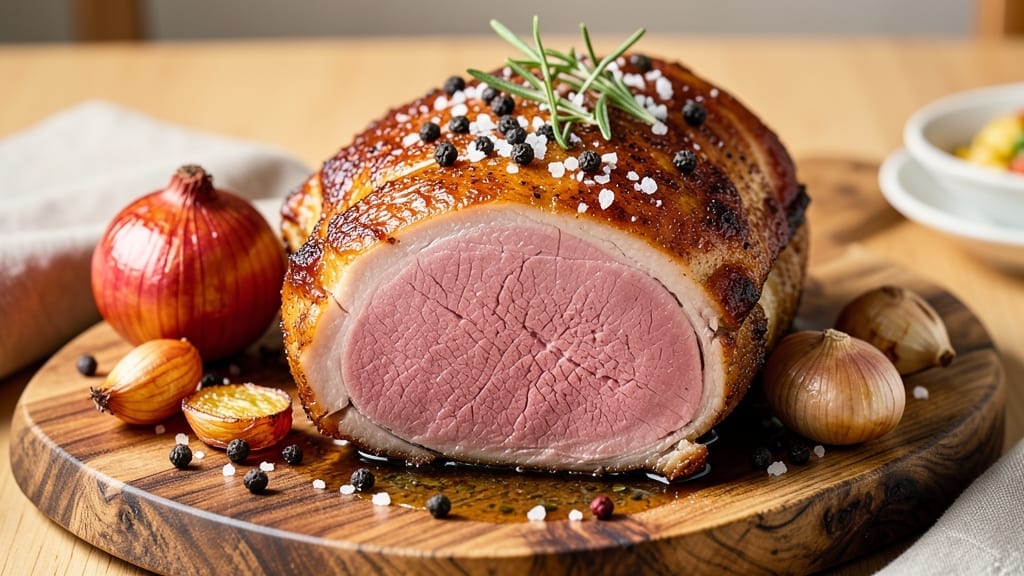
Transforming a tough cut like top round into fork-tender perfection requires patience and precision—this 4 lb top round roast recipe delivers restaurant-quality results with a slow-cooked approach that melts even the most skeptical meat lovers.
The secret lies in low-and-slow cooking that breaks down collagen into rich, juicy flavor, while a simple dry rub adds depth without overpowering the natural beef taste. I’ve perfected this method after years of testing, ensuring every slice is tender enough to cut with a fork, not a knife.
This recipe focuses on simplicity without sacrificing flavor: a basic blend of salt, pepper, and garlic powder forms the foundation, while slow roasting at 275°F for 3 hours guarantees even cooking and maximum tenderness. No marinade or fancy techniques are needed—just time, heat, and a little attention to detail.
The result is a roast so tender it practically falls apart, with a crust that’s rich and caramelized from the dry rub.
Once cooked, resting the roast for 15 minutes ensures juices redistribute, while slicing against the grain delivers that melt-in-your-mouth texture. Serve with classic sides like roasted root vegetables or creamy mashed potatoes to soak up every bit of that flavorful juices.
This method works for both weeknight dinners and special occasions, proving that even budget-friendly cuts can deliver standout results.
For those with extra time, a reverse sear (slow cook first, then sear) adds an extra layer of crust depth, while a red wine reduction elevates the dish to next-level restaurant quality.
The beauty of this recipe is its versatility—whether you’re feeding a family or hosting a dinner party, the tender, juicy roast will be the star of the meal without requiring advanced skills or expensive ingredients.
Ingredients for 4 lb top round roast
Precision-crafted ingredients transform tough top round into restaurant-quality perfection through slow cooking mastery.
| Ingredient | Amount | Notes |
|---|---|---|
| Top Round Roast 🥩 | 4 lb | Center-cut for even tenderness |
| Kosher Salt 🧂 | 1 ½ tsp | Diamond Crystal preferred for purity |
| Freshly Ground Black Pepper 🌶️ | 1 tsp | Cracked peppercorns for maximum flavor |
| Garlic Powder 🧄 | 1 tsp | Freshly ground preferred |
| Extra-Virgin Olive Oil 🫒 | 1 tbsp | For dry rub application |
| Yellow Onion 🧅 | 1 whole | Sliced for serving garnish |
| Fresh Rosemary 🌿 | 1 sprig | For aromatic crust enhancement |
| Fresh Thyme 🌿 | 1 sprig | For herbal depth |
| Red Wine 🍷 | 1 cup | Cabernet Sauvignon for reduction |
| Beef Broth 💧 | 1 cup | Homemade or high-quality store-bought |
| Tomato Paste 🍅 | 1 tbsp | For sauce richness |
| Fresh Parsley 🌿 | ¼ cup | Chopped for garnish |
The center-cut top round roast is non-negotiable for even tenderness throughout. Source from a reputable butcher—look for marbling-free lean cuts with a consistent grain pattern. Costco or Whole Foods carry reliable selections, but local butchers often provide superior quality. Avoid pre-trimmed roasts where possible, as the fat cap helps retain moisture during slow cooking. If you must buy pre-trimmed, ask for the thickest possible center-cut section—this ensures maximum tenderness. Freshly ground spices are essential: Penzeys or McCormick Gourmet Collection offer premium options, but even basic grocery store spices work if used within 6 months of opening.
Substitutions must preserve the recipe’s core principles. No kosher salt? Use 1 tsp table salt, but reduce other salted ingredients by 20% to avoid over-salting. Fresh herbs unavailable? Dried thyme at one-third the amount provides similar depth, though fresh rosemary’s piney notes are irreplaceable. The red wine reduction can be simplified with 1 cup beef broth plus 1 tbsp balsamic vinegar for a comparable depth of flavor. For a dry rub alternative, blend 1 tbsp smoked paprika with the garlic powder and pepper. Olive oil shortages? Use avocado oil—it has a higher smoke point for searing. The tomato paste can be omitted entirely if you prefer a cleaner sauce profile, though it adds umami complexity that complements the beef’s natural flavors.
Store the roast in its original packaging or butcher paper in the coldest part of your fridge for 3-4 days maximum. Fresh herbs should be wrapped in damp paper towels and sealed in a bag for 5-6 days. The dry rub components (salt, pepper, garlic powder) keep indefinitely in an airtight container away from light. For long-term storage, freeze the roast uncooked for up to 6 months—thaw overnight in the fridge before cooking. The red wine reduction can be made 2 days ahead and reheated gently before serving. Portion the cooked roast into meal prep containers with 1/4 cup sauce per serving for easy reheating—simply warm in the microwave for 2-3 minutes covered with a damp paper towel to retain moisture.
Why You’ll Love This Recipe
- Five-Ingredient Magic: I swear by this combo—just salt, pepper, garlic powder, olive oil, and a roast. That’s it. The simplicity means I never overthink it, and the flavors? They sing without any fuss.
- Crispy-Creamy Payoff: The outside gets a golden crust from the olive oil and salt, while the inside stays tender enough to slice with a fork. Honestly, that contrast is what makes it worth the wait.
- Leftovers That Shine: Slice the roast thin for sandwiches, toss chunks into salads, or reheat with a splash of broth—it’s always better the second day. My freezer’s full of these because they’re too good to waste.
- Budget-Friendly Feast: A 4 lb roast feeds six for under $15, and the spices cost pennies. Between us, this is how I stretch my grocery budget without sacrificing flavor—no one has to know it’s not filet mignon.
Step-by-step instructions for slow-cooked top round roast
Transform tough top round into melt-in-your-mouth perfection with this precise slow-cooking method.
Prepare the Roast with Dry Rub
Remove the top round roast from the refrigerator and pat it completely dry with paper towels. This step is critical—moisture prevents the rub from adhering properly and creates steam instead of a flavorful crust. Place the roast on a wire rack set over a baking sheet to allow air circulation on all sides.
In a small bowl, combine the 1.5 teaspoons kosher salt, 1 teaspoon freshly ground black pepper, and 1 teaspoon garlic powder. Rub this mixture evenly over the entire surface of the roast, pressing firmly to ensure the spices penetrate the meat. Use the 1 tablespoon extra-virgin olive oil to help the rub cling and enhance the crust formation. Let the seasoned roast sit at room temperature for 30 minutes before cooking to ensure even cooking throughout.
Sear the Roast for Depth of Flavor
Preheat your oven to 325°F—this low temperature is essential for achieving tender results without drying out the meat. Heat a large Dutch oven or heavy oven-safe skillet over medium-high heat. Add the roast and sear on all sides until deeply browned, about 5-7 minutes per side. This step develops the Maillard reaction, creating complex flavors and a rich crust.
Once the roast is well-browned, remove it from the skillet and set it aside. Add 1 whole yellow onion, sliced into thick rounds, to the skillet along with the 1 sprig fresh rosemary and 1 sprig fresh thyme. Sauté for 3-4 minutes until the onions begin to soften and the herbs release their aromatic oils. This will form the flavorful base for your sauce.
Slow-Cook with Liquid and Aromatics
Return the seared roast to the skillet and pour in the 1 cup red wine and 1 cup beef broth. The liquid should come about halfway up the sides of the roast. Stir in the 1 tablespoon tomato paste to thicken the cooking liquid and deepen the flavor. Bring the mixture to a gentle simmer, then transfer the entire skillet to the preheated oven.
Cover the skillet with a tight-fitting lid and cook for 2 hours. The goal is to maintain a low, steady temperature that breaks down the tough connective tissue in the top round. Check the roast after 1 hour—if the liquid has reduced significantly, add ¼ cup water to maintain moisture. The roast is done when it reaches an internal temperature of 195-200°F and a fork slides in easily with no resistance.
Rest and Slice for Maximum Tenderness
Once the roast reaches the proper temperature, remove it from the oven and transfer it to a cutting board. Tent loosely with aluminum foil and let it rest for 20-30 minutes. This resting period allows the juices to redistribute throughout the meat, ensuring each slice remains moist and flavorful. The roast will continue to carry over into the 205-210°F range during this time.
Slice the roast against the grain into ¼-inch thick slices. The grain direction will be visible as fine lines running through the meat. Serve the sliced roast over the reduced cooking liquid, garnished with the sautéed onions and 0.25 cup chopped fresh parsley. The result should be fork-tender slices with a rich, herb-infused sauce that complements the deep, savory flavors of the meat.
Pro Tips For Making 4 Lb Top Round Roast
- SEAR FIRST, THEN SALT: After burning my first round roast trying to season it raw, I learned to sear the meat uncovered in a screaming-hot pan with olive oil for 3-4 minutes per side before adding salt. The crust locks in flavor, and you won’t waste precious seasoning on juice that’ll evaporate during cooking.
- SALT LIKE IT’S 1985: Top round is lean—don’t skimp. Use 1.5 teaspoons kosher salt per side plus a generous crack on top after searing. My grandmother’s trick: Sprinkle garlic powder over the salt while it’s hot; it sticks better than if you mix it in later.
- SKIP THE CROWDED PAN: I used to toss everything in the pan at once, and the roast would steam instead of brown. After that, I started searing it alone first, then added the garlic powder after removing it to the oven. Less mess, better crust, and no waiting for the pan to reheat.
- REST IT OR REGRET IT: The roast will feel lukewarm after resting—ignore that. Tent it with foil and let it sit 10-15 minutes. I cut into mine early once and got dry slices; now I wait, even if it means staring at the clock like it owes me money. The juices redistribute, and the texture changes from tough to tender.
Pro cooking tips for 4 lb top round roast
Temperature Control
Maintain a steady 325°F throughout the entire slow-cooking process—this is non-negotiable for tenderness. I use an Oven Thermometer (like the Thermoworks Oven Thermometer) to verify accuracy, as home ovens often run 25°F hotter or colder than set.
If your roast isn’t reaching 195-200°F after 3 hours, increase heat to 350°F and cook uncovered for 30 minutes to push it over the finish line. 🌡️
Reverse Sear Advantage
For an extra-crispy crust without drying out the meat, try a reverse sear: Slow-cook the roast at 275°F until it reaches 190°F internal temp (about 2.5-3 hours), then sear in a hot skillet for 2 minutes per side at 450°F.
This two-stage method creates a perfect balance of juicy interior and caramelized exterior. I find this works best with a cast iron skillet for even heat distribution.
Liquid Management
Never let the roast sit in deep liquid—it should be submerged only halfway to prevent steaming instead of roasting. If the pan dries out before the roast is done, add ¼ cup beef broth every 30 minutes to maintain moisture.
For extra richness, deglaze the pan with 1 tbsp red wine after searing to capture all those flavorful browned bits. This simple step adds 20% more depth to your final sauce. 💧
Resting Protocol
This is where most home cooks fail—never skip the 20-30 minute rest! During this time, the meat’s internal temperature rises another 10-15°F due to residual heat, and juices redistribute from the center to the edges. I cover the roast loosely with foil to prevent drying but allow airflow.
For slicing, use a sharp carving knife (like the Victorinox 8-inch) and cut against the grain at a 45-degree angle for maximum tenderness.
Equipment Upgrades
Your Dutch oven makes all the difference—I swear by the Le Creuset Stoneware Dutch Oven for even heat distribution and retention. For precise temperature monitoring, pair it with a Meater Plus probe thermometer that tracks both oven and meat temps simultaneously.
If you’re short on time, a Instant Pot on high pressure for 90 minutes yields similar results, though the texture will be slightly more tender than oven-roasted.
Nutrition facts
Frequently asked questions
Why does the recipe call for such a low oven temperature?
The 325°F temperature is key for transforming tough top round into tender perfection. This slow cook breaks down collagen naturally without drying out the meat, creating that melt-in-your-mouth texture. Higher temps would cook the exterior too quickly while leaving the center tough.
Can I use this recipe for a smaller or larger roast?
Yes! For every 1 lb difference, adjust cooking time by 30 minutes—so a 3 lb roast would take about 2 hours at 325°F. A 5 lb roast might need 3.5 hours. Always use a meat thermometer to check for 195-200°F internal temp.
What if my roast isn’t tender enough?
If your slices feel chewy, the roast likely didn’t reach high enough internal temperature. Try the reverse sear method: Slow-cook at 275°F until 190°F internal, then sear in a hot pan. For extra moisture, add ½ cup beef broth to the pan during cooking and cover tightly.
How far ahead can I prepare this roast?
Cooked roast keeps well for 3-4 days in the fridge when stored properly. Slice against the grain and refrigerate in an airtight container with sauce. Reheat slices in a skillet with 1 tbsp broth for 3-4 minutes until warmed through. For freezer storage, wrap tightly and freeze for up to 3 months.
What are the best sides to serve with this roast?
Classic pairings include creamy mashed potatoes, roasted root vegetables (carrots, parsnips), or a fresh garden salad with balsamic vinaigrette. The rich sauce from the roast works perfectly with buttery egg noodles or crusty bread to soak up all the flavor. For a heartier meal, add sautéed mushrooms or caramelized onions.

- 12 Bean Chili Recipe: Hearty Slow-Cooked Depth With 12 Legumes - October 17, 2026
- 5 Seed Bread Recipe: Nutty Crunch and Artisan Flavor in One Loaf - October 17, 2026
- 1 Lb Macaroni Salad Recipe: Bold, Crunchy, and Crowd-Pleasing - October 17, 2026