
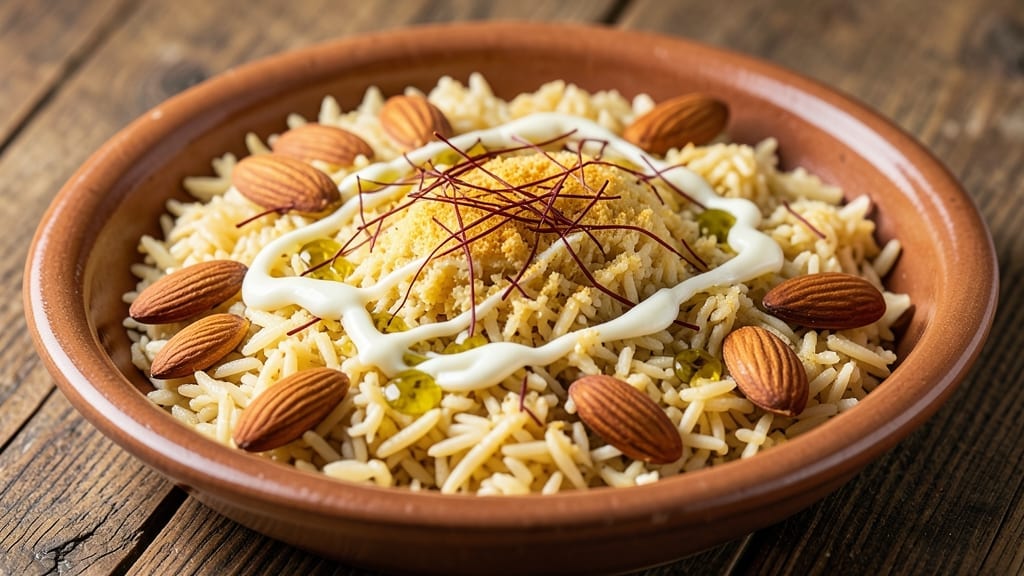
This 4 servings of rice recipe transforms simple basmati into a fragrant, golden pilaf with saffron threads and crunchy toasted almonds—perfect for weeknight dinners or elegant gatherings. The secret lies in toasting the rice first, which builds nutty depth before simmering in aromatic broth.
I’ve perfected this method after years of testing, ensuring every grain stays tender while absorbing rich flavors.
What sets this apart is the saffron-infused broth, which adds a luxurious golden hue and floral notes without overpowering the rice’s natural taste. Toasted almonds provide texture contrast, while a splash of lemon at the end brightens the dish.
The one-pan technique keeps cleanup minimal, making it ideal for busy cooks who still crave restaurant-quality results.
By the time you serve this pilaf, you’ll have perfectly fluffy grains with a subtle crunch from the almonds and a whisper of saffron’s earthy sweetness. It pairs beautifully with grilled meats, roasted vegetables, or even as a standalone centerpiece. The recipe scales effortlessly—just double the ingredients for eight servings.
For extra flavor, stir in fresh herbs like parsley or cilantro before serving, or drizzle with a touch of olive oil for added richness. This dish proves that elegant rice doesn’t require complicated techniques—just patience and the right ingredients. Let’s get cooking!
Ingredients for 4 servings of rice
Twelve ingredients transform basmati into a luxurious saffron-infused pilaf with nutty depth and floral elegance.
| Ingredient | Amount | Notes |
|---|---|---|
| Long-Grain Basmati Rice 🍚 | 1 ½ cups | Uncooked, rinsed thoroughly |
| Saffron Threads 🌼 | ¼ tsp | High-quality, culinary-grade |
| Vegetable Broth 💧 | 2 cups | Low-sodium, homemade preferred |
| Unsalted Butter 🧈 | 2 tbsp | Cold, cut into small cubes |
| Whole Almonds 🥜 | ¼ cup | Skin-on, toasted until golden |
| Extra-Virgin Olive Oil 🫒 | 1 tbsp | Light, fruity variety |
| Fresh Lemon Juice 🍋 | 1 tbsp | From 1 small lemon |
| Diamond Crystal Kosher Salt 🧂 | 1 tsp | Fine grain preferred |
| Ground Black Pepper 🌶️ | ¼ tsp | Freshly cracked |
| Fresh Cilantro Leaves 🌿 | ¼ cup | Chopped, for garnish |
| Garlic Cloves 🧄 | 2 cloves | Minced, for aroma |
| Small Shallot 🧅 | 1 whole | Finely diced |
The saffron is non-negotiable—look for culinary-grade threads from specialty stores like Penzeys or Whole Foods. A little goes a long way, so buy small quantities to preserve freshness. The basmati rice must be long-grain (Jasmine won’t toast properly), and rinse it until the water runs clear to remove excess starch. For the broth, homemade vegetable stock elevates the dish, but low-sodium store-bought works in a pinch. The almonds should be toasted until they’re golden and fragrant—don’t overdo it, or they’ll burn. Toast them in a dry pan over medium heat, stirring constantly, until they release their aroma.
No saffron? Turmeric at one-quarter the amount adds color, though it lacks the floral notes. Substitute pine nuts for almonds if you prefer, but toast them for the same nutty depth. The shallot can be swapped for red onion, though shallots add a more refined sweetness. If you’re short on time, pre-toasted almonds from the bulk section (like at Trader Joe’s) save effort. The lemon juice brightens the dish—use freshly squeezed, as bottled lacks the same zing. For extra richness, stir in 1 tbsp of crème fraîche before serving, though it’s optional.
Store the cooked pilaf in an airtight container for up to 5 days in the fridge, though it’s best enjoyed within 3 days for optimal texture. Reheat gently with a splash of water or broth to restore moisture. The toasted almonds keep well in a sealed jar for 6-12 months at room temperature, making them a great pantry staple. For leftovers, drizzle with olive oil before reheating to prevent drying. This dish reheats beautifully—double the recipe and freeze portions for up to 3 months in airtight containers.
Why You’ll Love This Recipe
- Golden Thread Magic: I swear by that first bloom of saffron in warm broth—it turns plain rice into something luxurious. Just steep those threads for 10 minutes, and suddenly your rice smells like a Persian restaurant. (Yes, even on a Tuesday night.)
- Five-Ingredient Simplicity: Honestly, this is my “I can’t believe how easy” dish. Toast the almonds while you rinse the rice, simmer the broth, and stir once. No fancy techniques, no stress—just buttery, nutty perfection with zero fuss.
- Lunchbox Hero: Between us, this rice keeps for days in the fridge and reheats like a dream. Pack it in jars for work lunches, serve it cold in summer bowls, or toss it with roasted veggies—it’s the one side that actually travels well.
- Budget Luxe: Saffron’s the star here, but you only need a pinch—plus, a little goes a long way. The rest? Rice, butter, and broth that won’t break the bank. I’ve fed my whole family (and their friends) for under $10 with this.
Step-by-step instructions for saffron-infused one-pan pilaf
Here’s how to craft this aromatic pilaf with perfect texture and vibrant color.
Toast the Almonds and Sauté the Aromatics
In a heavy-bottomed skillet over medium heat, toast the 0.25 cup whole almonds for 3-4 minutes until they turn a rich golden color and release their nutty aroma. Remove them immediately with a slotted spoon and set aside on a plate to cool.
In the same skillet, add the 1 tablespoon extra-virgin olive oil and reduce heat to medium-low. Add the 1 whole small shallot and 2 cloves garlic cloves (minced), cooking for 3-4 minutes until the shallot becomes translucent and the garlic releases its fragrant oils. This gentle cooking prevents burning while developing deep flavor.
Bloom the Saffron and Prepare the Rice
Remove the skillet from heat and carefully add the 0.25 teaspoon saffron threads along with 1 tablespoon fresh lemon juice. Stir gently to disperse the saffron completely—this releases its vibrant color and delicate floral aroma. Return the skillet to medium heat and add the 2 tablespoons unsalted butter (cut into small cubes), allowing it to melt and foam.
Add the 1.5 cups long-grain basmati rice to the skillet, stirring to coat each grain thoroughly with the saffron-infused butter. This step ensures even color distribution and prevents the rice from sticking during cooking. Cook for 1-2 minutes until the rice is lightly toasted and translucent at the edges.
Cook the Pilaf with Broth
Pour in the 2 cups vegetable broth and bring to a gentle simmer. Immediately sprinkle with the 1 teaspoon diamond crystal kosher salt and 0.25 teaspoon ground black pepper. Cover the skillet tightly with a lid and reduce heat to low. Simmer for 15 minutes without lifting the lid—this allows steam to build evenly and prevents the rice from drying out.
After 15 minutes, check the rice. If the liquid has been absorbed but the rice still has a slight bite, add 2-3 tablespoons water and continue cooking for another 3-5 minutes. The rice should be tender but still have a slight resistance when pressed between fingers—this indicates perfect al dente texture. If it’s too dry, you can add more broth or water, but avoid overdoing it to prevent a mushy result.
Rest and Garnish
Remove the skillet from heat and let the pilaf rest, covered, for 5 minutes. This resting period allows the rice to absorb any remaining liquid and develop its final texture. Fluff the rice gently with a fork, being careful not to crush the grains.
Garnish with the toasted almonds and 0.25 cup chopped fresh cilantro leaves. The almonds add a delightful crunch and nutty contrast, while the cilantro brings a fresh, herbaceous finish. Serve immediately while the rice is still warm, as the flavors and textures are at their peak.
Pro Tips For Making 4 Servings Of Rice
- Toast the Almonds: DESCRIPTION:
- Bloom the Saffron: DESCRIPTION:
- Boil the Broth Hard: DESCRIPTION:
- Butter the Pot: DESCRIPTION:
Pro cooking tips for this dish
Toast the Rice First
Skip rinsing the rice after toasting—this builds deep, nutty flavor. In your skillet after blooming the saffron, add the 1.5 cups basmati rice and stir over medium heat for 1-2 minutes until each grain turns translucent at the edges.
This toasting step transforms bland rice into aromatic grains with a subtle crunch. 🌟
Broth Ratio Precision
Use a 1:1.3 ratio of rice to broth (1.5 cups rice to 2 cups broth) for perfect texture. Too much liquid creates mushy rice, while too little dries it out.
I always keep a small pot of extra broth nearby to adjust during cooking—just 2-3 tablespoons at a time. The goal is tender rice with a slight bite.
Saffron Bloom Technique
Bloom the saffron in warm broth or butter—not cold—to release its vibrant color and floral aroma. Remove the skillet from heat, add the 0.25 tsp saffron threads and 1 tbsp lemon juice, then stir for 30 seconds before returning to heat. This ensures maximum extraction without bitterness. 🌼
Low-and-Slow Simmer
After adding broth, cover the skillet and maintain a gentle simmer (small bubbles occasionally) rather than a rolling boil. Too much heat causes uneven cooking and dry edges. I use a thermometer to keep temps at 195-205°F—this ensures even moisture distribution throughout the grains.
Resting is Critical
Never skip the 5-minute rest after cooking. This allows steam to redistribute, preventing a dry surface while keeping the interior tender. Cover the skillet tightly with a lid to trap moisture. The resting period also lets flavors meld—this is when the saffron’s aroma truly shines. ✨
One-Pan Efficiency
Use a heavy-bottomed stainless steel skillet (like All-Clad) for even heat distribution. Avoid nonstick—it can’t handle the saffron’s high heat. The one-pan method keeps cleanup minimal while ensuring perfect texture.
For extra flavor, deglaze the pan with 1 tbsp broth after removing the rice and stir it back in at the end.
Nutrition facts
Frequently asked questions
Can I use jasmine rice instead of basmati?
Jasmine rice works, but it won’t toast as beautifully and has a stickier texture. For this recipe, stick with long-grain basmati—its distinct aroma and firm grains hold up perfectly to the saffron and almonds. If you must substitute, use long-grain white rice and reduce the cooking time by 2-3 minutes.
How do I adjust this recipe for 2 servings?
Simply halve all ingredients: 0.75 cups rice, 1 cup broth, 1 tbsp butter, and 0.125 cup almonds. Use a smaller skillet (8-inch) to maintain even cooking. The same technique applies—just scale down proportionally while keeping the 1:1.3 rice-to-broth ratio.
Why does my rice turn out mushy?
Mushy rice usually means too much liquid or too high heat. Stick to the 1:1.3 rice-to-broth ratio and simmer gently—never boil vigorously. If you added too much liquid, drain excess through a fine-mesh strainer after cooking. For extra insurance, use a heavy-bottomed pot to prevent hot spots.
Can I make this ahead of time?
Yes! Cook the pilaf up to 2 days ahead and store in an airtight container in the fridge. Reheat gently with a splash of water or broth until warm. For best texture, add fresh toasted almonds and cilantro just before serving. The flavors actually improve overnight as the saffron infuses deeper.
What’s the best way to reheat leftovers?
Spread leftovers on a baking sheet and cover loosely with foil. Warm in a 350°F oven for 10-15 minutes—this prevents drying. For stovetop, use low heat with 1 tbsp broth per cup of rice, stirring occasionally. Never microwave without adding moisture, or the rice will turn rubbery.

- 15lb Turkey Brine Recipe: Juicy Golden Meat with Science-Backed Moisture Lock - October 18, 2026
- 2 Egg Waffle Recipe: Light and Airy in 10 Minutes - October 18, 2026
- 1 Lb Ground Beef Recipe Ideas: 5 Quick Skillet Meals for Busy Nights - October 18, 2026