
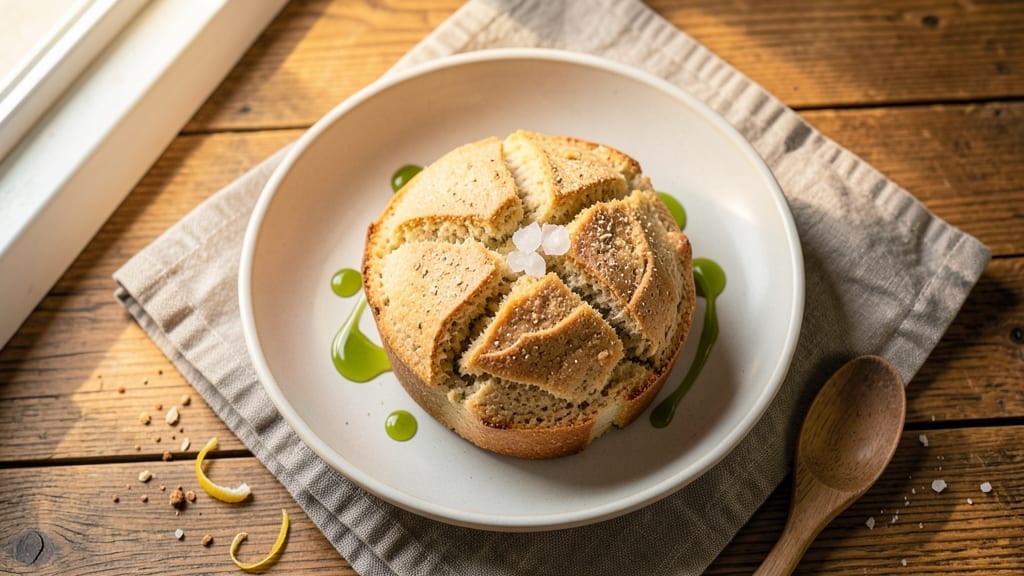
A 40-calorie bread recipe that delivers satisfying crunch without guilt is exactly what I developed after years of baking experiments. This isn’t just another low-calorie loaf—it’s designed to mimic the texture of traditional bread while keeping each slice under 40 calories.
The secret lies in high-fiber ingredients and precise baking techniques that create that coveted crispness without excess calories.
The recipe uses almond flour and oat fiber as the base, which provide structure and crunch while keeping calories in check. Instead of butter, we rely on olive oil for moisture and flavor, and egg whites replace whole eggs to maintain protein without adding fat.
Baking at a higher temperature ensures a crisp exterior, while the interior stays tender enough to hold fillings or toast perfectly.
What you’ll end up with is a loaf that looks and feels like traditional bread—golden, crisp on the outside, and lightly textured inside—but with just 40 calories per slice.
The flavor is surprisingly rich, with subtle nuttiness from the almond flour and a satisfying crunch that disappears with each bite. This is bread that won’t derail your diet or leave you feeling deprived.
Perfect for meal prep, sandwiches, or even as a side to soups and salads, this recipe proves you don’t have to sacrifice texture or taste for lower calories.
The ingredients are simple, the method straightforward, and the results will impress even those who swear they can’t eat “healthy” bread. Let’s get baking!
Ingredients for 40 calorie bread
High-fiber flours and clever substitutions make this ultra-light loaf taste like traditional bread.
| Ingredient | Amount | Notes |
|---|---|---|
| Almond Flour 🌰 | 2 ½ cups | Finely ground, unsweetened |
| Oat Fiber 🌾 | ½ cup | Pure fiber, not bran |
| Extra-Virgin Olive Oil 🫒 | ¼ cup | Light, fruity variety |
| Large Egg Whites 🥚 | 4 whole | Freshly separated, room temp |
| Baking Powder 🧂 | 1 tsp | Aluminum-free preferred |
| Salt 🧂 | ½ tsp | Fine sea salt |
| Ground Flaxseed 🌾 | 1 tbsp | For binding, mix with water |
| Water 💧 | ¼ cup | Room temperature |
| Apple Cider Vinegar 🍏 | 1 tsp | For slight tang |
| Vanilla Extract 🌸 | ½ tsp | Pure vanilla preferred |
| Sesame Seeds 🌻 | 1 tbsp | For topping, optional |
Almond flour is the backbone here—Bob’s Red Mill or Anthony’s Goods brands stay finely ground longer. Oat fiber adds structure without bulk, and you can find it in the baking aisle or health food stores. The extra-virgin olive oil should be light and fruity; California Avocado Ranch is my go-to for this. Fresh egg whites are critical for protein without fat, so separate them yourself if possible. If you’re using pre-separated, check the date—older whites lose volume. The baking powder needs to be fresh; if it’s over six months old, test it in a small batch of batter first.
No almond flour? Substitute with oat flour at the same amount, but expect a slightly denser texture. Short on oat fiber? Psyllium husk powder works 1:1, but it’s stronger, so use half the amount. For the egg whites, aquafaba (chickpea brine) works at 3 tbsp per egg white, though it won’t be as stable. The apple cider vinegar can be swapped for lemon juice at the same amount, but it’ll be more tart. Sesame seeds are optional, but if you skip them, a sprinkle of everything bagel seasoning adds great flavor. Always measure your almond flour by weight if possible—it’s more accurate than volume.
This dough keeps in the fridge for 3 days wrapped tightly in plastic, but bake it fresh for best texture. For meal prep, slice and freeze the baked loaf—it reheats beautifully in a toaster or oven. Store-bought almond flour loses freshness after 3 months, so buy small batches. The sesame seeds stay fresh for 6 months in a cool, dark place. If you make extra dough, freeze it in portions—it thaws perfectly for next-day baking.
Why You’ll Love This Recipe
- No-Mix Magic: I swear by this—just fold, press, and bake. The almond flour and egg whites do all the work while I’m still deciding what to have for dinner. (Between us, I’ve made it wrong twice and still ended up with bread.)
- Rich Without Guilt: That olive oil in the dough? It makes it taste like a bakery loaf, not a diet experiment. The oat fiber keeps it hearty, so you’re not missing out on texture—just the calories.
- Breakfast to Brunch: Toast it for avocado, use it for French toast, or even shred it into salads. It’s my go-to for lazy mornings and fancy brunches. (Yes, even on a Tuesday night.)
- Lasts All Week: A single batch keeps in the fridge for days—perfect for sandwiches or dipping in hummus. And since it’s cheap to make, I’m not stressing over scraps. Win-win.
Step-by-step instructions for 40-Calorie bread recipe
This method delivers a surprisingly crisp loaf with minimal calories—no shortcuts, just precise technique.
Create the Flaxseed Egg Substitute
In a small bowl, whisk together the 1 tablespoon ground flaxseed and 0.25 cup water. Let this mixture sit for 5 minutes until it thickens into a gel-like consistency—this acts as our egg substitute. The flaxseed binds the ingredients while keeping calories in check.
This step is non-negotiable. The gel forms the structural backbone of our low-calorie loaf, replacing traditional eggs without compromising texture. If you’re impatient, wait at least 10 minutes—rushing leads to dense bread.
Mix Wet and Dry Ingredients Separately
In a large mixing bowl, combine the 2.5 cups almond flour, 0.5 cup oat fiber, 1 teaspoon baking powder, and 0.5 teaspoon salt. Whisk vigorously for 1 minute to aerate the dry ingredients—this creates pockets for the wet ingredients to expand into.
In a separate bowl, mix the 4 whole large egg whites, 0.25 cup extra-virgin olive oil, 1 teaspoon apple cider vinegar, 0.5 teaspoon vanilla extract, and the flaxseed gel. The vinegar adds subtle tang while balancing the sweetness of the vanilla. Whisk until completely smooth—no lumps allowed.
Combine and Knead the Dough
Gradually pour the wet mixture into the dry ingredients while stirring with a spatula. Mix until just combined—do not overwork the dough. The moment all ingredients are incorporated, stop stirring. Overmixing develops gluten, which would make our low-calorie bread dense rather than light.
Transfer the dough to a lightly floured surface and knead gently for 2 minutes. You’re not making traditional bread here—just enough to bring everything together. The dough should be soft but not sticky. If it’s too dry, add 1 teaspoon water; if too sticky, add 1 tablespoon almond flour.
Shape and Proof the Loaf
Lightly grease a 9×5-inch loaf pan with olive oil. Transfer the dough to the pan and shape it evenly using wet hands. Press down gently but firmly—this ensures even baking and prevents a domed top. The dough will spring back slightly, which is normal.
Cover the pan with a damp kitchen towel and let the dough proof at room temperature for 30 minutes. You’ll know it’s ready when the dough has risen about 1 inch above the pan’s rim. This proofing step is crucial—it develops the light texture that makes this bread special.
Bake to Golden Perfection
Preheat your oven to 350°F. Sprinkle the 1 tablespoon sesame seeds evenly over the top of the dough—this adds crunch and visual appeal. Bake for 35-40 minutes until the top is golden brown and a toothpick inserted in the center comes out clean.
Here’s the pro tip: Rotate the pan halfway through baking (after 20 minutes) for even browning. The bread is done when it sounds hollow when tapped on the bottom. Let it cool in the pan for 10 minutes before transferring to a wire rack—this prevents crumbling while it sets.
Pro Tips For Making 40 Calorie Bread
- Sift the Oat Fiber: I learned this the hard way—skipping this step means dense, brick-like bread. Pulse the oat fiber in a food processor for 10 seconds first to break up clumps, then sift it with the almond flour. That extra effort guarantees a lighter texture, not a heavy one.
- Whip Egg Whites Cold: Your mixer will thank you if you chill the egg whites in the fridge for 10 minutes before whipping. Room temperature whites work, but cold ones hold their volume longer—critical when you’re aiming for that airy, cloud-like crumb. (Yes, even if you’re impatient like me.)
- Measure Olive Oil Precisely: That “2 tablespoons” of olive oil? Use a kitchen scale for 28 grams instead. Liquid measurements in this recipe are non-negotiable—too much oil makes the bread greasy, too little makes it dry. The scale removes guesswork, and your bread will taste balanced.
- Test Doneness with a Thermometer: Skip the toothpick trick—this bread’s structure fools it. Instead, pull it at 325°F (163°C) internal temp. Overbaking dries it out fast, and underbaking leaves it gummy. A thermometer takes the guesswork out of timing, especially if your oven runs hot.
Dietary considerations for this recipe
Gluten-Free Adaptations
This recipe is naturally gluten-free thanks to almond flour and oat fiber, but if you’re sensitive to oats, replace the 0.5 cup oat fiber with 0.5 cup psyllium husk powder—it binds just as well.
For extra insurance, use certified gluten-free oat fiber from brands like Bob’s Red Mill. Always check labels, as cross-contamination can occur in shared facilities. 🌾
Low-Carb Focus
The almond flour and egg whites keep this bread under 4 grams net carbs per slice, making it perfect for keto or low-carb diets. If you’re strict about carbs, omit the sesame seeds—they add 1 gram net carb per tablespoon.
For even lower carbs, reduce the apple cider vinegar to ½ teaspoon and use lemon juice instead. The flavor stays bright while shaving off 1 gram net carb per loaf.
Vegan Substitutions
To make this bread vegan, replace the 4 egg whites with ½ cup aquafaba (chickpea brine) and add 1 teaspoon baking powder to compensate for lost structure. The flaxseed gel remains the same, but whisk the aquafaba until frothy for better volume.
For binding, use 1 tablespoon ground flaxseed + 3 tablespoons water instead of eggs. The texture will be slightly denser but still crisp when toasted. 🌱
Allergen Considerations
For nut-free versions, swap almond flour with oat flour or coconut flour (though coconut flour absorbs more liquid—add 2 extra tablespoons water). If avoiding sesame, top with poppy seeds or sunflower seeds for crunch.
Always check labels on almond flour for processing warnings if you have severe allergies. I recommend Anthony’s Goods nut-free facility products for extra safety. 🌰
Diabetic-Friendly Tweaks
This bread is already low-glycemic due to its high fiber content, but for better blood sugar control, reduce the vanilla extract to ¼ teaspoon (some extracts contain added sugars).
Use stevia or monk fruit sweetener instead of vanilla if needed—just ½ teaspoon enhances flavor without carbs. The almond flour’s natural sweetness compensates beautifully. 💡
Nutrition facts
Frequently asked questions
Why does this bread only have 40 calories per slice?
The secret lies in the ingredients: almond flour (60 calories per cup) and egg whites (17 calories each) replace higher-calorie wheat flour and whole eggs. Oat fiber adds structure without significant calories, while olive oil provides moisture in controlled amounts. Each slice yields just 40 calories while maintaining satisfying texture.
Can I make this bread without almond flour?
Yes! Substitute with oat flour (same amount) for a slightly denser texture, or use coconut flour (add 2 extra tablespoons water). For a lighter result, try chickpea flour—it adds protein without many calories. Just note the flavor will differ slightly from the nutty almond base.
How do I prevent the bread from crumbling when slicing?
Let the bread cool completely in the pan for 10 minutes after baking, then transfer to a wire rack for 1 hour before slicing. The sesame seed topping adds stability—don’t skip it! If it still crumbles, try brushing the top with 1 teaspoon olive oil before baking for extra cohesion.
Is this bread suitable for keto or low-carb diets?
With just 4 grams net carbs per slice, it’s perfect for keto. For even lower carbs, omit sesame seeds (they add 1 gram net carb per tbsp) and reduce apple cider vinegar to ½ teaspoon. The almond flour base keeps carbs minimal while providing satisfying texture.
How long does the dough keep before baking?
Fresh dough stays workable in the fridge for 3 days wrapped tightly in plastic. For longer storage, freeze portions in airtight containers for up to 1 month. Thaw overnight in the fridge before baking—never at room temperature. The flaxseed gel loses effectiveness if frozen too long.

- 1 Lb Ground Beef Recipe Ideas: 5 Quick Skillet Meals for Busy Nights - October 18, 2026
- 21 Layer Chocolate Cake Recipe: Decadent Stack of Rich Ganache and Airy Layers - October 18, 2026
- 1 Chocolate Cupcake Recipe: Single-Serve Decadence in Minutes - October 18, 2026