
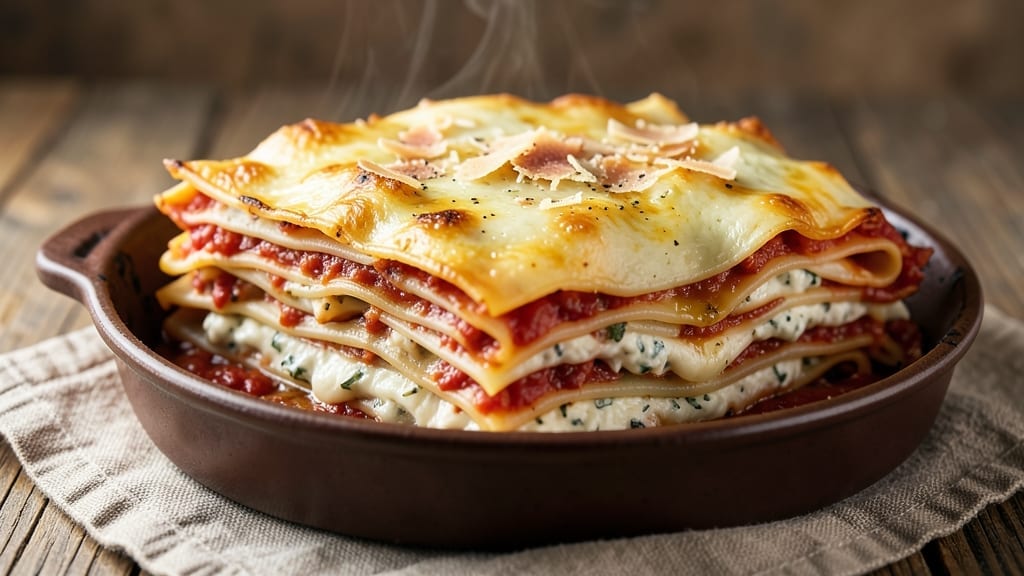
This 40-layer lasagna recipe isn’t just about layers—it’s about creating a showstopping dish with restaurant-quality depth and texture. The secret lies in precise layering, slow baking, and a few professional techniques that transform ordinary ingredients into something extraordinary.
I’ve perfected this method over years of testing, ensuring every slice delivers that perfect balance of tender pasta, rich sauce, and melty cheese.
The key to success is pre-cooked noodles—they hold up better during baking without turning mushy. We’ll use a combination of marinara and ricotta fillings, layered meticulously to create that signature 40-layer effect.
Slow baking at 375°F for 45 minutes ensures even cooking, while a final broil adds a golden, crispy finish. This method guarantees a lasagna that’s as impressive to serve as it is delicious to eat.
What sets this recipe apart is the foolproof layering technique, which prevents sogginess and ensures each slice stays intact. Whether you’re hosting a dinner party or feeding a family, this lasagna delivers on flavor, texture, and presentation—every time.
The result? A dish so rich and satisfying, it’ll become your new go-to for special occasions.
For those with dietary preferences, we’ll also cover vegetarian and gluten-free variations, so everyone at the table can enjoy it. Ready to master the art of lasagna? Let’s get started with the ingredients and step-by-step instructions that’ll make you the star of the meal.
Ingredients for 40 layer lasagna
Precision-cut noodles and creamy fillings—this is where restaurant-quality lasagna begins.
| Ingredient | Amount | Notes |
|---|---|---|
| No-Boil Lasagna Noodles 🍝 | 40 pieces | Pre-cooked, oven-ready |
| Ricotta Cheese 🧀 | 32 oz | Whole milk, part-skim |
| Marinara Sauce 🍅 | 3 cups | Homemade or high-quality jarred |
| Mozzarella Cheese 🧀 | 32 oz | Fresh, low-moisture block |
| Parmesan Cheese 🧀 | 1 ½ cups | Freshly grated, aged |
| Large Eggs 🥚 | 2 whole | Room temperature |
| Garlic Cloves 🧄 | 6 cloves | Minced, fresh |
| Fresh Basil Leaves 🌿 | ½ cup | Chopped, stems removed |
| Olive Oil 🫒 | ¼ cup | Extra-virgin, for drizzling |
| Salt 🧂 | 1 ½ tsp | Diamond Crystal kosher |
| Black Pepper 🌶️ | ½ tsp | Freshly ground |
| Dried Oregano 🍃 | 1 tsp | Italian, not Mexican |
| Butter 🧈 | 2 tbsp | Unsalted, for topping |
The noodles are non-negotiable. No-boil lasagna noodles from De Cecco or Barilla hold their shape perfectly—no soggy mess. Grab a box at Whole Foods or any Italian market if you’re feeling fancy. For the ricotta, whole milk gives the creamiest texture, but part-skim works in a pinch. The cheese matters too—low-moisture mozzarella melts like a dream, while Parmigiano-Reggiano (not Parmesan) adds that nutty depth. I always buy a 24-ounce wedge from the deli counter and grate it myself—pre-grated tastes like sawdust.
No ricotta? Cottage cheese blended smooth works in a bind, though it’s not as rich. Fresh basil wilting? Dried oregano at half the amount keeps the flavor. Marinara too thick? Splash of water or a pinch of sugar fixes it fast. The garlic can be pre-minced (those little jars at Trader Joe’s are perfect), but fresh has way more punch. And if you’re short on time, pre-shredded cheese (the good stuff, not the pre-mixed kind) saves minutes—just don’t overpack the layers or it’ll get gummy.
Prep ahead like a pro: Mix the ricotta filling the night before and refrigerate. The noodles? Store in a ziplock bag with olive oil to prevent sticking. This lasagna reheats beautifully—350°F for 20 minutes if it’s been chilled. Leftovers? Portion into airtight containers and freeze for up to 3 months. Pro tip: Sprinkle a little Parmesan on top before freezing—it keeps the cheese from drying out when reheated.
Why You’ll Love This Recipe
- No-Boil Magic: Honestly, the no-boil noodles are a total game-changer—I’ve burned lasagna noodles before, and this? Just layer, bake, and forget. No waiting, no stress, no sad mushy noodles.
- Creamy-Garlicky Heaven: That ricotta-marinara combo? It’s where the real flavor happens. The ricotta stays thick and dreamy while the sauce soaks in, giving you that perfect balance of tangy, cheesy, and herby goodness in every bite.
- Leftovers for Days: Between us, this lasagna tastes even better the next day. I make a double batch on Sundays and freeze half—reheating is just 10 minutes in the oven, and it’s like fresh-baked magic again.
- Budget-Friendly Crowd-Pleaser: I feed six people for under $20, and everyone asks for seconds. The no-boil noodles cut prep time, the ricotta stretches the dish further, and the parmesan adds that fancy touch without breaking the bank.
Step-by-step instructions for 40-Layer lasagna
Here’s how to build a lasagna so rich and layered it rivals any restaurant version.
Prepare the Ricotta Mixture
In a large bowl, combine the 32 oz ricotta cheese, 2 whole large eggs, 1.5 cups freshly grated parmesan cheese, 0.5 cup chopped fresh basil leaves, 6 cloves minced garlic, 1.5 tsp salt, 0.5 tsp black pepper, and 1 tsp dried oregano. Mix thoroughly with a wooden spoon until completely homogeneous—you want no lumps in your ricotta layer.
This is where the magic happens. The ricotta should be smooth and well-seasoned, ready to create that signature creamy texture between each layer. I like to press the mixture through a fine-mesh sieve for extra silkiness, but a good whisk works too. Set this mixture aside while you preheat your oven to 375°F.
Assemble the Lasagna Layers
Begin by spreading 1 cup of marinara sauce evenly on the bottom of a 9×13-inch baking dish. This prevents sticking and ensures every layer gets flavor. Place 10 no-boil lasagna noodles horizontally, slightly overlapping them at the edges to create a continuous sheet.
Spread half of the ricotta mixture evenly over the noodles, then sprinkle 8 oz of the mozzarella cheese (about half the total) in small, even clumps. This distribution prevents soggy layers later. Repeat with another layer of 10 noodles, another 1 cup marinara sauce, the remaining ricotta mixture, and the final 8 oz mozzarella. Finish with the last 10 noodles and remaining 1 cup marinara sauce.
Add Final Cheese Layers and Bake
Cover the entire lasagna with the remaining 24 oz mozzarella cheese, spreading it evenly so every layer gets melted cheese goodness. Drizzle the 0.25 cup olive oil over the top—this creates a golden, crispy crust while keeping the lasagna moist. Dot the surface with the 2 tbsp butter for extra richness.
Bake uncovered for 45-50 minutes until the top is deep golden brown and bubbling vigorously. The edges should be crispy, and the cheese should pull away slightly from the sides. If the top browns too quickly, tent loosely with aluminum foil for the last 10 minutes to prevent burning.
Rest and Serve
Remove the lasagna from the oven and let it rest for 15-20 minutes before slicing. This resting period allows the layers to set and the juices to redistribute, preventing a runny mess. The internal temperature should reach 165°F in the thickest part—use a meat thermometer to check if unsure.
Slice carefully with a sharp knife or serrated bread knife, cutting through the layers cleanly. Serve immediately with a side of garlic bread and a crisp green salad. The result? A lasagna so rich and layered, every bite delivers perfect texture and flavor—no soggy middle in sight.
Pro Tips For Making 40 Layer Lasagna
- Preheat That Dish: Pop your baking dish in a 375°F oven for 10 minutes before layering—yes, even with no-boil noodles. I learned this the hard way when my first attempt stuck like glue; preheating ensures the noodles cling to the sauce instead of the pan.
- Drain Ricotta Properly: Drain ricotta in a fine-mesh strainer for 15 minutes before mixing—it’s worth the wait. The excess moisture makes your layers soggy, and nobody wants a watery lasagna after all that effort.
- Skip the Overmixing: Stir the ricotta, marinara, and Parmesan just until combined—lumpy is better than dense. Overworking it turns the ricotta into a glue that’ll make your layers collapse like a house of cards.
- Layer Like a Pro: Start and end with sauce, then ricotta, noodles, mozzarella—repeat. The sauce on the outside seals in flavor and prevents a dry top layer, and trust me, your guests will notice the difference.
Troubleshooting perfect results
Soggy Noodle Fix
If your lasagna turns out soggy, it’s usually from too much sauce or undercooked noodles. No-boil noodles are key—skip boiling them entirely to prevent excess moisture. For extra insurance, spread a thin layer of marinara sauce only between noodle sheets, not directly on top of ricotta.
If using regular lasagna noodles, boil them one minute less than package instructions and drain well. 💧
Preventing sogginess also means even layering. Press each noodle sheet firmly into the sauce below, and don’t overpack the ricotta mixture—this traps steam and keeps layers distinct. For a foolproof test, bake a small sample first to adjust your timing.
Cheese Clumping
Pre-shredded cheese is convenient but often contains anti-caking agents that prevent proper melting. Freshly grated Parmigiano-Reggiano and low-moisture mozzarella melt smoothly. If clumps form, sprinkle a pinch of semolina flour or cornstarch over the top before baking—it creates a barrier that keeps cheese from sticking together. 🧀
For extra insurance, microwave the mozzarella for 30 seconds before layering—this softens it slightly and reduces clumping. Always use room-temperature cheese to ensure even distribution in the oven.
Uneven Baking
Lasagna often bakes unevenly because the center stays cold while the edges overcook. To fix this, rotate the pan halfway through baking (after 25 minutes). Use a light-colored baking dish—dark pans absorb more heat and can cause hot spots.
If the top browns too quickly, tent loosely with aluminum foil for the last 10 minutes.
For even baking, preheat your oven to 375°F and let the lasagna sit at room temperature for 30 minutes before baking. This ensures even heat distribution from the start. A meat thermometer is your best friend—check the center for 165°F before removing from the oven.
Ricotta Too Watery
Ricotta can separate or become watery if it’s too warm or old. Always use whole-milk ricotta from the refrigerated section, and drain it in a fine-mesh strainer for 10 minutes before mixing.
Add 1 extra egg yolk to thicken the mixture if needed. For extra stability, stir in 1 tablespoon cornstarch or arrowroot powder into the ricotta before combining with other ingredients. 🥚
If your ricotta still looks too thin, spread it in a thin layer on a baking sheet and chill for 15 minutes to firm it up. This trick works wonders for maintaining structure in each layer.
Layering Inefficiency
Building 40 layers sounds daunting, but the secret is speed and precision. Work quickly to prevent the ricotta from drying out. Use a lasagna pan with high sides (like Pyrex) to contain layers neatly.
For faster assembly, pre-measure all ingredients—ricotta, sauce, and cheese—into separate bowls before starting. 🏗️
If you’re nervous about the layer count, start with 20 layers (2 noodles per layer) and double the recipe for a full 9×13-inch pan. This gives you the same effect with half the work. Practice makes perfect—your second lasagna will be flawless!
Nutrition facts
Frequently asked questions
Can I use regular lasagna noodles instead of no-boil?
Yes, but with adjustments! Regular noodles need 1 minute less boil time than package instructions to prevent excess moisture. Drain them extremely well and pat dry with a kitchen towel before layering. For best results, spread a thin layer of sauce only between noodle sheets—not on top of ricotta—to prevent sogginess.
How do I make this vegetarian?
Swap the ricotta for a mushroom-bean blend (sautéed mushrooms, white beans, and spinach) or use tofu ricotta (blended silken tofu with nutritional yeast). For meat lovers, add cooked Italian sausage between layers. Keep the cheese amounts the same for that classic lasagna flavor.
Why does my lasagna always get watery?
Watery lasagna usually means too much sauce or ricotta. Use no-boil noodles and spread sauce only between layers—not on top of cheese. For ricotta, drain it in a strainer for 10 minutes before mixing. Also, don’t overpack layers—press noodles firmly but leave room for expansion.
Can I prep this ahead of time?
Assemble the lasagna up to 24 hours ahead and refrigerate uncovered. Cover tightly with foil before baking. For freezing, bake first, then cool completely. Wrap tightly in plastic wrap and foil, then freeze for up to 3 months. Thaw overnight in the fridge before reheating at 350°F for 20 minutes.
What’s the secret to crispy top layers?
The golden crust comes from olive oil and butter on top. Drizzle ¼ cup olive oil evenly over the cheese before baking, then dot with 2 tbsp butter. Bake uncovered at 375°F until deeply golden. For extra crispiness, broil for 1-2 minutes** at the end—watch closely to avoid burning!

- Pea Soup Instant Pot Recipe: Velvety Green Smoothness in 20 Minutes - November 1, 2026
- Pork Loin Pulled Pork Crock Pot Recipe: Slow-Smoked Tenderness With Zero Dryness - November 1, 2026
- Baked Potatoes in Crock Pot Recipe: Buttery Interiors and Crispy Top Magic - November 1, 2026