
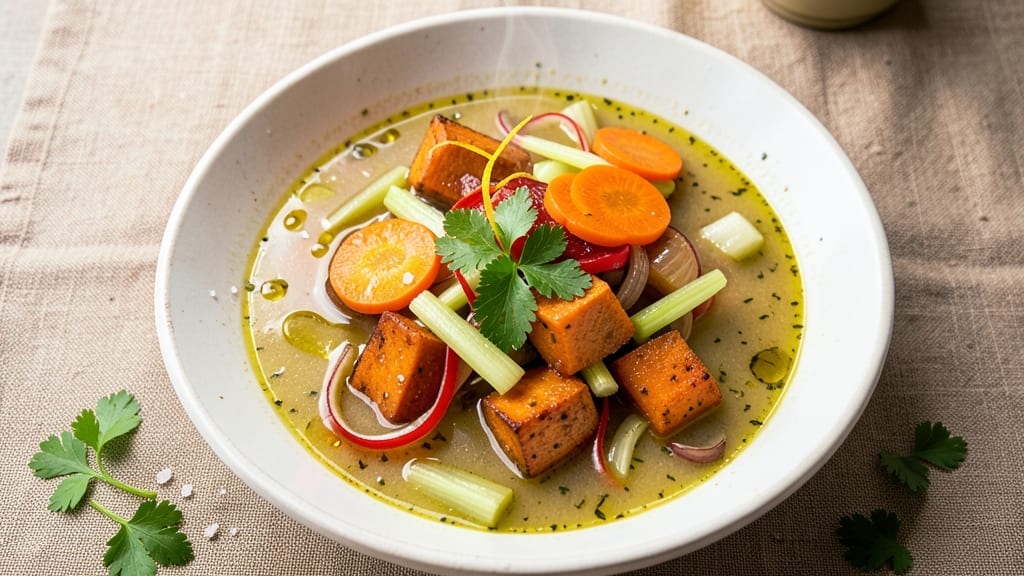
This 5 a day soup recipe delivers a powerhouse of vegetables in every bowl, packed with nutrients without sacrificing flavor—perfect for anyone looking to boost their daily intake of vitamins and fiber.
The beauty of this one-pot wonder lies in its versatility: you can swap ingredients based on seasonality or dietary preferences while keeping the core concept intact.
What makes it special is the balance of textures—creamy blended sections, tender cooked vegetables, and a light broth that lets the natural flavors shine through.
The foundation of this soup is a simple yet effective technique: sautéing aromatic vegetables first to build flavor, then simmering everything together until the vegetables are tender but still retain their vibrant colors.
I use a blend of carrots, celery, and onions as the base, then add leafy greens and other seasonal vegetables for depth.
The key to maximizing nutrition is blending half the vegetables at the end, creating a velvety texture that makes the soup feel indulgent while keeping it light and satisfying.
What you’ll end up with is a soup that’s as nourishing as it is delicious—rich in color, packed with flavor, and brimming with nutrients. It’s the kind of dish that transforms a simple weeknight dinner into a meal that feels like a health boost.
The best part? It’s naturally vegetarian-friendly, easily customizable, and perfect for meal prep, so you can enjoy the benefits of this nutrient-packed recipe all week long.
Serve it with a sprinkle of fresh herbs or a drizzle of olive oil for extra flavor, and pair it with crusty whole-grain bread to round out the meal.
Whether you’re prepping for the week or cooking for a crowd, this soup delivers on both nutrition and taste. Here’s how to make it!
Ingredients for 5 a day soup
Six servings of vibrant vegetables—this one-pot wonder packs a punch of nutrition and flavor.
| Ingredient | Amount | Notes |
|---|---|---|
| Vegetable Broth 💧 | 6 cups | Low-sodium preferred for flexibility |
| Carrots 🥕 | 3 medium | Peeled, sliced into rounds |
| Celery Stalks 🧅 | 3 whole | Trimmed, chopped into 1-inch pieces |
| Yellow Onion 🧅 | 1 whole | Medium size, diced |
| Sweet Potato 🍠 | 1 medium | Peeled, cubed into 1-inch pieces |
| Zucchini 🥒 | 2 medium | Sliced into half-moons |
| Spinach 🌱 | 4 cups | Fresh, loosely packed |
| Kale 🥬 | 2 cups | Chopped, stems removed |
| Garlic Cloves 🧄 | 4 cloves | Minced for depth |
| Extra-Virgin Olive Oil 🫒 | 2 tbsp | For sautéing vegetables |
| Tomato Paste 🍅 | 2 tbsp | Smooth texture preferred |
| Dried Thyme 🌿 | 1 tsp | Or 1 tbsp fresh thyme |
| Ground Black Pepper 🌶️ | ½ tsp | Freshly cracked |
| Sea Salt 🧂 | 1 ½ tsp | Adjust to taste |
| Fresh Basil Leaves 🌿 | ¼ cup | Chopped for garnish |
The vegetables are the stars here, so pick the freshest you can find. Local farmers markets often have the best selection, especially for leafy greens like spinach and kale. For the carrots and sweet potato, organic is ideal—they absorb more nutrients when grown without pesticides. I always grab a rainbow of carrots if available; the different colors mean more vitamins. The zucchini can be slightly underripe (firm but not hard)—they’ll soften perfectly during cooking. Store your fresh herbs like basil in a jar of water in the fridge to keep them crisp for garnishing later.
No sweet potato? Regular potatoes work too—just don’t overcook them. Running out of kale? Substitute Swiss chard or collard greens at the same amount. The tomato paste can be swapped for 1/2 cup crushed tomatoes if you prefer a chunkier texture. For extra depth, add a pinch of smoked paprika or a dash of red pepper flakes. The broth should be low-sodium—you’ll be adding plenty of salt at the end. If you’re short on time, pre-chopped frozen veggies work perfectly (just thaw and drain first).
This soup tastes even better the next day as flavors meld together. Store in an airtight container in the fridge for up to 5 days, or freeze portions for 3 months. I like to freeze it in individual servings so I can grab a bowl whenever I need a quick, healthy meal. For meal prep, double the recipe and freeze half—perfect for busy weeknights. The basil wilts fast, so add it fresh just before serving if you’re prepping ahead.
Why You’ll Love This Recipe
- Pantry-Friendly Magic: I swear by this one when I’ve got nothing but a few veggies and broth. No fancy prep—just chop, simmer, and let the sweet potato melt into that creamy, caramelized goodness. The onion and celery? They’re the unsung heroes, building depth without effort.
- Sweet & Savory Balance: That roasted sweet potato brings natural sweetness, while the carrot and celery add a fresh, earthy bite. Honestly, the broth soaks up all the flavors—no extra seasoning needed. It’s the kind of soup that tastes even better the next day (if you can wait).
- Meal Prep MVP: I make a big batch on Sundays and freeze portions—perfect for lazy days or when I need to throw something together fast. The sweet potato holds up beautifully, and reheating it just makes the flavors sing even louder.
- Budget-Buster Combo: Carrots, celery, onion, sweet potato—these are the cheap staples that stretch into a full meal. Between us, I’ve fed four people for under $5 with this. Plus, it’s one of those recipes where leftovers disappear before they even hit the fridge.
Step-by-step instructions for a nutrient-packed vegetable soup
Here’s how to create a vibrant, health-focused soup that packs five servings of vegetables into every bowl.
Sauté the Vegetable Base
Heat the 2 tablespoons extra-virgin olive oil in a large pot over medium-high heat. Add the diced yellow onion, chopped celery stalks, and sliced carrots, stirring occasionally for 5 minutes until the vegetables begin to soften and the onion becomes translucent. This foundational cooking step builds flavor and ensures your vegetables develop a satisfying texture.
Add the minced garlic cloves and cook for another 30 seconds until fragrant. Here’s the thing—don’t let the garlic burn. It should smell heavenly but not bitter. Immediately add the 2 tablespoons tomato paste and stir to coat the vegetables, creating a rich base for your soup. Cook for 1 minute until the tomato paste darkens slightly and blends smoothly with the vegetables.
Add Hearty Vegetables and Seasonings
Pour in the 6 cups vegetable broth and bring the mixture to a gentle boil. Add the cubed sweet potato and sliced zucchini, stirring to combine. Reduce heat to medium-low and let the soup simmer uncovered for 15 minutes, stirring occasionally. This allows the sweet potato to soften while maintaining the zucchini’s shape and texture.
Season with the 1 teaspoon dried thyme, 0.5 teaspoon ground black pepper, and 1.5 teaspoons sea salt. Stir well to distribute the seasonings evenly. You’ll notice the soup developing a beautiful golden hue and aromatic steam—this is where the magic happens. The thyme releases its earthy notes while the salt enhances all the natural flavors of the vegetables.
Incorporate Leafy Greens for Color and Nutrition
After 15 minutes of simmering, add the 4 cups spinach and 2 cups chopped kale. Stir gently to distribute the greens throughout the soup. Cook for an additional 3-4 minutes until the spinach wilts completely and the kale softens but still retains some texture. The greens should blend seamlessly into the soup, adding vibrant color and a boost of nutrients.
Here’s where it gets fun—the soup should now have a rich, hearty consistency with visible chunks of vegetables throughout. If it looks too thick, add a splash of water or more vegetable broth to reach your desired consistency. The greens should be fully incorporated but not mushy—this ensures you get that perfect balance of texture and nutrition in every spoonful.
Simmer and Finish with Fresh Herbs
Continue simmering the soup for another 5 minutes to allow all the flavors to meld together. Taste and adjust the seasoning if needed—this is your chance to make it perfectly balanced. The soup should be flavorful but not overpowering, with each vegetable contributing its unique taste.
Remove the pot from heat and stir in the 0.25 cup chopped fresh basil leaves. This final step adds a bright, fresh note that cuts through the richness of the other vegetables. Let the soup sit off the heat for 5 minutes to allow the basil to infuse its flavor. The basil’s aroma will fill your kitchen, signaling that your soup is ready to serve.
Pro Tips For Making 5 A Day Soup
- Sweat the Aromatics First: I learned this the hard way—throwing everything in raw means your soup will taste like a sad salad. Dice the onion, chop the celery, and cook them in a dry pot for 5 minutes over medium heat until they’re soft and just starting to brown. That deep, caramelized flavor is what makes the broth sing.
- Cut Sweet Potatoes Small: Big chunks? Forget it. Your soup will end up with a mushy, uneven texture. Peel and dice the sweet potato into ½-inch cubes—small enough to soften in 15 minutes but not so tiny they dissolve into the broth. (Yes, even if you’re impatient like me.)
- Salt the Broth Early: Taste the broth after 10 minutes, not at the end. Season it properly then, or you’ll be drowning your soup in salt later. Start with 1 teaspoon per quart of broth, then adjust—this is the thing that matters most for balancing flavors.
- Blend Halfway for Creaminess: Sounds weird, but it works: after 20 minutes of simmering, blend half the soup until smooth, then return it to the pot. The result? A velvety texture without sacrificing the hearty bite of the veggies. (Your future self will thank you.)
Creative variations of these flavors
Seasonal Swaps
Spring brings fresh asparagus and peas—swap the sweet potato for 1 cup chopped asparagus and ½ cup frozen peas for a lighter, brighter bowl. In summer, add cherry tomatoes and corn kernels for natural sweetness.
For fall, roast butternut squash cubes before adding them to deepen flavor. Winter calls for heartier veggies like rutabaga or turnips—simmer them longer for tender bites. 🍂
Protein Add-Ins
Keep it vegetarian or boost nutrition with plant-based proteins. Stir in ½ cup cooked lentils or ½ cup crumbled tofu for extra fiber and protein. For a lighter touch, add ¼ cup chickpeas at the end of cooking.
If you prefer animal protein, try ½ cup shredded rotisserie chicken or ¼ cup cooked white beans for a heartier meal. 💪
Global Twists
Give your soup international flair! For a Thai-inspired version, add 1 tbsp red curry paste and ½ cup coconut milk> after simmering. A Mexican-inspired twist uses 1 tsp cumin> and ½ cup black beans>.
For Italian, stir in ½ cup diced tomatoes> and ½ tsp oregano> at the end. Each variation keeps the core veggie-packed concept while adding exciting new flavors. 🌍
Dietary Adaptations
Gluten-free? Use a gluten-free vegetable broth> (like Imagine or Pacific Foods). For low-sodium, reduce added salt to ½ tsp> and use no-salt-added broth. Vegan? Skip tomato paste and use 1 tbsp nutritional yeast> for a cheesy flavor.
For a creamy texture without dairy, blend ½ cup of the soup> with ¼ cup coconut milk> at the end. All adaptations keep the soup vibrant and nutritious. ✨
Kid-Friendly Versions
Make it fun for picky eaters! Blend half the soup for a smooth texture, then swirl in ¼ cup plain Greek yogurt> for creaminess. Add diced ham> or shredded cheese> on top for appeal.
Serve with crusty bread> cut into fun shapes or let kids assemble their own bowls with toppings like crumbled bacon> or buttered noodles>. The veggies stay hidden but packed with nutrients! 🧒
Nutrition facts
Frequently asked questions
Can I make this soup without blending half the vegetables?
If you prefer chunky textures, skip blending and simply stir in all the greens at the end. The soup will still be packed with nutrients and vibrant colors—just with more distinct vegetable pieces. For extra creaminess without blending, mash ½ cup of the sweet potato with a fork before adding the broth.
How do I adjust the recipe for fewer servings?
Scale down all ingredients by ⅓ for 4 servings or ½ for 3 servings. The key is maintaining the vegetable-to-broth ratio—use 2 cups broth per 1 cup chopped vegetables. For example, reduce sweet potato to ½ medium and zucchini to 1 medium for 4 servings. Keep the same cooking times but taste frequently to adjust seasoning.
What’s the best way to reheat leftover soup?
Reheat gently on the stovetop over medium-low heat until steaming, stirring occasionally. Add 1-2 tablespoons water or broth if it thickens too much. For microwave reheating, cover with a damp paper towel and heat in 1-minute intervals, stirring between each. Never boil—this can make the greens turn bitter. Stir in fresh basil after reheating for maximum flavor.
Can I use canned vegetables instead of fresh?
Yes, but with adjustments! Drain and rinse canned vegetables well to remove excess sodium. For best texture, use low-sodium or no-salt-added versions. The soup will still be flavorful, but you may need to reduce added salt by ½ teaspoon. Canned tomatoes or corn work well—just add them with the broth. Fresh vegetables always taste better, but canned is a great backup when fresh isn’t available.
How can I make this soup more filling for a main course?
Add a protein boost like ½ cup cooked lentils or ¼ cup chickpeas for plant-based options. For meat eaters, stir in ½ cup shredded chicken or top with crumbled feta cheese. Serve with whole-grain bread or a side of quinoa to increase volume. The soup’s natural fiber and nutrients will keep you satisfied longer.

- 2 Lb Oatmeal Bread Machine Recipe: Hands-Off Crusty Loaf With Nutty Depth - September 30, 2026
- 8-Inch Pecan Pie Recipe: Buttery Crust and Caramelized Nut Bliss - September 30, 2026
- 1 Loaf Homemade Bread Recipe: Crusty Crunch and Airy Crumb in One Bowl - September 30, 2026