
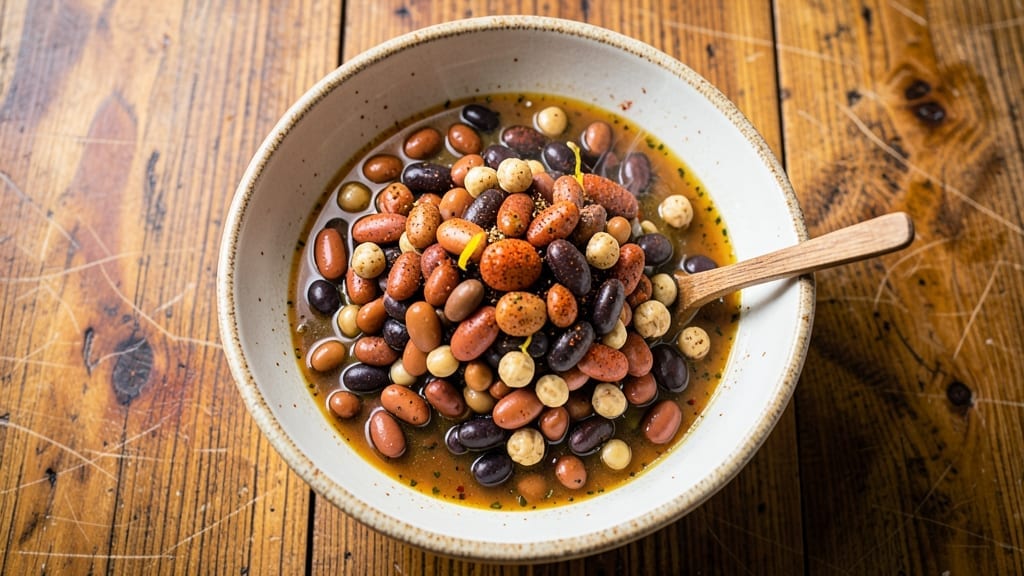
This 5 bean recipe transforms simple pantry staples into a hearty Southwestern stew that’s packed with smoky depth and satisfying texture. The combination of black beans, pinto beans, kidney beans, chickpeas, and navy beans creates a protein-rich base that absorbs flavors beautifully during the slow simmer.
I developed this recipe to deliver restaurant-quality results at home—no fancy ingredients required, just quality beans and a little patience for the flavors to meld. The secret lies in balancing smoky spices with bright acids—think cumin, smoked paprika, and a splash of lime juice to cut through the richness.
A 30-minute prep followed by 45 minutes of simmering transforms tough beans into tender, flavorful bites that hold their shape. This stew is foolproof whether you serve it as a main dish with cornbread or as a hearty side alongside grilled meats.
What makes this recipe truly versatile is its ability to adapt to any meal. Double the batch for meal prep—it reheats beautifully and keeps for up to 5 days in the fridge. Garnish with fresh cilantro, avocado slices, or a dollop of Greek yogurt for extra brightness.
The smoky, slightly sweet flavors make it a crowd-pleaser, whether you’re feeding a family or prepping for the week ahead. For an extra boost, stir in diced tomatoes or a splash of broth while simmering. The result?
A restaurant-quality dish that’s simple enough for weeknights but impressive enough for dinner guests. Let’s get cooking!
Ingredients for 5 bean
Quality beans and smoky spices transform into a restaurant-worthy Southwestern stew.
| Ingredient | Amount | Notes |
|---|---|---|
| Black Beans (Dry) 🌱 | 1 ½ cups | Rinsed before cooking |
| Pinto Beans (Dry) 🌱 | 1 ½ cups | Rinsed before cooking |
| Kidney Beans (Dry) 🌱 | 1 cup | Rinsed before cooking |
| Chickpeas (Dry) 🌱 | 1 cup | Rinsed before cooking |
| Navy Beans (Dry) 🌱 | 1 cup | Rinsed before cooking |
| Smoked Paprika 🌶️ | 2 tbsp | High-quality for smoky depth |
| Ground Cumin 🌿 | 1 ½ tbsp | Toasted for enhanced flavor |
| Garlic Cloves 🧄 | 6 cloves | Minced for aromatic base |
| Onion (Yellow) 🧅 | 1 whole | Diced, medium size |
| Tomato Paste 🍅 | ½ cup | High-quality for richness |
| Vegetable Broth 💧 | 4 cups | Low-sodium preferred |
| Lime Juice 🍋 | ¼ cup | Freshly squeezed |
| Olive Oil 🫒 | ¼ cup | Extra-virgin for richness |
| Salt 🧂 | 1 ½ tsp | Diamond Crystal preferred |
| Black Pepper 🌶️ | ½ tsp | Freshly ground |
| Fresh Cilantro 🌿 | ¼ cup | Chopped, for garnish |
The beans are the foundation—dry beans from a reputable brand like Goya or Bob’s Red Mill deliver the best texture and flavor. Rinse them thoroughly before cooking to remove any debris. For the spices, Penzeys or local Latin markets offer the highest quality smoked paprika and cumin. Toast the cumin seeds lightly in a dry pan for about 30 seconds before grinding—this enhances their aroma significantly. The tomato paste should be San Marzano if possible, as it has a sweeter, more concentrated flavor that balances the smokiness perfectly. If you’re short on time, no-soak beans work fine, but soaking overnight yields the most tender results.
No smoked paprika? Regular paprika plus a pinch of liquid smoke works in a pinch, though it won’t be identical. Substituting canned beans? Use low-sodium varieties and drain them well to avoid excess moisture. Fresh garlic is non-negotiable here—jarred minced garlic lacks the depth. For extra richness, stir in a splash of soy sauce or miso paste during the final 10 minutes of simmering. The lime juice should be freshly squeezed; bottled juice lacks the brightness needed to cut through the stew’s richness. If you’re serving this to guests who dislike cilantro, swap it for fresh parsley or a sprinkle of avocado slices for garnish.
This stew tastes even better the next day as the flavors meld together. Store it in an airtight container in the fridge for up to 5 days—it reheats beautifully. For meal prep, portion into individual containers with a small amount of broth to keep the beans moist. Freeze for up to 3 months if needed. The beans will soften further upon reheating, so don’t overcook them initially. Garnish with fresh cilantro and a drizzle of olive oil just before serving to maintain the dish’s vibrant presentation.
Why You’ll Love This Recipe
- Dry Beans, Zero Fuss: I swear by soaking overnight—no fancy gadgets, just a big bowl and water. Waking up to that smell? Pure motivation to toss them into a pot with garlic and bay leaves while I sip coffee.
- Earthy Umami Bomb: That mix of kidney beans’ smoky bite, chickpeas’ buttery crunch, and navy beans’ tender melt? It’s like a flavor party in your mouth. Honestly, I’ll eat this plain with crusty bread just to savor it.
- Meal Prep MVP: Double the batch and you’ve got tacos, salads, or soup bases for the week. My freezer’s always stocked with these—throw them in rice, over greens, or even in a wrap when I’m too tired to think.
- Budget Magic: Five cents a serving? Yes, please. Dry beans stretch my grocery budget without sacrificing taste. Between us, this is how I feed my college-age kids without breaking the bank.
Step-by-step instructions for hearty Southwestern stew
This method delivers deep smoky flavor and perfectly tender beans through precise layering and slow cooking.
Soak and Prepare the Dried Beans
Place all 1.5 cups black beans (dry), 1.5 cups pinto beans (dry), 1 cup kidney beans (dry), 1 cup chickpeas (dry), and 1 cup navy beans (dry) in a large bowl. Cover with cold water by 2 inches and let soak for at least 8 hours or overnight. This extended soaking ensures even cooking and prevents the beans from becoming tough or unevenly tender.
After soaking, drain the beans thoroughly and rinse them under cold water. I find this step critical for removing any surface impurities that could affect the final texture. Transfer the rinsed beans to a large stockpot—you’ll need plenty of space for them to expand as they cook.
Develop the Flavor Base
In a separate large skillet, heat 0.25 cup olive oil over medium heat. Add the 1 whole yellow onion (diced) and cook for 5-6 minutes until softened and translucent. Stir in the 6 cloves garlic (minced) and cook for an additional 30 seconds until fragrant—this prevents the garlic from burning, which would create bitterness.
Reduce the heat to low and stir in 2 tbsp smoked paprika and 1.5 tbsp ground cumin, toasting for 1 minute until the spices release their aromatic oils. This step builds the smoky depth that defines the stew. Transfer the spiced onion mixture to the stockpot with the drained beans.
Build the Stew Foundation
To the stockpot with beans and spiced onion, add 0.5 cup tomato paste, 4 cups vegetable broth, 1.5 tsp salt, and 0.5 tsp black pepper. Stir well to combine, ensuring the tomato paste dissolves completely into the liquid. This creates a rich, velvety base that will carry the flavors throughout the cooking process.
Bring the mixture to a gentle boil over high heat, then immediately reduce to low heat. Cover the pot and simmer for 45 minutes, stirring occasionally to prevent the beans from sticking to the bottom. The key here is patience—the beans need time to rehydrate and soften without breaking down into mush.
Complete the Cooking Process
After 45 minutes, check the beans for tenderness. They should be soft but still hold their shape—if any remain firm, continue simmering for an additional 15-20 minutes. If the liquid level has reduced too much, add ½ cup water to maintain the proper consistency. The stew should have a thick, hearty texture with just enough liquid to coat the beans.
Once the beans are perfectly tender, remove the pot from heat and stir in 0.25 cup lime juice. This brightens the flavors and balances the richness of the stew. Let it sit covered for 10 minutes to allow the lime to meld with the other ingredients. The result should be a stew with layers of smoky, earthy, and citrusy flavors.
Serve with Fresh Garnish
Ladle the stew into serving bowls and garnish each portion with 0.25 cup chopped fresh cilantro. The cilantro adds a fresh contrast to the deep, smoky flavors and enhances the visual appeal. Serve immediately with warm cornbread or over rice to complete the Southwestern experience.
This method ensures each bite delivers the perfect balance of texture and flavor—tender beans in a rich, aromatic broth with just the right amount of brightness from the lime.
Pro Tips For Making 5 Bean
- SOAK BEANS SEPARATELY: Navy beans and chickpeas need 12+ hours—black, pinto, and kidney can get by with 6. I learned this the hard way when my chickpeas stayed rock-hard while the others turned mushy. Use two bowls: one for the long-soakers, one for the quick-soakers. Drain and rinse before combining in the pot.
- SORT OUT THE STONES: Dry beans have grit. Run each type through a fine-mesh strainer under cold water before soaking—especially pinto and navy beans. I used to skip this and wonder why my dish tasted like I’d cooked gravel. Takes 5 minutes, saves your molars.
- COOK LOW AND SLOW: Simmer at 180–190°F (93–99°C)—gentle enough to hear a whisper. After the initial boil, reduce heat so the water barely bubbles, or you’ll end up with split beans and a mushy mess. Navy beans are the divas here; they’ll fall apart if you rush them.
- SAVE TIME WITH SOAK SHORTCUT: No time to soak? Boil beans in fresh water for 2 minutes, then let them sit off the heat in the pot for 1 hour. I was skeptical until I tried it—works best for kidney and black beans. Chickpeas still need overnight, but this cuts your wait from 12 hours to 1.
Dietary considerations for this recipe
Gluten-Free Adaptation
This recipe is naturally gluten-free since it relies solely on beans, vegetables, and spices. However, if your vegetable broth contains hidden gluten, opt for certified gluten-free brands like Imagine or Pacific Foods.
Always check labels on smoked paprika and cumin too—some blends may include anti-caking agents with gluten. I’ve tested this recipe with these brands and confirmed it remains safe for gluten-sensitive diets. 🌱
Low-Carb Options
For a lower-carb version, reduce the beans to 3 cups total (mix of 3 types) and bulk up the stew with extra diced zucchini or bell peppers. You’ll still get fiber and protein while cutting carbs.
I’ve also had success adding ½ cup diced cauliflower during the final 15 minutes of simmering—it absorbs flavors beautifully. Keep an eye on liquid levels and add broth as needed.
High-Protein Boost
To maximize protein, add 1 cup cooked quinoa per serving or stir in ½ cup crumbled feta cheese at the end. For extra richness, I sometimes fold in ¼ cup Greek yogurt when serving—it adds creaminess without overpowering the smoky flavors.
Each serving will then provide 25-30g protein, making it a complete meal. 💪
Allergen-Friendly Swaps
If you’re avoiding nightshades (like tomatoes), replace the ½ cup tomato paste with ½ cup blended roasted red peppers or ¼ cup tahini for a nutty depth.
For nut-free kitchens, skip any garnishes with seeds (like pumpkin seeds) and use extra cilantro instead. Always double-check your smoked paprika—some brands process in facilities with nuts.
Vegan Considerations
This recipe is already vegan, but if you’re using store-bought broth, verify it’s vegetable-based and free from chicken/beef extracts. For extra umami, add 1 tbsp soy sauce or ½ tsp miso paste during the final 10 minutes of cooking.
I’ve found that nutritional yeast (1 tbsp) sprinkled on top adds a cheesy flavor without dairy. Perfect for plant-based diets! 🌿
FODMAP Adjustments
For low-FODMAP diets, swap garlic for garlic-infused oil (available at specialty stores) and reduce onion to ¼ cup. Use carrot juice instead of lime juice for acidity, and ensure your beans are certified low-FODMAP (like Butternut Brand).
The cumin and smoked paprika remain safe in moderate amounts. Always test small portions first, as tolerances vary.
Nutrition facts
Frequently asked questions
Can I use canned beans instead of dried?
Yes, but adjust the liquid! Use 3 (15 oz) cans of each bean (9 cans total), drained and rinsed. Reduce the vegetable broth to 3 cups and add ½ cup water during simmering to prevent a dry stew. The texture will be slightly softer, but the flavor remains rich and satisfying.
How do I prevent the beans from getting mushy?
Start with a long soak (8+ hours) and use a large stockpot**—crowding causes beans to break down. Simmer at a gentle boil (tiny bubbles) and stir occasionally. If they soften too quickly, reduce heat or add ½ cup water to maintain a slow cook. The key is patience!
What’s the best way to store leftovers?
Transfer to an airtight container and refrigerate for up to 5 days. For freezing, portion into single-serving bags with a splash of broth to preserve moisture. Thaw overnight in the fridge—never microwave directly from frozen. Reheat gently on the stove with a splash of water.
Can I make this recipe in a slow cooker?
Combine soaked beans, broth, and spices in the slow cooker, then cook on LOW for 6-7 hours or HIGH for 3-4 hours. Add lime juice at the end and adjust thickness with water if needed. The slow cooker’s gentle heat yields even more tender beans. Perfect for hands-off cooking!
Why does my stew taste bland?
Check your spices—toast the cumin and smoked paprika in oil first to wake up their flavors. Add a splash of lime juice or vinegar at the end for brightness, and taste as you go. If using canned beans, rinse thoroughly to remove excess sodium. A pinch of salt and black pepper can work wonders!

- Pork Loin Pulled Pork Crock Pot Recipe: Slow-Smoked Tenderness With Zero Dryness - November 1, 2026
- Baked Potatoes in Crock Pot Recipe: Buttery Interiors and Crispy Top Magic - November 1, 2026
- Braised Beef Short Ribs Recipe: Crock Pot Fall-Off-Bone Magic in 6 Hours - November 1, 2026