
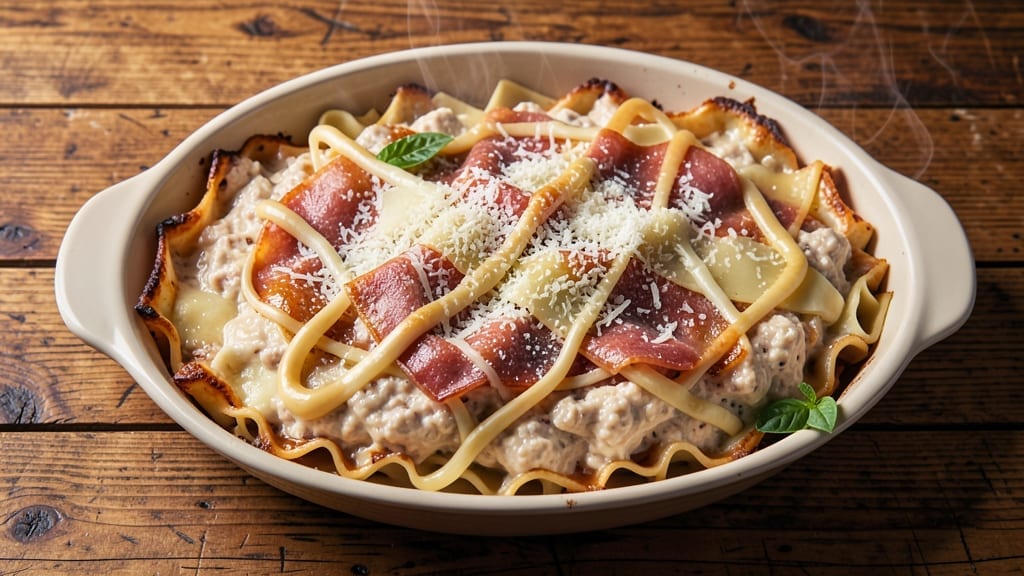
A 5-cheese no-meat lasagna that delivers restaurant-quality richness without a single bite of meat—this is the recipe I developed after years of perfecting vegetarian lasagna for my family.
The secret lies in the cheese blend: mozzarella, ricotta, parmesan, provolone, and fontina work together to create layers of melt-in-your-mouth texture, from creamy ricotta in the middle to crispy, golden cheese on top.
I first made this version when my daughter Lily declared she wanted “cheesy lasagna, but no meat,” and I had to deliver—no compromises on flavor, just a different approach.
What makes this recipe stand out is the no-boil lasagna noodles, which eliminate the need to pre-cook and save time without sacrificing texture.
The key to success? Layering like a pro—spreading sauce evenly, distributing cheese evenly, and pressing down gently to ensure every bite has that perfect combination of creamy, cheesy goodness.
The oven does the rest, transforming simple ingredients into a dish that’s hearty enough for a weeknight dinner but impressive enough for company.
By the time it emerges from the oven, you’ll have a lasagna with crispy, golden cheese on top, tender noodles, and a sauce that’s rich but not heavy—thanks to a balance of tomatoes and herbs.
The cheese pulls apart in strands, and each layer delivers that satisfying mix of textures: creamy ricotta, gooey mozzarella, and nutty parmesan. This is the kind of lasagna that disappears faster than you can say “seconds, please.”
Serve it with a simple side salad or garlic bread to soak up every last drop of that cheesy goodness. The best part? It’s foolproof—even if you’ve never made lasagna before, this recipe delivers results you’ll be proud of. Let’s get started on this cheesy masterpiece.
Ingredients for 5 cheese lasagna recipe no meat
Five cheeses, no meat, all the flavor—this lasagna delivers restaurant-quality layers with minimal effort.
| Ingredient | Amount | Notes |
|---|---|---|
| No-Boil Lasagna Noodles 🍝 | 12 sheets | 9-inch size, uncooked |
| Ricotta Cheese 🧀 | 1 ½ cups | Full-fat for creaminess |
| Mozzarella Cheese 🧀 | 2 cups | Fresh, part-skim preferred |
| Parmesan Cheese 🧀 | 1 cup | Freshly grated from block |
| Provolone Cheese 🧀 | 1 cup | Shredded, mild variety |
| Fontina Cheese 🧀 | ¾ cup | Shredded, for meltiness |
| Marinara Sauce 🍅 | 2 ½ cups | Homemade or quality jarred |
| Vegetable Broth 💧 | 1 cup | Low-sodium preferred |
| Fresh Basil Leaves 🌿 | ¼ cup | Chopped, for freshness |
| Garlic Cloves 🧄 | 4 cloves | Minced for depth |
| Extra-Virgin Olive Oil 🫒 | 2 tbsp | For sautéing garlic |
| Diamond Crystal Kosher Salt 🧂 | 1 ½ tsp | Adjust to taste |
| Freshly Ground Black Pepper 🌶️ | ½ tsp | For seasoning |
| All-Purpose Flour 🌾 | 2 tbsp | For thickening sauce |
The cheese blend is where the magic happens. Fontina melts like a dream, while provolone adds a subtle tang. Grab fresh mozzarella from the deli section—pre-shredded gets clumpy and lacks that gooey pull. For ricotta, full-fat is non-negotiable—it’s what makes the middle layer creamy. Parmesan? Always grate it yourself; pre-grated has anti-caking agents that ruin the texture. I buy my cheeses at Whole Foods or Trader Joe’s—they carry good-quality blocks and tubs. The no-boil noodles are a game-changer; Barilla makes the best ones, but any reputable brand works. Look for ‘no-boil’ or ‘oven-ready’ on the package—those are your friends.
No ricotta? Cottage cheese blended smooth gets you close, though it’s not identical. Short on fontina? Gruyère or sharp cheddar both work well. The marinara can be store-bought (I won’t judge), but if you’re making it fresh, San Marzano tomatoes make all the difference. Those little cans at Eataly or Penzeys are worth the splurge. For the garlic, roast it first if you’re feeling fancy—it adds a sweet depth. The flour is just for thickening if your sauce needs it, but most jarred sauces are fine as-is. If you’re layering ahead, assemble up to 24 hours before baking—just cover tightly and refrigerate.
This lasagna tastes even better the next day—plan ahead. Assemble the night before, cover with foil, and bake straight from the fridge (add 10 minutes to the bake time). Cheese keeps best in airtight containers; parmesan freezes beautifully, while mozzarella and ricotta should be used within 3 months of purchase. The noodles? Store them in a cool, dry place—once opened, they’ll last 1 year. Leftovers reheat perfectly in the oven at 350°F until bubbly. Serve with a crisp green salad to cut through the richness—trust me, you’ll want to.
Why You’ll Love This Recipe
- No Boil, No Stress: The no-boil noodles are my secret weapon—just layer and bake. No pre-cooking, no waiting, no stress. Honestly, I’ve burned lasagna noodles before, and this? Zero risk.
- Creamy Crispy Magic: That ricotta swirled with provolone and mozzarella? It’s the good stuff—creamy ricotta in the middle, crispy edges on top, and parmesan dusting everything like fairy sprinkles. (Yes, even on a Tuesday night.)
- Leftovers That Last: I make this on Sundays, and it’s still delicious four days later. The cheeses meld together perfectly, and reheating? Just cover it with foil for 10 minutes—no soggy mess.
- Budget-Friendly Luxury: Five cheeses sound fancy, but bulk bags of shredded mozzarella and block parmesan stretch this dish for a crowd. I’ve fed six people for under $15, and no one complains about the portions.
Step-by-step instructions for 5 cheese no-meat lasagna
Here’s how to assemble layers of cheesy perfection without the meat—simple, satisfying, and foolproof.
Prepare the Cheese Filling
In a medium bowl, combine the 1.5 cups ricotta cheese, 1 cup grated Parmesan cheese, 1 cup shredded Provolone cheese, and 0.75 cup shredded Fontina cheese. Add the 1.5 teaspoons Diamond Crystal kosher salt and 0.5 teaspoon freshly ground black pepper, mixing until fully incorporated. The ricotta should be light and fluffy, with no lumps remaining.
Fold in the 0.25 cup chopped fresh basil leaves and set the mixture aside. Here’s the thing—using full-fat ricotta ensures that rich, creamy texture we all love in lasagna. If your ricotta looks too thick, give it a quick stir with a fork to lighten it up before proceeding.
Thicken the Marinara Sauce
In a saucepan, combine the 2.5 cups marinara sauce and 1 cup vegetable broth. Bring to a gentle simmer over medium heat and let it cook for 5-7 minutes until slightly thickened. This step prevents a watery lasagna after baking.
While the sauce simmers, whisk together the 2 tablespoons all-purpose flour with 2 tablespoons extra-virgin olive oil in a small bowl. Slowly pour this mixture into the simmering sauce, stirring constantly. The sauce should thicken noticeably within 2-3 minutes. If it’s still too thin, simmer for another minute or two. Remove from heat and keep warm.
Sauté the Garlic
In a small skillet, heat 2 tablespoons extra-virgin olive oil over medium-low heat. Add the 4 minced garlic cloves and sauté for 1-2 minutes until fragrant but not browned. This aromatic base adds depth to every layer of your lasagna.
Immediately remove the skillet from heat and stir the garlic into the thickened marinara sauce. The garlic should infuse the sauce with its signature flavor without overpowering it. Let the sauce sit while you assemble the lasagna—this gives the garlic time to meld completely.
Assemble the Lasagna Layers
Preheat your oven to 375°F. Grease a 9×13-inch baking dish with a bit of olive oil to prevent sticking. Begin by spreading 1 cup of the thickened marinara sauce evenly over the bottom of the dish.
Layer 4 sheets of the no-boil lasagna noodles on top of the sauce, slightly overlapping them if needed. Spread half of the ricotta-cheese mixture evenly over the noodles, followed by 1 cup of the mozzarella cheese. Repeat with another layer of 4 noodle sheets, remaining cheese mixture, and 1 cup mozzarella cheese. Finish with the remaining 4 noodle sheets and the remaining 1 cup mozzarella cheese.
Bake to Golden Perfection
Cover the lasagna tightly with aluminum foil and bake for 30 minutes. This initial covered baking helps the layers meld together without drying out. After 30 minutes, remove the foil and bake for another 15-20 minutes until the top is golden brown and bubbly.
Let the lasagna rest for 10-15 minutes before slicing. This resting period allows the layers to set, making it easier to serve without a messy slide. The cheese should be perfectly melted, the noodles tender, and the sauce rich and flavorful in every bite. Serve with a side of garlic bread or a simple arugula salad for a complete meal.
Pro Tips For Making 5 Cheese Lasagna Recipe No Meat
- Preheat That Pan: Your oven should hit 375°F before you even think about assembling the lasagna—no-boil noodles or not. I learned this the hard way when my first layer stuck like glue; a hot oven guarantees the cheese melts evenly instead of turning into a sad, gummy mess. (Yes, even if you’re impatient like me.)
- Drain Ricotta Like a Pro: Skip the paper towels—ricotta’s watery afterlife is real. Spread it on a wire rack with parchment paper for 10 minutes before mixing with egg and herbs. This keeps your ricotta layer light, not soggy, and saves you from that dreaded “lasagna soup” texture at the bottom.
- Layer Cheese Strategically: Mozzarella goes between noodles, provolone on top—it’s the melty glue that holds everything together. Parmesan? Sprinkle it last like confetti; it’s the flavor bomb that won’t dissolve into nothingness. (I used to dump it all in the ricotta mix and wondered why my lasagna tasted flat.)
- Cover It Twice: Foil first for 25 minutes to steam the layers, then remove it for the last 10. This prevents a dry top while keeping the noodles tender—no-boil or not, they still need love. (Your future self will thank you when you cut into a perfect slice, not a brick.)
Essential equipment for this dish
Baking Dish Basics
You’ll need a 9×13-inch baking dish—this is the gold standard for lasagna because it gives you the perfect balance of surface area for even baking and depth for layers. I swear by Ceramic CorningWare dishes—they distribute heat evenly and handle the weight of a fully loaded lasagna without warping.
If you’re on a budget, a heavy-duty aluminum baking pan works too, but avoid thin, flimsy metal pans that can cause hot spots. Grease your dish with olive oil or line it with parchment paper for easy release, especially if you’re making this ahead of time. 🧈
No-Boil Noodle Tools
Skip the pre-boiling step with no-boil lasagna noodles, which soften in the oven thanks to their wider, thicker edges. I always use Barilla or De Cecco—their noodles hold up beautifully without turning mushy.
Store your unopened noodles in a cool, dry place (like your pantry) and transfer them to an airtight container once opened to keep them fresh for up to 1 year.
Pro tip: If your noodles arrive dry or stiff, soak them in warm water for 5 minutes before layering to soften them slightly. 🍝
Cheese Prep Essentials
Shredding cheese properly makes all the difference—pre-shredded cheese clumps and loses moisture, so I always grate my own. A box grater works, but a microplane gives you the finest, most even shreds for that silky texture.
For ricotta, use a large spoon or spatula to gently fold in the Parmesan and herbs—overmixing makes it dense. Store your cheeses in the fridge (except Parmesan, which freezes beautifully) and take them out 30 minutes before assembling to let them soften slightly. 🧀
Sauce Thickening Gear
A medium saucepan with sloped sides is ideal for thickening your marinara—it prevents splattering when you stir in the flour-oil slurry. I keep a wooden spoon nearby to avoid scratching nonstick pans, and a small whisk for blending the flour smoothly into the sauce.
If your sauce is still too thin after thickening, simmer it uncovered for 5-10 minutes to reduce it further. For extra flavor, I sometimes add a pinch of red pepper flakes or a splash of balsamic vinegar to the sauce before baking. 🍅
Oven Thermometer
Your oven’s temperature gauge is rarely accurate, so invest in an oven thermometer—I use the Thermoworks Oven Thermometer—to ensure your lasagna bakes at the precise 375°F.
Place it in the center of the oven while preheating, and adjust your oven’s dial if it’s off by more than 10°F. This small tool prevents undercooked noodles or over-browned cheese. For even baking, rotate your dish halfway through if your oven has hot spots. 🌡️
Resting and Serving
After baking, let your lasagna rest for 10-15 minutes—this is non-negotiable! Use this time to set the table with large serving spoons (lasagna is messy!) and warm up garlic bread or a simple salad.
I like to serve mine on a wooden board for a rustic touch, and always keep a small bowl of extra Parmesan on the table for topping. Leftovers? Store in an airtight container and reheat covered with foil at 350°F until bubbly. 🍽️
Nutrition facts
Frequently asked questions
Can I make this lasagna ahead of time?
Assemble the lasagna up to 24 hours in advance and refrigerate it covered with foil. When ready to bake, add 10-15 minutes to the baking time (about 45-50 minutes total) since it starts cold. This method actually enhances the flavors—just let it sit at room temperature for 30 minutes before baking for even cooking.
What if I don’t have all 5 cheeses?
No problem! Swap any cheese while keeping the texture balance: replace fontina with Gruyère or sharp cheddar, and provolone with Monterey Jack. For ricotta, use blended cottage cheese (drained well) in a pinch. The key is maintaining creamy, melty, and nutty elements—just adjust quantities to match what you’re substituting.
Why is my lasagna soggy after baking?
Soggy lasagna usually means too much sauce or underbaked noodles. Start with 1 cup sauce per layer (as in this recipe), and bake uncovered for the last 15-20 minutes to crisp the top. For extra insurance, spread 1/4 cup ricotta mixture on the top layer before the final cheese—it creates a moisture barrier. Always bake until the center reaches 165°F.
Can I use regular lasagna noodles instead of no-boil?
Yes, but you’ll need to pre-cook them al dente (about 2 minutes less than package instructions) and drain well. Pat them dry with a towel to remove excess moisture, which prevents a watery lasagna. The no-boil version saves time and avoids this step entirely, but regular noodles work if you’re prepared for the extra work.
How do I get that perfect crispy cheese top?
For a golden, crispy crust, spread 1/4 cup ricotta mixture on the final cheese layer, then sprinkle with 1/2 cup breadcrumbs mixed with 1 tablespoon melted butter before baking. Bake uncovered for the last 10 minutes at 375°F to toast the top. Broil for 1-2 minutes at the very end if needed—just watch closely!

- 12 Bean Chili Recipe: Hearty Slow-Cooked Depth With 12 Legumes - October 17, 2026
- 5 Seed Bread Recipe: Nutty Crunch and Artisan Flavor in One Loaf - October 17, 2026
- 1 Lb Macaroni Salad Recipe: Bold, Crunchy, and Crowd-Pleasing - October 17, 2026