
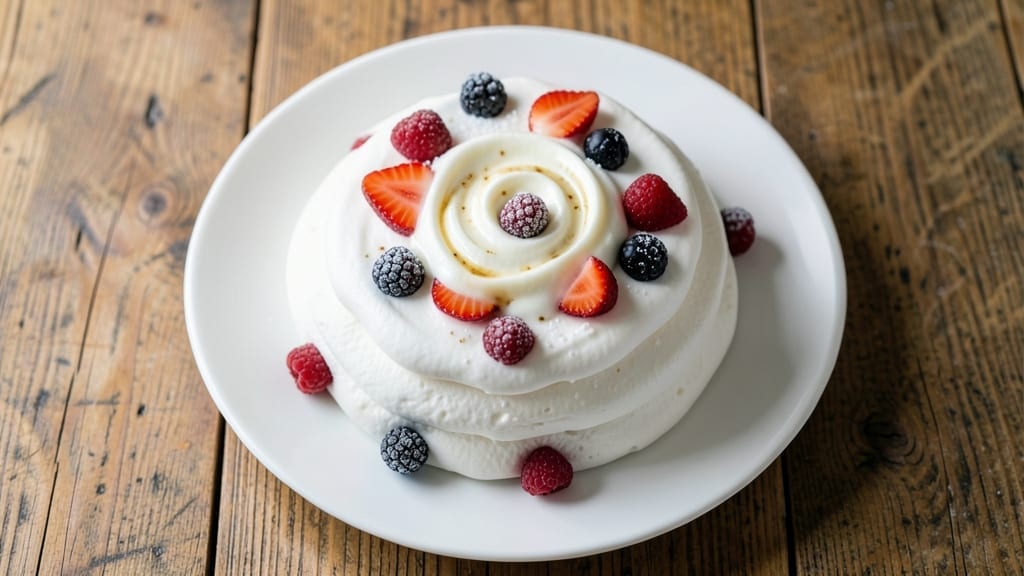
A 5-egg pavlova delivers that perfect balance of crisp outer shell and cloud-soft marshmallow center—every bite is a revelation. This classic Australian dessert has been my go-to for special occasions, and I’ve refined the technique to ensure foolproof results.
The secret lies in precise egg white whipping and gentle oven baking, which transforms simple ingredients into something extraordinary.
What sets this recipe apart is the foolproof method for achieving that signature crisp shell while keeping the inside light and airy. You’ll work with 5 large egg whites (about 1 cup), granulated sugar, and cornstarch, all whipped together to stiff peaks before baking at a low temperature.
This approach eliminates common pitfalls like cracking or collapsing, even for beginners.
The final result is a golden, crisp-edged meringue with a marshmallow core that holds its shape perfectly. Topped with freshly whipped cream and seasonal fruit, it becomes a stunning centerpiece for any dessert table. The contrast of textures and temperatures—crisp shell, cool cream, juicy fruit—makes each bite unforgettable.
This recipe works year-round but shines especially during holidays and summer gatherings. Once you master the technique, you can experiment with flavors like vanilla, coffee, or citrus zest in the meringue, or try alternative toppings like caramel, nuts, or berry compote. Let’s create something truly special.
Ingredients for 5 egg pavlova
Five simple ingredients transform into a showstopping dessert with perfect texture contrast.
| Ingredient | Amount | Notes |
|---|---|---|
| Large Egg Whites 🥚 | 5 whole | Room temperature, no yolks |
| Granulated Sugar 🍚 | 1 cup | Superfine preferred for smoothness |
| Cornstarch 🌾 | 2 tbsp | For stability and crisp edges |
| White Vinegar 🍶 | 1 tsp | Stabilizes egg whites |
| Vanilla Extract 🌿 | ½ tsp | Pure, high-quality extract |
| Heavy Whipping Cream 🧈 | 1 ½ cups | Cold, for topping |
| Fresh Berries 🍓 | 2 cups | Seasonal, for garnish |
| Lemon Juice 🍋 | 1 tbsp | Freshly squeezed |
| Unsalted Butter 🧈 | ¼ cup | Softened, for greasing |
The egg whites are non-negotiable—room temperature is critical for volume. Whole Foods or specialty stores carry high-quality eggs with thicker whites, but any large eggs work if fresh. For sugar, superfine granulated dissolves faster, but regular sugar crushed in a food processor works too. The cornstarch acts as a stabilizer, giving that signature crisp edge. I always use Diamond Crystal cornstarch for its fine texture, though any brand will suffice. Store eggs in their carton in the fridge until use, and bring them to room temperature by leaving them out for 30 minutes before starting.
No vanilla extract? Vanilla bean paste or seeds add depth, or skip it entirely for a neutral base. The white vinegar is key—it stabilizes the meringue, preventing collapse. For a citrus twist, swap the vanilla for lemon or orange zest. The berries can be any seasonal variety—strawberries, raspberries, or blueberries all work beautifully. If you’re short on time, frozen berries thawed and drained work perfectly. The heavy whipping cream should be cold straight from the fridge for maximum volume when whipped.
This pavlova keeps best in an airtight container for 2 days at room temperature, though the texture softens slightly. For longer storage, freeze the meringue base (without toppings) for up to 3 months. Reheat at 300°F for 5 minutes to restore crispness. The whipped cream and fruit should be added fresh before serving. I like to prepare the meringue base a day ahead—it develops better flavor overnight, and the toppings stay fresher when added just before serving.
Why You’ll Love This Recipe
- No Whisk Arm Fatigue: I’ll be real—whipping egg whites is the workout in this recipe, but five eggs mean you’re not stuck beating forever. That cornstarch? It stabilizes the meringue like magic, so even if I rush, it still holds its shape. (Between us, I’ve burned a batch or two.)
- Crispy-Creamy Magic: That sugar and vinegar combo? It’s what makes this meringue sing—crunchy outside, marshmallow soft inside. Add a splash of vanilla, and suddenly it’s not just dessert; it’s the dessert. Honestly, I’ve had people ask if I bought it pre-made.
- Fancy Without Effort: Serve it with whipped cream and berries for a holiday spread, or just top it with store-bought ice cream for a lazy Sunday. It’s the kind of dish that looks impressive but takes less time than deciding what to watch on Netflix.
- Leftovers? No Problem: Unlike some desserts, pavlova actually improves the next day—if there’s any left. I’ve packed slices in lunchboxes (yes, really) and reheated them in the toaster for a crispy breakfast treat. Five eggs stretch further than you’d think, too.
Step-by-step instructions for crisp shell, marshmallow core magic
Master this delicate balance of technique and timing for a perfect meringue every time.
Prepare the Meringue Base
Preheat your oven to 250°F and line a baking sheet with parchment paper. Draw a 6-inch circle on the parchment using a plate as a guide—this will be your pavlova’s foundation. In a spotless, grease-free bowl, beat the 5 whole Large Egg Whites with an electric mixer on medium speed until soft peaks form.
Gradually add the 1 cup Granulated Sugar and 2 tbsp Cornstarch while mixing on low speed. Increase to high speed and beat for 8-10 minutes until the meringue is glossy, thick, and holds stiff peaks when the beaters are lifted. The mixture should be cool to the touch—if it feels warm, chill the bowl in an ice bath for 5 minutes to stabilize the proteins.
Shape and Bake the Shell
Transfer the meringue to a piping bag fitted with a large round tip. Pipe the meringue onto the drawn circle, creating a thick, even base with slightly raised edges. Use the back of a spoon to smooth the top and create a gentle slope toward the center. Immediately place the baking sheet in the preheated oven and reduce the temperature to 225°F.
Bake for 90 minutes, then increase the heat to 275°F and bake for another 15-20 minutes until the meringue is crisp and dry to the touch. The shell should be golden brown with a hollow sound when tapped. Let it cool completely in the oven with the door slightly ajar to prevent cracking—this gradual cooling is crucial for structural integrity.
Create the Marshmallow Filling
While the pavlova cools, prepare the filling by combining the 1.5 cups Heavy Whipping Cream with the 0.5 tsp Vanilla Extract and 1 tbsp Lemon Juice in a chilled bowl. Whip on high speed until soft peaks form, then gradually add the 1 cup Granulated Sugar remaining, continuing to whip until the mixture reaches stiff peaks and holds its shape when the beaters are lifted.
This filling should be light and airy—like a cloud—with a smooth, velvety texture. If the cream doesn’t whip properly, it may be too warm. Place the bowl in an ice bath for 10 minutes before attempting to whip again. The filling should be ready just as the pavlova finishes cooling.
Assemble and Garnish
Once the pavlova is completely cool, spread the whipped cream evenly over the top, leaving a slight border around the edges. Use an offset spatula to create a smooth, even layer. Immediately press the 2 cups Fresh Berries gently into the cream, arranging them in a decorative pattern. The berries should be fresh and firm—avoid overripe fruit that will macerate and make the pavlova soggy.
Serve immediately while the cream is still light and fluffy. The contrast between the crisp, crunchy shell and the soft, marshmallow-like center is what makes pavlova truly magical. For best results, prepare the pavlova no more than 2 hours before serving to maintain texture.
Pro Tips For Making 5 Egg Pavlova
- Whip to Stiff Peaks: DESCRIPTION: Use a stand mixer with the whisk attachment—no hand muscles, no guesswork. Stop when the meringue forms soft peaks that hold their shape but still glisten slightly; overwhipping dries it out faster than you can say “collapsed dessert.”
- Room-Temp Egg Whites: DESCRIPTION: Take those egg whites out of the fridge 30 minutes before you start. Cold whites fold in air like a deflated balloon, and you’ll end up with a pavlova that looks more like a sad pancake than a cloud.
- Sugar Gradually: DESCRIPTION: Add the granulated sugar in three batches while mixing—slow and steady wins the race. Dumping it all at once? You’re asking for grainy pockets that’ll ruin the silky texture. And yes, even if you’re impatient like me.
- Vinegar First: DESCRIPTION: Mix the white vinegar into the egg whites before you start whipping—it stabilizes the meringue from the get-go. I learned this the hard way after my first batch wept like a dramatic soap opera.
Serving suggestions for 5 egg pavlova
Classic Presentation
Serve your pavlova on a slate board or white porcelain platter to highlight its golden shell and vibrant toppings. I like to arrange the berries in a sunburst pattern around the edges, leaving the center cream exposed for that “marshmallow surprise” effect.
Add a mint leaf garnish for freshness—just a few leaves tucked between the berries elevates the presentation instantly. 🌟
Warm Weather Twist
For summer gatherings, chill the pavlova for 30 minutes before serving to enhance the contrast between the crisp shell and cool toppings. Swap the berries for tropical fruit like mango slices or kiwi—their juices won’t make the meringue soggy as quickly.
A drizzle of honey or passionfruit coulis adds a tropical touch without overwhelming the delicate flavors.
Holiday Elevation
Transform your pavlova into a festive centerpiece by adding edible gold leaf or crushed pistachios for a luxurious finish. For Christmas, fold cranberries and orange zest into the whipped cream, then dust with powdered sugar for a snowy effect.
The contrast of deep red berries against the white meringue creates a stunning holiday dessert. 🎄
Make-Ahead Tips
Prepare the meringue base up to 2 days ahead—store it in an airtight container at room temperature. Just before serving, whip the cream and add fresh toppings.
For a no-fuss dessert, assemble the pavlova in individual ramekins (6-inch diameter) instead of one large piece—this makes serving and storage much easier for parties. 💡
Alternative Toppings
Swap the berries for caramelized apples in autumn or passionfruit curd for a tangy twist. For chocolate lovers, fold white chocolate shavings into the whipped cream and top with raspberries. The key is to keep toppings firm and dry—avoid anything overly wet that could compromise the meringue’s crispness.
Portioning Perfection
Use a pizza cutter to slice the pavlova into 6-8 wedges for easy serving. For individual desserts, pipe the meringue into 4-inch circles on parchment-lined baking sheets—this creates mini pavlovas perfect for brunch or dessert buffets.
Serve each with a small scoop of vanilla ice cream on the side to balance the textures. ✨
Nutrition facts
Frequently asked questions
Why does my meringue crack during baking?
The most common causes are humidity or uneven cooling. Use your meringue within 2 hours of whipping when humidity is high, and let it cool gradually in the oven with the door slightly open. Also, avoid overmixing the egg whites—just until soft peaks form before adding sugar.
Can I make a smaller pavlova with fewer eggs?
Yes! For a 4-inch pavlova, use 3 egg whites and reduce sugar to ¾ cup. Keep all other ratios the same. The baking time will be shorter (60-75 minutes total), but follow the same low-and-slow method to prevent cracking.
How do I fix a collapsed pavlova?
If the center sinks, try this: Preheat oven to 275°F, place the collapsed pavlova on a baking sheet, and bake for 10-15 minutes to dry out the center. Then whip fresh cream and add toppings immediately. For prevention, always chill the meringue bowl if it feels warm during whipping.
Can I use a stand mixer for the egg whites?
A stand mixer works perfectly—just use the whisk attachment. For best results, whip on medium-high speed and avoid overmixing. If your mixer struggles, switch to a hand mixer for the final stiff peaks to prevent overheating the egg whites.
What’s the best way to store leftover pavlova?
Store the meringue base (without toppings) in an airtight container at room temperature for up to 2 days. To refresh, bake at 300°F for 5 minutes to restore crispness. Always add whipped cream and fruit fresh before serving to maintain texture.

- 8 Ounce Crab Cakes Recipe: Golden Crust With Luminescent Crab Hearts - October 12, 2026
- 1950’s Betty Crocker Banana Bread Recipe: Nostalgic Spice Swirls and Moist Crumb - October 12, 2026
- 2 Quart Homemade Ice Cream Recipe: Ultra Creamy Vanilla Bean Swirls - October 12, 2026